Introduction
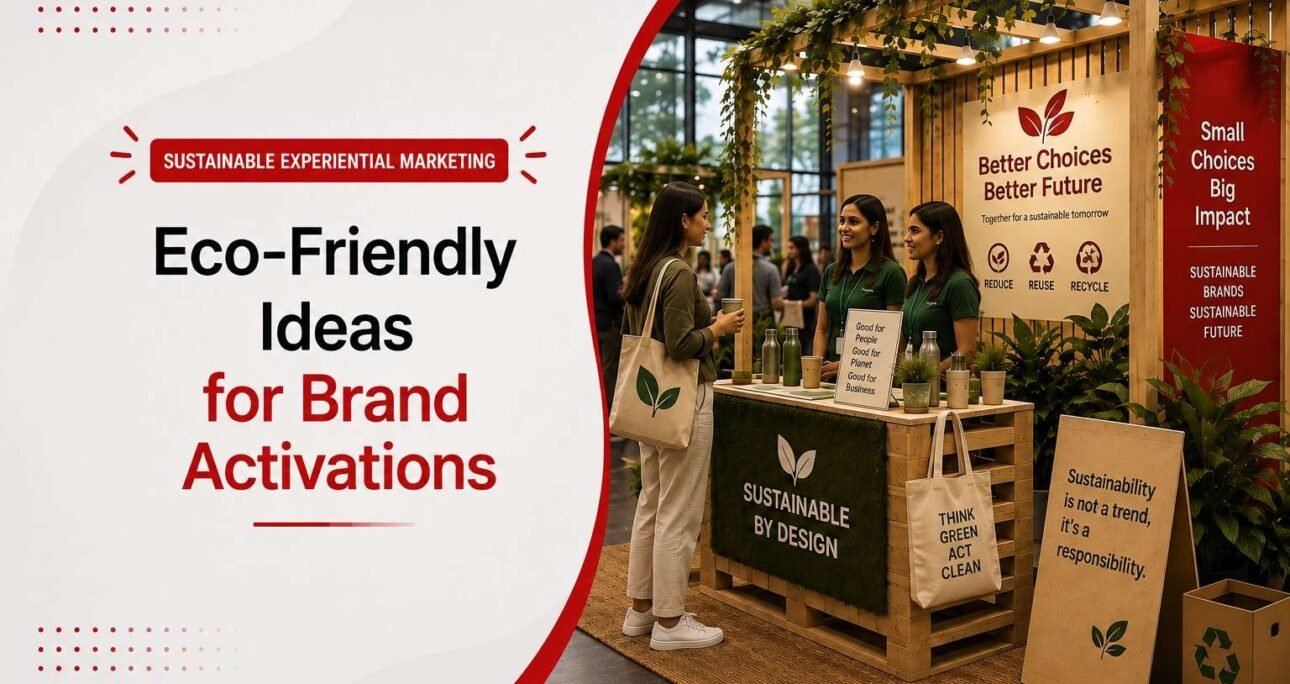
Consumers today expect brands to do more than promote products; they expect them to demonstrate purpose, responsibility, and transparency. Sustainability has become a key factor influencing purchasing decisions, brand loyalty, and public perception, making it an essential part of modern marketing. At the same time, experiential marketing continues to grow as businesses invest in immersive, interactive experiences that build stronger emotional connections with their audiences. The challenge is no longer just creating memorable brand experiences, but doing so in a way that minimises environmental impact without compromising creativity or engagement. This shift has led to the rise of sustainable experiential marketing, an approach that combines immersive brand experiences with environmentally responsible planning, design, and execution. Instead of relying on single-use materials, excessive waste, or resource-intensive activities, it focuses on reusable event assets, responsible sourcing, digital engagement, efficient logistics, and measurable sustainability outcomes. The result is an experience that not only resonates with consumers but also supports long-term environmental and business goals. Whether it’s a product launch, pop-up experience, exhibition, retail activation, conference, or corporate event, sustainability is becoming a core part of successful brand experiences. Businesses are increasingly recognising that sustainable practices strengthen brand perception, improve operational efficiency, support ESG commitments, and create meaningful engagement while reducing waste.
Understanding Sustainable Experiential Marketing
Sustainable experiential marketing is the practice of designing, executing, and measuring immersive brand experiences that minimise environmental impact while maximising audience engagement and long-term business value. It combines the creativity of experiential marketing with responsible decision-making across every stage of an activation, from planning and material selection to logistics, execution, and post-event evaluation.
Unlike traditional marketing, where advertisements communicate messages through one-way channels, experiential marketing allows consumers to interact directly with a brand. Whether it’s a product launch, pop-up store, festival activation, exhibition booth, or corporate event, the objective is to create memorable experiences that encourage participation, emotional connection, and brand advocacy. Sustainable experiential marketing builds on this concept by ensuring these experiences are designed with environmental responsibility and resource efficiency in mind.
Rather than treating sustainability as a single feature such as replacing plastic with recycled materials, it becomes a guiding principle throughout the entire event lifecycle. Every decision, from venue selection and transportation planning to booth construction, energy consumption, promotional merchandise, and waste management, is evaluated based on both its environmental impact and its ability to deliver meaningful customer experiences.
The GREEN Framework for Sustainable Experiential Marketing
Creating a sustainable event requires more than adopting a few eco-friendly practices. It requires a structured approach that integrates sustainability into every stage of planning and execution. The GREEN Framework provides a practical roadmap for businesses to develop environmentally responsible brand activations while maintaining strong marketing performance.
GREEN Framework | Focus | Practical Application |
G – Govern | Establish clear sustainability objectives aligned with business and ESG goals. | Define measurable KPIs for waste reduction, carbon emissions, reusable assets, and audience engagement before planning begins. |
R – Reduce | Minimise resource consumption and environmental impact. | Use modular exhibition booths, reusable event infrastructure, locally sourced materials, digital communication, and energy-efficient equipment. |
E – Engage | Encourage meaningful participation in sustainable initiatives. | Incorporate refill stations, reusable merchandise, community partnerships, and interactive sustainability activities that educate and involve attendees. |
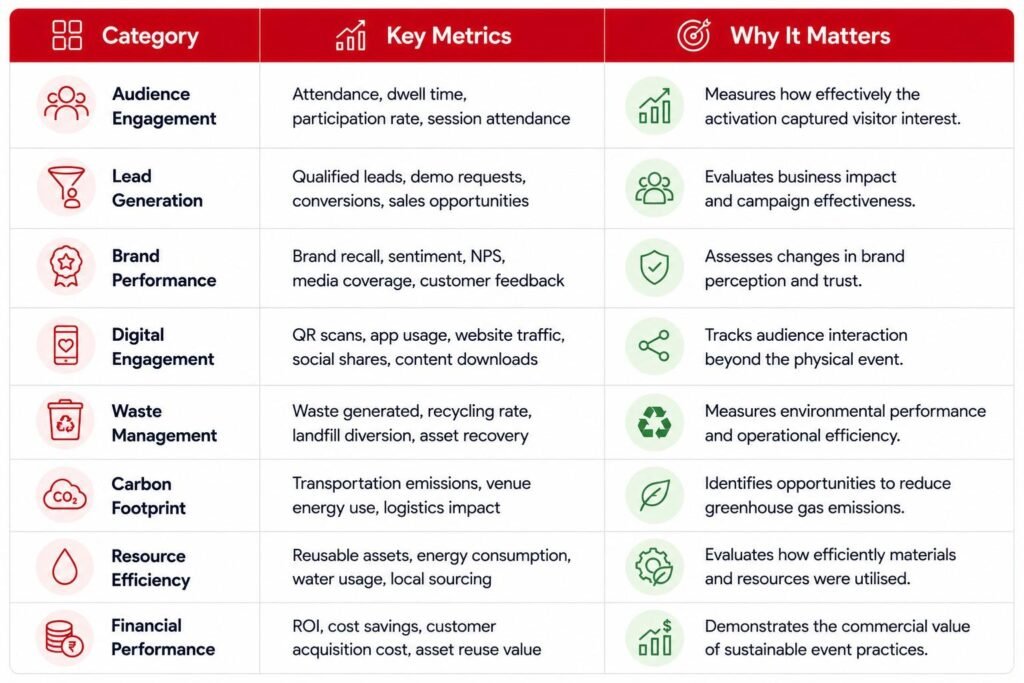
E – Evaluate | Measure environmental and marketing performance together. | Track waste diversion, carbon emissions, lead quality, digital engagement, and reusable asset utilisation to understand overall event performance. |
N – Next | Continuously improve future activations. | Analyse performance data, optimise supplier selection, reuse event assets, and refine sustainability strategies for future campaigns. |
By following the GREEN Framework, businesses can move beyond one-time sustainability initiatives and develop a repeatable event sustainability framework that supports long-term environmental responsibility, operational efficiency, and stronger brand experiences. It also creates a foundation for measuring success consistently across multiple activations, making sustainability an integral part of modern experiential marketing rather than an isolated campaign objective.
How Sustainable Experiential Marketing Differs from Traditional Experiential Marketing
Both traditional and sustainable experiential marketing aim to create memorable brand experiences that strengthen customer relationships and increase brand awareness. The difference lies in how those experiences are planned, delivered, and measured. While traditional activations often prioritise immediate visibility and audience engagement, sustainable experiential marketing balances marketing performance with environmental responsibility, operational efficiency, and long-term value. Rather than focusing solely on the event itself, sustainable experiential marketing considers the entire lifecycle of an activation from sourcing materials and selecting suppliers to managing waste, reusing assets, and measuring environmental impact alongside marketing results. This integrated approach helps brands create experiences that not only engage audiences but also support broader business and ESG objectives.
Traditional Experiential Marketing vs Sustainable Experiential Marketing
Traditional Experiential Marketing | Sustainable Experiential Marketing |
Focuses primarily on audience engagement and brand visibility. | Balances audience engagement with environmental responsibility and long-term business value. |
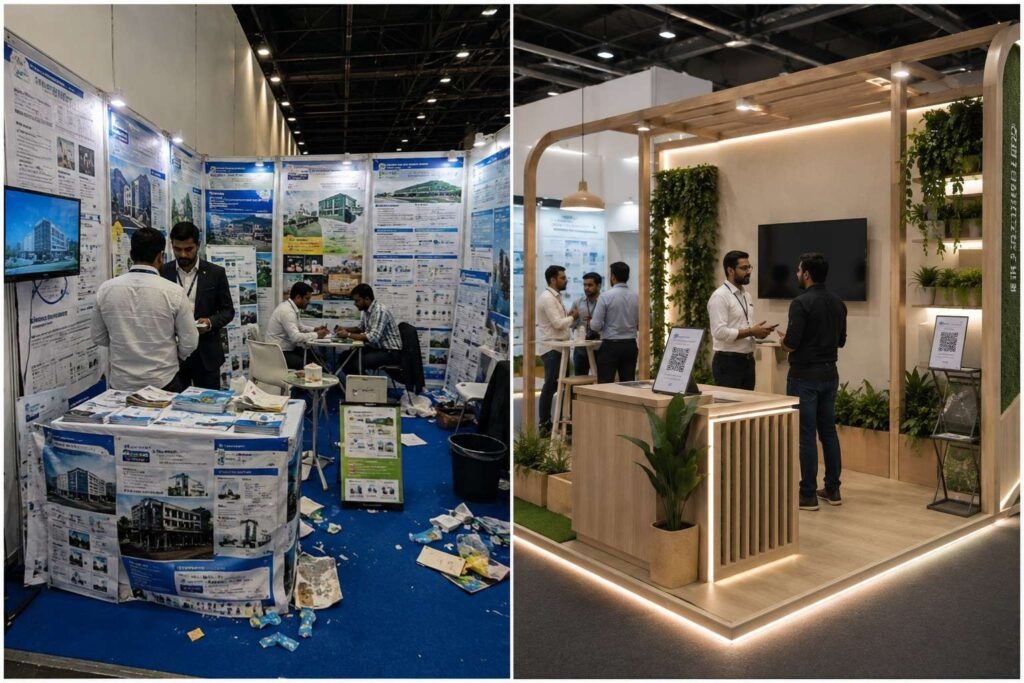
Frequently relies on single-use booths, printed collateral, and custom-built event assets. | Prioritises reusable exhibition booths, modular event systems, and responsible material selection. |
Success is measured using attendance, reach, and lead generation. | Success is measured through both marketing KPIs and sustainability metrics such as waste reduction, carbon emissions, reusable asset utilisation, and lead quality. |
Supplier selection is often based on cost and convenience. | Suppliers are evaluated on sustainability practices, local sourcing, certifications, and operational efficiency. |
Waste management is generally addressed after the event. | Waste reduction is planned from the beginning through circular design, recycling, reuse, and responsible disposal. |
Event assets are commonly discarded after one campaign. | Event infrastructure is designed for reuse across multiple activations, reducing costs and environmental impact over time. |
The objective of sustainable experiential marketing is not to limit creativity or make events less impactful. Instead, it encourages businesses to deliver the same level of audience engagement while using resources more efficiently, reducing unnecessary waste, and building systems that can be reused across future campaigns. This approach creates stronger long-term returns by lowering operational costs, supporting sustainability goals, and strengthening brand credibility with increasingly environmentally conscious consumers.
Sustainable Experiential Marketing vs Green Marketing
The terms green marketing and sustainable experiential marketing are often used interchangeably, but they refer to different aspects of a brand’s sustainability efforts.
Green marketing focuses on communicating the environmental benefits of a product, service, or initiative. This may include promoting recyclable packaging, energy-efficient products, responsible sourcing, or sustainability commitments through advertising, digital campaigns, and public relations.
Sustainable experiential marketing, on the other hand, focuses on how the brand experience itself is created and delivered. It ensures that sustainability is integrated into every stage of an activation from planning and supplier selection to exhibition booth design, logistics, audience engagement, and post-event reporting. The emphasis is not only on communicating sustainability but also on demonstrating it through measurable actions.
For example, promoting a recyclable product through an advertising campaign is an example of green marketing. Designing a zero-waste event using reusable infrastructure, locally sourced materials, digital engagement, and responsible waste management is an example of sustainable experiential marketing. While green marketing shapes the brand’s message, sustainable experiential marketing ensures the brand’s actions reinforce that message. When both approaches work together, businesses build greater trust, strengthen ESG commitments, and create authentic experiences that resonate with today’s environmentally conscious audiences.
Benefits of Sustainable Experiential Marketing
Sustainable experiential marketing delivers far more than environmental benefits. By integrating sustainability into every stage of event planning and execution, businesses can create memorable brand experiences while improving operational efficiency, strengthening customer relationships, and supporting long-term business growth. Whether organising a product launch, exhibition, trade show, corporate event, or sustainable pop-up store, adopting a sustainable event strategy helps brands maximise impact while minimising waste.
1. Strengthens Brand Trust and Customer Engagement
Consumers increasingly expect brands to demonstrate genuine environmental responsibility rather than simply communicate sustainability through marketing campaigns. Sustainable brand activations that incorporate reusable exhibition booths, responsible sourcing, and eco-friendly event ideas create authentic experiences that build trust and encourage meaningful audience participation. These experiences strengthen emotional connections, improve brand perception, and increase the likelihood of long-term customer loyalty.
2. Reduces Costs Through Smarter Resource Management
Sustainability encourages businesses to use resources more efficiently rather than consume more. Investing in modular exhibition systems, reusable event assets, rental infrastructure, digital communication, and local sourcing reduces production, logistics, storage, and disposal costs across multiple campaigns. Over time, these efficiencies improve return on investment while supporting more sustainable event planning.
3. Supports ESG Goals and Corporate Sustainability Initiatives
Sustainable experiential marketing plays an important role in helping organisations achieve their Environmental, Social, and Governance (ESG) objectives. Responsible supplier selection, waste reduction, efficient resource management, and lower carbon emissions contribute to measurable sustainability outcomes while aligning marketing activities with broader corporate sustainability commitments. This integration strengthens transparency, accountability, and stakeholder confidence.
4. Minimises Environmental Impact Without Compromising Creativity
A sustainable event does not have to sacrifice creativity or audience engagement. By using reusable event systems, responsibly sourced materials, efficient logistics, and circular design principles, businesses can significantly reduce waste and resource consumption while continuing to deliver immersive and memorable brand experiences. Sustainable exhibition booths and thoughtfully planned activations demonstrate that innovation and environmental responsibility can work together.
5. Delivers Measurable Long-Term Business Value
The success of sustainable experiential marketing extends beyond attendance and lead generation. Businesses can evaluate campaign performance using both marketing and sustainability metrics, including waste diversion, reusable asset utilisation, carbon emissions, supplier performance, and customer engagement. Measuring these outcomes enables continuous improvement, supports future event planning, and demonstrates the long-term value of investing in sustainable event strategies.
Eco-Friendly Event Ideas for Sustainable Brand Activations
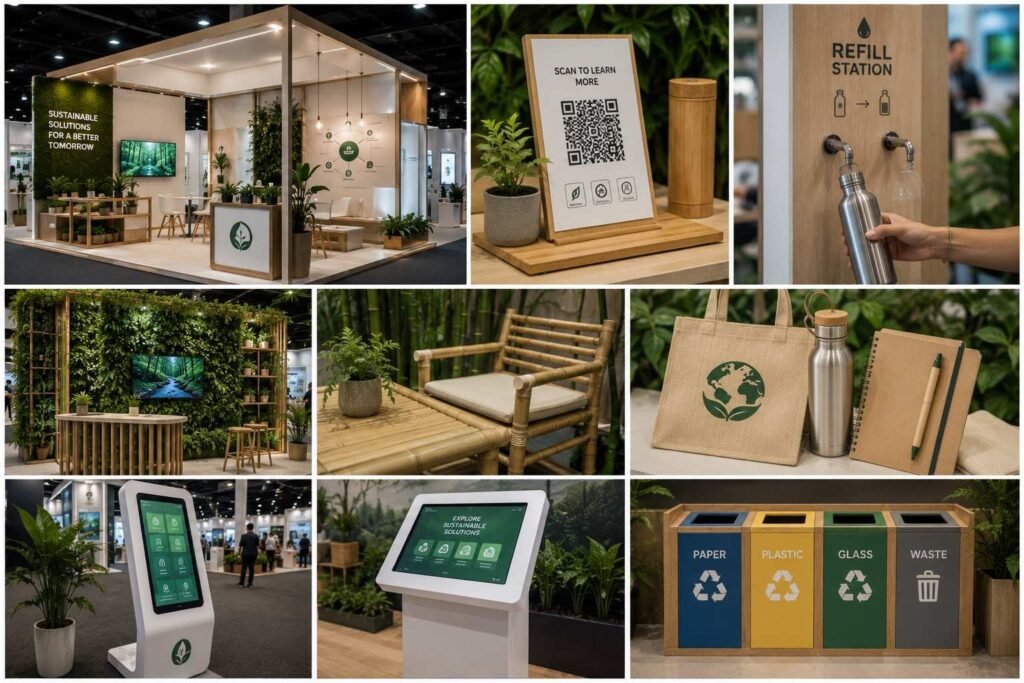
Creating a memorable brand activation doesn’t require excessive materials or unnecessary waste. The most successful sustainable events combine creativity with thoughtful planning, ensuring every element contributes to both audience engagement and environmental responsibility. By choosing reusable infrastructure, responsible sourcing, efficient operations, and circular design principles, businesses can reduce their environmental footprint while delivering impactful experiences. Whether planning a product launch, trade show, exhibition, corporate event, or sustainable pop-up store, these eco-friendly event ideas help create experiences that are engaging, cost-effective, and aligned with long-term sustainability goals.
1. Design Modular and Reusable Exhibition Booths
A sustainable exhibition booth is designed for multiple events rather than a single activation. Modular structures, interchangeable branding panels, reusable furniture, and durable display systems reduce material waste while lowering long-term production costs. Investing in reusable infrastructure also simplifies transportation, storage, and future event planning, making it one of the most effective sustainable event ideas for businesses that regularly participate in exhibitions and trade shows.
2. Choose Sustainable Materials and Local Suppliers
The materials and suppliers selected for an event significantly influence its environmental impact. Using FSC-certified wood, recycled aluminium, organic fabrics, recyclable signage, and water-based inks helps reduce resource consumption, while working with local suppliers minimises transportation emissions and supports regional businesses. Responsible sourcing also improves supply chain transparency and strengthens ESG commitments.
3. Create a Zero Waste Event Strategy
A zero-waste event focuses on preventing waste before it is created rather than managing it afterwards. This can be achieved by replacing disposable products with reusable alternatives, providing refill stations, reducing unnecessary packaging, implementing clearly labelled recycling stations, and donating or repurposing event materials after the activation. Planning for reuse from the outset helps minimise landfill waste while improving operational efficiency.
4. Build Sustainable Pop-up Stores and Experiential Spaces
A sustainable pop-up store should be designed with flexibility and reuse in mind. Modular displays, rented furniture, energy-efficient lighting, recyclable branding materials, and locally sourced décor allow businesses to create premium retail experiences while reducing waste and production costs. Designing temporary spaces for repeated use extends the life of event assets and supports a more circular approach to experiential marketing for corporate events.
5. Encourage Audience Participation in Sustainability
The most memorable brand activations invite visitors to become active participants rather than passive observers. Activities such as refill stations, upcycling workshops, community initiatives, sustainability pledges, and educational experiences help audiences engage with the brand while reinforcing its environmental values. Purpose-driven participation creates stronger emotional connections and encourages visitors to share their experiences, extending the campaign’s reach beyond the event itself.
Choosing the Right Sustainable Event Idea
Not every sustainability initiative is suitable for every activation. The most effective approach depends on your objectives, audience, budget, and event format.
Business Goal | Recommended Sustainable Approach |
Reduce long-term costs | Modular exhibition booths and reusable event assets |
Lower environmental impact | Zero waste event strategy and responsible material sourcing |
Improve ESG performance | Sustainable suppliers and measurable sustainability KPIs |
Increase audience engagement | Interactive sustainability experiences and community initiatives |
Build flexible retail experiences | Sustainable pop-up stores with reusable infrastructure |
The most successful sustainable brand activations do not rely on a single eco-friendly initiative. Instead, they combine responsible planning, reusable event systems, sustainable materials, and meaningful audience engagement to create experiences that deliver measurable business value while reducing environmental impact. By integrating these principles into every stage of planning, organisations can build future-ready events that support both marketing objectives and long-term sustainability goals.
Building Sustainable Events: Materials, Technology, and Best Practices
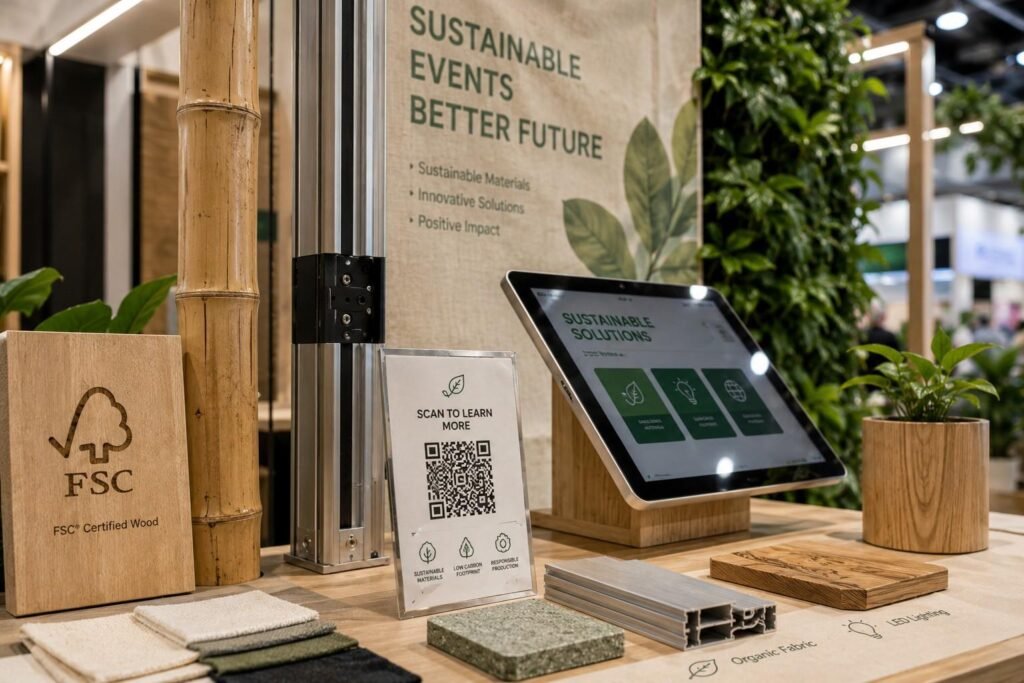
Creating a sustainable event goes beyond choosing eco-friendly materials or reducing waste on the event day. Every decision from the materials used to construct an exhibition booth to supplier selection, logistics, energy consumption, and post-event recovery contributes to the overall environmental impact of an activation. By combining responsible sourcing, practical technology, and efficient event management, businesses can deliver engaging experiences while reducing resource consumption and improving long-term operational efficiency. Rather than viewing sustainability as a single initiative, successful organisations integrate it into every stage of event planning to create repeatable systems that support both business performance and environmental responsibility.
Choosing Sustainable Materials
The materials used for exhibition booths, event displays, furniture, signage, and promotional assets often account for a significant share of an event’s environmental footprint. Selecting durable, reusable, and responsibly sourced materials helps reduce waste while extending the lifespan of event infrastructure.
Material | Why It’s Sustainable | Common Applications |
FSC-Certified Wood | Responsibly sourced and renewable | Exhibition booths, display structures, furniture |
Recycled Aluminium | Lightweight, durable, and reusable | Modular booth systems and framing |
Bamboo | Fast-growing and highly renewable | Décor, signage, partitions, furniture |
Organic or Recycled Fabrics | Reusable and recyclable | Backdrops, banners, table covers |
Water-Based Inks & Recyclable Signage | Lower environmental impact | Branding, graphics, directional signage |
Choosing quality materials not only reduces environmental impact but also allows event assets to be reused across multiple campaigns, lowering long-term production costs.
Using Technology More Responsibly
Technology should support sustainability by reducing resource consumption rather than adding unnecessary complexity. Digital registration, mobile event platforms, interactive displays, and online content help minimise printed materials while improving visitor access to information. Rather than relying heavily on multiple technologies, businesses should adopt digital solutions where they provide genuine value, streamlining communication, improving operational efficiency, and collecting meaningful event insights. A balanced digital-first approach reduces waste while maintaining a seamless visitor experience.
Sustainable Event Practices That Deliver Long-Term Value
The most effective sustainable events are built on consistent operational practices rather than one-time initiatives. Integrating these practices into every activation helps reduce environmental impact while improving efficiency and controlling costs.
Best Practice | Business & Sustainability Benefit |
Source locally wherever possible | Reduces transportation emissions and supports local businesses |
Rent equipment instead of buying | Extends product life and reduces unnecessary manufacturing |
Use modular event systems | Enables repeated use across multiple campaigns |
Replace disposable items with reusable alternatives | Minimises waste and recurring purchasing costs |
Optimise logistics and transport | Lowers carbon emissions and improves operational efficiency |
Implement structured waste management | Increases recycling and material recovery rates |
Use energy-efficient lighting and equipment | Reduces electricity consumption and operating costs |
No single initiative can make an event fully sustainable. The greatest impact comes from combining responsible materials, practical technology, and efficient operational practices into a cohesive strategy. When these elements work together, businesses create events that are environmentally responsible, cost-effective, and better prepared for future sustainability expectations.
Common Mistakes Brands Should Avoid in Sustainable Experiential Marketing
A sustainable brand activation is judged not by what a brand claims, but by how consistently sustainability is reflected throughout the entire experience. Even well-intentioned campaigns can lose credibility if sustainability is treated as a marketing message rather than an operational commitment. By recognising and avoiding these common mistakes, brands can create authentic experiences that strengthen trust while delivering measurable environmental and business value.
1. Treating Sustainability as a Marketing Campaign Instead of a Business Strategy
One of the biggest mistakes brands make is promoting sustainability during marketing campaigns while continuing to rely on unsustainable event practices behind the scenes. For example, highlighting recyclable packaging while using single-use exhibition structures or excessive printed materials creates an inconsistent customer experience that can weaken brand credibility.
How to avoid it: Make sustainability a core part of your event strategy rather than a campaign message. Integrate it into planning, design, supplier selection, logistics, event operations, and post-event reporting so that every stage of the activation reflects the same environmental commitment.
2. Greenwashing Instead of Demonstrating Genuine Action
Consumers are increasingly sceptical of vague environmental claims. Using terms like eco-friendly, green, or sustainable without supporting them with real initiatives can damage trust and make an activation appear inauthentic.
How to avoid it: Support every sustainability claim with measurable actions. Share specific outcomes such as waste diverted from landfill, reusable event assets, local sourcing, renewable energy usage, or reductions in printed materials. Transparency is far more effective than broad environmental statements.
3. Designing Single-Use Event Infrastructure
Temporary booths, displays, signage, and decorative installations are often designed for a single campaign and discarded afterwards, generating unnecessary waste and increasing production costs.
How to avoid it: Invest in modular exhibition systems, reusable furniture, interchangeable graphics, and adaptable event structures that can be refreshed for multiple activations. Designing assets for repeated use improves both sustainability and long-term return on investment.
4. Choosing Suppliers Based Only on Cost
Selecting vendors solely because they offer the lowest price can result in poor material sourcing, excessive packaging, inefficient logistics, and environmentally harmful production practices.
How to avoid it: Evaluate suppliers on more than just cost. Consider their sustainability certifications, responsible sourcing policies, recycling initiatives, local production capabilities, and experience in delivering environmentally responsible events before making a decision.
5. Ignoring Transportation and Logistics
Transportation is one of the largest contributors to an event’s carbon footprint, yet it is often overlooked during the planning process. Multiple deliveries and long-distance shipping increase both emissions and operational costs.
How to avoid it: Develop a logistics strategy that prioritises local sourcing, consolidated deliveries, lightweight modular equipment, and efficient transport planning. Reducing unnecessary travel benefits both the environment and the event budget.
6. Producing Promotional Merchandise That Has Little Long-Term Value
Cheap promotional giveaways are frequently discarded shortly after an event, creating waste while offering little lasting value to attendees or the brand.
How to avoid it: Choose practical, durable merchandise such as reusable bottles, organic cotton tote bags, recycled notebooks, or bamboo office accessories. High-quality products remain useful for longer, increasing brand visibility while reducing unnecessary waste.
7. Overlooking Waste Management During the Event
Even sustainable activations can generate unnecessary waste if disposal systems are poorly organised. Without proper planning, recyclable materials often end up in general waste bins.
How to avoid it: Implement a structured waste management plan that includes clearly labelled recycling stations, compost collection where appropriate, staff training, vendor responsibilities, and post-event reporting to maximise material recovery and improve future event planning.
8. Relying Too Heavily on Printed Materials
Printed brochures, flyers, catalogues, and registration forms continue to generate significant amounts of avoidable waste, especially when attendees increasingly prefer digital information.
How to avoid it: Adopt a digital-first communication strategy by replacing printed materials with QR codes, mobile event apps, interactive kiosks, digital catalogues, and email follow-ups. This reduces paper consumption while providing attendees with easier access to up-to-date information.
Sustainable Experiential Marketing KPI Dashboard
Conclusion
Sustainable experiential marketing is no longer just about reducing environmental impact it’s about creating smarter, more efficient, and more meaningful brand experiences. By integrating sustainable event strategies into planning, design, execution, and measurement, businesses can reduce waste, optimise resources, strengthen ESG commitments, and build lasting customer trust. From reusable exhibition booths and responsible supplier selection to measurable sustainability KPIs and eco-friendly event ideas, every decision contributes to creating brand activations that deliver both business and environmental value. The most successful organisations view sustainability as an ongoing strategy rather than a one-time initiative, continuously improving each event through better planning and measurable outcomes. As the events industry continues to evolve, brands that embrace sustainable experiential marketing will be better positioned to create memorable experiences, improve marketing performance, and build a more responsible and future-ready business.
FAQs
1. What is sustainable experiential marketing?
Sustainable experiential marketing is the practice of creating immersive brand experiences that reduce environmental impact while maintaining high audience engagement. It combines creative marketing with responsible planning, reusable resources, and eco-friendly event practices.
2. Why is sustainability important in brand activations?
Sustainability helps brands reduce waste, improve operational efficiency, and demonstrate genuine environmental responsibility. It also strengthens customer trust by aligning brand experiences with the values of today’s environmentally conscious consumers.
3. How is sustainable experiential marketing different from traditional experiential marketing?
Traditional experiential marketing focuses primarily on customer engagement and brand awareness, whereas sustainable experiential marketing also considers resource efficiency, waste reduction, responsible sourcing, and long-term environmental impact throughout the event lifecycle.
4. What are some eco-friendly ideas for brand activations?
Brands can use reusable exhibition booths, paperless registrations, QR-code-based product information, refillable sampling stations, sustainable merchandise, renewable energy solutions, and locally sourced materials to create environmentally responsible activations.
5. How can brands make event activations more sustainable?
Businesses can improve sustainability by selecting reusable materials, partnering with responsible suppliers, reducing printed collateral, optimising logistics, implementing waste management systems, and measuring environmental performance after every event.
6. Are sustainable brand activations more expensive?
While some sustainable solutions require higher upfront investment, reusable event assets and efficient planning often reduce production, logistics, and disposal costs over multiple campaigns, making them cost-effective in the long run.
7. How do you measure the success of a sustainable brand activation?
Success should be measured using both marketing and sustainability KPIs, including audience engagement, lead generation, waste reduction, carbon emissions, reusable asset utilisation, and overall return on investment.
8. What materials are commonly used in sustainable event activations?
Popular sustainable materials include FSC-certified wood, bamboo, recycled aluminium, organic fabrics, recyclable display panels, water-based inks, compostable packaging, and modular exhibition systems designed for repeated use.
9. What role does technology play in sustainable experiential marketing?
Technology reduces paper consumption and improves visitor engagement through digital registration, QR codes, mobile event apps, augmented reality experiences, AI-powered event management, and interactive digital displays.
10. Can small businesses implement sustainable experiential marketing?
Yes. Small businesses can adopt sustainable practices by renting equipment, using reusable displays, sourcing materials locally, replacing printed brochures with digital content, and investing in practical, reusable promotional merchandise.