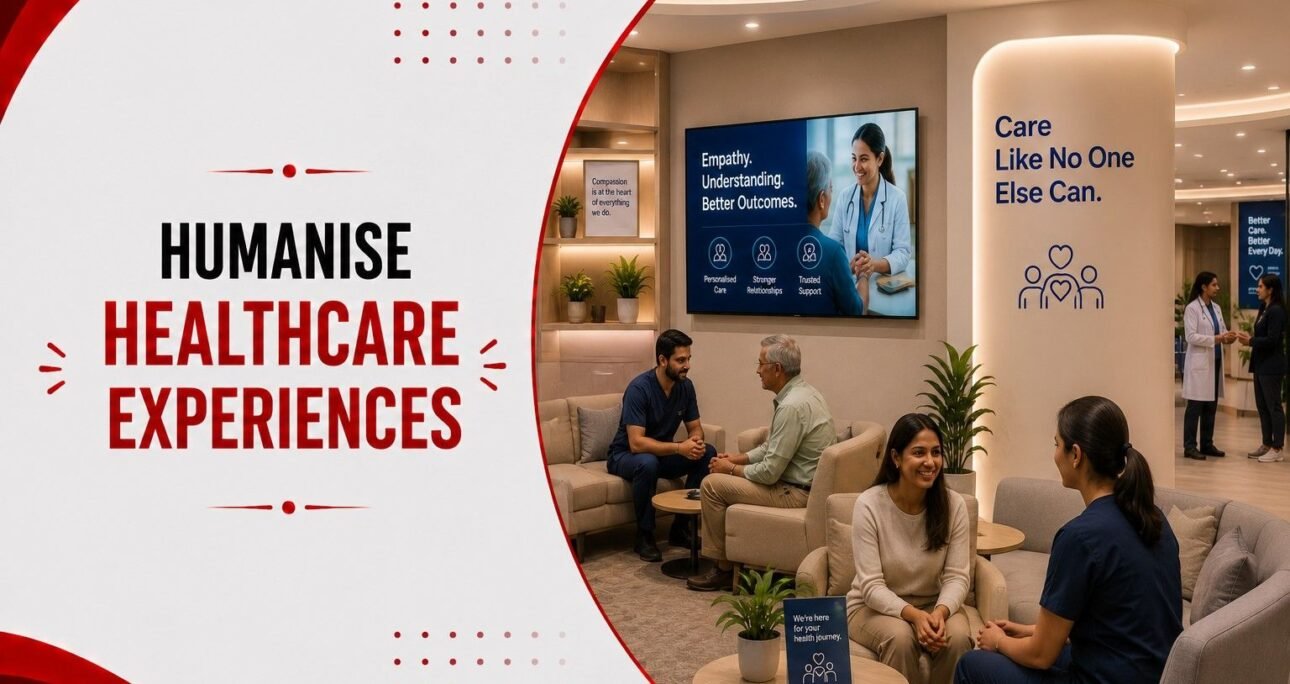
Healthcare marketing has traditionally focused on visibility, information and reputation. But for a healthcare brand, what people experience in person can matter just as much as what they see in an advertisement or read online. A confusing exhibition booth, difficult-to-follow information or an overly promotional interaction can leave the wrong impression. On the other hand, a well-planned experience can make complex information easier to understand, create meaningful conversations and help people feel more confident about a brand. This is where healthcare experiential marketing comes in. Instead of simply communicating what a healthcare brand offers, it creates opportunities for people to interact with the brand through exhibitions, conferences, activations, demonstrations and educational experiences. The goal is not to make healthcare marketing more dramatic. It is to make the experience more relevant, clear and human while keeping the needs of patients, caregivers, healthcare professionals and other audiences at the centre. In this article, we explore how patient-centred experiences can strengthen trust, what goes into designing them, how healthcare brands can measure their impact and what marketers should consider when planning experiences in India.
What Is Healthcare Experiential Marketing?
Healthcare experiential marketing is the use of live, interactive or immersive experiences to help healthcare brands communicate with and engage their audiences in a more meaningful way. These experiences can take place at exhibitions, conferences, health awareness events, product demonstrations, brand activations and other physical or hybrid environments. Unlike traditional healthcare advertising, which mainly communicates a message to an audience, experiential marketing gives people an opportunity to experience that message. They may explore a medical technology demonstration, interact with educational content, speak directly with a brand representative or move through a carefully designed healthcare environment. The audience is not limited to patients. Depending on the campaign, a healthcare experience may be designed for patients, caregivers, doctors, healthcare professionals, hospital decision-makers, partners or the wider community. Each group can have different questions and expectations, so the experience needs to be designed around who is actually participating.
For example, a medical-device company exhibiting at a healthcare trade show may use an interactive demonstration to explain how its technology works. A health-tech brand could create an educational experience that helps visitors understand a digital healthcare solution. A hospital might use an awareness activation to communicate health information in a way that is easier for visitors to explore and understand. The strongest healthcare experiences have a clear purpose behind the creative idea. The visuals, technology, layout, demonstrations and conversations should work together to make the intended message easier to understand rather than simply making the environment look impressive. That distinction matters because experiential marketing in healthcare is not about adding more activity to an event. It is about designing an experience that gives the audience a reason to participate, understand and remember the brand.
Why Trust Matters in Healthcare Brand Experiences

Trust carries more weight in healthcare than it does in many everyday purchase decisions. People are often dealing with uncertainty, unfamiliar information or decisions that can have a direct impact on their wellbeing. In that setting, a healthcare brand is judged not only by what it says, but also by how clearly, responsibly and consistently it communicates. A patient may come across a hospital, pharmaceutical company, medical-device brand or health-tech service several times before deciding to engage with it. Every interaction contributes to the overall impression from a website or social media post to a conference, exhibition booth, awareness campaign or face-to-face conversation. This is why patient experience in healthcare cannot be separated from brand experience. If information is difficult to understand, staff interactions feel rushed, or the physical environment is confusing, even strong marketing communication can lose some of its impact. The opposite is also true. A well-organised experience can make a healthcare brand feel easier to approach. Clear information, thoughtful communication, accessible spaces and genuine human interaction can help people understand what the brand offers and what they can expect from it.
Trust Is Built Through Small Interactions
Trust is rarely created by one impressive campaign. It develops through a series of experiences that feel consistent and credible. Consider a healthcare exhibition. A visitor may first notice the booth design, then read the messaging, watch a product demonstration and speak with a representative. Each of these moments shapes their perception of the organisation. If the experience is clear and considered from beginning to end, the brand has a better opportunity to leave a credible impression. This is particularly relevant when healthcare information is complex. People should not have to work unnecessarily hard to understand the message being presented to them. Good healthcare brand experiences simplify the journey without oversimplifying the subject itself.
Experience Should Match the Brand Promise
A healthcare organisation may communicate values such as care, innovation, accessibility or transparency in its marketing. The physical experience should support those promises. If a brand presents itself as approachable but creates an intimidating environment, there is a disconnect. If it promotes clarity but fills an exhibition space with dense technical information, the experience does not reinforce the message. This is where experiential marketing becomes more than a creative exercise. It provides a space where a healthcare brand can demonstrate its values through the way people are welcomed, informed, guided and engaged. For healthcare marketers, the question is therefore not simply “How do we attract more visitors?” It is also “What should people understand and feel after interacting with our brand?” That shift in thinking is the starting point for creating experiences that can contribute to lasting trust.
How Does Experiential Marketing Build Trust in Healthcare?
Experiential marketing can build trust in healthcare by giving people opportunities to understand, interact with and evaluate a brand through real experiences rather than relying only on promotional messages. When the experience is clear, informative and designed around the audience, it can make the brand feel more approachable and credible. The important part is how the experience is designed. Simply adding technology, large displays or interactive elements does not automatically create trust. The experience needs to solve a genuine communication or engagement challenge.
1. It Makes Complex Information Easier to Understand
Healthcare brands often have to communicate information that can be technical or difficult for a general audience to absorb. An exhibition panel filled with terminology may communicate a lot, but that does not necessarily mean visitors will understand it. Experiential marketing gives brands more ways to explain the same information. A product demonstration, interactive display, visual walkthrough or guided presentation can break a complicated subject into smaller, easier-to-follow parts. The aim is not to remove important details. It is to present them in a way that helps the audience follow the story without feeling overwhelmed.
2. It Creates Space for Human Interaction
Healthcare can be an intensely human category. People may have questions that a poster, screen, or brochure alone can’t answer. A well-designed experience gives people an opportunity to speak with someone, ask questions and explore information at their own pace. At a conference, for instance, a clearly planned conversation area can be more valuable than another promotional display competing for attention. These interactions also allow the brand to listen. Understanding what visitors ask, where they hesitate and what information they want can help shape better future experiences.
3. It Turns Brand Claims Into Something People Can Experience
A healthcare brand may describe itself as innovative, accessible or patient-focused. Experiential marketing provides an opportunity to demonstrate those qualities rather than simply stating them. Suppose a health-tech company wants to communicate that its platform makes healthcare easier to navigate. A guided demonstration can show visitors how the solution works instead of asking them to take the claim at face value. The experience becomes evidence of the brand’s approach.
4. It Reduces Friction During the Visitor Journey
Trust can be affected by seemingly minor details. If visitors cannot figure out where to go, do not know what an exhibition space offers, or struggle to find relevant information, the experience becomes unnecessarily difficult. Thoughtful healthcare experiential marketing considers these details from the beginning. Clear signage, logical visitor flow, readable messaging and well-positioned interaction points help people move through the experience without confusion. This is particularly important when an environment needs to accommodate different audiences with different levels of knowledge.
5. It Creates More Meaningful Brand Recall
People are more likely to remember an experience when they actively participate in it rather than simply receiving information. A useful demonstration, a relevant conversation or an educational activity can give visitors something specific to associate with the brand. The memory does not have to come from an elaborate installation. Sometimes, a simple experience that answers a genuine question can be more effective than an impressive but disconnected display. For healthcare brands, that distinction matters. The objective is not to create an experience that people remember merely because it was visually striking. It is to create one that they remember for what they learned, experienced or understood.
Trust Starts With the Experience, Not Just the Message
A successful healthcare activation should therefore be judged on more than attendance or visual impact. The stronger question is whether the experience helped the audience understand the brand and interact with it in a way that felt clear and appropriate. When strategy, communication, design and human interaction work together, experiential marketing can become a practical way for healthcare brands to strengthen the relationship between what they promise and what people actually experience.
The Patient-Centred Experience Journey
A patient-centred experience starts before someone walks into an exhibition booth, activation or event space. It begins with what they already know, what they expect and what they need from the interaction. Designing around that journey helps healthcare brands create experiences that feel purposeful rather than simply attractive. For healthcare marketers, the journey can be viewed in seven stages: Before the experience → First impression → Discovery → Interaction → Reassurance → Action → Follow-up
1. Before the Experience
The audience rarely arrives with a blank slate. They may have seen the brand online, received information from a healthcare professional, heard about it from someone else or encountered the brand at an earlier event. That existing perception should influence the experience design. A campaign should have a clear understanding of who is attending, what they are likely to know already and what the experience is expected to achieve. For example, a medical-device exhibition aimed at healthcare professionals will require a very different approach from a public health awareness activation.
2. First Impression
The first few seconds determine whether someone feels encouraged to explore or simply walks past. This does not mean the biggest screen or most elaborate installation wins attention. The environment should make it immediately clear who the brand is, what the experience offers and why it is relevant. Entrance design, visibility, lighting, signage and the placement of key messages all contribute to that first impression.
3. Discovery
Once someone enters the experience, they need a reason to continue. This is where the information hierarchy becomes important. Instead of presenting every feature or message at once, guide visitors from the most important idea to supporting information. An interactive display might introduce the problem first, followed by the solution and then a deeper explanation for visitors who want to explore further. Good discovery feels natural. People should be able to decide how much information they want to engage with rather than being forced through a fixed sales pitch.
4. Interaction
The next stage is where the audience moves from observing to participating. Depending on the objective, this could involve a product demonstration, interactive technology, educational activity, consultation, discussion or guided walkthrough. The interaction should have a clear purpose. If an element exists only because it looks impressive, it can become a distraction. Every interaction should help visitors understand something, experience something or have a meaningful conversation.
5. Reassurance
Healthcare audiences may have questions that arise only after they have explored the experience. This stage gives them space to ask those questions and clarify what they have seen. Staff knowledge, appropriate communication and a comfortable environment can make a significant difference here. For experiences involving sensitive conversations, privacy also needs to be considered at the planning stage. Not every interaction belongs in an open, high-traffic area.
6. Action
A healthcare experience should have a clear next step, but that does not always mean making a purchase. Depending on the audience and campaign, the next step could be requesting more information, speaking with a representative, registering for a programme, exploring a product demonstration or simply taking away useful educational material. The action should feel relevant to the experience rather than being added as an afterthought.
7. Follow-Up
The relationship does not necessarily end when the visitor leaves. Follow-up can help continue the conversation through appropriate communication, additional information, event resources or a relevant next interaction. For B2B healthcare experiences, this could also mean following up with qualified leads or professional contacts generated during an exhibition or conference. The key is continuity. If the experience promises clarity and helpful communication, the follow-up should reflect the same approach.
Designing Around the Whole Journey
A patient-centred approach does not mean creating the same experience for every healthcare audience. It means understanding the people involved and designing each stage around their needs, expectations and context. When the journey is considered as a whole, the booth, activation or event stops being a collection of separate design elements. The entrance, messaging, interaction, staff, technology and follow-up begin working together as one brand experience.
The TRUST Framework for Healthcare Experiential Marketing
A strong healthcare experience needs more than a creative concept. It needs a clear process for turning audience needs into an environment that people can understand, navigate and engage with comfortably. The TRUST Framework provides a simple way to approach that process:
T – Understand the Target
R – Remove Friction
U – Use Human Interaction
S – Simplify the Message
T – Track the Outcome
The framework can be applied to healthcare exhibitions, conferences, brand activations, product demonstrations and other experiential campaigns.
T – Understand the Target
Start by identifying exactly who the experience is being designed for. A healthcare brand may be speaking to patients, caregivers, doctors, hospital administrators, pharmacists, distributors or other stakeholders. These audiences do not necessarily have the same knowledge, priorities or questions. Understanding the audience helps determine everything from the language and visuals to the level of detail and type of interaction. For instance, a medical-device experience for healthcare professionals may need detailed demonstrations, while a public health activation may need simpler explanations and more accessible communication.
R – Remove Friction
Once the audience is clear, look for anything that could make the experience unnecessarily difficult. Can visitors immediately understand where to enter? Is the information easy to find? Can they tell which part of the experience is relevant to them? Is there enough space to move comfortably or have a conversation? Small design decisions can have a noticeable effect on how an environment feels. Clear wayfinding, sensible layouts, readable information and accessible interaction points can reduce unnecessary confusion and allow visitors to focus on the experience itself.
U – Use Human Interaction
Technology can attract attention, but people often provide the context that turns an experience into a useful conversation. Give visitors opportunities to speak with knowledgeable representatives, ask questions and explore the subject beyond what is displayed on a screen. This does not mean surrounding every visitor with sales representatives. Human interaction should feel appropriate to the setting. Sometimes it may be a guided demonstration; at other times, it may simply be someone available to answer a question when needed.
S – Simplify the Message
Healthcare communication can become complicated quickly. Brands may have extensive information to share, but an experiential environment has limited time and attention. The solution is not to remove important information. It is to organise it. Start with the central message, then provide supporting information for visitors who want to explore further. Visual storytelling, demonstrations and simple explanations can help communicate technical subjects without turning the experience into an information overload. A visitor should leave knowing what the brand was trying to communicate, even if they did not explore every detail.
T – Track the Outcome
The final step is to understand what the experience actually achieved. Footfall can show how many people visited, but it does not explain what happened once they entered. Look at a combination of measures such as interactions, participation, dwell time, feedback, enquiries and qualified leads, depending on the campaign objective. For experiences where understanding or perception is important, feedback can be just as useful as a lead count. The purpose of measurement is not simply to produce a report after the event. It is to identify what worked, what created friction and what can be improved the next time.
Putting the Framework Into Practice
The TRUST Framework works best when these five principles are considered together. Understanding the audience informs the experience. Removing friction makes that experience easier to navigate. Human interaction adds context, while simplified communication makes the message easier to follow. Measurement then shows whether the entire approach achieved its intended purpose. That creates a more disciplined approach to healthcare experiential marketing, one where creativity supports the experience rather than becoming the experience itself.
Healthcare Experiential Marketing Ideas
The right experiential concept depends on what a healthcare brand wants its audience to understand, experience or do. A medical-device company may need to demonstrate a product, while a hospital may want to create greater awareness around a health service. A health-tech brand, meanwhile, may need to show how its technology fits into an existing healthcare journey. Here are several formats that can be adapted to different healthcare audiences and objectives.
1. Interactive Health Education Zones
Health information can be difficult to absorb when it is presented as long blocks of text. An educational zone can turn important information into something visitors can explore at their own pace. Touchscreens, visual displays, guided activities or simple interactive demonstrations can help break a broad subject into smaller topics. The experience should encourage curiosity without overwhelming visitors with too much information at once. This format can work particularly well for awareness campaigns where the goal is to improve understanding rather than promote a specific product.
2. Medical-Device Demonstration Experiences
For medical-device and healthcare technology brands, explaining how a product works can be more effective than simply listing its features. A live demonstration allows visitors to see the product in use and understand its practical application. At a professional exhibition, the experience can be supported by technical information and conversations with knowledgeable representatives. The design should make the demonstration easy to see without creating unnecessary crowding. If several audiences are expected, the experience can also provide different levels of information depending on the visitor’s role and interest.
3. Healthcare Exhibition Experiences
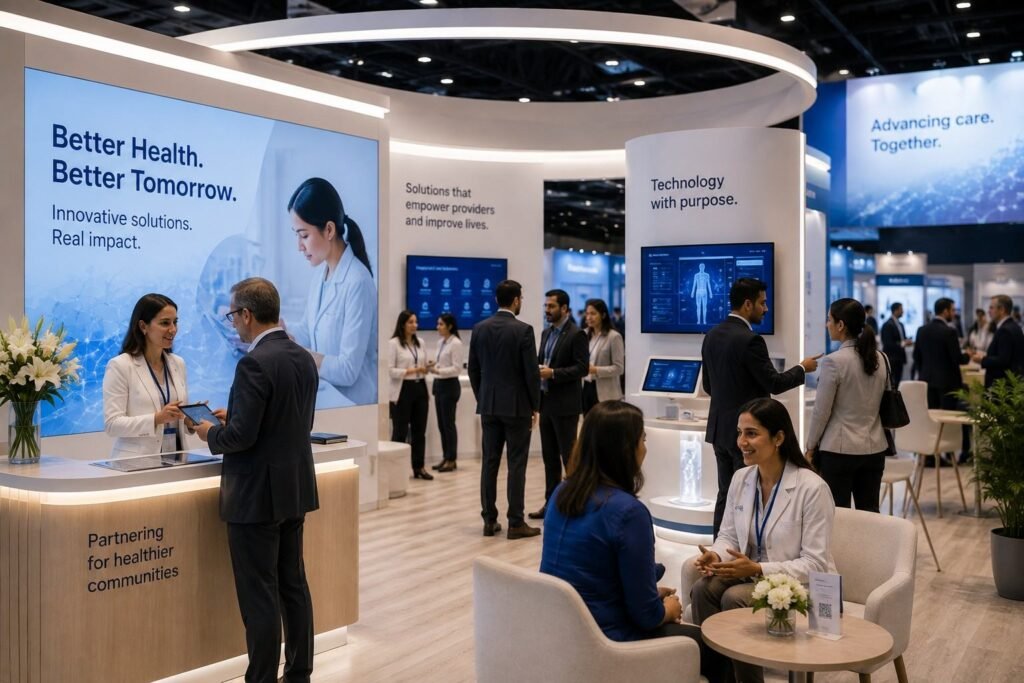
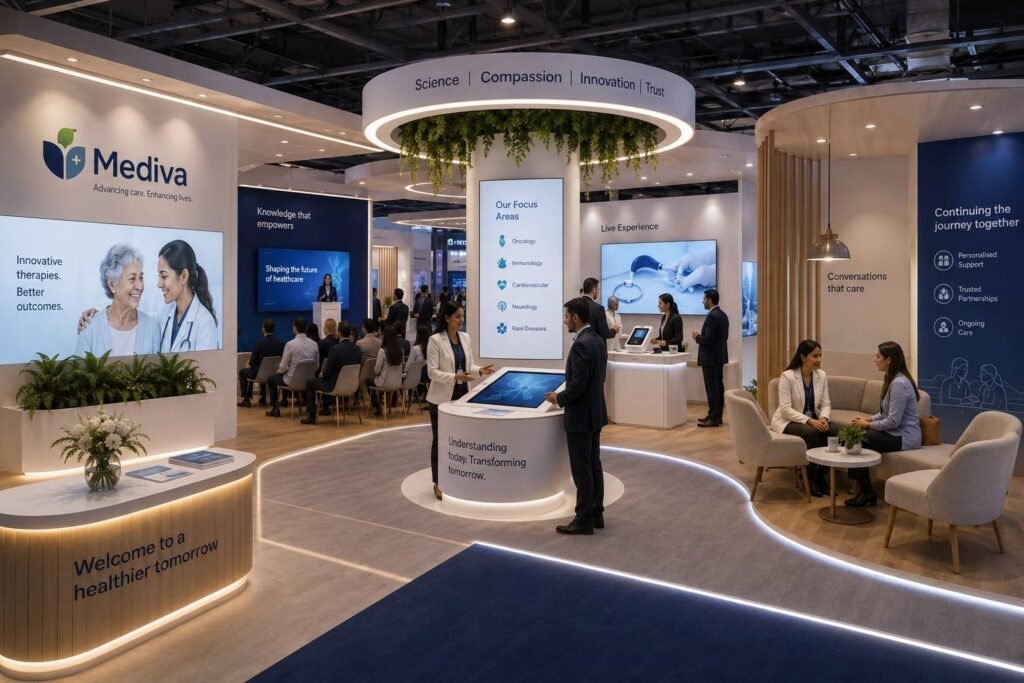
An exhibition booth is often the first physical interaction someone has with a healthcare brand at a trade show or industry event. That makes the overall environment important, not just the branding displayed on its walls. A well-planned healthcare exhibition experience can combine product displays, demonstrations, meeting areas, educational content and clear visitor pathways. Rather than treating the booth as a showroom, think of it as a guided environment. Every element should have a role, whether that is attracting attention, explaining an offering, facilitating a conversation or supporting a business objective.
4. Health Awareness Activations
Awareness campaigns can benefit from experiences that invite people to participate rather than simply observe. Depending on the subject and audience, an activation could include educational installations, guided activities, information stations or professionally managed awareness initiatives. The creative idea should remain appropriate to the healthcare topic. An experience that attracts attention but makes light of a serious subject can undermine the message, so tone and context need to be considered from the beginning.
5. Patient Education Environments
Healthcare information is not always easy to understand in a conventional presentation format. A dedicated education environment can give visitors more time and space to explore a subject. The content might be organised into simple stages, supported by visual explanations, demonstrations or guided conversations. This can be useful when the audience needs more context than a single poster or brochure can provide. The objective is not to replace professional healthcare advice. It is to make general information easier to access and understand within the appropriate setting.
6. Conference and Professional Engagement Experiences
Healthcare conferences bring together audiences with different levels of expertise and different reasons for attending. A static branded backdrop may establish visibility, but it does little to encourage meaningful interaction. Brands can use discussion areas, demonstrations, interactive presentations or carefully planned meeting spaces to create more purposeful engagement. For B2B healthcare brands, the experience can also help move conversations beyond the exhibition floor by creating an environment where professionals can discuss products, solutions or industry challenges in greater depth.
7. Interactive Technology Experiences
Technology can add depth to a healthcare activation when it solves a genuine communication challenge. Augmented reality, virtual demonstrations, touch-based interfaces, digital simulations and interactive screens can help audiences explore information that would otherwise be difficult to visualise.
But technology should have a clear job. If removing the technology would make the experience easier to understand, it may not be adding enough value. The strongest digital elements support the message rather than becoming the main attraction.
Choosing the Right Format
There is no single experiential format that works for every healthcare brand. The choice should begin with the audience and objective, not with the technology or visual concept. A useful question to ask is: What does the audience need to experience that a conventional advertisement, brochure or presentation cannot communicate as effectively? The answer can help determine whether the right solution is a demonstration, educational environment, exhibition experience, activation, professional engagement space or something entirely different.
How Booth and Event Design Influences Healthcare Brand Experience
A healthcare brand experience is shaped by more than the message on a screen or the logo on a wall. The physical environment influences how easily people find information, where they stop, what they explore and whether they feel comfortable enough to engage. This becomes particularly important at exhibitions, conferences and live activations, where visitors may have only a few minutes to decide whether to enter, interact or move on. Good healthcare brand experience design makes those decisions feel natural rather than forced.
Start With the Entrance
The entrance sets the tone before a visitor has spoken to anyone. It should quickly communicate what the brand is about and what someone can expect inside. If the entrance is blocked by furniture, crowded with messages or visually difficult to understand, the experience can feel less inviting. The goal is not necessarily to create the most dramatic entrance. It is to create one that gives people enough clarity and curiosity to take the next step.
Make Wayfinding Simple
Once visitors enter, they should not have to figure out where to go. Wayfinding can include directional signage, visual cues, floor layouts and the positioning of key zones. In a larger healthcare exhibition or event environment, these details become even more important because several activities may happen simultaneously. A visitor looking for a product demonstration should be able to identify it easily. Someone who wants a private conversation should not have to navigate through the main interaction area to find a suitable space.
Build a Clear Information Hierarchy
One of the easiest ways to make a healthcare experience overwhelming is to give every message the same visual importance. Instead, organise information into levels. The first layer should communicate the main idea quickly. Supporting information can then explain the offering in greater detail for visitors who want to explore further. This approach is especially useful when communicating technical healthcare products or services. Visitors should be able to understand the basic proposition without having to read every panel.
Give Interaction Its Own Space
Interaction works better when it has been considered as part of the layout rather than added after the design is finished. A product demonstration needs enough room for people to gather and observe. An interactive screen needs space for someone to use it without blocking the rest of the visitor flow. A guided conversation requires a setting where people can actually listen. These decisions may appear small on a floor plan, but they can have a significant effect on how smoothly an experience operates.
Consider Privacy
Healthcare conversations can sometimes involve personal or sensitive subjects. Even when an activation is focused on general awareness or brand communication, visitors may prefer not to discuss certain questions in the middle of a busy exhibition space. Creating designated conversation areas can provide a greater sense of comfort and discretion. Privacy should therefore be considered during the initial planning stage rather than treated as something to solve once the booth is already built.
Design for Accessibility
A healthcare experience should be usable by as many people as reasonably possible. That means considering more than physical access. Font sizes, contrast, audio, screen positioning, language and the amount of information presented can all affect how easily people engage with the experience. Accessibility should be part of the design brief from the beginning, particularly when the intended audience includes the general public.
Plan Visitor Flow
A visually attractive booth can still perform poorly if people do not know where to move next. Visitor flow should consider how people enter, where they pause, how they interact and how they leave. High-traffic areas should not become bottlenecks, while important demonstrations or conversations should not be hidden behind crowded zones. The aim is not to force every visitor through the same route. It is to create a layout that gives people enough freedom to explore while keeping the experience easy to navigate.
Position People as Carefully as You Position Displays
Staff placement can influence the experience just as much as physical design. If representatives are positioned directly at the entrance and immediately approach every visitor, some people may feel pressured. If staff are too far away, visitors may not know whom to approach when they have a question. A better approach is to create natural points of contact. Staff should be visible and approachable while allowing visitors enough space to explore independently.
End With a Clear Next Step
The final part of the experience deserves as much attention as the entrance. Visitors should understand what they can do next based on their interest. That might mean requesting more information, arranging a professional discussion, exploring another demonstration, or simply taking away educational resources. The next step should feel like a continuation of the experience, not an abrupt sales request.
Design Is Part of the Healthcare Experience
Good event and booth design does not compete with the healthcare message. It supports it. When layout, signage, information, interaction, accessibility, privacy and human engagement are planned together, the physical environment becomes easier to understand and more comfortable to use. That is the difference between a healthcare booth that simply looks branded and one that actually delivers a considered brand experience.
Common Healthcare Experiential Marketing Mistakes
A healthcare experience can have an impressive concept and still fall short if the execution does not match the audience or objective. Some problems are obvious, while others only become apparent when visitors start interacting with the space. Recognising these issues early can help healthcare brands avoid spending time and resources on an experience that looks good but does not work as intended.
1. Designing for Appearance Instead of the Audience
A visually striking installation may attract attention, but attention alone is not the objective. Healthcare brands sometimes focus heavily on large screens, elaborate structures or complex installations without first asking whether those elements help the intended audience understand or engage with the message.
Better approach: Start with the audience, objective and visitor behaviour. Let the creative concept support those requirements rather than the other way around.
2. Trying to Communicate Too Much
Healthcare brands often have a lot to say. Product features, technical information, research, services and brand credentials can all seem important. Putting everything into one experience, however, can make it difficult for visitors to identify what matters most.
Better approach: Establish one clear primary message and organise supporting information around it. Give interested visitors the option to explore further rather than presenting everything at once.
3. Making the Experience Feel Like a Sales Pitch
People may be willing to engage with a healthcare brand, but that does not mean they want every interaction to become a sales conversation. An experience that immediately pushes a product or asks for personal information can make visitors uncomfortable, particularly when the subject involves health.
Better approach: Give people a genuine reason to engage first. Education, demonstrations and useful conversations can create a more natural path toward further interaction.
4. Adding Technology Without a Clear Purpose
Interactive screens, virtual reality, augmented reality and other technologies can make an experience memorable. But technology should solve a communication problem rather than exist simply to create a visual attraction. If visitors spend more time figuring out how to use the technology than understanding the healthcare message, the experience has lost its focus.
Better approach: Define the role of each digital element before selecting the technology. If a simpler method communicates the idea more effectively, use it.
5. Ignoring Privacy and Comfort
A busy exhibition environment is not always suitable for every type of conversation. Visitors may want to ask questions privately, particularly when the subject is personal or sensitive. A lack of suitable space can discourage people from engaging at all.
Better approach: Consider private or semi-private conversation areas where appropriate, and ensure the team understands how to handle questions responsibly.
6. Forgetting Accessibility
An experience may technically be open to everyone while still being difficult for some people to use. Small details such as hard-to-read text, poor screen positioning, limited physical access, complicated instructions or a lack of language consideration can create unnecessary barriers.
Better approach: Include accessibility considerations in the original design brief instead of treating them as final-stage adjustments.
7. Measuring Only Footfall
A crowded booth can look successful from a distance. But a high visitor count does not necessarily tell a healthcare brand whether people understood the message, interacted meaningfully or took the intended next step.
Better approach: Match metrics to the campaign objective. Along with footfall, consider participation, dwell time, enquiries, feedback, understanding and qualified leads where relevant.
8. Forgetting What Happens After the Event
The experience may end physically when visitors leave, but the relationship does not necessarily have to end there. If a brand collects relevant enquiries but has no clear follow-up process, valuable conversations can be lost.
Better approach: Decide before the event how different types of interactions will be followed up. The post-event experience should remain consistent with the tone and expectations established during the activation.
Avoiding These Mistakes Starts With Better Planning
Most of these problems are not caused by a lack of creativity. They happen when strategy and execution are treated as separate stages. A healthcare experiential campaign works better when audience needs, communication goals, physical design, human interaction, technology and measurement are considered together from the beginning. That approach helps ensure the experience is not only attractive enough to draw attention, but useful enough to give people a reason to stay.
Planning Healthcare Experiential Campaigns in Mumbai and Across India
Planning a healthcare experiential campaign involves more than finding a venue and creating a branded setup. The experience needs to work across strategy, creative design, production and on-ground execution. This becomes especially important when a campaign is being delivered across different cities or event formats. A healthcare brand may need one consistent identity while adapting the experience to different venues, audiences and practical requirements.
Look for Strategic Experience Planning
The right experiential partner should begin by understanding the campaign objective, audience and communication challenge. Before discussing booth size, screens or fabrication, there should be clarity on what the experience is expected to achieve. This helps ensure that creative decisions are connected to a measurable purpose.
Consider End-to-End Execution
A strong concept still needs reliable execution. For exhibitions and live events, this can involve design, fabrication, technology, graphics, lighting, logistics, installation, on-site coordination and dismantling. Having these capabilities managed as part of one process can make it easier to maintain consistency between the approved concept and the final experience.
Evaluate Creative and Experience Design
Healthcare experiences need to balance brand visibility with usability. Look for a partner that can translate the brand message into the physical environment through visitor flow, information hierarchy, interaction zones, demonstrations and appropriate meeting spaces. The creative concept should make the experience easier to understand rather than simply making the space more visually elaborate.
Think Beyond a Single City
Mumbai is a major business and events hub, but healthcare brands often operate across multiple locations. If a campaign needs to travel from Mumbai to another Indian city, the experience should be designed with scalability in mind. Modular elements, adaptable layouts and consistent brand guidelines can help maintain the core concept while responding to different venue conditions.
Choose a Partner That Understands the Audience
Ultimately, the right healthcare experiential marketing agency in India should understand that the experience is not only about production. It needs to bring together audience insight, creative thinking, spatial design, execution and measurement. When these areas work together, healthcare brands have a stronger foundation for creating experiences that are relevant to the people they want to reach. For Young Mirchies, this approach fits naturally with the wider role of experiential marketing: bringing strategy, creative experience and execution together to create physical brand interactions that have a clear purpose.
How to Plan a Patient-Centred Healthcare Brand Experience
A patient-centred healthcare experience does not begin with a creative theme. It begins with understanding what the audience needs from the interaction and deciding what the brand wants that interaction to achieve. Whether the campaign is a healthcare exhibition, conference experience, awareness activation or product demonstration, the following process can help bring the strategy together.
1. Define the Audience
Be specific about who the experience is for. Patients, caregivers, doctors and healthcare decision-makers may interact with the same brand but have very different expectations. Identify the primary audience first, then consider whether secondary audiences also need to be accommodated.
2. Identify the Communication Barrier
Ask what is currently making the brand, product or message difficult to understand or engage with. It could be technical language, lack of awareness, too much information, limited product understanding or simply a lack of opportunities for meaningful interaction. Identifying the actual barrier gives the experience a clear problem to solve.
3. Set the Experience Objective
Decide what success should look like before developing the creative concept. The objective might be to increase awareness, demonstrate a product, generate professional conversations, educate an audience or encourage a specific next step. A clear objective also makes it easier to select the right KPIs later.
4. Establish the Core Message
A visitor should not have to spend several minutes inside an experience before understanding what the brand is communicating. Identify the one message that needs to come through most clearly. Supporting information can then be built around it. This creates a stronger foundation for the booth design, content, demonstrations and staff conversations.
5. Map the Experience
Think through what happens from the moment someone notices the experience to the point at which they leave. Consider: Notice → Enter → Explore → Interact → Ask → Understand → Act. The exact journey can vary depending on the campaign, but mapping it helps identify where visitors may become confused, disengaged or unsure about what to do next.
6. Design Meaningful Interaction
Choose interaction formats based on the objective rather than current technology trends. A demonstration may be more useful than a virtual reality installation. A guided conversation may be more valuable than another touchscreen. The best interaction is the one that helps the audience understand, explore or experience something relevant.
7. Plan for Accessibility and Privacy
These considerations should be built into the experience from the start. Review physical access, readability, language, screen placement, seating, movement and communication requirements. Where conversations may involve sensitive subjects, consider whether private or quieter areas are appropriate.
8. Prepare the Experience Team
The people representing the brand are part of the experience. Staff should understand the purpose of the campaign, the audience they are speaking with and how the different elements of the experience work. They should also know when to guide, when to explain and when to give visitors space to explore independently.
9. Decide How Success Will Be Measured
Choose metrics before the campaign begins. Depending on the objective, this could include visitor numbers, interactions, dwell time, feedback, enquiries, registrations, qualified leads or follow-up opportunities. Having this framework in place makes it easier to understand whether the experience delivered what it was designed to do.
10. Plan the Follow-Up
The experience should not become an isolated event. Decide what happens after visitors leave. Relevant contacts may need additional information, a professional conversation or another form of follow-up. For awareness-focused campaigns, the next step may simply be continued access to useful educational content.
Conclusion
Healthcare experiences are remembered for more than how they look. They are remembered for how clearly they communicate, how easy they are to navigate and how comfortable people feel while interacting with the brand. That is why healthcare experiential marketing should begin with the audience rather than the creative concept. A well-planned exhibition, activation or healthcare event can turn complex information into something easier to understand and create meaningful opportunities for interaction. For healthcare brands in India, the opportunity is to build experiences that bring together strategy, thoughtful design, human interaction and measurable objectives.
When every part of the experience has a purpose, the brand can move beyond simply attracting attention and create a more credible, relevant connection with its audience. At Young Mirchies, we bring strategy, creative experience design and execution together to help brands create purposeful physical experiences. Whether it is a healthcare exhibition, conference or brand activation, the focus remains on designing an experience that gives people a reason to engage and something meaningful to take away.
FAQs
1. What is healthcare experiential marketing?
Healthcare experiential marketing uses live, interactive or immersive experiences to help healthcare brands communicate with their audiences. It can include exhibitions, conferences, health-awareness activations, product demonstrations and educational experiences designed around patients, healthcare professionals, caregivers or other relevant audiences.
2. How does experiential marketing build trust in healthcare?
Experiential marketing can support trust by giving people opportunities to understand a healthcare brand through direct interaction rather than promotional communication alone. Clear information, useful demonstrations, knowledgeable conversations and a well-organised environment can make the brand easier to understand and engage with.
3. Why is patient experience important for healthcare brands?
Patient experience influences how people perceive their interactions with a healthcare organisation. Factors such as communication, accessibility, ease of navigation and human interaction can shape whether an experience feels clear and supportive. For brands, improving these touchpoints can contribute to a more consistent overall brand experience.
4. What are examples of healthcare experiential marketing?
Examples include healthcare exhibition booths, medical-device demonstrations, health-awareness activations, interactive education zones, conference experiences, patient education environments and technology-led brand activations. The appropriate format depends on the audience, campaign objective and type of information being communicated.
5. How can healthcare brands improve patient engagement?
Healthcare brands can improve engagement by making information easier to understand, creating opportunities for relevant interaction and reducing unnecessary friction. Experiences should give people a clear reason to participate while allowing them to explore information at a comfortable pace.
6. What is patient-centred healthcare marketing?
Patient-centred healthcare marketing puts the needs, expectations and experience of the intended audience at the centre of communication and engagement. Instead of focusing only on what the brand wants to say, it considers what people need to understand, how they prefer to interact and what could make the experience easier for them.
7. How do you measure healthcare experiential marketing?
Healthcare experiential marketing can be measured through a combination of reach, engagement, experience and business metrics. Depending on the campaign, these may include footfall, interactions, dwell time, feedback, enquiries, registrations, qualified leads and follow-up opportunities. The most useful KPIs should be connected to the campaign’s original objective.
8. Is experiential marketing suitable for healthcare exhibitions?
Yes. Experiential marketing can be particularly useful at healthcare exhibitions because brands have an opportunity to demonstrate products, explain complex solutions, facilitate professional conversations and create a more engaging environment than a static display. The experience should still be designed around the expectations and needs of the exhibition audience.
9. How can healthcare brands use experiential marketing in India?
Healthcare brands in India can use experiential marketing across exhibitions, conferences, awareness campaigns, product demonstrations and public-facing activations. Campaigns should account for differences in audience knowledge, language, accessibility, event formats and local context while maintaining consistent brand communication.