Engineering Experiential Marketing: How Live Product Demonstrations Influence B2B Buyers

Engineering Experiential Marketing: How Live Product Demonstrations Influence B2B Buyers

A technical product can look impressive on a specification sheet and still be difficult for a B2B buyer to evaluate. Features, diagrams and presentations explain what a product is designed to do, but they do not always show how it performs in a real situation. This is where engineering experiential marketing becomes valuable. Live product demonstrations give buyers an opportunity to see a product in action, understand its practical application and ask questions while the experience is happening. Instead of simply describing technical capability, companies can demonstrate it. For engineering and industrial brands, this matters because B2B purchasing decisions often involve several stakeholders. Engineers may want to understand performance, operations teams may focus on usability, procurement may consider value, while senior decision-makers look at the wider business impact. A well-planned demonstration brings these perspectives into one experience. It can help buyers move from simply seeing a product to understanding, evaluating and trusting it before deciding what to do next.

What Is Engineering Experiential Marketing?

Engineering experiential marketing uses live, interactive experiences to help B2B audiences understand complex products, technologies and solutions. Instead of relying only on brochures, presentations or static displays, it gives buyers an opportunity to see how a product works and understand where it fits into a real-world application. For engineering companies, the experience needs to go beyond simply making a booth or event look impressive. The focus should be on making technical information easier to evaluate. A working machine, product simulation, interactive model or guided demonstration can give buyers something concrete to observe and discuss. This approach is particularly useful when a product has complex functionality or a high-value purchase decision. Buyers can ask technical questions, explore relevant features and connect product capabilities with their own operational requirements.  In simple terms, engineering experiential marketing turns technical information into a product experience. The objective is not just to attract attention, but to help the right B2B buyers understand the product well enough to consider taking the next step.

Why Live Product Demonstrations Matter in B2B Marketing

Engineering products are often easier to understand when buyers can see them working rather than reading about them. A specification sheet can explain dimensions, capacity or performance, but a live demonstration can show how those features translate into actual use. This is especially important in B2B marketing, where the purchase may involve significant investment, technical evaluation and several decision-makers. Buyers need enough evidence to determine whether a product can solve a specific problem and perform reliably in their environment.


Turn Technical Features Into Practical Value

A live product demonstration connects a feature with its practical purpose. Instead of simply stating that a machine offers a particular capability, the demonstration can show how that capability works in a realistic situation. This helps buyers answer a more useful question: “How will this work for us?”


Give Buyers Something They Can Evaluate

Seeing a product operate creates a more concrete discussion between the buyer and the brand. Engineers can ask technical questions, operations teams can explore applications, and commercial stakeholders can discuss value and implementation. The demonstration therefore becomes more than an attraction at an exhibition or event. It becomes an opportunity for buyers to evaluate the product against their own requirements.


Build Confidence Through Visible Proof

B2B buyers often need confidence before progressing with a complex purchase. A live demonstration cannot answer every question, but it can provide visible evidence of functionality and create direct access to people who understand the technology. That combination of seeing the product work and being able to question the experts behind it can make the buying conversation more meaningful.


Support Different Stages of the Buying Journey

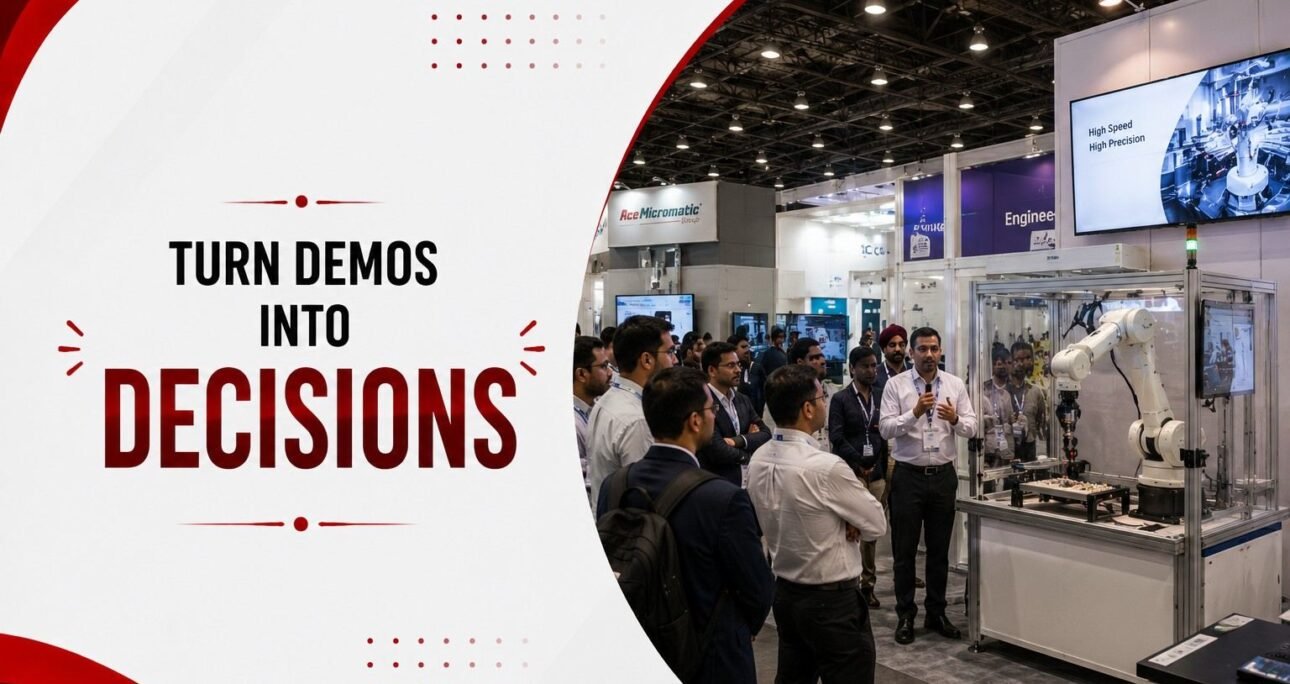
A demonstration can also serve different purposes depending on where a buyer is in the decision process. A first-time visitor may need a simple introduction, while an active prospect may want a detailed technical discussion or a specific use-case demonstration. The strongest B2B demonstrations are therefore not designed simply to attract crowds. They are designed to help the right buyers move from interest to understanding and from understanding to evaluation.

How Live Product Demonstrations Influence B2B Buyers
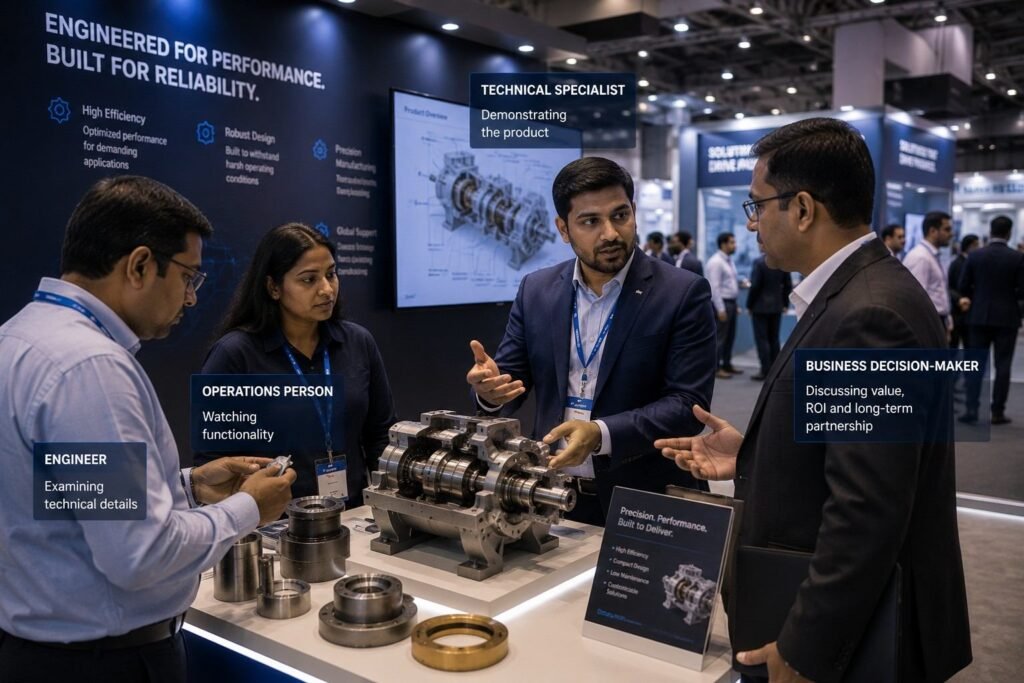
Live engineering product demonstration

A live demonstration can change the way a B2B buyer evaluates an engineering product. Instead of asking buyers to imagine how a product might perform, it gives them something tangible to observe, question and assess. The impact is not simply about creating an engaging event experience. It is about reducing uncertainty and helping buyers make a more informed evaluation.


They Make Complex Products Easier to Understand

Engineering products can involve technical processes, components and specifications that are difficult to communicate through static marketing material. A demonstration can break this complexity into something buyers can see and follow. For example, showing how a machine operates or how a technical system responds under a specific condition can make its functionality easier to understand than a written explanation alone.


They Turn Product Claims Into Visible Proof

Marketing materials describe what a product can do. A demonstration allows buyers to see those capabilities in practice. This distinction matters when buyers are comparing technical solutions. Showing a feature in action can make the conversation more concrete and give visitors a better basis for evaluating the product.


They Show Real-World Performance

A strong demonstration should not focus only on individual features. It should show how the product can be used to address a realistic business or operational requirement. This helps buyers connect technical performance with their own environment. Instead of thinking only about specifications, they can consider questions such as:

  • Can it solve the problem we have?
  • How would our team use it?
  • What would implementation involve?
  • What practical value could it deliver?


They Create Space for Technical Questions

B2B buyers rarely make complex engineering decisions based on a demonstration alone. They often need clarification from technical experts. A live experience creates an opportunity for those conversations to happen immediately. Engineers can ask detailed questions, operations teams can discuss applications, and decision-makers can explore commercial implications. That direct interaction can be difficult to replicate through a brochure or standard presentation.


They Build Confidence Across the Buying Committee

Engineering purchases often involve several stakeholders, each with different priorities. A useful demonstration can give each person a reason to engage with the product. The engineer may focus on performance. The operations team may consider practical use. Procurement may examine value, while management may look at the wider business impact. When the experience addresses these different needs, it can help create a more informed and confident buying discussion.


They Connect Technical Features With Business Outcomes

The most effective demonstrations do not stop at showing how something works. They explain why that functionality matters. A technical feature becomes more valuable when buyers understand how it can improve an operation, solve a problem, reduce complexity or support a business objective. That is where experiential marketing becomes more than a product display. The demonstration creates a bridge between technical capability and business value, helping B2B buyers understand not only what a product does, but why it may matter to their organisation.

What Makes an Effective Engineering Product Demonstration?

A live product demonstration should do more than attract visitors. It should help the right B2B buyers understand the product, explore its relevance and decide whether it deserves further consideration. The strongest demonstrations are built around the buyer’s needs rather than the number of features a company wants to display.


Start With the Buyer’s Problem

Begin with the problem the product is designed to solve. Buyers are more likely to pay attention when they can immediately see how the demonstration relates to a challenge they recognise. Instead of listing every specification, identify the use case that matters most and build the demonstration around it.


Demonstrate a Realistic Use Case

Whenever possible, show the product in a situation that reflects how it will actually be used. A realistic scenario helps buyers understand the connection between product functionality and their own operations. For engineering products, this can be more useful than demonstrating isolated features without context.


Keep the Technical Explanation Relevant

Technical buyers expect substance, but more information does not automatically create a better experience. The demonstration should explain the technical details that help buyers evaluate performance, application and suitability. The goal is to simplify the path to the technical information, not simplify the technical information itself.


Make Interaction Meaningful

If the product allows it, give visitors an opportunity to interact with the technology, explore specific functions or ask questions around their own requirements. Interaction should have a purpose. A hands-on activity that has no connection to the product’s actual value can create attention without creating understanding.


Have the Right Experts Available

Complex engineering products often generate questions that marketing teams alone cannot answer. Technical specialists should be available to explain functionality, limitations, applications and performance. This also creates a stronger conversation between the buyer and the people who understand the product at a deeper level.


Connect Features to Business Outcomes

Every important technical feature should ultimately answer a business question: Why does this matter to the buyer? A demonstration becomes more persuasive when it connects product capability with outcomes such as operational efficiency, reliability, productivity or suitability for a particular application.


Give the Buyer a Clear Next Step

The experience should not end when the demonstration finishes. Depending on the buyer’s level of interest, the next step could be a technical discussion, product consultation, site visit, trial, quotation or follow-up meeting. A well-designed engineering demonstration therefore creates a natural progression: Problem → Demonstration → Interaction → Evaluation → Next Step. That makes the experience useful not only for engagement, but also for moving qualified B2B conversations forward.

How Different B2B Buyers Experience the Same Demonstration

An engineering product demonstration rarely has just one audience. A typical B2B buying group may include engineers, operations professionals, procurement teams and senior decision-makers, each looking at the same product from a different perspective. A successful demonstration recognises these differences without making the experience complicated. The product remains the same, but the conversation around it can change according to what each stakeholder needs to evaluate.


Engineers: “Will It Perform as Expected?”

Technical buyers are likely to focus on specifications, functionality, integration, performance and limitations. They may want to understand how the product behaves under specific conditions or how it compares with an existing solution. Having a technical expert available can make these conversations more useful than a purely sales-led presentation.


Operations Teams: “Will It Work for Our Environment?”

Operations professionals are often more concerned with practical application. They may want to know how the product fits into existing processes, how teams will use it and what implementation could involve.  Demonstrating the product in a realistic operating scenario can help answer these questions.


Procurement: “Does the Value Justify the Investment?”

Procurement teams may look beyond technical performance to consider cost, reliability, scalability, service and overall value. The demonstration should therefore connect product capabilities with measurable or practical business benefits rather than focusing only on technical features.


Management: “What Business Problem Does It Solve?”

Managers need to understand how the product contributes to broader operational goals. They may be less interested in every technical detail and more interested in productivity, efficiency, reliability or business impact. A concise explanation of the outcome can help translate technical performance into commercial relevance.


Executives: “Why Does This Matter Strategically?”

Senior decision-makers often need a wider perspective. They may want to understand how the solution supports growth, competitiveness, innovation or long-term business priorities. A strong demonstration can provide this context without overwhelming executives with unnecessary technical detail.


One Product, Different Conversations

The strongest engineering experiential marketing experiences do not create separate demonstrations for every stakeholder. Instead, they create a flexible experience that allows different buyers to explore the aspects most relevant to them. The goal is simple: give every decision-maker enough relevant evidence to understand where the product fits within their own priorities. When a demonstration achieves that, it becomes more than a memorable event experience. It becomes a useful part of the B2B buying process.

Where Engineering Product Demonstrations Work Best
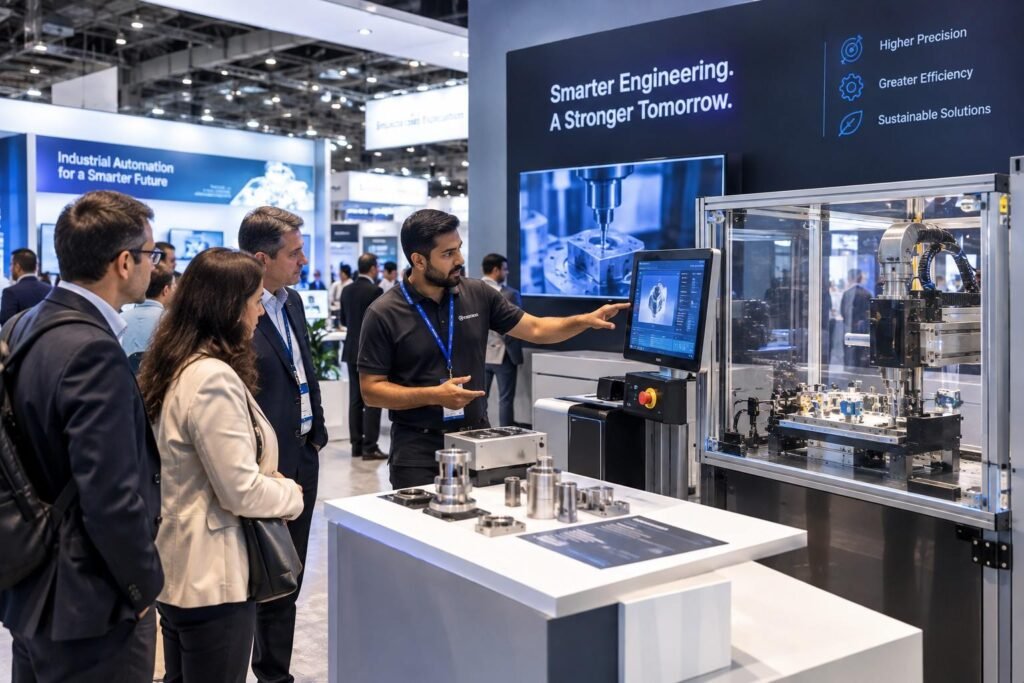
Industrial product demonstration

Live product demonstrations can work across different B2B environments, but the format should match the product, audience and objective. A complex industrial machine may need a different demonstration approach from a software-enabled engineering solution. The most effective setting is one where buyers have enough time and context to understand the product and discuss how it could apply to their needs.


Engineering Exhibitions

Exhibitions give engineering companies direct access to technical professionals, procurement teams and business decision-makers in one environment. A working product or interactive demonstration can help a booth stand out from static displays while giving visitors a practical reason to start a conversation. Demonstrations can also help sales teams identify visitors who have a genuine interest in the product.


Industrial Trade Shows

Trade shows are particularly useful when buyers are actively comparing technologies and suppliers. A live demonstration allows companies to show specific capabilities rather than relying entirely on brochures or sales presentations. It can also create a natural starting point for more detailed technical discussions.


Technical Conferences

Conferences are useful when the audience is looking for knowledge as well as products. A demonstration can support a technical presentation, workshop or expert discussion by showing how a technology works in practice. The focus should remain educational rather than turning the demonstration into a conventional sales pitch.


Product Launches

A live demonstration can make a new engineering product easier to understand during a launch. Instead of announcing features through slides alone, companies can show the product performing a relevant task. This gives attendees something concrete to evaluate and creates a stronger connection between the product announcement and its practical value.


Customer Experience Centres

For high-value or technically complex products, a dedicated experience centre can provide more time for detailed demonstrations. Unlike a busy exhibition environment, buyers can explore specific use cases, discuss technical requirements and have deeper conversations with product specialists.


Dealer and Distributor Events

Demonstrations can also help channel partners understand products before they take them to their own customers. A hands-on experience gives distributors and dealers a stronger understanding of product functionality, applications and key selling points.


B2B Corporate and Industry Events

Corporate events, private showcases and industry gatherings can provide a more focused environment for demonstrations, particularly when the audience consists of selected accounts or decision-makers. The advantage is greater control over the experience and more opportunity for meaningful one-to-one conversations. Ultimately, the best location is not simply the one with the largest audience. It is the environment where the right buyers can see the product, ask relevant questions and evaluate its potential application.

Live vs Digital Product Demonstrations: When to Use Each


FactorDigital Product DemonstrationLive Product Demonstration
Best forProduct discovery and remote audiencesProduct evaluation and deeper engagement
Audience reachWider, geographically distributed audiencesMore targeted, location-based audiences
Product typeSoftware, connected technologies, digital solutionsMachinery, equipment and physical engineering products
InteractionClicks, virtual walkthroughs, videos and simulationsHands-on exploration and face-to-face discussion
Technical questionsAddressed through content or virtual sessionsAnswered directly by technical experts
Real-world performanceOften shown through video or simulationCan be observed directly in operation
Buyer stageAwareness and early considerationConsideration and evaluation
ScalabilityEasy to repeat and distributeRequires physical setup and expert support
Follow-upEasy to revisit and share after an interactionCan lead directly to meetings, consultations or trials
Best approachBuild awareness and educateDemonstrate, validate and build confidence

How to Plan a Product Demonstration Before, During and After an Event

A successful product demonstration does not begin when the event opens. The experience needs to be planned around the buyer journey before, during and after the event. Without this planning, even an impressive demonstration can generate attention without creating meaningful B2B opportunities.


Before the Event: Prepare for the Right Buyers

Start by identifying who the demonstration is intended to attract and what they need to understand. The preparation should include:

  • Identifying target accounts and buyer roles
  • Defining the main problem the demonstration will address
  • Selecting realistic product use cases
  • Preparing technical and visual content
  • Training sales and technical teams
  • Defining what qualifies as a valuable interaction

The objective is not simply to attract more visitors. It is to make the experience relevant to the buyers who matter most.


During the Event: Turn Attention Into Useful Conversations

Once the event begins, the demonstration should create opportunities for meaningful interaction. Staff can:

  • Ask visitors about their requirements
  • Adapt the demonstration to relevant use cases
  • Answer technical questions
  • Identify buying intent
  • Capture important visitor information
  • Schedule follow-up conversations

The demonstration should feel like a conversation rather than a rehearsed sales pitch. A visitor who has a specific technical challenge may need a different demonstration from someone who is simply exploring the technology.


After the Event: Continue the Experience

The buyer journey does not end when the demonstration finishes. Follow-up should reflect what happened during the interaction. A technical prospect may need detailed specifications or a technical meeting, while another buyer may need a product overview or commercial discussion. Useful follow-up actions include:

  • Segmenting leads according to interest and buying stage
  • Sharing relevant technical information
  • Following up on specific questions
  • Scheduling product consultations or trials
  • Connecting qualified opportunities with the sales team
  • Tracking opportunities through the CRM

How to Measure B2B Product Demonstration ROI

A product demonstration should not be judged only by how many people visited the stand or watched the presentation. For B2B engineering brands, the more useful question is whether the experience created meaningful conversations and contributed to future business opportunities. The right metrics should connect activity with buyer intent and commercial outcomes.


Measure Demonstration Engagement

Start by understanding how people interacted with the experience. Useful indicators include:

  • Number of demonstration interactions
  • Time spent with the product
  • Questions asked
  • Repeat visits
  • Content or technical material requested

These metrics show whether the demonstration attracted genuine attention, but they should not be treated as proof of business impact on their own.


Measure Lead Quality

A smaller number of relevant conversations can be more valuable than a large number of casual visitors. Track:

  • Qualified conversations
  • Target-account interactions
  • Technical enquiries
  • Meetings requested
  • Sales-qualified leads
  • Product trials or consultations

This helps separate general event traffic from buyers who have a genuine need.


Measure Pipeline Influence

For higher-value engineering products, the strongest measurement often comes after the event. Track whether demonstration participants progress into: Meetings → Opportunities → Proposals → Negotiations → Sales. Not every opportunity will close immediately, so the demonstration’s contribution should be considered across the wider sales cycle.


Connect Event Data With Sales Follow-Up

Marketing and sales teams should agree in advance on what happens to leads after the demonstration. When event interactions are connected with CRM and sales activity, teams can identify which conversations developed into opportunities and which did not. This creates a more useful picture of ROI than simply counting visitors.


Focus on Quality, Not Just Volume

A successful engineering demonstration does not necessarily mean a crowded event space. If the experience generates fewer but more relevant conversations with engineers, procurement teams, operations professionals or decision-makers, it may create greater commercial value than a high-traffic activation with little buyer intent. The goal is therefore to measure the complete journey: Engagement → Qualified Conversation → Meeting → Opportunity → Pipeline → Revenue. This approach helps engineering companies understand whether their experiential marketing investment is creating genuine buyer value and supporting measurable business outcomes.

Engineering Experiential Marketing in India

India’s engineering and manufacturing ecosystem creates strong opportunities for brands to use experiential marketing to explain complex products in more practical ways. Engineering exhibitions, industrial trade shows, technical conferences and product launches bring together buyers who often want to understand how a solution works before considering it further. For these audiences, a live demonstration can make a technical conversation more useful. Instead of relying only on specifications or sales material, companies can show product functionality, explain relevant applications and answer questions directly.


This is particularly valuable when several stakeholders are involved in the buying process. Engineers may want technical details, operations teams may focus on implementation, while procurement and business leaders may be more interested in value and long-term suitability. Indian engineering brands can therefore use live demonstrations across exhibitions, industry events, customer showcases and product launches to create more meaningful B2B interactions. The important point is that GEO relevance should not mean simply adding city names or repeating “India” throughout the content. A stronger local strategy comes from understanding the country’s engineering audience, event environment and B2B buying process and creating experiences that address those real needs.

Conclusion

For engineering brands, experiential marketing is most effective when it helps buyers understand something they cannot fully evaluate from a brochure or presentation. A live product demonstration allows B2B buyers to see, understand, interact with, evaluate and trust a product before deciding what to do next. It can turn technical functionality into a practical conversation and help different stakeholders assess the product from their own perspective. The strongest demonstrations are not simply designed to attract attention. They are built around a buyer problem, supported by relevant technical expertise and connected to a clear next step. When planned as part of the wider B2B buyer journey, live product demonstrations can become more than an event attraction; they can become a valuable tool for helping engineering companies create meaningful buyer conversations and move qualified opportunities forward.

FAQs

1. Is experiential marketing effective for engineering companies?

Yes, particularly when a product is complex, high-value or difficult to explain through static content. Experiential marketing gives engineering companies a way to demonstrate functionality, explain applications and create direct conversations with technical and commercial decision-makers.

The demonstration should focus on a real buyer problem, not simply a list of product features. Show how the product works in a relevant situation, explain the technical reasoning behind its performance and connect that performance to the buyer’s operational or business requirements.

They should be technically accurate but easy to follow. Simplifying the technical information too much can reduce credibility with engineering audiences. Instead, the experience should make the path to that information clearer, allowing technical buyers to explore deeper details when they need them.

A useful demonstration gives visitors a reason to stop, watch and participate. Instead of displaying a product passively, companies can demonstrate a specific application, solve a realistic problem or show a capability that is difficult to communicate through static graphics.

The right person depends on the audience and product. A marketing or sales professional can guide the overall experience, but a technical specialist should be available when the demonstration involves detailed engineering questions, performance requirements or product limitations.

A common mistake is designing the demonstration around what the company wants to show rather than what the buyer needs to understand. Demonstrating too many features can overwhelm visitors. A focused use case with a clear explanation is often more useful.

Yes. A demonstration can create the initial conversation, reveal buyer requirements and identify genuine purchase intent. The commercial value increases when the interaction is followed by a relevant technical discussion, consultation, trial, proposal or other clearly defined next step.

Interaction should relate directly to the product. Depending on the technology, this could include hands-on controls, simulations, configuration exercises, testing a use case or allowing visitors to explore specific functions. The objective should be better understanding, not interaction for its own sake.

Not always. Some products are better explained through simulations, videos or digital walkthroughs, particularly when the product is too large, hazardous, inaccessible or difficult to operate in an event environment. In those cases, a hybrid experience can combine digital explanation with physical product elements.

Success depends on the objective. For awareness, engagement may matter most. For a B2B sales objective, stronger indicators include qualified conversations, technical enquiries, meetings, opportunities and pipeline influence. The measurement should reflect what the demonstration was designed to achieve.