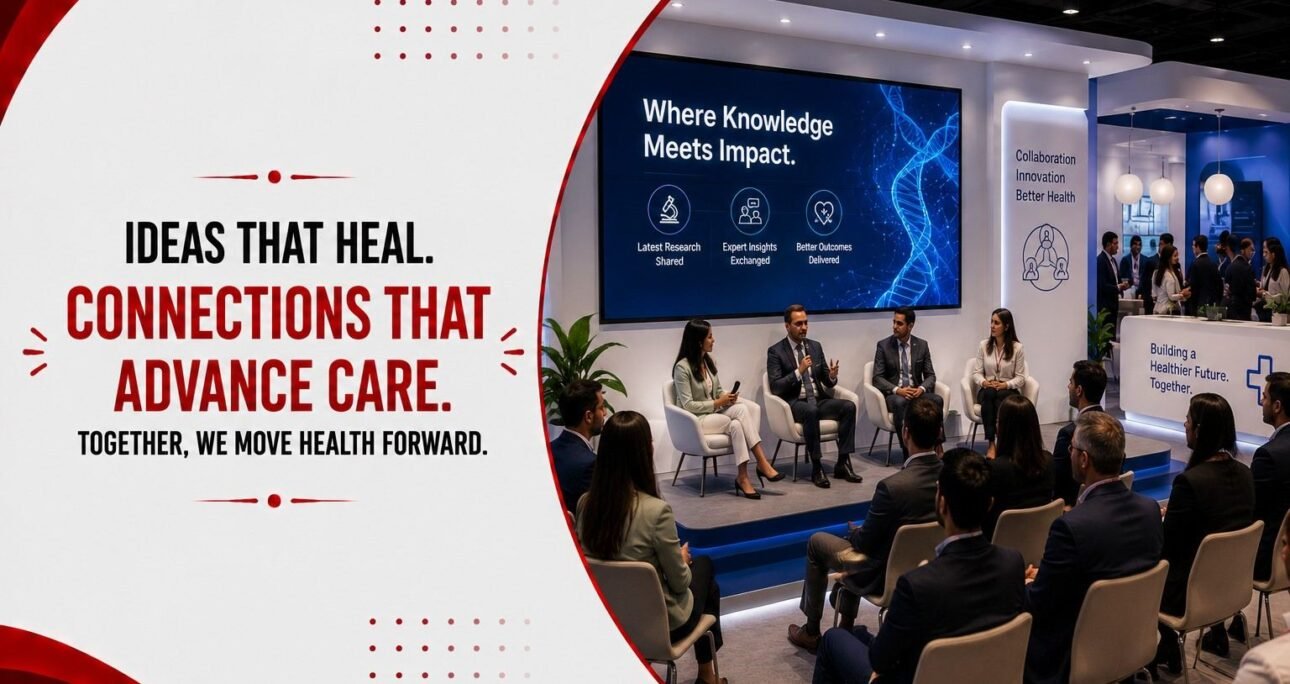
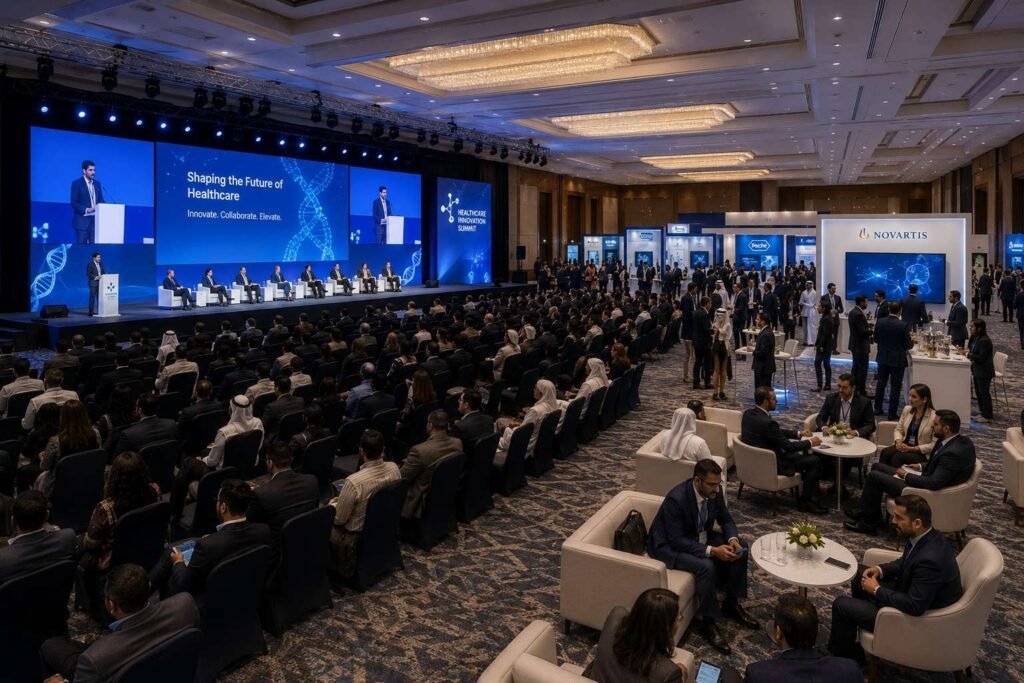
A healthcare conference can have respected speakers, valuable research and a well-planned agenda, yet the experience can still fall flat if the environment makes it difficult for people to listen, move around or connect. A crowded registration area, poor visibility from the back rows or a networking space that feels like an afterthought can affect how attendees experience the entire event. This is why conference design needs to go beyond the stage and branding. For healthcare and pharma events, the environment should support the way doctors, researchers, healthcare professionals, industry leaders and other delegates learn and interact. From the layout of the main auditorium to breakout rooms, networking areas, exhibition spaces and digital touchpoints, every element can have a practical role. Good healthcare conference planning brings these elements together so that the setting supports the content, rather than competing with it. The result is an environment where medical knowledge is easier to access, conversations happen naturally, and attendees have a clearer reason to stay engaged.
What Makes a Healthcare Conference Environment Effective?
A good healthcare conference environment should make one thing easy: participation. Attendees should be able to see the stage, follow presentations, move between sessions and find opportunities to connect without thinking about the setup behind it. That means looking beyond the stage. Clear wayfinding, comfortable session spaces, reliable AV, practical networking areas and thoughtful zoning all contribute to how people experience the event. For pharma and healthcare conferences, the environment also needs to reflect professional credibility. The design should support the scientific programme and brand presence without allowing either to overpower the attendee experience. When everything works together, the venue becomes an active part of the conference, not just the place where it happens.
Why Conference Design Matters for Medical Knowledge Exchange
Medical conferences are built around the exchange of information, but that exchange does not happen only from the stage. Attendees learn through presentations, questions, informal conversations, workshops and discussions with people from different areas of the healthcare industry. The environment needs to support all of these interactions. Consider a large scientific session. If attendees cannot see the presentation clearly or hear the speaker properly, the quality of the content becomes less relevant because part of the audience is already struggling to follow it. The same applies to smaller sessions. A rigid or uncomfortable setup can make discussion feel formal when the objective is to encourage participation.
The spaces between sessions matter too. A well-placed networking area can give delegates a natural opportunity to continue a conversation after a presentation. Similarly, an exhibition or product demonstration area can create another point of interaction between healthcare professionals and industry representatives. Good medical conference design therefore connects different parts of the attendee experience. It creates an environment where information can move from presentation to discussion, discussion to connection, and connection to further learning.
The 6 Principles of Medical Conference Environment Design
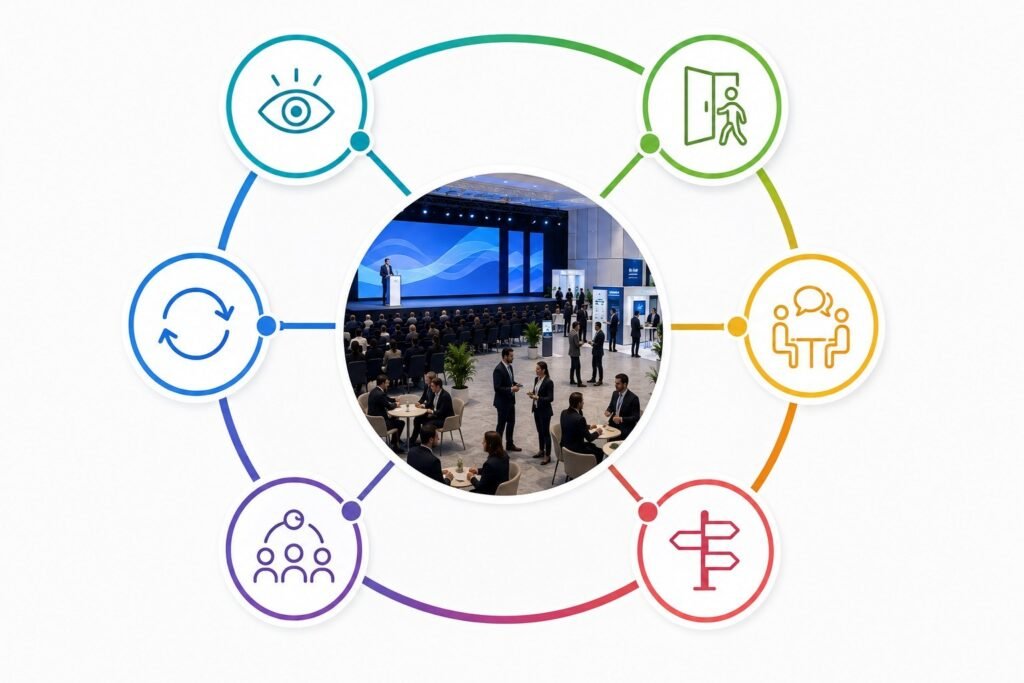
A medical conference has several moving parts happening at once. People may be listening to a keynote, moving to a breakout session, meeting colleagues, visiting a pharmaceutical display or looking for a quiet place to continue a discussion. The environment needs to accommodate all of this without making the event feel complicated. A useful way to approach medical conference design is through six principles: Visibility, Accessibility, Interaction, Navigation, Connection and Continuity. Each addresses a different part of the attendee experience.
1. Visibility
In a conference environment, what attendees cannot see is just as important as what they can see. A speaker standing clearly on stage may still be difficult to follow if presentation screens are poorly positioned or lighting creates glare. Visibility should therefore be considered from the audience’s perspective. Seating capacity, viewing distance, screen size, stage height and lighting need to work together. For larger conferences, relying on one central screen may not be enough.
For example: imagine a pharmaceutical conference with several hundred delegates in a large auditorium. Attendees seated towards the sides or back may struggle to follow a detailed presentation on a single central screen. Additional side screens can improve visibility without requiring the entire audience to constantly look towards the centre. The same principle applies outside the auditorium. Important information such as session timings, room numbers and exhibition directions should be visible without attendees having to search for it.
2. Accessibility
Accessibility should be considered as part of the initial conference layout rather than added once the design is complete. The objective is to make the event usable and comfortable for people with different mobility, sensory and access requirements. This includes accessible entrances, suitable pathways, seating options, registration counters and convenient access to session rooms. It also means avoiding layouts where furniture, branding structures or temporary installations create unnecessary obstacles.
For example: if a breakout room is located on a different level, the route to it should be clear and accessible. An attendee should not have to depend on staff assistance simply because the event layout overlooked basic access requirements. A well-planned environment also benefits everyone. Wider pathways, clear information and uncluttered spaces make it easier for delegates to move around, particularly during busy session changes.
3. Interaction
The format of the session should influence the way the space is designed. A keynote presentation may work well with theatre-style seating, but the same arrangement may not be ideal for a workshop where active participation is expected. Healthcare professionals often attend conferences to exchange experiences, ask questions and discuss new developments. The environment should give them opportunities to do that.
For example: a clinical case discussion can use a more flexible seating arrangement that allows participants to see the speaker and each other. A workshop may include smaller discussion tables, interactive displays or digital polling to make participation easier. Even simple changes can affect how comfortable people feel about contributing. The goal is not to make every session interactive, but to make the layout appropriate to what the session is trying to achieve.
4. Navigation
Large healthcare and pharma conferences can involve multiple rooms, stages, exhibition areas and networking zones. When these spaces are poorly connected, attendees can become frustrated or miss sessions. Good navigation starts with the overall zoning of the venue. Spaces that people need to visit frequently should be easy to identify and reach. Signage then reinforces that structure.
For example: if three breakout sessions begin at the same time, attendees should be able to identify their room quickly from the main circulation area. Consistent room names, directional signs and digital displays can reduce confusion during busy transitions.
5. Connection
Medical conferences are not only about presentations. They also create opportunities for healthcare professionals, researchers, pharmaceutical companies and industry partners to connect and exchange ideas. The design should therefore include spaces that support meaningful conversations without interfering with the main programme. Networking lounges, informal seating areas, meeting tables and dedicated discussion zones can help attendees continue conversations before or after sessions.
For example: after a panel discussion on new treatment approaches, attendees may want to discuss the topic with colleagues or speakers. A nearby networking area with comfortable seating can make that interaction easier than expecting people to have detailed conversations in crowded corridors. The placement of these spaces also matters. Networking areas should be accessible but positioned away from high-traffic routes where conversations may be constantly interrupted.
6. Continuity
A medical conference should feel consistent from the moment attendees arrive until they leave. This means connecting the physical environment, branding, technology and attendee experience rather than treating each area as a separate space. Consistent visual elements, signage, stage design, digital screens and exhibition displays can help create a unified experience. Technology should also support this continuity by making information easy to access across different parts of the event.
For example: if the conference uses a particular colour system to identify different tracks, the same colours can appear on room signs, digital displays, session schedules and floor maps. Attendees can then recognise information quickly without having to learn a new system in every area. Continuity also applies to the transition between sessions. Clear announcements, visible schedules and well-planned movement routes can help the event progress smoothly without creating unnecessary interruptions.
Designing the Healthcare Conference Around the Attendee Journey
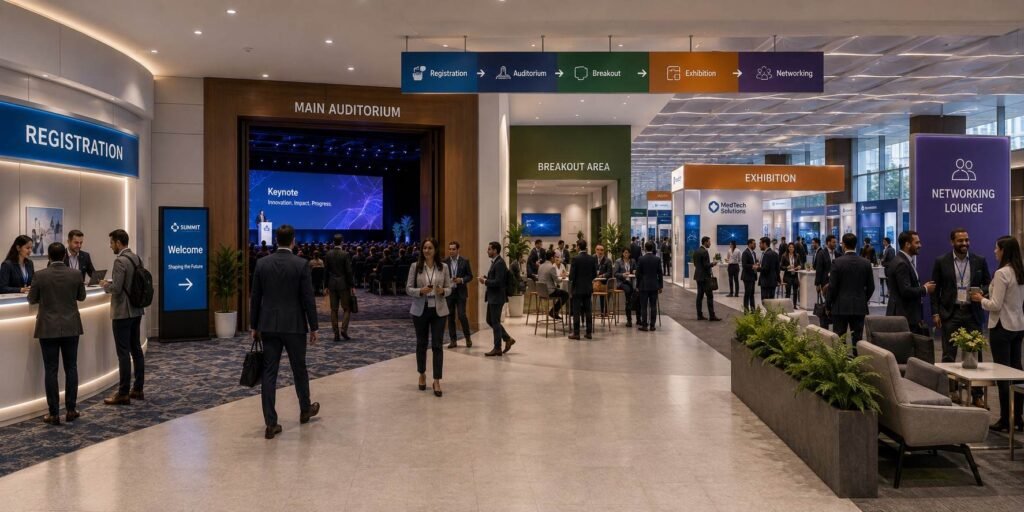
A healthcare conference is experienced in stages, not as one continuous event. An attendee may begin by looking for the registration desk, move into a keynote session, switch rooms for a specialist discussion, visit an exhibition area and later spend time networking with other delegates. Each transition is an opportunity to either make the experience easier or create friction. Good healthcare conference planning considers what attendees need at each stage and how one part of the experience connects to the next.
Arrival and Registration
The first few minutes set the tone for the event. Registration should be easy to locate, organised for the expected number of delegates and supported by clear information. Long queues, limited counters or unclear directions can create unnecessary frustration before the programme even begins. Digital check-in, separate counters for different attendee categories and visible signage can help manage busy arrival periods. The registration area should also leave enough room for people to collect badges or event material without blocking the main entrance.
Main Sessions
Once inside the auditorium, the focus shifts to learning. Seating, stage positioning, presentation screens, lighting and audiovisual systems should allow attendees to concentrate on the speaker and content without distractions. The room should also account for movement during the programme. If hundreds of delegates need to leave or enter between sessions, entrances and aisles should be positioned so that movement does not unnecessarily disturb people who are already seated.
Breakout Sessions
Smaller sessions often require a different environment. Workshops, specialist discussions and panel sessions benefit from layouts that make it easier for attendees to see one another, participate and ask questions. The setup can also reflect the session format. A workshop may need flexible seating and tables, while a focused expert discussion may work better with a smaller, more intimate arrangement.
Networking
Networking should not be limited to a scheduled coffee break. Comfortable meeting areas placed close to the main activity can encourage delegates to continue conversations between sessions and build professional connections. The location matters as much as the furniture. A networking space hidden away from the main flow may remain underused, while smaller meeting points near high-traffic areas can create more natural opportunities for interaction.
Exhibition and Product Areas
For pharma and healthcare conferences, exhibition areas can provide another layer of learning and interaction. Medical technologies, products and solutions can be presented in spaces that are easy to discover without disrupting the flow of the main programme. The layout should allow visitors to stop and have conversations without creating bottlenecks. Product demonstrations, digital displays and branded experiences can also be planned around the way attendees naturally move through the exhibition area.
Departure and Follow-Up
The attendee experience does not necessarily end when people leave the venue. Feedback forms, digital content, presentation access and post-event communication can keep the conversation going while giving organisers useful information for future conferences. Even simple feedback can reveal practical details that may not be obvious during planning, such as which areas felt crowded, which sessions attracted the most participation or where attendees experienced difficulties.
When these stages are planned as one connected journey, the conference becomes easier to navigate and more purposeful from the attendee’s perspective. Instead of designing individual spaces in isolation, organisers can create an environment that supports the attendees from arrival to learning, interaction, networking and follow-up. Navigation is particularly important when the venue is large or unfamiliar. The objective is simple: attendees should spend their time engaging with the conference, not figuring out where they are supposed to be.
Key Spaces Every Medical Conference Should Include
The right spaces depend on the size and format of the conference, but most healthcare and pharma events need more than a main stage and rows of seating. Different parts of the programme require different environments, and planning these spaces together helps avoid congestion and underused areas.
Space | Purpose | Key Design Consideration |
Main auditorium | Keynotes, scientific sessions and panel discussions | Clear sightlines, acoustics and presentation visibility |
Breakout rooms | Workshops, specialist sessions and smaller discussions | Flexible seating and an environment suited to participation |
Networking areas | Informal conversations and professional connections | Comfortable seating with enough space for movement |
Registration zone | Delegate check-in and event information | Easy access, clear queues and efficient processing |
Exhibition area | Product, technology and solution displays | Logical circulation and sufficient interaction space |
Meeting areas | Private conversations and scheduled meetings | Quiet, accessible spaces away from heavy foot traffic |
Speaker/green room | Speaker preparation and coordination | Privacy, comfort and convenient access to the stage |
Not every conference needs all of these spaces in the same proportion. A scientific symposium may require more breakout rooms, while a large pharma event may need greater exhibition and networking capacity. The layout should follow the programme and audience rather than forcing every event into the same template. This is where medical conference planning becomes more than venue selection. The challenge is to allocate space according to how attendees, speakers, sponsors and event teams will actually use it throughout the day.
How Technology Is Changing Medical Conference Experiences
Technology has become part of the basic infrastructure of a modern healthcare conference. But adding more screens, apps or digital tools does not automatically create a better event. The real question is whether the technology solves a problem, improves communication or gives attendees a more useful way to participate. For medical and pharma conferences, this matters because attendees may move between scientific sessions, panel discussions, workshops, exhibitions and networking meetings throughout the day. The right technology can connect these experiences while keeping the focus on the content.
Digital Registration for a Smoother Arrival
Registration is often the first major interaction attendees have with the event, and it can quickly become a bottleneck when hundreds of delegates arrive together. QR-based check-in, digital registration and automated badge printing can make the process faster while giving organisers better control over attendee information. For example, at a large pharma conference, delegates who have already registered online can scan a QR code at the entrance, collect their badge and move directly into the conference area instead of waiting at a manual registration desk.
Digital Signage and Smarter Wayfinding
Finding the right room can become difficult when several sessions are taking place at the same time. Digital signage can display room numbers, session schedules, speaker information and last-minute changes, making it easier for attendees to navigate the venue. For example, if a panel discussion is moved from Hall B to Hall C, digital displays across the main circulation areas can be updated immediately, helping delegates find the new location without relying entirely on staff or printed notices.
Interactive Tools for Audience Participation
Medical conferences often involve detailed presentations, expert panels and scientific discussions, but participation does not have to stop at listening. Live Q&A, audience polling and interactive displays can give attendees a simple way to contribute. For example, during a clinical case discussion, the speaker could ask the audience to select how they would approach a particular scenario through a live poll, then use the responses to open a wider discussion. This creates a more active session without forcing every attendee to speak into a microphone.
Event Apps That Keep Information in One Place
An event app can bring schedules, speaker profiles, venue maps, session information and announcements together, which is particularly useful for conferences with multiple tracks. For example, a doctor attending a two-day medical conference could use the app to create a personal schedule, receive a reminder before a chosen session and check the room location without carrying a printed programme. For organisers, the same platform can be used to communicate schedule changes or important announcements during the event.
Technology for Hybrid Participation
Not every speaker or delegate will be able to attend a conference in person. Live streaming, virtual speaker access and remote Q&A can allow selected sessions to reach a wider audience. For example, an international medical expert who cannot travel to Mumbai could join a keynote session remotely while appearing on the main event screens and answering questions from the audience. Making this work well requires proper camera positioning, microphones, presentation feeds and technical support so that the remote participant feels like part of the session rather than an interruption.
Immersive Technology for Medical and Pharma Experiences
Technology can also make complex medical information easier to understand. Interactive touchscreens, augmented reality, 3D visualisations and immersive displays can be useful when a company needs to demonstrate a product, medical device or technical process. For example, a medical technology brand could use an interactive 3D model to show how a device works, allowing healthcare professionals to explore its components instead of relying only on printed product information. The experience should still have a clear purpose; technology should help explain something rather than simply attract attention.
Using Data to Improve Future Conferences
Event technology can provide useful information after the conference as well. Attendance data, session participation, polling responses, app activity and attendee feedback can help organisers understand how people interacted with the programme. For example, if one breakout session consistently reaches capacity while another has low attendance, the organiser can review the timing, topic and room allocation before planning the next conference. Data becomes valuable when it leads to a practical improvement rather than being collected simply because the technology allows it.
Keeping Technology in the Background
The most effective technology is not always the most noticeable. A quick registration, clear digital sign, reliable presentation system or simple way to ask a question can improve the experience without distracting attendees from the scientific programme. For example, a delegate may never think about the technology behind a presentation that runs smoothly, but a microphone failure or unreadable presentation screen can immediately become the focus of the room. That is why effective healthcare conference planning treats technology as a supporting element rather than the centre of the event. Every digital tool should have a clear job: make information easier to access, participation easier, or the overall attendee journey more seamless.
Healthcare Conference Design Trends for 2026
Healthcare and pharma conferences are moving beyond the traditional stage-and-seating format. In 2026, the focus is increasingly on creating environments that respond to how attendees learn, move, network and interact throughout the event. The change is less about adding more technology and more about making every part of the conference experience purposeful.
More Personalised Conference Experiences
A large medical conference can bring together specialists, researchers, healthcare professionals and industry representatives with very different interests. Giving everyone the same experience may mean that some of the content feels less relevant to them. Personalised schedules, recommended sessions, targeted notifications and curated networking opportunities can help attendees build an experience around their own interests. For example, a delegate attending a multi-track pharma conference could receive reminders only for the scientific sessions and expert discussions selected in their personal schedule.
Flexible Spaces That Adapt Throughout the Day
Conference spaces no longer have to remain fixed from morning to evening. A large room used for a keynote in the morning could be divided into smaller areas for workshops or expert discussions later in the day. Movable seating, modular structures and adaptable stage setups make this possible. For example, an auditorium could begin with theatre-style seating for a keynote and later be reconfigured into smaller discussion zones for a clinical workshop. This makes better use of the venue while allowing the environment to match the programme.
Networking With More Purpose
“Networking” can easily become a vague part of an event agenda. Simply providing coffee and a few tables does not necessarily encourage meaningful professional conversations. Healthcare conferences are increasingly creating more intentional networking opportunities through meeting areas, small discussion zones, scheduled introductions and topic-based interactions. For example, a conference could create dedicated spaces for researchers, HCPs and industry representatives to hold short one-to-one meetings rather than expecting networking to happen randomly during breaks.
Sustainable Event Design
Sustainability is also influencing how conference environments are built and produced. Instead of creating every stage, display and branding element from scratch, organisers can consider modular and reusable systems that can be adapted for future events. Digital signage can reduce printed material, while reusable structures and carefully selected materials can help minimise production waste. For example, a modular branded wall can be redesigned and reused at several conferences instead of being produced as a single-use installation.
Data-Informed Conference Planning
The end of a conference now provides an opportunity to understand what actually happened during the event. Attendance patterns, session participation, app engagement, feedback and networking activity can reveal where the experience worked well and where it did not. For example, if a breakout session repeatedly reaches capacity while another has very low attendance, organisers can review the timing, topic, room size or scheduling before the next event. This turns event data into practical planning decisions rather than simply a post-event report.
Blending Physical and Digital Experiences
The physical conference remains central, but digital participation can extend its reach. Remote speakers, live streaming, digital session content and online networking can allow people who cannot travel to participate in selected parts of the programme. The challenge is making the digital experience feel connected to the physical event. For example, an international speaker joining a keynote remotely should be supported by proper audio, cameras and presentation feeds so that the audience experiences the contribution as part of the session rather than as a technical interruption.
Designing Around the Way People Actually Attend
The biggest shift in healthcare conference design is not one particular technology or visual trend. It is a change in mindset. Instead of asking, “How should the conference look?”, organisers are increasingly asking, “How will people use this space?”
That question influences everything from room layouts and networking areas to digital tools and sustainable production. When design decisions start with attendee behaviour, the conference becomes more useful, easier to navigate and more memorable for the people it is actually built for.
How Sustainability Is Changing Conference Design
Sustainability at a healthcare or pharma conference is not limited to reducing printed material. Some of the biggest opportunities come from decisions made during the design and production stage. Reusable stage structures, modular branding systems and adaptable display elements can be used across different events instead of being built for a single occasion. Digital signage and event information can also reduce the need for large volumes of printed collateral. Material selection matters as well. Where practical, organisers can consider materials that are durable, reusable or easier to recycle after the event. The aim is to make sustainability part of the production plan rather than adding it as a last-minute feature.
Venue operations can contribute too. Efficient lighting and audiovisual planning, sensible space allocation and careful production management can help avoid unnecessary resource use. For healthcare and pharma conferences, the challenge is finding a balance between a professional, high-quality environment and responsible event production. Sustainable design does not have to make an event feel basic. With thoughtful planning, it can be integrated into the overall experience without distracting from the scientific programme.
Common Medical Conference Design Mistakes
Even a well-planned conference can lose its impact when small design decisions create problems for attendees. These issues are often avoidable when the environment is planned around the programme, audience and actual movement of people through the venue.
1. Designing for Appearance Instead of Usability
An impressive stage or entrance can create a strong first impression, but visual appeal should not come at the expense of visibility, movement or comfort. A beautiful installation means little if it blocks a screen or creates a bottleneck.
How to avoid it: Review every major design element from the attendee’s perspective. Check sightlines, pathways and usable space before approving the final layout.
2. Poor Wayfinding
When session rooms, registration desks or exhibition areas are difficult to locate, attendees spend time figuring out where to go instead of participating in the programme. This becomes particularly noticeable when several sessions start at the same time.
How to avoid it: Create a simple venue zoning plan and use consistent room names, directional signage, maps and digital displays throughout the conference.
3. Overcrowded Networking Areas
A networking area can look inviting on a floor plan but become uncomfortable once people actually use it. Too many tables, chairs or display elements can leave little room for people to move or have conversations.
How to avoid it: Estimate expected traffic during peak breaks and leave enough circulation space around seating and meeting points. Networking areas should support conversation, not simply provide furniture.
4. Treating Audiovisual Planning as an Afterthought
Sound, screens, microphones and presentation systems directly affect the quality of a medical conference. Technical problems during an important presentation can quickly distract the audience and disrupt the programme.
How to avoid it: Involve the AV and production teams while the venue layout is still being developed. Test sound, screens, lighting, connectivity and presentation systems before the event begins.
5. Mixing Every Activity Into One Space
Scientific sessions, networking, refreshments and product displays have different requirements. Placing them too close together can result in noise, crowding and distractions.
How to avoid it: Divide the venue into clear functional zones. Keep high-focus areas such as auditoriums and scientific sessions sufficiently separated from busy networking or catering activity.
6. Ignoring Attendee Movement
A layout can look perfectly balanced on a floor plan and still create problems once hundreds of people start moving between sessions. Narrow pathways and poorly positioned entrances can lead to congestion during breaks.
How to avoid it: Map the busiest movement periods before finalising the setup. Consider where people will enter, exit, queue, gather and change rooms, then adjust the layout accordingly.
7. Overloading the Environment With Branding
Healthcare and pharma events need a strong professional identity, but placing logos and promotional graphics everywhere can make the venue feel cluttered. Too much branding may also compete with scientific presentations and educational content.
How to avoid it: Identify the key brand touchpoints and use them deliberately. A well-designed stage backdrop, registration area or exhibition space can create stronger visibility than covering every available surface.
How to Measure the Success of a Healthcare Conference Environment
A conference environment should not be judged only by how it looks in photographs. Its real value becomes clearer when organisers look at how attendees actually used the space and responded to the event.
Some useful indicators include:
What to Measure | What It Can Tell You |
Session attendance | Which topics attracted the most interest |
Session drop-off | Where attendees may have lost interest or faced difficulties |
Q&A participation | How actively audiences engaged with sessions |
Networking participation | Whether spaces encouraged professional interaction |
Exhibition engagement | How effectively product and solution areas attracted visitors |
Attendee feedback | What people liked, struggled with or would change |
Sponsor engagement | Whether commercial spaces generated meaningful interaction |
Registration-to-attendance ratio | How effectively registrations translated into actual participation |
Not every metric needs to be tracked at every event. The right measures depend on the conference objectives. A scientific symposium may place greater emphasis on session participation and feedback, while a pharma conference may also look closely at networking and exhibition engagement. Combining these observations with post-event feedback gives organisers a clearer picture of what worked. Over time, this information can help shape better healthcare conference planning, from space allocation and session formats to networking and attendee flow.
Conclusion
A healthcare or pharma conference should do more than bring people into the same room. Its environment should make it easier for attendees to listen, participate, exchange ideas and build professional connections. From the main auditorium and breakout spaces to networking areas, technology and exhibition zones, each element has a role in shaping that experience. Good conference design starts with understanding how people will use the space, not simply how it will look. When the layout, technology and event operations work together, the environment can support the scientific programme instead of distracting from it. For healthcare and pharma organisations, that balance matters. The most effective conference environments are those that make learning easier, conversations more natural and the overall experience more purposeful.
FAQs
1. What is healthcare conference planning?
Healthcare conference planning involves organising the venue, programme, attendee experience, technology, networking areas, branding and on-the-ground execution of an event for healthcare professionals and industry stakeholders. The planning should ensure that the environment supports both the educational purpose of the conference and the practical needs of attendees.
2. What makes a successful healthcare conference?
A successful healthcare conference combines relevant content with a well-organised attendee experience. Clear navigation, comfortable session spaces, reliable technology, useful networking opportunities and efficient event operations all contribute to how effectively attendees can participate and exchange knowledge.
3. How do you design a medical conference?
Start by understanding the audience, programme and venue requirements. The layout can then be planned around the main auditorium, breakout sessions, networking, registration and exhibition areas, with audiovisual systems, accessibility and attendee movement considered throughout the design.
4. What spaces are needed for a medical conference?
Most medical conferences require a main session area, registration zone and suitable spaces for networking. Depending on the programme, organisers may also need breakout rooms, exhibition areas, meeting spaces and speaker facilities.
5. How can conference design improve knowledge exchange?
Conference design can make knowledge exchange easier by creating spaces that support clear presentations, focused discussions and informal interaction. Good sightlines, acoustics, suitable seating, accessible information and dedicated networking areas can all contribute to a more effective learning environment.
6. What role does technology play in medical conferences?
Technology can simplify registration, improve communication and create more opportunities for participation. Tools such as digital signage, event apps, audience polling, live Q&A and presentation systems can support different parts of the attendee experience when they are chosen for a clear purpose.
7. How can pharma conferences improve attendee engagement?
Pharma conferences can improve engagement by combining strong scientific content with well-planned networking, interactive sessions and relevant brand experiences. The environment should make it easy for healthcare professionals to participate while maintaining a professional and appropriate setting.
8. What does a healthcare conference management company do?
A healthcare conference management company can coordinate different parts of an event, including planning, venue setup, branding, production, audiovisual requirements, attendee movement and on-the-ground execution. The exact scope depends on the event’s objectives and requirements.