Fintech Exhibition Booth Design: How to Turn Complex Digital Products Into Simple Demos

Fintech Exhibition Booth Design: How to Turn Complex Digital Products Into Simple Demos

A fintech exhibition booth has a harder job than simply putting a brand name on a wall and adding a few screens. Most fintech products are digital, technical and difficult to explain at a glance. A visitor may be looking at payment infrastructure, a lending platform, fraud detection software, an API, a digital banking system or a financial dashboard, often while moving through a busy exhibition hall. That creates a simple design challenge: how do you make something complex understandable in a few minutes?


The answer is to design the booth around the product story and visitor journey, rather than treating the booth as a standalone piece of decor. The right combination of messaging, physical layout, interactive demos, technology and meeting space can help a visitor move from curiosity to understanding and, eventually, to a useful business conversation. For fintech brands, the booth should make three things clear quickly: what problem the product solves, how it works and why the visitor should care.
 

Fintech Exhibition Booth Design

What Is Fintech Exhibition Booth Design?

Fintech exhibition booth design is the planning of a physical exhibition space around a financial technology company’s brand, product demonstration, visitor experience, meetings and lead-generation goals. It combines the visual design of the booth with product storytelling, interactive technology, AV, visitor flow and on-ground execution. The important difference is that a fintech booth is often presenting something that cannot be physically displayed. A payment platform, fraud-detection system or API may exist entirely on a screen. The booth therefore has to turn that digital product into an experience that visitors can understand without needing a lengthy technical explanation.


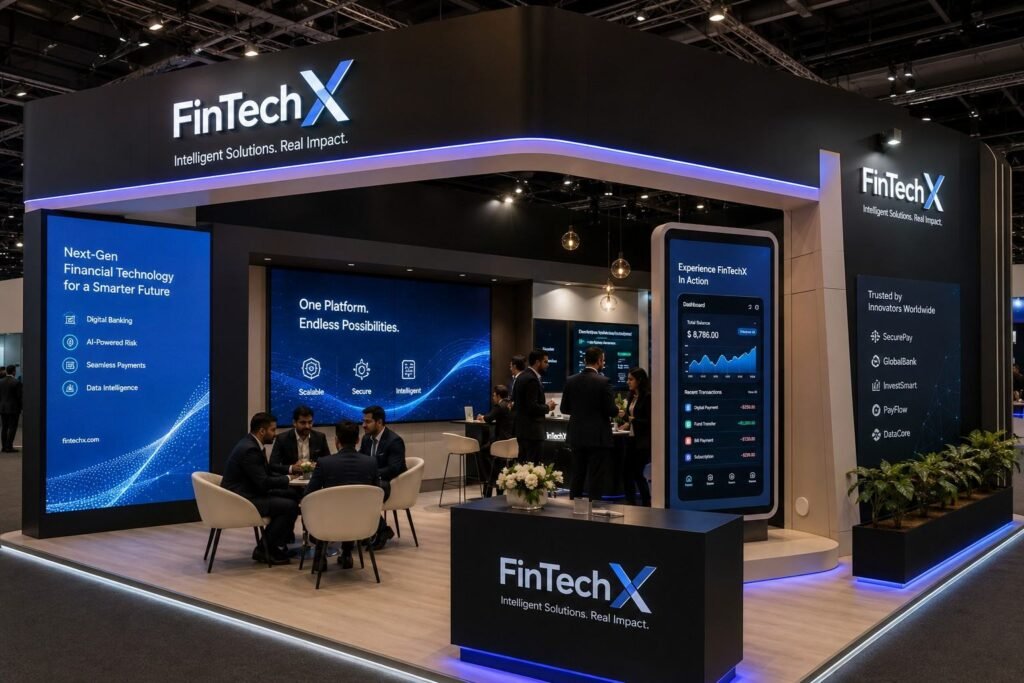
A well-designed fintech booth might use a large display to communicate the main proposition, an interactive screen for a guided product journey, a dedicated area for deeper demonstrations and a quieter meeting space for qualified prospects. Each element has a purpose. The goal is not to show everything the product can do. It is to help the right visitor understand the one problem, workflow or outcome that matters to them and give them a clear reason to continue the conversation.

Why Fintech Products Are Difficult to Demonstrate at Exhibitions

A fintech product can be easy to use once someone understands it, yet surprisingly difficult to explain in a busy exhibition hall. Visitors are usually moving quickly, comparing several companies and deciding within a short time whether a conversation is worth having. The first challenge is that most fintech products are intangible. A payment gateway, fraud detection platform, lending engine or API cannot be understood by simply looking at it. The booth has to translate the product into something visual and easy to follow. There is also the problem of technical complexity. A product may involve multiple integrations, dashboards, workflows, security layers or data points. Showing all of them during a short booth interaction can leave visitors with more information but less understanding.


Visitors Have Different Reasons for Stopping

Not every visitor arrives with the same question. A technology decision-maker may want to understand integrations. A business leader may care more about efficiency or revenue. A compliance professional may want to know how risk is managed, while an investor may be looking for evidence of scale and market relevance. This is why a single, lengthy product presentation rarely works well on a fintech exhibition stand. The experience needs to give visitors a simple entry point and allow the conversation to become more detailed when there is genuine interest.


Trust Matters as Much as Technology

Fintech buyers are also evaluating risk. A visually impressive booth may attract attention, but visitors still want confidence that the product is secure, reliable and suitable for serious financial use. Proof can come through relevant client examples, certifications, transaction volumes, security information or a clear explanation of how the product works. The booth does not need to display every credential, but it should make important trust signals easy to find.


Technology Can Become a Weak Point

A digital demonstration also introduces technical dependencies. The product may rely on internet connectivity, APIs, login credentials, display equipment or third-party systems. A demo that works perfectly in the office can behave differently on an exhibition floor. A common mistake is testing each piece of equipment separately instead of testing the complete experience. The laptop may work, the display may work, and the internet may work, yet the final demonstration can still fail because of connectivity, switching, resolution, power or signal-path issues. For this reason, fintech exhibition booth design has to consider the product experience and the technical setup together. The simpler the visitor journey is, the easier it becomes to deliver a reliable demonstration under real exhibition conditions.

How to Turn a Complex Fintech Product Into a Simple Exhibition Demo
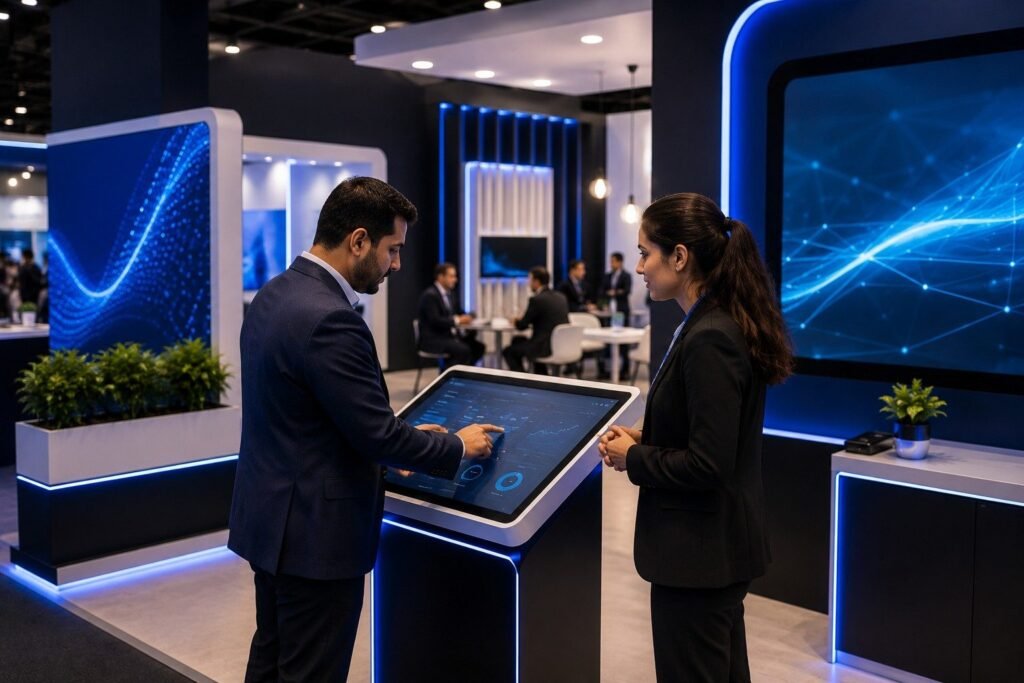
Fintech Product Demo

The easiest way to simplify a fintech product is to stop trying to demonstrate the entire platform. At an exhibition, visitors rarely need a complete product tour. They need to understand what problem the product solves, what happens when they use it and what result they can expect. A useful way to structure the experience is: Problem → Product → Proof → Interaction → Next Step. This keeps the demo focused while leaving room for a deeper conversation with visitors who want more detail.


Start With One Problem

Begin with the business problem rather than the product’s feature list. For example, a payment company could focus on fragmented payment reconciliation instead of opening with a list of integrations. A fraud-prevention platform could demonstrate how a suspicious transaction is identified rather than explaining every part of its risk engine. The visitor should be able to recognise the problem quickly. If they have to understand the technology before understanding why it matters, the demo is already asking too much.


Show One Relevant Product Journey

Once the problem is clear, show the part of the product that addresses it. A fintech platform may have dozens of features, but the exhibition demo might only need to show one workflow: Transaction → Risk Check → Decision → Alert or Application → Verification → Credit Assessment → Approval. The exact journey will depend on the product and audience. The principle is the same: choose one path that demonstrates the product’s value without requiring a full software tour.


Show the Result

Once the workflow is demonstrated, make the outcome clear. The visitor should be able to see what changed because of the product, whether that means a faster process, less manual work, an automated decision, better visibility, a detected fraud attempt, a completed transaction or a simpler customer journey. The result does not need a detailed technical explanation; it should be visible enough for the visitor to understand the practical value of the product within a few seconds. 


Give Visitors Something to Interact With

Interaction can make a digital product easier to remember, but it needs a clear purpose. A visitor might change a transaction value, select a customer scenario, explore a dashboard or follow a simulated workflow. The interaction should lead to a visible result so that the visitor understands what their action changed. A touchscreen by itself does not make a booth interactive. The visitor needs a reason to touch, choose, explore or ask.


End With a Clear Next Step

The demo should not simply end with “Thank you.” Once a visitor has understood the product, give them an appropriate next action. That might be a technical discussion, a product walkthrough, an integration conversation, a meeting with sales or a follow-up demonstration. For a fintech exhibition booth, this is where product demonstration becomes business development.


Keep the Public Demo Short

A public-facing demonstration should generally be short enough for a visitor to understand the main idea without committing to a long presentation. A 60–120 second journey is often enough to introduce the problem, show the workflow and demonstrate the outcome. Visitors who want more detail can then move into a longer, assisted demonstration or meeting. The objective is not to make the product look simple by removing its substance. It is to present the right part of its complexity at the right moment. A good fintech booth gives visitors enough information to become interested, then provides a clear path to explore further.

Choosing the Right Fintech Product Demo Format
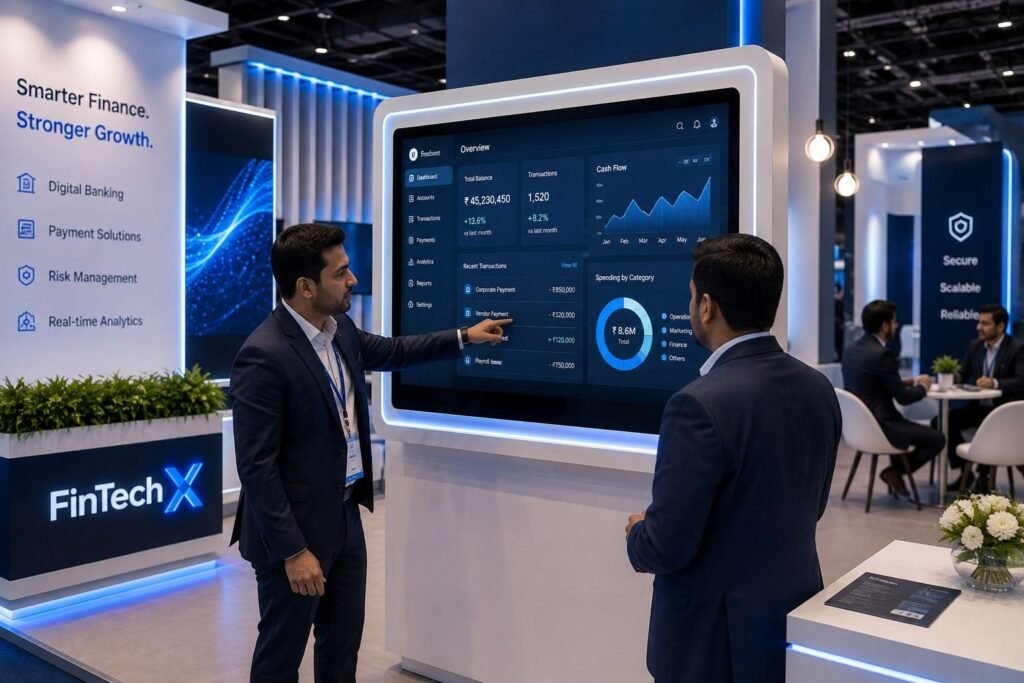
Interactive Product Demo

No single demo format works for every fintech product. The right choice depends on what you are demonstrating, how much time visitors have and how much of the real product can be safely and reliably shown on the exhibition floor. For most fintech exhibition booths, the practical choice comes down to four formats: live product demos, interactive simulations, recorded demos and hybrid experiences.


Live Product Demo

A live demo is useful when the product is stable, easy to access and can be demonstrated without exposing sensitive information or relying on a complicated setup. It works particularly well when a visitor wants to see the actual platform in operation or ask technical questions during the demonstration. The drawback is reliability. If the product depends heavily on internet connectivity, external APIs, authentication or third-party services, a live demo can become difficult to manage in a busy exhibition environment.


Interactive Simulation

An interactive simulation can recreate the important parts of a product without requiring the complete live system. For example, a fintech company could create a simulated payment journey, fraud-detection scenario or lending workflow that allows visitors to make choices and immediately see the outcome. This approach is particularly useful when the real product is too complex, sensitive or technically dependent for a short exhibition demonstration. It also gives the team greater control over what the visitor sees.


Recorded Demo

A recorded product demonstration is useful as a supporting format or backup. It can show a complete workflow without depending on live connectivity or system performance. However, video is passive. It works well for explaining a process quickly, but it does not give visitors the same opportunity to explore the product themselves.


Hybrid Demo

For many fintech exhibition booths, a hybrid approach is the most practical. A visitor might first see a short animation or recorded product story, then interact with a simplified version of the product, followed by a live demonstration when there is genuine interest. This approach also creates a useful backup structure. If the live product becomes unavailable, the visitor journey does not have to stop.

Demo format

Best suited for

Main advantage

Main limitation

Live product

Detailed product conversations

Shows the real platform

Dependent on systems and connectivity

Interactive simulation

Complex digital workflows

Controlled and engaging

Requires preparation

Recorded demo

Quick product explanation

Reliable

Limited interaction

Hybrid

Most complex fintech products

Balances engagement and reliability

Requires careful planning


The important point is that the most technically authentic demo is not always the most effective exhibition demo. If a visitor spends the first minute waiting for a login, connection or API response, the product experience has already become more complicated than it needs to be. Choose the format that makes the product easiest to understand while still giving qualified visitors a path to the real technology.

How to Design the Booth Around the Demo

Once the demo is clear, the physical booth should be designed to support it. A common mistake in fintech exhibition booth design is to develop the booth architecture first and decide later where the product demonstration will happen. For a digital product, the opposite approach usually works better. Start with the visitor journey and then decide where the screens, demo counters, meeting areas and branding should sit. A simple journey is: Attract → Understand → Experience → Discuss → Act


  • Attract: The first message should work from the aisle. Visitors should be able to understand what the company does without stopping to read a paragraph. A clear headline, strong visuals, and one supporting message are usually more useful here than a wall filled with product features.
  • Understand: Once a visitor stops, give them enough context to understand the product before starting the detailed demonstration. This could be a short product animation, a simple workflow graphic or a screen showing the problem and outcome. The purpose is not to explain everything. It is to give the visitor enough information to decide whether the product is relevant to them.
  • Experience: The main demo area should be easy to access and positioned where a salesperson can guide the interaction without blocking the rest of the booth. For an interactive fintech booth, consider visibility as well. A demo that is technically impressive but hidden behind a counter is unlikely to attract much attention.
  • Discuss: Visitors who show genuine interest need somewhere to continue the conversation. A small meeting area close to the demo can work for initial discussions, while a more private space may be appropriate for technical, commercial or sensitive conversations. The important thing is to avoid treating meeting space as an isolated furniture requirement. It should be part of the visitor journey.
  • Act: The final step is to give the visitor a clear reason to continue the conversation. Depending on their level of interest, this could mean requesting a product walkthrough, speaking with a technical specialist, scanning a QR code for more information, scheduling a meeting or discussing pricing and integration. The important thing is to make the next step simple and relevant, rather than leaving the visitor to decide what to do after the demo.


Keep the Journey Easy to Read

A fintech booth can contain several technologies, screens and product messages, but the visitor should not have to figure out how to navigate the space. The physical layout should make the next step obvious. That is why booth design and demo design should be developed together. The product demonstration tells visitors what the company can do; the booth environment determines how easily they can discover it, experience it and move into a meaningful conversation.

What Should a Fintech Exhibition Booth Say?

People walking through an exhibition don’t have time to read everything in a booth. If they see a wall filled with features, technical terms and long descriptions, they are unlikely to stop and work out what the product does. The booth message needs to make the value clear almost immediately. A visitor should be able to understand what the company does, what problem it solves and why it is worth knowing more about.


Start With the Problem, Not the Technology

Fintech companies often describe their products using technical terms because those terms make sense internally. On an exhibition floor, they may not mean much to someone seeing the brand for the first time. For example, instead of saying: AI-Powered Payment Risk Management Platform, a more useful message could be:  Detect Payment Risk Before It Becomes a Loss. The second message gives the visitor something to relate to. Once they understand the problem, the team can explain the technology behind the solution.


Don’t Put Everything on the Walls

A booth does not need to list every feature, integration or technical capability. That information can come later. The main graphic can explain the value, while a screen or demo can show how the product works. If the visitor wants more detail, the team can take the conversation further. A simple way to think about it is: The booth gets attention. The demo explains the product. The conversation handles the details.


Use Simple Visuals to Explain Complex Products

A complicated fintech workflow can often be understood faster through a simple visual than a paragraph of copy. For example: Transaction → Risk Check → Decision → Action. Or: Application → Verification → Assessment → Approval. The visitor doesn’t need to understand the entire technology stack at this stage. They just need to see what happens and where the product adds value.


Keep Technical Information for the Right Audience

Some visitors will want to know about APIs, integrations, security and system architecture. That information is important, but it doesn’t need to be the first thing everyone sees. Keep the main booth message simple, then bring in the technical detail during the demo or meeting when it becomes relevant.


Avoid Messages That Could Belong to Any Fintech Company

Statements such as “Powering the Future of Finance” or “Transforming Financial Services” sound impressive but don’t tell a visitor what the company actually does. A better booth message is specific enough that the right visitor can recognise the problem immediately. Good fintech exhibition booth design uses the graphics to start the conversation. It doesn’t try to fit the entire sales presentation onto the walls.

How to Make a Fintech Booth Interactive Without Overcomplicating It

Adding more screens does not automatically make a booth more interactive. In fact, too much technology can make the experience confusing if visitors don’t know what they are supposed to do with it. For a fintech booth, the better question is simple: what can the visitor do that helps them understand the product?


Make the Interaction Useful

The interaction should help the visitor see the product in action. For example, they could explore a payment workflow, test a fraud scenario, change a transaction value or move through a customer journey. The specific interaction will depend on the product, but there should always be a clear outcome. If someone taps through five screens and still doesn’t understand what they just experienced, the technology isn’t helping.


Show One Product Journey

Fintech platforms can have dozens of features, but an exhibition visitor doesn’t need to see all of them. Take a fraud-detection platform. Instead of opening the whole dashboard, let the visitor select a transaction and see how the system identifies and responds to a potential risk. For a lending platform, the interaction could follow an application from verification through assessment and approval. A focused journey is easier to follow and gives the salesperson a natural starting point for the conversation.


Use Large Screens for a Reason

LED walls and large displays are useful for attracting attention, but they shouldn’t be used only to run a logo animation. They can show a simple product workflow, explain a key benefit or demonstrate what happens behind the scenes. This gives the screen a role in the visitor experience rather than making it just another branding surface.


Make It Easy to Start

Visitors shouldn’t need someone standing beside a screen explaining how to use it. A prompt such as: See how a suspicious transaction is detected is much clearer than: Interact with our solution. The first tells the visitor what they can expect and gives them a reason to try it.


Give Visitors a Choice

Some people will want to explore on their own. Others will prefer a team member to walk them through the product. A good interactive fintech booth should allow for both. Keep the first interaction simple enough for self-guided use, while making it easy for a salesperson to step in when someone wants to understand the product in more detail. The aim is not to fill the booth with technology. It is to make a complex product easier to experience. If the technology doesn’t help the visitor understand something faster or better, it probably doesn’t need to be there.

How to Make a Fintech Exhibition Demo Reliable
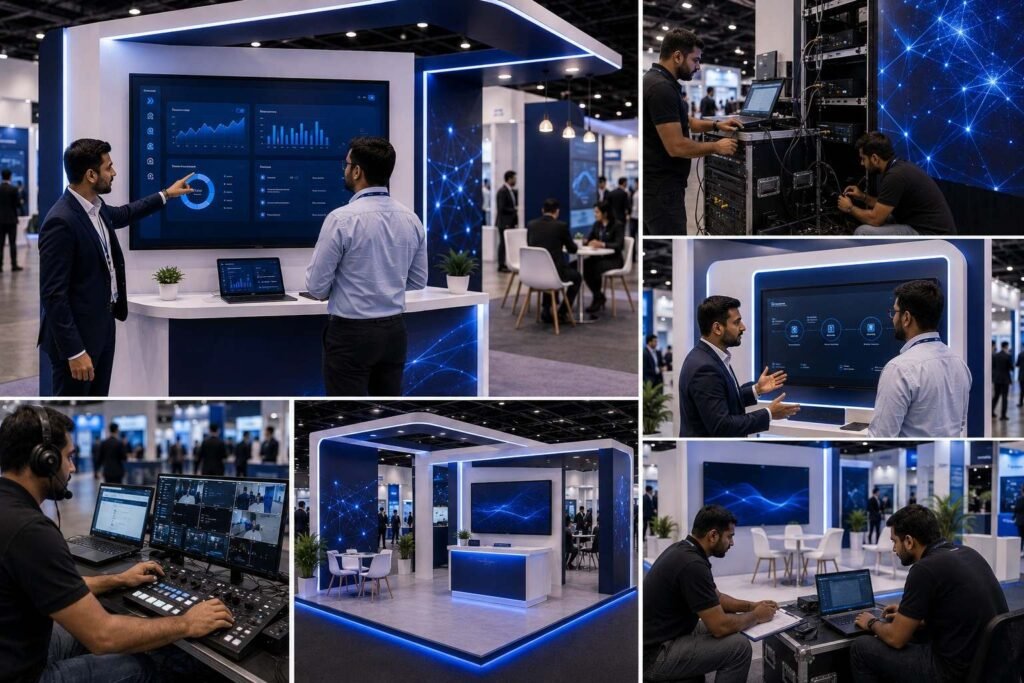
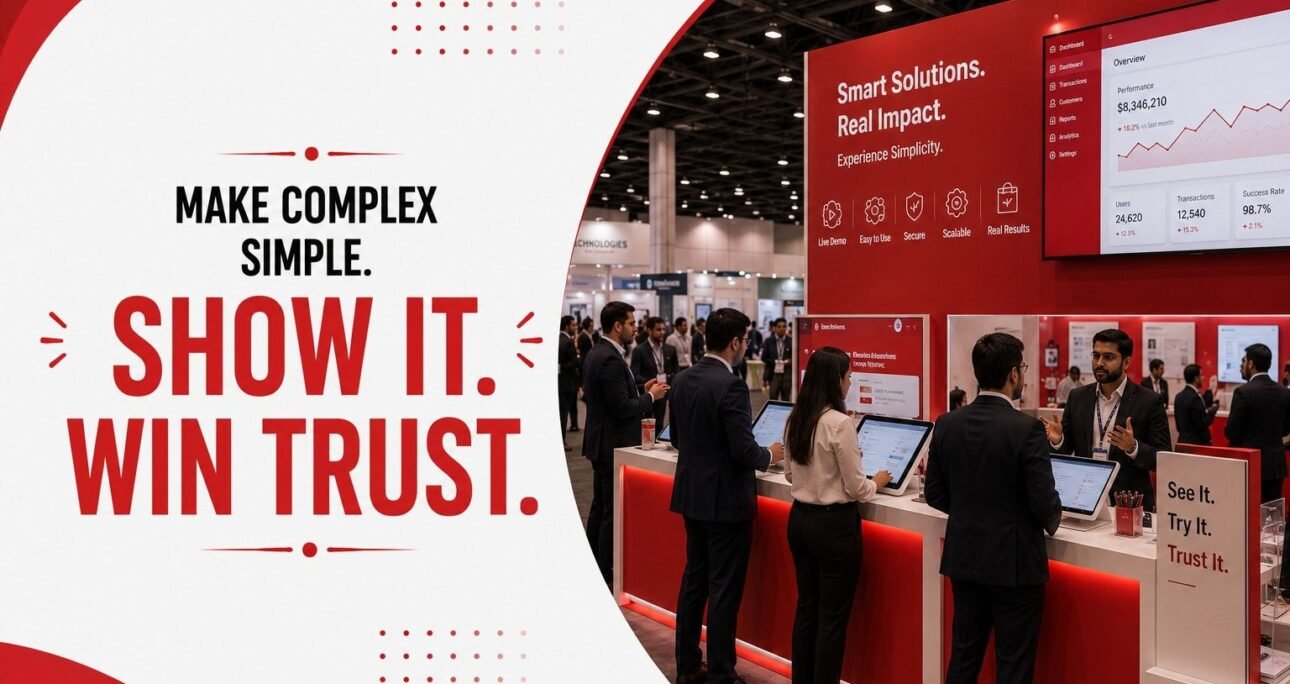
Fintech Brand Experience

A fintech demo can work perfectly in the office and still run into problems at an exhibition. The network may behave differently, the display setup may change, or a small issue with power or connectivity can stop the whole demonstration. That is why reliability needs to be considered while planning the fintech exhibition booth design, rather than left to the technical team just before the event.


Test the Whole Setup Together

Testing the laptop, screen, and internet connection separately is not enough. The complete setup needs to be tested as it will work on the show floor. For example: Product → Device → Network → AV setup → Display → Visitor interaction. A problem at any point can affect the final demo. Testing the complete setup also makes it easier to spot issues with display formats, switching, power or connectivity before visitors arrive.


Don’t Rely on One Internet Connection

If the product needs to be online, have a backup plan. Exhibition networks can be unpredictable, and even a short interruption can break a live product demonstration. Depending on the setup, the backup could be a second connection, locally stored product content or an offline version of the demo. The important thing is that the visitor should not be left standing at the screen while the team tries to reconnect the system.


Keep a Backup Demo Ready

An offline version can be particularly useful for products that depend on APIs, external platforms or multiple login steps. It doesn’t need to recreate the entire product. It only needs to demonstrate the part of the journey that matters to the visitor. A recorded demo can provide another fallback if the live and offline versions are unavailable.


Never Use Real Customer Data

Fintech demonstrations need extra care because they can involve sensitive financial or customer information. Use dummy accounts, test transactions and anonymised information instead. Demo credentials should also be controlled so that visitors cannot accidentally access anything they shouldn’t. A realistic demo is useful. Exposing real customer information is not worth the risk.


Make Sure the Team Knows the Backup Plan

The people running the booth should know the demo well enough to handle a problem without stopping the conversation. They should know how to start the demo, what to show, what to do if a step fails and when to switch to the backup. They should also know how to move the visitor from the demonstration into a more detailed discussion. A reliable exhibition demo isn’t one where nothing ever goes wrong. It’s one where a small technical problem doesn’t become a visible problem for the visitor.


How to Turn Booth Interactions Into Qualified Leads

A crowded booth can look successful without producing many useful leads. For a fintech company, the goal isn’t to collect as many contact details as possible. It is to identify the visitors who have a real reason to continue the conversation. The product demo can help you do that because the way someone interacts with the product often tells you more than a simple badge scan.


Give Visitors a Relevant Next Step

Don’t end every conversation with the same form or QR code. Once you understand what the visitor is interested in, make the next step relevant to them. Someone interested in integration might want to speak with a technical specialist. Another visitor may want a product walkthrough, pricing information or a meeting with the sales team. These choices give you a better idea of what the visitor actually wants.


Use the Conversation to Qualify Interest

Not every visitor who stops at the booth is a potential buyer. Someone who spends time exploring a fraud-detection workflow is likely to have a different level of interest from someone who simply picks up a brochure. The team can usually understand this through a natural conversation. Asking what solution they currently use, what they are looking to solve, or whether they would like to see the technical side of the product can help identify genuine interest. The conversation should feel like a discussion, not a checklist of sales questions. The aim is simply to understand why the visitor stopped and whether there is a useful next step.


Make the Next Step Simple

If someone is genuinely interested, don’t make them work out what happens next. You could offer a product resource, schedule a meeting, arrange a technical discussion or connect them directly with the right person from the team. For high-value prospects, arranging the next conversation while the visitor is still at the booth can be far more useful than relying on a follow-up email later.


Look Beyond Visitor Numbers

Footfall tells you how many people came to the booth. It doesn’t tell you how many were actually interested. A more useful picture is Visitors → Demo interactions → Qualified conversations → Meetings → Follow-ups. This helps the team understand whether the booth attracted the right audience and whether the product demonstration helped move those visitors further into the sales process. Good fintech exhibition booth design should therefore support more than footfall. It should make it easier to recognise genuine interest and give interested visitors a clear path to the next conversation.

Designing a Fintech Booth for Trust

For a fintech company, a visitor is not only looking at the product. They are also trying to decide whether they can trust the company behind it. This matters because fintech products often deal with payments, financial data, integrations and processes that businesses cannot afford to get wrong. A booth may look impressive, but if the product demo is unreliable or the message is unclear, that first impression can quickly disappear.


Show Proof, Not Just Claims

Instead of simply saying that the company is secure, reliable or trusted, show something that supports those claims. Depending on the business, this could be a relevant certification, an established client, a recognised partnership, transaction volume or a measurable product result. The key is to keep the proof relevant. A visitor doesn’t need to see every credential the company has. They need to see enough to feel confident that the product is credible.


Explain Security Without Making It Too Technical

Security is important in fintech, but a booth wall is rarely the place for a full technical explanation. A fraud-detection company, for example, could show how a suspicious transaction is identified and what happens next. A payment platform could show how a transaction moves through the system. This gives visitors a basic understanding of how the product works without overwhelming them with technical architecture.


Make Sure the Demo Builds Confidence

Small problems can have a bigger impact on trust than expected. If a product takes too long to load, the demo data looks unfinished or the system keeps losing connection, visitors may start questioning the reliability of the product itself. The physical booth matters too. Screens should be easy to see, information should be readable, and the space should feel organised. These details may seem minor, but together they influence how prepared and dependable the company appears.


Give Different Visitors the Information They Need

A bank or enterprise buyer may want to know about security and integration. A technology specialist may want to understand the architecture. A business decision-maker may be more interested in efficiency, scale or commercial results. The booth does not need to show all of this at once. Keep the main message simple and let the demo or conversation provide more detail when it becomes relevant. For a fintech brand, trust should come through the entire experience from the first message on the booth to the product demonstration and the conversation that follows.

How Much Does a Fintech Exhibition Booth Cost?

There is no single price for a fintech exhibition booth because the budget depends on how much of the product experience needs to be built into the space. A simple branded stall with a screen will cost very differently from a custom booth with interactive demonstrations, LED displays, meeting areas and dedicated AV. The main cost factors usually include:

  • Booth size and structure: Larger or more complex builds require more materials, fabrication and installation work.
  • Custom fabrication: Special structures, finishes, storage and meeting areas add to production costs.
  • Displays and AV: LED walls, commercial displays, touchscreens, processors, audio and control equipment can significantly affect the budget.
  • Interactive technology: Product simulations, touch interfaces and other interactive elements require additional development and hardware.
  • Graphics and branding: Printed graphics, backlit panels and custom branding contribute to the overall build.
  • Furniture and meeting spaces: Seating, counters and enclosed meeting areas add both cost and floor-space requirements.
  • Connectivity: A live fintech product may require dedicated internet, backup connectivity or additional networking equipment.
  • Logistics and installation: Transportation, venue handling, installation and dismantling need to be included in the project budget.


Why the Cheapest Booth Is Not Always the Most Cost-Effective

Reducing the fabrication budget does not necessarily reduce the total cost of the exhibition. If the product demo is difficult to see, the internet connection is unreliable or there is no suitable space for qualified conversations, the booth may generate attention without producing useful business outcomes.


For fintech companies, it can be more useful to allocate the budget around the visitor experience and product demonstration rather than spending heavily on decorative elements that have little role in explaining the product. The right budget therefore depends on the event, booth size, audience, product complexity and level of technology required. A clear brief covering the demo, visitor journey, technical requirements and meeting needs will make it easier to compare quotations and avoid unexpected costs later.

Fintech Exhibition Booth Checklist

A good fintech exhibition booth needs more than a strong visual concept. The product, technology, visitor journey and sales process should all be ready before the event opens. Use this checklist during the final planning stage:

Area

What to check

Message

Is the main product value clear within a few seconds?

Demo

Is there one primary product journey rather than too many features?

Interaction

Does the visitor know what to do and what they will see?

Technology

Has the complete demo setup been tested together?

Connectivity

Is there a backup if the primary connection fails?

Data

Are all demo accounts and customer details safe and anonymised?

Backup

Is an offline or recorded version ready?

Screens

Can visitors clearly see and understand the content?

Staffing

Does someone own the product demonstration?

Lead capture

Can the team record visitor interest and intent?

Meetings

Is there an appropriate space for qualified conversations?

CTA

Is the next step clear after the demonstration?

Installation

Have venue access, power, AV and installation requirements been confirmed?


The final check should be done as a visitor would experience the booth, not just as a production team reviewing individual components. Walk in from the aisle. Read the main message. Try the demo. Move into the meeting area. Complete the lead-capture process. If any step feels confusing, slow or unnecessary, fix it before the exhibition opens. The strongest fintech exhibition booth is one where the visitor journey feels simple even though a considerable amount of planning and technology is working behind the scenes.

Conclusion

A successful fintech exhibition booth does not try to explain everything a company can do. It gives visitors a simple way to understand what the product solves, how it works and why it matters. The strongest approach is to design the booth around the product demonstration from the beginning. Clear messaging attracts the right visitors, a focused demo makes the product easier to understand, reliable technology keeps the experience running, and a well-planned visitor journey creates a natural path from interaction to conversation.


For fintech companies exhibiting in Mumbai or elsewhere in India, the physical execution matters just as much. Venue requirements, connectivity, AV, installation, backup systems and meeting spaces need to support the same product story. Ultimately, good fintech exhibition booth design is less about how much technology or visual detail can fit into the space and more about how quickly the right visitor can understand the value of the product and decide to take the conversation further.

FAQs

1. What is fintech exhibition booth design?

Fintech exhibition booth design is the planning of an exhibition space around a financial technology company’s product, brand, demonstrations, visitor journey and business objectives. It combines physical design with product storytelling, interactive technology, AV and lead capture.

Focus the demonstration on one important problem, one product workflow and one outcome. Avoid showing the entire platform and use visual storytelling or an interactive simulation to explain the most relevant part of the product.

It depends on the product. A live demo works well when the platform is stable and easy to access, while an interactive simulation can be more reliable when the product depends on complex integrations, internet connectivity or sensitive data. A hybrid approach can provide both flexibility and reliability.

A public-facing demo should generally be short enough to hold a visitor’s attention. A 60–120-second demonstration can introduce the problem, show the key workflow and communicate the result. Visitors who want more detail can then move into a longer discussion.

The essentials are a clear value proposition, an easy-to-understand product demonstration, appropriate displays or interactive technology, space for meaningful conversations and a clear lead-capture process. The exact booth setup should depend on the product and audience.

Use the demonstration to understand visitor intent rather than simply collecting contact details. Offer relevant next steps such as a technical discussion, product walkthrough, integration conversation or meeting, and record what the visitor was interested in.

The cost depends on booth size, fabrication, materials, displays, AV, interactive technology, graphics, furniture, connectivity, logistics, installation and dismantling. A booth built around a complex live product demonstration will usually require more technical planning than a simple branded space.

The timeline depends on booth size, fabrication complexity, technology, venue requirements and event deadlines. For a custom fintech booth, starting several weeks in advance gives the design, production, technical testing and installation teams enough time to coordinate without relying on last-minute changes.