
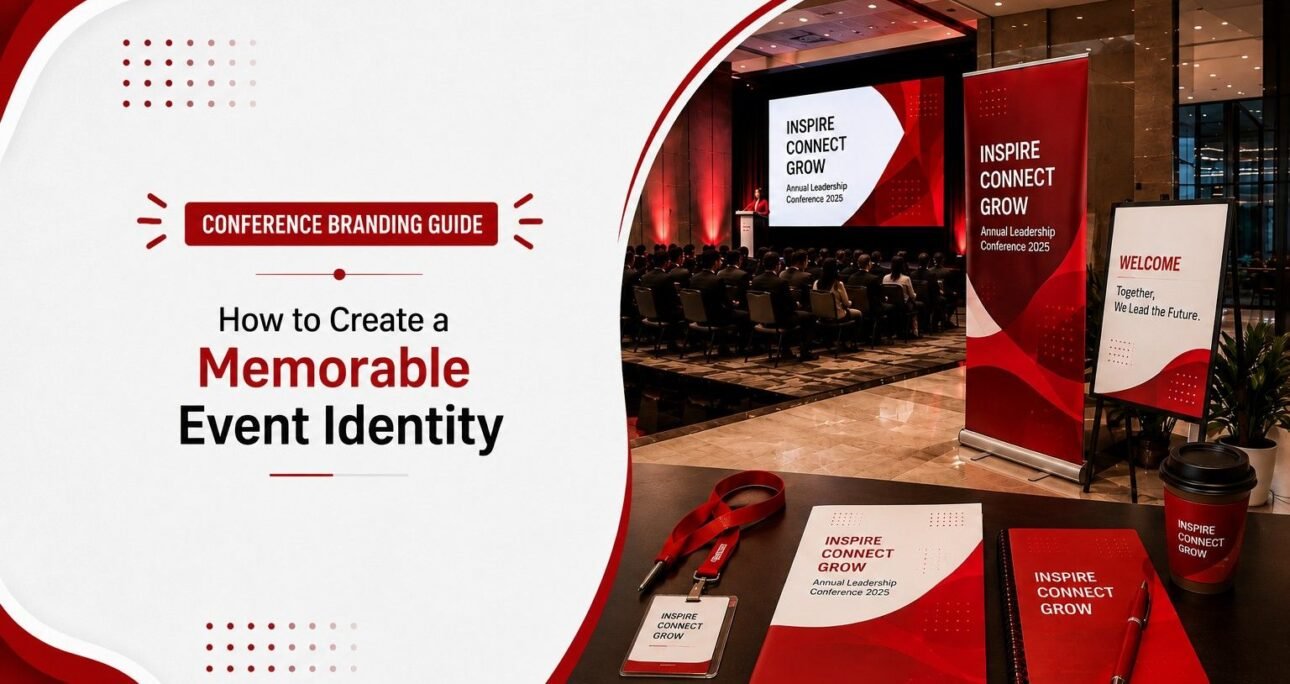
Conferences have evolved far beyond speaker sessions and networking opportunities. Today, attendees expect immersive experiences that reflect the event’s purpose from the moment they receive an invitation until long after the conference ends. Every interaction, whether it’s the registration website, stage design, event signage, or post-event communication, contributes to how people perceive and remember the event. This is where conference branding becomes a competitive advantage. More than just a logo or colour palette, it creates a consistent identity that connects every touchpoint into one memorable experience. A strong conference brand identity helps attendees instantly recognise your event, builds credibility with sponsors and speakers, and encourages participants to return year after year.
Research consistently shows that consistent branding improves brand recognition and trust, making it easier for attendees to remember and recommend an event. In an increasingly competitive events industry, conferences with a well-defined identity often stand out long before registrations open. Whether you’re planning a corporate conference, industry summit, leadership forum, or hybrid event, investing in a thoughtful branding strategy helps transform an ordinary gathering into a memorable experience that delivers lasting business value.
What Is Conference Branding?
Conference branding is the process of creating a consistent identity that shapes how people recognise, experience, and remember your event. It combines visual elements, messaging, and attendee experiences to communicate your conference’s purpose and values across every touchpoint, from the first invitation to post-event follow-ups. Think about the conferences you remember most. Chances are, it’s not only because of the speakers or venue. It’s the overall experience, the theme, visuals, communication, atmosphere, and interactions that left a lasting impression. That’s the power of effective conference branding. A strong conference brand goes far beyond designing a logo or choosing a colour palette. It creates a unified experience that helps attendees instantly recognise your event, builds trust before they register, and keeps your conference memorable long after it ends. Whether you’re organising a corporate conference, industry summit, leadership forum, or hybrid event, branding influences how attendees, sponsors, speakers, and exhibitors perceive your event. Every interaction should reinforce the same identity, from your event website and registration page to stage design, presentation templates, name badges, signage, social media posts, and follow-up emails.
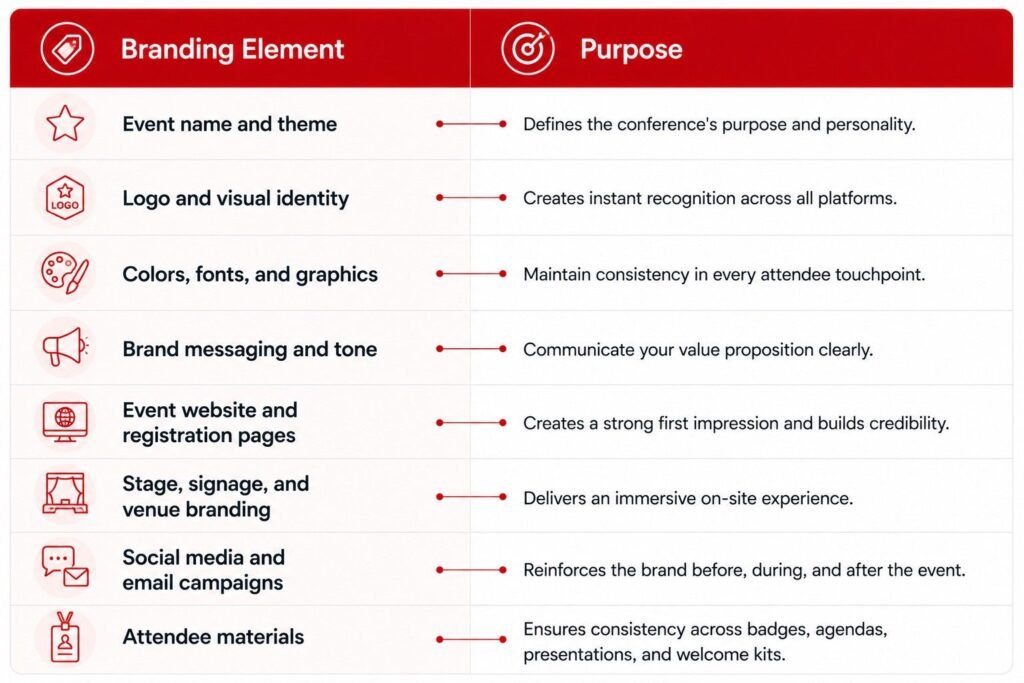
What Does Conference Branding Include?
Conference branding brings together multiple visual and experiential elements to create one cohesive event identity. When these elements work together consistently, they strengthen recognition, improve the attendee experience, and reinforce your conference’s message at every stage of the event.
Why Conference Branding Matters
Conference branding shapes how attendees, sponsors, speakers, and exhibitors perceive your event long before they arrive at the venue. From the first email invitation to the final follow-up message, every interaction influences whether people see your conference as professional, credible, and worth attending. Today’s audiences have countless conferences, summits, and industry events to choose from. While a strong speaker lineup and valuable sessions remain important, they are rarely enough to differentiate one event from another. Attendees are increasingly drawn to conferences that present a clear identity, deliver a seamless experience, and maintain consistency across every touchpoint.
Research has shown that consistent branding can significantly improve brand recognition, making it easier for audiences to remember and trust an event. For conference organisers, this means that branding is not simply a creative exercise; it’s a strategic investment that supports registrations, sponsor confidence, attendee engagement, and long-term event growth. A well-defined conference brand identity creates familiarity across your website, registration platform, event communications, conference stage branding, presentation templates, networking spaces, and conference signage design. When every touchpoint reflects the same visual identity and message, attendees experience a conference planning that feels organised, professional, and memorable.
Benefits of Strong Conference Branding
1. Creates a Memorable First Impression
Your conference branding is often the first thing potential attendees notice. A clear event theme, professional visuals, and consistent messaging establish credibility from the beginning and encourage people to learn more about your event. A distinctive identity also makes your conference easier to recognise when attendees compare multiple events within the same industry.
2. Builds Trust and Credibility
People are more likely to register for conferences that look organised and professionally managed. Consistent branding across your website, registration pages, speaker announcements, social media, and event materials signals quality and reassures attendees that the experience will meet their expectations.
3. Increases Event Recognition
Every consistent interaction strengthens your conference brand. Using the same logo, typography, colours, imagery, and messaging across marketing campaigns and on-site experiences improves recall and ensures attendees instantly recognise your event before, during, and after the conference.
4. Improves the Attendee Experience
Strong branding isn’t limited to visual design; it helps create a better overall experience. Clear navigation, thoughtfully designed conference signage, branded presentation templates, intuitive wayfinding, and cohesive stage visuals reduce confusion and allow attendees to focus on learning, networking, and participating throughout the event.
5. Creates Greater Value for Sponsors
Sponsors invest in conferences that attract the right audience and provide meaningful visibility. A professionally branded event creates premium sponsorship opportunities by integrating sponsor messaging naturally within the overall event experience instead of overwhelming attendees with disconnected branding. This balanced approach benefits both sponsors and organisers.
6. Encourages Repeat Attendance
The most successful conferences build loyal communities rather than one-time audiences. When attendees associate your event with a positive and memorable experience, they’re far more likely to return, recommend it to colleagues, and become advocates for future editions. Strong conference branding helps create that long-term recognition and loyalty.
Conference Branding vs. Conference Marketing
Although the terms are often used interchangeably, conference branding and conference marketing serve different purposes. Branding defines who your conference is and how people remember it, while marketing focuses on promoting the event and encouraging registrations. Marketing campaigns may change every year, but a strong conference brand provides consistency that supports every campaign.
Conference Branding | Conference Marketing |
Creates the event’s identity | Promotes the event to target audiences |
Focuses on long-term recognition | Focuses on driving registrations |
Includes visual identity, messaging, event theme, and attendee experience | Includes email campaigns, SEO, social media, paid ads, and PR |
Builds emotional connections and trust | Generates awareness and conversions |
Continues before, during, and after the conference | Primarily supports pre-event promotion |
The strongest conferences don’t choose between branding and marketing; they combine both. A clear brand identity makes every marketing campaign more consistent, recognisable, and effective.
Common Signs Your Conference Needs Better Branding
Strong conference branding makes an event instantly recognisable, builds credibility, and creates an experience that attendees remember long after the final session. If your conference struggles to stand out or leaves little lasting impression, it may be time to rethink your branding strategy. Many organisers assume branding only needs attention when registrations decline. In reality, weaker branding often reveals itself much earlier through inconsistent communication, low engagement, and a lack of audience recall. Identifying these signs early allows you to strengthen your conference before they begin affecting attendance, sponsorship opportunities, and long-term growth.
1. Your Conference Looks Different Across Every Platform
If your website, registration page, emails, social media, presentation templates, and venue branding all have different colours, fonts, or messaging, attendees may struggle to recognise your event. Consistency is one of the foundations of a strong conference brand identity, and even small visual inconsistencies can reduce trust.
2. People Remember the Speakers but Not the Conference
One of the clearest signs of weak branding is when attendees talk about a keynote speaker or panel discussion but can’t recall the conference name, theme, or organiser. A memorable conference should create a lasting identity that extends beyond individual sessions.
3. Your Event Theme Feels Generic
Titles such as Annual Business Conference or Leadership Summit 2027 don’t tell attendees what makes the event unique. A distinctive conference theme gives people a reason to remember your event and helps unify your marketing, stage design, speaker content, and attendee experience.
4. Sponsors Receive Visibility but Little Engagement
When sponsor logos appear everywhere without a structured branding strategy, attendees often overlook them. Strong conference branding creates meaningful sponsor touchpoints through branded networking areas, interactive experiences, and thoughtfully integrated placements that feel valuable rather than intrusive.
5. Attendees Aren’t Sharing Their Experience
Today’s attendees naturally share memorable experiences online. If your conference generates very little user-generated content, it may indicate that your event lacks visually engaging spaces, interactive moments, or experiences worth talking about. Simple additions such as creative photo installations, branded networking lounges, or immersive stage designs can significantly improve organic social sharing.
6. Returning Attendance Remains Low
People return to conferences that deliver both valuable content and memorable experiences. If repeat registrations remain low despite positive speakers and sessions, your branding may not be creating the emotional connection needed to encourage long-term loyalty.
The 6C Conference Branding Framework
Before creating a conference branding strategy, it helps to understand the six core principles that make successful conference brands memorable. Think of these as the foundation that guides every branding decision from choosing an event theme to designing the attendee experience.
Principle | Purpose |
Clarity | Define a clear purpose and value proposition for the conference. |
Consistency | Maintain the same messaging, visuals, and tone across every attendee touchpoint. |
Creativity | Develop memorable themes, experiences, and visual elements that help the conference stand out. |
Connection | Build meaningful relationships with attendees, speakers, sponsors, and exhibitors. |
Communication | Deliver clear, engaging messaging before, during, and after the event. |
Continuity | Continue engaging your audience after the conference to strengthen loyalty and encourage future participation. |
The 6C Framework isn’t a rigid process but a practical way to evaluate your conference brand. If one or more of these elements is missing, the overall attendee experience can feel disconnected, even if the event itself is well organised. With these principles in place, the next step is turning them into a structured branding strategy that guides every stage of your conference planning.
How to Create a Conference Branding Strategy

A successful conference branding strategy starts with a clear purpose, a deep understanding of your audience, and a consistent identity that extends across every attendee touchpoint. Rather than focusing only on visual design, an effective strategy aligns your conference goals with the experience you want attendees to remember. Think about the conferences you’ve attended recently. Chances are, the ones you remember weren’t just well-organised; they had a clear identity. From the event website and registration process to the stage design and follow-up emails, every interaction felt connected. That’s the difference between simply organising a conference and building a conference brand. Instead of treating branding as the final step in planning, make it the foundation that guides every decision throughout the event lifecycle.
Step 1: Define Your Conference Goals
Before creating your conference branding, be clear about what you want the event to achieve. Your goals should guide every decision, from the messaging and visual identity to the overall attendee experience. Whether you’re aiming to educate professionals, generate leads, launch a product, or strengthen your brand’s position in the industry, having a clear purpose keeps your branding focused and consistent.
Example: Imagine you’re organising a sustainability conference. Instead of promoting it as an “Annual Sustainability Conference,” position it around a stronger idea like “Driving Practical Solutions for a Sustainable Future.” This gives the event a clear direction and influences everything from marketing campaigns to speaker selection and stage design.
Best Practices: Start with one primary objective and use it to guide every branding decision. Share your goals with your internal team, speakers, sponsors, and partners so everyone communicates the same message throughout the attendee journey.
Step 2: Understand Your Target Audience
The most effective conference branding is built around the people you want to attract. Before deciding on your messaging, visuals, or theme, understand who your attendees are, what challenges they face, and what they’re hoping to gain from the event. When your branding reflects their interests and expectations, it’s easier to capture attention and encourage registrations.
Example: A technology conference for software developers might use bold visuals, live demonstrations, and messaging focused on innovation. In contrast, a leadership summit for senior executives may adopt a more refined visual style with messaging centred on strategic thinking, decision-making, and executive networking. Both events have different audiences, so their branding should feel different too.
Best Practices: Create attendee personas before developing your branding and use feedback from previous events to understand what your audience values most. Focus on their needs rather than trying to appeal to everyone, as a more targeted brand is often a more memorable one.
Step 3: Develop a Clear Brand Message
Your brand message should quickly tell people what your conference is about and why it’s worth attending. Instead of listing speakers, sessions, or event features, focus on the value attendees will take away. A clear message helps people understand what makes your conference different and creates consistency across your website, emails, social media, and promotional campaigns.
Example: Instead of saying, “Join our annual marketing conference,” try something more benefit-driven like, “Discover practical marketing strategies, connect with industry experts, and gain ideas you can apply to grow your business.” The second message tells attendees exactly what they can expect from the event.
Best Practices: Keep your messaging simple, consistent, and focused on attendee benefits. Use the same core message across every marketing channel so your conference is easy to recognise and remember.
Step 4: Create a Memorable Conference Theme
A strong conference theme gives your event a clear identity and brings every element together. It should reflect the purpose of your conference while influencing everything from your marketing campaigns and speaker sessions to stage design and attendee experiences. When every touchpoint follows the same theme, the event feels more cohesive and leaves a lasting impression.
Example: If you’re organising an AI conference, a theme like “AI That Transforms Business” is far more meaningful than a generic title such as “Innovation Conference 2027.” It gives speakers, sponsors, and attendees a clear idea of what the event is about and creates consistency across your marketing and event experience.
Best Practices: Choose a theme that’s relevant to your audience and easy to remember. Once it’s finalised, use it consistently across your website, promotional materials, venue branding, and presentations to create a unified conference experience.
Step 5: Build Brand Consistency Across Every Touchpoint
A strong conference brand should feel familiar wherever attendees interact with your event. From the first visit to your website to the final follow-up email, every touchpoint should reflect the same visual identity, messaging, and tone. This consistency builds trust, strengthens brand recognition, and creates a more professional experience throughout the attendee journey.
Example: Imagine your healthcare conference uses the theme “Leading the Future of Healthcare.” Attendees should see the same branding on the registration page, confirmation emails, event app, stage backdrop, signage, presentation templates, attendee badges, and post-event communications. When every interaction feels connected, the conference becomes far more memorable.
Best Practices: Create simple brand guidelines before designing any marketing or event materials. Use the same logo, colours, fonts, imagery, and messaging across every platform, and ensure speakers, sponsors, and partners follow these guidelines wherever appropriate.
Conference Branding Ideas to Create a Memorable Event Experience
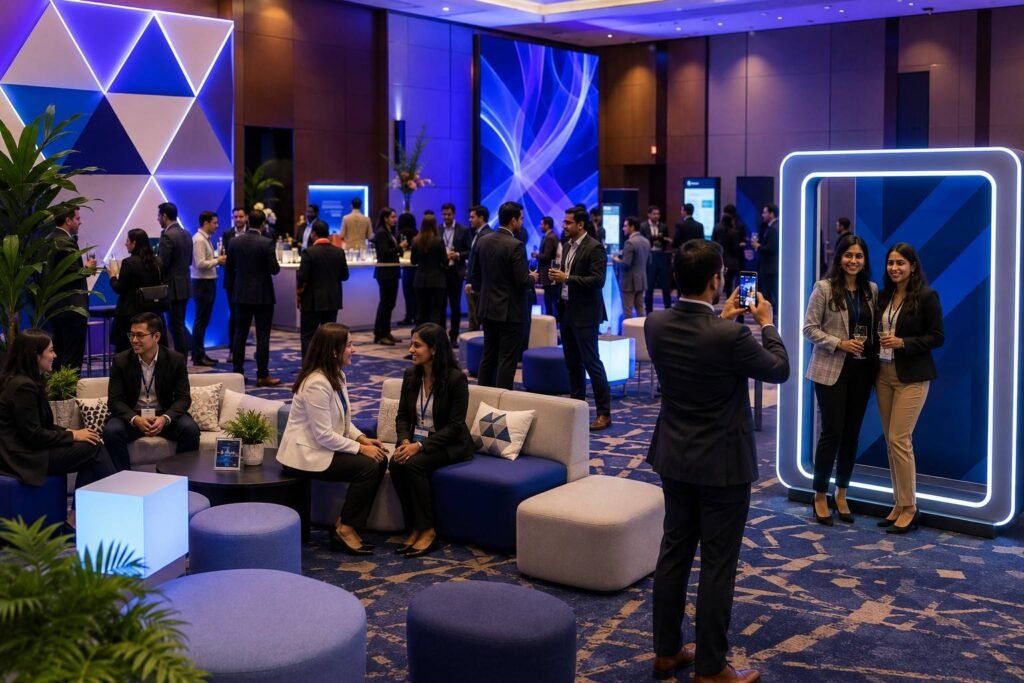
Once you’ve developed your conference branding strategy, the next step is bringing it to life. Thoughtful branding ideas help transform your conference from a well-organised event into an experience attendees remember long after it ends. The goal isn’t to add branding everywhere; it’s to create meaningful interactions that reinforce your conference identity and improve the attendee experience. Here are some practical ideas you can incorporate into your next event.
1. Create an Engaging Welcome Experience
The attendee journey begins the moment people arrive at your conference. A professional and welcoming first impression helps build excitement while reinforcing your event brand. Consider using branded welcome signage, registration counters, digital displays, and clearly identified event staff. A smooth check-in process, combined with consistent branding, immediately sets the tone for the rest of the conference.
Example: A leadership summit could welcome attendees with a branded entrance, digital agenda screens, and a registration desk featuring the event colours, logo, and theme. These small details create a polished and memorable arrival experience.
2. Design Photo-Worthy Branded Spaces
Attendees naturally enjoy sharing memorable moments from conferences. Creating visually appealing branded spaces encourages organic social sharing while increasing your event’s visibility. Photo opportunities don’t need to be elaborate. A well-designed backdrop, interactive installation, networking lounge, or themed display can encourage attendees to capture and share their experience.
Best Practices: Create photo opportunities that attendees will genuinely want to use. Keep the design clean, visually appealing, and aligned with your conference branding so every shared photo reinforces your event identity. Make sure the space is well lit to encourage high-quality images, and position it in a busy area where attendees naturally gather, such as the entrance, networking lounge, or exhibition floor. The easier and more inviting the experience is, the more likely attendees are to capture and share their moments, helping extend your conference’s reach beyond the venue.
3. Maintain Consistent Stage Branding
The main stage is often the focal point of a conference and appears in hundreds of attendee photos and videos. Consistent stage branding strengthens your conference identity throughout keynote sessions, presentations, and panel discussions. Ensure elements such as LED screens, presentation templates, podium graphics, lower-third graphics, and stage backdrops all follow the same visual identity.
Example: If your conference theme is “Future of Digital Healthcare,” use the same typography, colours, icons, and visual style across stage screens, speaker presentations, and session title slides to create a cohesive experience.
4. Brand Networking and Collaboration Spaces
Networking is one of the biggest reasons professionals attend conferences. Instead of treating networking areas as empty spaces, extend your branding into these environments. Use branded seating areas, discussion zones, charging stations, directional signage, and digital displays that reflect your conference identity while encouraging meaningful conversations. When networking spaces feel comfortable and professionally designed, attendees are more likely to spend time interacting with other participants.
5. Personalise the Attendee Experience
Personalisation makes attendees feel valued and creates stronger emotional connections with your conference. Simple touches such as personalised name badges, welcome kits, event apps with customised agendas, session recommendations, and digital certificates can significantly improve the attendee experience.
Example: Instead of providing identical welcome packs to every participant, create different versions for speakers, sponsors, exhibitors, media representatives, and general attendees. Tailoring materials to each audience makes the event feel more thoughtful and professional.
6. Deliver a Consistent Digital Experience
Today’s conferences extend beyond the venue. Attendees interact with your event through websites, registration platforms, mobile apps, livestreams, and post-event content. Maintaining consistent branding across these digital touchpoints creates a seamless experience for both in-person and virtual participants. Ensure your website, registration portal, event app, presentation templates, livestream platform, digital certificates, and post-event emails all follow the same visual identity and messaging. This consistency strengthens brand recognition and ensures attendees experience the same conference identity regardless of how they participate.
Common Conference Branding Mistakes to Avoid
Even the strongest conference branding strategy can lose its impact if it’s applied inconsistently. Avoiding common mistakes helps create a professional, memorable, and seamless experience for attendees before, during, and after the event. Small branding mistakes can make a conference feel disconnected or unorganised. By recognising these common issues early, you can create a stronger and more consistent event identity.
1. Focusing Only on the Logo
A logo is an important part of your conference identity, but it isn’t your entire brand. Your theme, messaging, website, emails, signage, presentations, and attendee experience should all work together to create a consistent impression.
How to Avoid It: Build a complete brand identity instead of relying only on visual elements. Ensure every attendee touchpoint reflects the same style and message.
2. Inconsistent Branding Across Channels
Using different colours, fonts, or messaging across your website, social media, emails, and venue materials can confuse attendees and weaken your conference identity. Consistency makes your event easier to recognise and builds trust.
How to Avoid It: Create a brand style guide and use the same logo, typography, colours, and messaging across all marketing and event materials.
3. Ignoring Your Target Audience
Branding should reflect the expectations of your audience, not personal preferences. A design that works for a startup conference may not appeal to executives attending a leadership summit.
How to Avoid It: Research your audience before creating your brand and tailor your visuals, messaging, and event experience to their interests and needs.
4. Overlooking the Attendee Experience
Strong branding should improve the attendee journey, not make it more complicated. Confusing signage, difficult registration, or inconsistent session materials can negatively affect the overall experience.
How to Avoid It: Focus on creating clear navigation, easy registration, consistent signage, and well-designed attendee materials that support both functionality and branding.
5. Letting Sponsor Branding Overshadow the Event
Sponsors are valuable partners, but excessive logos and promotional displays can distract from your conference identity. Attendees should remember your event, not just the sponsors.
How to Avoid It: Balance sponsor visibility by using dedicated sponsor zones, branded networking spaces, and sponsored sessions while maintaining a strong conference identity.
6. Started Branding Too Late
Leaving branding until the final weeks often leads to rushed decisions and inconsistent marketing materials. It also gives designers, speakers, and vendors less time to follow your branding guidelines.
How to Avoid It: Develop your conference branding early so it can guide your website, marketing campaigns, sponsorship materials, and event design from the beginning.
7. Forgetting Post-Event Branding
Conference branding doesn’t end when the last session finishes. Without follow-up communication, it’s easy for attendees to forget the experience and disconnect from your event.
How to Avoid It: Continue engaging attendees with thank-you emails, presentation downloads, event recap videos, feedback surveys, and updates about future conferences.
How to Measure the Success of Your Conference Branding
The success of conference branding can be measured by how well it improves brand recognition, attendee engagement, sponsor value, and overall event experience. Tracking the right metrics helps you understand what worked, identify areas for improvement, and strengthen future conferences. Creating a memorable conference brand is only half the job. The other half is evaluating whether your branding achieved its purpose. Did attendees remember your event? Did sponsors gain meaningful exposure? Did your branding contribute to higher engagement?
Instead of relying on assumptions, use measurable data to assess your conference branding strategy.
Measure Brand Recognition
One of the clearest signs of successful branding is when people recognise your conference without needing an explanation. Keep an eye on branded searches, direct website traffic, event hashtag usage, and social media mentions. If more people are searching for your conference by name and talking about it online, your brand is becoming more visible.
Best Practices: Compare these metrics with previous events to understand how your brand recognition is growing over time rather than relying on one campaign alone.
Track Registration and Attendance
Strong branding builds trust, and that trust often influences registrations. While branding isn’t the only factor, steady growth in registrations, early-bird bookings, repeat attendees, and referral registrations can indicate that people recognise the value of your event and want to be part of it.
Best Practices: Review registration trends alongside your marketing campaigns to understand how branding is contributing to attendance.
Evaluate Attendee Engagement
Attendee engagement is one of the best ways to measure whether your conference brand is delivering the experience people expected. Session participation, networking activity, event app usage, social media interactions, and feedback responses all provide useful insights into how connected attendees felt throughout the event.
Best Practices: Look beyond attendance numbers and focus on how actively people participated before, during, and after the conference.
Analyse Social Media Performance
When attendees share photos, videos, or insights from your conference, they’re extending the reach of your brand. Monitor event hashtag usage, mentions, shares, user-generated content, and video views to understand how your conference is being discussed online.
Best Practices: Encourage attendees to create and share content during the event, as authentic posts often generate more engagement than promotional campaigns.
Measure Sponsor Success
Successful conference branding should also create value for your sponsors. If sponsors receive strong visibility, meaningful attendee interactions, and quality leads, they’re far more likely to return for future events.
Best Practices: Review sponsor feedback alongside metrics such as booth traffic, session attendance, lead generation, and renewal rates to evaluate the overall value your conference delivered.
Collect Attendee Feedback
Data tells you what happened, but attendee feedback explains why it happened. Ask participants about their overall experience, the consistency of your branding, venue navigation, memorable moments, and whether they would attend or recommend the conference in the future.
Best Practices: Look for recurring feedback instead of focusing on individual comments. Common themes often highlight your biggest strengths and the areas that need improvement.
Review Post-Event Performance
The impact of strong conference branding doesn’t end when the event finishes. Continued website visits, presentation downloads, replay views, newsletter subscriptions, and registrations for future events show that your conference has remained relevant even after attendees have left the venue.
Best Practices: Continue monitoring engagement for several weeks after the conference to understand the long-term impact of your branding strategy.
Conclusion: Build a Conference Brand That People Remember
A successful conference isn’t remembered because of a single keynote session or a beautifully designed stage. It’s remembered because every interaction feels connected, purposeful, and consistent. That’s exactly what effective conference branding delivers. From defining your conference strategy and developing a unique theme to creating a cohesive visual identity and branding every attendee touchpoint, each step contributes to a stronger event experience. When your website, registration process, venue, presentations, networking spaces, and post-event communication all reflect the same identity, attendees are more likely to trust your event, engage throughout the conference, and return in the future.
Remember, conference branding isn’t about adding more logos or decorative elements. It’s about creating an experience that clearly communicates your event’s purpose and leaves a lasting impression on attendees, speakers, sponsors, and exhibitors alike. Whether you’re organising a corporate conference, industry summit, leadership forum, or hybrid event, investing time in a thoughtful branding strategy can improve recognition, strengthen attendee engagement, and set your conference apart in an increasingly competitive event landscape.
FAQs
1. How is conference branding different from conference marketing?
Conference branding focuses on creating the identity of your event, including its theme, messaging, visuals, and overall attendee experience. Conference marketing, on the other hand, is the process of promoting the event through channels like email, social media, paid advertising, and content marketing. Branding shapes how people perceive your conference, while marketing helps attract attendees.
2. How do you choose a conference theme?
Choose a conference theme that aligns with your event objectives, industry trends, and audience interests. The theme should clearly communicate the purpose of the conference and be flexible enough to guide your marketing, stage design, speaker sessions, and attendee experience. A simple and memorable theme is often more effective than a complex one.
3. What should be included in a conference brand style guide?
A conference brand style guide should include your logo guidelines, color palette, typography, imagery style, messaging, tone of voice, presentation templates, social media graphics, and sponsor branding rules. Having a documented guide ensures consistency across all teams, vendors, and event materials.
4. How can conference branding improve the attendee experience?
Effective conference branding makes the attendee journey more organized and engaging by creating consistency across registration, signage, stage design, networking spaces, digital platforms, and post-event communication. When attendees experience a cohesive brand, they can navigate the event more easily and are more likely to remember it positively.
5. What role does storytelling play in conference branding?
Storytelling helps give your conference a purpose beyond its agenda. Instead of focusing only on speakers or sessions, a strong brand story communicates why the event matters and how it benefits attendees. This emotional connection makes the conference more memorable and encourages stronger engagement.
6. Should sponsors follow the conference branding guidelines?
Yes. Sponsors should follow the conference’s branding guidelines to maintain a consistent visual identity throughout the event. While sponsors need visibility, their branding should complement the conference rather than compete with it. Clear guidelines help balance sponsor exposure with the overall event experience.
7. How often should you update your conference branding?
Your core conference identity should remain consistent, but individual branding elements such as themes, visuals, campaign messaging, and promotional assets can be refreshed each year. Regular updates help keep the event relevant while maintaining brand recognition among returning attendees.
8. Can conference branding help increase attendee registrations?
Yes. A clear and professional conference brand builds credibility and makes your event more appealing to potential attendees. Consistent branding across your website, emails, social media, and promotional materials can improve trust, strengthen recognition, and encourage more people to register.
9. What digital assets should match your conference branding?
All digital touchpoints should follow the same branding, including your event website, registration portal, email campaigns, mobile event app, livestream platform, presentation templates, digital certificates, and post-event content. Consistency across these assets creates a seamless experience for both in-person and virtual attendees.
10. What makes a conference brand memorable?
A memorable conference brand combines a clear purpose, consistent visual identity, engaging messaging, and a positive attendee experience. When every touchpoint reflects the same theme and values, attendees are more likely to remember the conference, recommend it to others, and return for future events.