Introduction
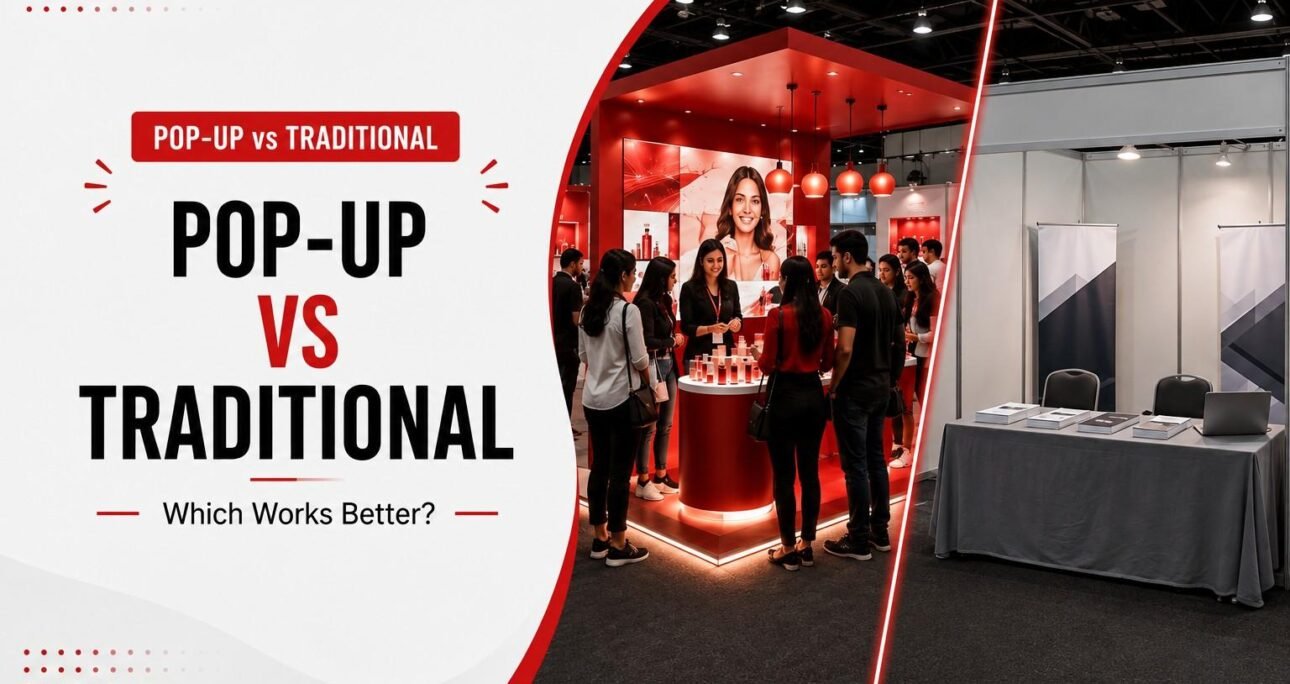
Marketing has evolved significantly over the past decade, but one question continues to challenge businesses of every size: in the debate of experiential marketing vs traditional marketing, which approach actually earns the budget? As consumer behaviour shifts towards authenticity, interaction, and personalised engagement, brands are rethinking how they connect with their audiences. While traditional marketing channels such as television, print, radio, billboards, and digital advertising remain essential for building large-scale awareness, pop-up experiences have emerged as a powerful way to create memorable brand interactions that drive deeper engagement and stronger customer relationships. Unlike conventional advertising, which often delivers one-way brand messages, pop-up experiences invite customers to actively participate. Whether through a temporary retail store, an interactive product launch, a live brand activation, or an experiential event, these campaigns encourage people to explore products, interact with brand representatives, and experience a brand firsthand. This shift from passive exposure to active participation is really the heart of the event marketing vs traditional marketing debate, and it has made pop-up marketing an increasingly valuable strategy for businesses looking to stand out in competitive markets.
At the same time, traditional marketing continues to play a vital role in modern marketing strategies. Its ability to reach large audiences quickly, build consistent brand visibility, and support long-term awareness campaigns makes it an indispensable tool for many organisations. For businesses targeting mass markets or operating across multiple regions, traditional marketing often provides a level of scale and reach that experiential campaigns alone cannot achieve. The real question, however, is not whether one approach is universally better than the other. The answer depends on factors such as your marketing objectives, target audience, industry, budget, customer journey, and the outcomes you want to achieve. A pop-up experience may be the ideal choice for launching a new product or building emotional connections, while traditional marketing may be more effective for driving widespread awareness or reinforcing brand recognition over time.
What Are Pop-Up Experiences?
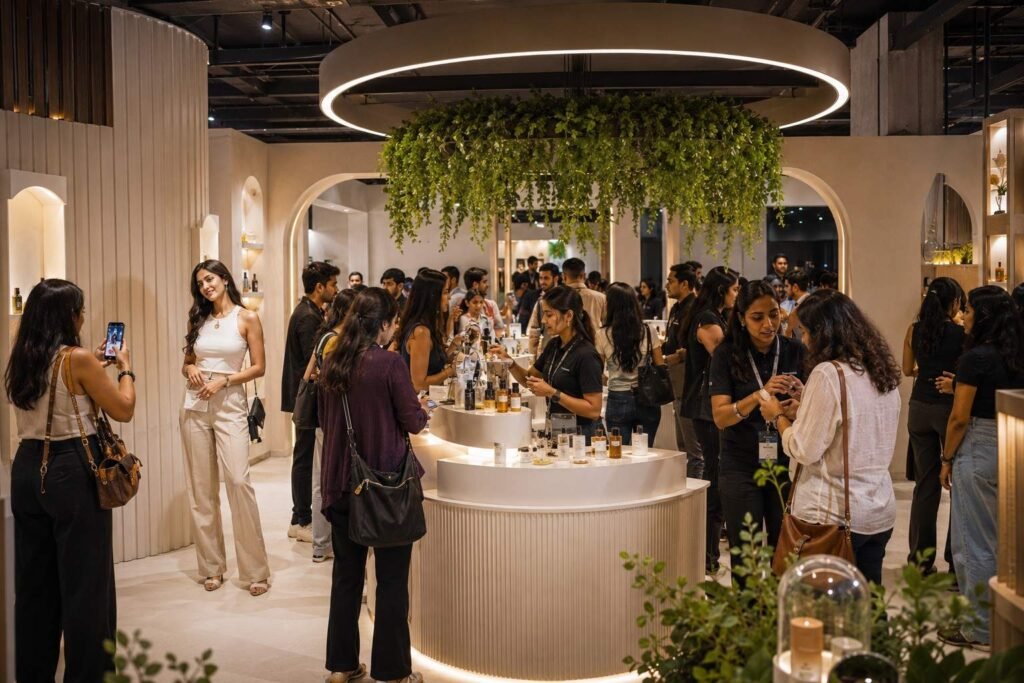
Pop-up experiences are temporary, immersive marketing activities often described as pop-up store marketing or pop-up retail marketing that allow customers to interact with a brand memorably and engagingly. Unlike permanent retail stores or traditional advertising campaigns, pop-up experiences are designed to operate for a limited period ranging from a single day to several weeks, to create excitement, encourage participation, and build stronger emotional connections with audiences. Because the format sits at the intersection of retail and events, marketers increasingly refer to it as temporary retail marketing when the focus is commerce, and experiential marketing when the focus is brand storytelling. Rather than simply promoting a product or service, pop-up experiences invite people to become part of the brand story. Visitors can explore products, attend live demonstrations, participate in interactive activities, test new launches, or engage with immersive installations that make the experience both memorable and shareable. This hands-on approach transforms customers from passive viewers into active participants, making brand interactions more meaningful and impactful.
How Pop-Up Experiences Work
Pop-up experiences create temporary, high-impact brand interactions that encourage customers to participate rather than simply observe. Designed around a limited-time opportunity, they generate excitement and a sense of exclusivity while inviting visitors to explore products, attend demonstrations, join interactive activities, or engage with brand representatives. Many activations also incorporate technologies such as AR, VR, or digital displays to enhance the experience. By combining hands-on engagement with memorable storytelling, pop-up experiences strengthen customer relationships and encourage visitors to share their experiences both on-site and online.
Key Characteristics of Pop-Up Experiences
While every activation is unique, successful pop-up experiences typically share several defining characteristics:
- Limited duration, running from a single day to a few weeks, which creates urgency and encourages immediate action
- High interactivity built around hands-on participation rather than passive viewing
- Strong local relevance often tied to a specific city, neighbourhood, or event through geo-targeted campaigns
- Rich data capture: footfall, dwell time, and product interaction data that traditional media rarely provides
- Built-in shareability: visually distinctive design intended to travel across social platforms
These qualities make pop-up experiences highly effective for capturing attention in crowded markets and creating stronger customer engagement than traditional one-way advertising.
Common Types of Pop-Up Experiences
Pop-up experiences can take many forms depending on the campaign goals, target audience, and industry. Among the most recognisable pop-up marketing examples are:
- Pop-up retail stores that showcase limited-edition products or exclusive collections
- Product launch events where customers can experience new offerings before they reach the wider market
- Experiential brand activations that combine storytelling, technology, and live interaction
- Interactive exhibition booths designed to attract visitors and generate qualified leads
- Festival and event activations that engage large audiences through immersive experiences
- Mobile pop-up experiences that bring brands directly to different cities, campuses, or public spaces
- Community-focused pop-ups that encourage workshops, demonstrations, and local engagement
Each format serves a different purpose, but they all share the same objective: creating meaningful interactions that strengthen customer relationships.
Why Pop-Up Experiences Have Become So Popular
The growing popularity of pop-up experiences reflects changing consumer expectations, and the trend data backs it up. Recent industry benchmarking from sources like EventTrack shows most large marketers continuing to grow their experiential budgets year over year, and research from Freeman and others consistently finds that live, in-person brand interaction increases consumer trust more than passive advertising does. Today’s customers value authenticity, participation, and memorable experiences just as much as the products themselves. Instead of simply seeing advertisements, they want opportunities to explore, ask questions, test products, and interact directly with brands.
At the same time, businesses are recognising that experiential campaigns generate benefits beyond immediate sales. Pop-up experiences help increase brand awareness, encourage social sharing, collect valuable customer insights, generate qualified leads, and build long-term loyalty through genuine human interaction. As a result, industries such as retail, automotive, healthcare, hospitality, technology, real estate, FMCG, and luxury have increasingly adopted pop-up experiences as part of their broader marketing strategies.
What Is Traditional Marketing?

Traditional marketing refers to the use of established offline advertising channels to promote products, services, or brands to a broad audience. Unlike pop-up experiences, which rely on direct interaction and participation, traditional marketing primarily delivers one-way communication through media such as television, radio, newspapers, magazines, billboards, direct mail, and outdoor advertising. Its primary objective is to build brand awareness, communicate key messages, and reach as many potential customers as possible. For decades, traditional marketing has been the foundation of brand promotion because of its ability to deliver consistent messaging across large geographic areas. Although digital and experiential marketing have changed how businesses engage with consumers, traditional marketing continues to play an important role, particularly for campaigns focused on mass visibility, credibility, and long-term brand recognition. Classic traditional advertising examples: a national TV spot, a highway billboard, a full-page newspaper ad still anchor many integrated media plans today.
How Traditional Marketing Works
Traditional marketing delivers brand messages to large audiences through established channels such as television, radio, newspapers, magazines, billboards, and direct mail. Its primary goal is to build awareness and reinforce brand recognition through consistent exposure rather than direct interaction. By reaching broad audiences with a unified message, traditional marketing remains an effective approach for businesses focused on large-scale visibility and long-term brand building.
Common Types of Traditional Marketing
Traditional marketing includes a wide range of offline channels that businesses use to reach their target audience. These include television and radio advertising, newspaper and magazine ads, billboards, direct mail, brochures, flyers, transit advertising, and event sponsorships. Each channel serves a different purpose, and many businesses combine several of them to increase brand visibility, reach a wider audience, and reinforce their message across multiple touchpoints.
Key Characteristics of Traditional Marketing
Traditional marketing has remained relevant because of its ability to consistently deliver large-scale brand exposure. Some of its defining characteristics include:
- Broad, one-way reach designed for mass exposure rather than two-way dialogue
- High production and media cost, especially for television and premium print placements
- Predictable, schedule-driven planning rather than real-time adjustment
- Limited personalisation the same message reaches every viewer or reader
- Strong credibility signalling through association with established media outlets
These characteristics make traditional marketing particularly effective for organisations seeking widespread awareness rather than personalised engagement.
Pop-Up Experiences vs Traditional Marketing: Comparison Matrix
Rather than a simple side-by-side list, the decision usually comes down to nine factors that determine which channel earns its place in the plan:
Factor | Pop-Up Experiences | Traditional Marketing |
Reach | Localised, limited to the activation’s footprint unless run across multiple cities | Broad capable of reaching regional, national, or mass-market audiences quickly |
Engagement | High built on live interaction, product trial, and conversation | Low to moderate one-way exposure with limited immediate response |
Personalisation | Strong staff and technology can tailor the experience in real time | Weak the same message is delivered to every recipient |
Cost | Moderate upfront investment concentrated in venue, staffing, and production | Often high media-buying cost, especially for TV, print, and outdoor placements |
Scalability | Harder to replicate consistently across multiple markets | Easier to scale a single creative across many channels and regions |
Lead Quality | High visitors self-select and engage voluntarily | Lower broad exposure includes many uninterested recipients |
ROI | Strongest for engagement, loyalty, and qualified pipeline | Strongest for awareness, reach, and brand recall |
Best Use Cases | Product launches, sampling, brand activations, trial-heavy categories | Mass-market launches, seasonal campaigns, national brand building |
Measurement | Granular dwell time, interactions, leads, on-site conversions | Aggregate impressions, reach, frequency, circulation |
This matrix highlights that pop-up experiences and traditional marketing aren’t really competing on the same axis one optimises for depth, the other for breadth.
Customer Engagement: Participation vs Exposure
One of the most significant differences lies in how customers experience the brand.
Traditional marketing is designed to expose audiences to a message through television commercials, print advertisements, billboards, radio campaigns, or direct mail. Customers receive the information but have limited opportunities to interact with it immediately.
Pop-up experiences, on the other hand, are built around participation. Customers can explore products, ask questions, try demonstrations, interact with brand representatives, and become active participants in the experience. This higher level of involvement often creates stronger emotional connections and more memorable brand interactions.
Brand Awareness vs Brand Experience
Traditional marketing excels at making people aware of a brand. Its strength lies in delivering consistent messages to large audiences, helping businesses establish recognition and remain visible in competitive markets.
Pop-up experiences focus less on reach and more on the quality of the interaction. Instead of simply introducing a brand, they allow customers to experience its products, values, and personality firsthand. This creates a deeper impression that often leads to stronger trust, higher engagement, and increased brand loyalty.
Reach vs Relevance
Traditional marketing offers unmatched reach, making it ideal for businesses launching nationwide campaigns or targeting diverse customer segments across multiple locations.
Pop-up experiences prioritise relevance over scale, frequently powered by geo-targeted campaigns and location analytics that identify the exact neighbourhoods, footfall patterns, and dayparts most likely to convert. Although they typically reach fewer people, those interactions are often more meaningful because the audience actively chooses to participate. This targeted engagement can result in higher-quality leads, stronger purchase intent, and more valuable customer relationships.
Measuring Success
The success of each approach should be measured against its primary objective. Traditional marketing is typically evaluated through reach, impressions, brand awareness, and audience size, whereas pop-up experiences focus on engagement metrics such as dwell time, product interactions, qualified leads, customer feedback, and conversions. Choosing the right performance indicators provides a more accurate view of campaign effectiveness than relying on a single metric.
Cost and Resource Considerations: Budget Comparison
Budget is another important factor when comparing these approaches, and the cost structures differ in shape as much as size.
Budget Line | Pop-Up Experiences | Traditional Marketing |
Media Buying | Minimal spend goes to the activation, not airtime | Largest single cost, especially TV, print, and outdoor |
Venue | Significant short-term lease or rental of retail or event space | Not applicable |
Staffing | Brand ambassadors, demo staff, and event managers | Minimal mostly agency and production teams |
Technology | AR/VR, POS, RFID tracking, and location analytics tools | Ad-serving, media planning, and tracking platforms |
Logistics | Transport, installation, and dismantling of the activation | Distribution and media placement scheduling |
Production | Set design, fixtures, and interactive installations | Filming, printing, and creative production |
Measurement | On-site analytics, lead capture, incrementality testing | Reach, impressions, brand-lift studies |
Typical Investment | Moderate, concentrated over a short campaign window | Often higher overall, spread across a longer flight |
Rather than comparing costs alone, businesses should evaluate which approach delivers the greatest value based on their specific campaign objectives.
Why Consumer Behaviour Is Shifting Towards Pop-Up Experiences
Consumers increasingly prefer authentic, interactive experiences over passive advertising. Instead of simply seeing promotional messages, they want opportunities to explore products, ask questions, and engage directly with brands. At the same time, the rise of social media has amplified the appeal of shareable experiences, allowing brands to extend their reach through user-generated content. This shift has encouraged businesses to invest more in experiential marketing as a way to build stronger relationships, increase engagement, and create lasting brand impressions.
Emotional Connections Influence Buying Decisions
Purchasing decisions are often driven by emotions as much as logic. While traditional marketing communicates product features and benefits, pop-up experiences create opportunities for customers to build emotional connections through participation and shared experiences. Whether it’s attending an exclusive product launch, customising a product, or taking part in an interactive brand activation, these moments help create positive memories that strengthen brand perception and increase the likelihood of future purchases.
Consumers Expect Personalised Experiences
Personalisation has become an essential part of modern marketing. Customers increasingly expect brands to understand their interests, preferences, and needs rather than delivering the same message to everyone. Pop-up experiences make personalisation easier by allowing brands to adapt interactions in real time. From tailored product recommendations and live demonstrations to customised experiences and one-to-one conversations, these activations create a customer journey that feels more relevant and engaging than traditional mass advertising.
Social Media Has Changed How People Experience Brands
Social media has transformed consumers from passive audiences into active content creators. Industry research consistently finds that the vast majority of event attendees create some form of digital or social content while they’re there, and much of it gets shared and viewed by their networks afterwards. People enjoy discovering unique experiences, sharing them with their communities, and influencing the purchasing decisions of others. Pop-up experiences naturally support this behaviour by creating visually engaging environments, interactive installations, and exclusive moments that people want to photograph, record, and share online. This user-generated content extends the campaign’s reach organically while adding authenticity that paid advertising often cannot replicate.
Trust Is Built Through Real Experiences
Consumers are becoming more selective about the brands they support. Rather than relying solely on promotional messages, they look for authentic interactions that help them evaluate products and services with confidence. Pop-up experiences build trust by allowing customers to interact directly with products, speak with knowledgeable representatives, and receive immediate answers to their questions. These face-to-face interactions reduce uncertainty and often create stronger credibility than one-way advertising, a dynamic that research from firms like Freeman has repeatedly linked to measurable increases in reported brand trust after a live interaction.
Benefits of Pop-Up Experiences
Stronger Customer Engagement and Lasting Brand Recall
Pop-up experiences transform customers from passive observers into active participants by encouraging them to interact with products, ask questions, join demonstrations, and engage directly with the brand. These hands-on interactions create memorable experiences that improve brand recall and foster emotional connections, making customers more likely to remember the brand and develop long-term loyalty.
Higher-Quality Leads and Better Customer Insights
Unlike traditional advertising that focuses primarily on reach, pop-up experiences attract audiences who willingly choose to engage. Through product demonstrations, personalised conversations, and interactive activities, brands can generate qualified leads while collecting valuable insights into customer preferences, behaviours, dwell time, and purchase intent. These insights help refine future marketing strategies and improve overall campaign performance.
Increased Visibility Through Omnichannel Marketing Integration
Well-executed pop-up experiences naturally generate social media content as visitors share photos, videos, and live updates. When combined with omnichannel marketing integration through social media, email campaigns, influencer collaborations, paid advertising, and retail partnerships, these activations extend their reach beyond the physical location, creating a consistent customer experience across multiple channels.
Greater Flexibility, Exclusivity, and Measurable Business Results
Because pop-up experiences are temporary, they create a sense of urgency that encourages immediate participation while giving brands the flexibility to test new markets, products, and creative concepts without long-term commitments. At the same time, businesses can measure meaningful outcomes such as engagement, qualified leads, conversion rates, product interactions, and pop-up marketing ROI, making future campaigns easier to optimise.
Challenges of Pop-Up Experiences
Planning and Operational Complexity
A successful pop-up experience demands careful coordination from start to finish. Venue selection, permits, staffing, logistics, technology setup, and visitor management all need to work together to create a seamless experience. Even minor operational issues can affect customer satisfaction, which is why detailed planning and early preparation are essential.
Budget, Scale, and Location Constraints
Unlike ongoing campaigns, pop-up activations operate within a limited timeframe and often require a significant upfront investment in production, branding, staffing, and technology. Expanding the same experience across multiple cities also increases costs and complexity. Choosing the right location through geo-targeted campaigns and location analytics can improve results, but businesses must still account for geographic limitations and visitor turnout.
External Risks and Sustainability
Weather conditions, technical failures, and unexpected disruptions can all impact the success of a live activation, particularly for outdoor events. At the same time, brands are placing greater emphasis on the sustainability of temporary activations by reducing waste, using reusable materials, and planning responsible dismantling after the event.
Measuring Long-Term Success
While footfall and engagement can be tracked during the activation, understanding the campaign’s long-term business impact requires a broader view. Measuring customer loyalty, repeat purchases, and brand perception often involves ongoing analysis, including incrementality testing, rather than relying only on immediate sales. The most successful campaigns balance creative experiences with clear business objectives and measurable outcomes.
Benefits of Traditional Marketing
Broad Reach and Strong Brand Visibility
Traditional marketing excels at reaching large audiences across cities, regions, and even entire countries through channels such as television, radio, newspapers, magazines, billboards, and direct mail. Repeated exposure helps build strong brand awareness, reinforces consistent messaging, and keeps businesses top of mind, making it particularly effective for nationwide campaigns and long-term brand building.
Builds Credibility and Customer Trust
Advertising through established media channels often enhances a brand’s credibility because consumers associate traditional platforms with reliability and professionalism. Consistent visibility across trusted media not only strengthens brand recognition but also builds customer confidence and reinforces trust through repeated exposure over time.
Supports Integrated and Local Marketing Efforts
Traditional marketing continues to play an important role within omnichannel marketing integration by complementing digital campaigns, pop-up activations, and experiential marketing. It is equally valuable for regional campaigns, helping businesses achieve high visibility in local markets through newspapers, radio stations, transit advertising, and outdoor media while supporting large product launches and promotional initiatives.
Predictable Planning and Long-Term Growth
One of the biggest advantages of traditional marketing is its structured and predictable execution. Campaigns can be planned well in advance, coordinated across multiple channels, and maintained consistently over long periods. This makes traditional marketing a reliable foundation for sustained brand growth while supporting broader integrated marketing strategies.
Challenges of Traditional Marketing
Limited Engagement and Personalisation
Traditional marketing primarily relies on one-way communication, giving customers few opportunities to interact with a brand or receive personalised experiences. As consumer expectations continue to shift towards engagement and participation, traditional advertising may struggle to create the same level of connection as experiential campaigns.
Difficult Measurement and Limited Insights
Unlike digital marketing, traditional campaigns provide limited customer data and can be difficult to measure accurately. Without robust attribution modelling, businesses often struggle to connect television, print, radio, or billboard campaigns directly to conversions, making campaign optimisation and ROI measurement more challenging.
High Costs and Reduced Flexibility
Premium advertising channels often require substantial investment, making them less accessible for smaller businesses. Once a campaign has been published or broadcast, updating creative assets or adjusting messaging is expensive and time-consuming, limiting opportunities to optimise performance while the campaign is live.
Increasing Competition for Consumer Attention
Consumers are exposed to thousands of marketing messages every day, making it harder for traditional advertising to stand out. Broad targeting, declining attention spans, slower optimisation, limited social sharing, and growing competition from digital and experiential marketing all reduce its ability to maintain audience engagement over time.
Pop-Up Experiences vs Traditional Marketing: Which Delivers Better ROI?
Pop-up experiences generally deliver a higher return on investment (ROI) when the objective is customer engagement, qualified lead generation, product education, and brand loyalty. Traditional marketing, however, often provides better ROI for large-scale brand awareness, market reach, and long-term visibility. The better investment depends on what your business is trying to achieve rather than which marketing approach is more popular and getting this comparison right increasingly depends on the sophistication of your measurement stack. One of the biggest mistakes businesses make is measuring both strategies using the same metrics. A television campaign and a pop-up activation are designed to produce different outcomes, so their success should be evaluated differently.
Understanding Marketing ROI Beyond Sales
Marketing ROI is often associated with immediate revenue, but successful campaigns create value in many other ways. Getting a true read on either channel now depends on four connected disciplines: attribution modelling to credit the right touchpoint, customer lifetime value (CLV) to value the relationship rather than the single transaction, incrementality testing to isolate what the campaign actually caused versus what would have happened anyway, and measuring assisted conversions to capture the influence a pop-up visit or ad exposure has on a purchase completed elsewhere. A traditional advertising campaign may generate millions of impressions and significantly increase brand awareness, while a pop-up experience may engage fewer people but produce stronger customer relationships, higher-quality leads, and greater purchase intent. Industry surveys have repeatedly found a sizeable share of marketers reporting stronger returns from experiential investment than from other channels, though the honest answer is that pop-up marketing ROI and traditional media ROI are simply optimised for different outcomes.
ROI Comparison: Pop-Up Experiences vs Traditional Marketing
Dimension | Pop-Up Experiences | Traditional Marketing |
Primary ROI driver | Engagement, lead quality, CLV uplift | Awareness, reach, frequency |
Attribution difficulty | Moderate on-site data plus assisted conversions | High requires attribution modelling across channels |
Time to measurable result | Short often within days of the activation | Long brand-lift studies over months |
Best measured by | Incrementality testing, dwell time, conversion rate | Impressions, reach, brand recall studies |
This comparison highlights that ROI should be measured according to the desired business outcome rather than a single financial metric.
When Pop-Up Experiences Deliver Better ROI
Pop-up experiences often deliver a stronger return on investment when the goal is to build genuine customer engagement rather than simply increase visibility. They are especially effective for product launches, demonstrations, customer trials, lead generation, and creating memorable brand moments. Because people choose to visit and interact with the experience, brands often gain higher-quality conversations, valuable customer insights, and stronger emotional connections than they would through traditional advertising alone.
When Traditional Marketing Delivers Better ROI
Traditional marketing is often the better choice when businesses need to reach a large audience quickly and maintain consistent brand visibility. It works well for building nationwide awareness, supporting long-term branding campaigns, promoting seasonal offers, and reinforcing brand recognition through repeated exposure. For companies targeting mass-market audiences, traditional marketing remains an effective way to achieve broad and reliable reach.
Measuring ROI the Right Way
The success of any marketing campaign depends on tracking the right metrics rather than focusing on reach alone. For pop-up experiences, businesses should measure factors such as customer engagement, dwell time, qualified leads, product demonstrations, customer feedback, social media activity, conversion rates, and repeat interactions. Traditional marketing campaigns are typically evaluated using metrics like audience reach, impressions, brand awareness, website traffic, enquiries, sales growth, and market share. Measuring performance against clear campaign objectives, supported by consistent attribution modelling, provides a more accurate understanding of what delivers the best return on investment.
The Best ROI Often Comes from Combining Both Strategies
Rather than viewing pop-up experiences and traditional marketing as competing approaches, many successful brands use them together through deliberate omnichannel marketing integration. For example, traditional marketing can create awareness before a campaign launches by promoting an upcoming pop-up event through television, radio, print, or outdoor advertising. The pop-up experience then converts that awareness into meaningful engagement by allowing customers to interact with products, ask questions, and build stronger relationships with the brand. This integrated strategy combines the strengths of both approaches: broad reach from traditional marketing and deep engagement from experiential marketing, resulting in a more effective customer journey and stronger overall marketing performance.
Decision Framework: Pop-Up, Traditional, or Hybrid?
Choosing between the two isn’t about which channel is trendier it’s about matching the approach to seven concrete decision factors:
Decision Factor | Choose Pop-Up | Choose Traditional | Choose Hybrid |
Campaign objective | Engagement, trial, loyalty | Mass awareness, recall | Awareness plus engagement |
Audience | Niche, local, or highly targeted | Broad, mass-market | Broad audience with a local activation layer |
Budget | Moderate, concentrated spend | Large, sustained media spend | Split across both channels |
Timeline | Short, campaign-specific window | Longer, scheduled flight | Phased: awareness first, activation second |
Product complexity | High needs demonstration or trial | Low message is simple to communicate | Moderate to high |
Geographic reach | Single city or a few target markets | Regional, national, or international | National awareness with regional activations |
Measurement needs | Granular engagement and lead data | Reach, frequency, brand-lift studies | Full-funnel attribution across channels |
For most mid-sized and enterprise brands, a hybrid path tends to outperform either channel used alone.
Conclusion
Pop-up experiences and traditional marketing are not competing strategies they solve different marketing challenges. Traditional marketing remains highly effective for building large-scale awareness, while pop-up experiences create meaningful interactions that strengthen customer relationships and generate valuable business insights. The strongest marketing strategies combine the reach of traditional advertising with the engagement of experiential activations. By selecting the right mix based on your objectives, audience, budget, and customer journey, businesses can maximise both brand visibility and long-term marketing performance. As customer expectations continue to evolve, brands that balance broad awareness with memorable, experience-led engagement will be better positioned to build trust, drive conversions, and achieve sustainable growth.
FAQs
1. What is the difference between a pop-up experience and traditional marketing?
A pop-up experience is a temporary, interactive brand activation that encourages customers to engage directly with a product or service through live experiences, demonstrations, or immersive activities. Traditional marketing, on the other hand, focuses on reaching large audiences through channels such as television, radio, newspapers, magazines, and billboards, with the primary goal of increasing brand awareness.
2. Which delivers better ROI: pop-up experiences or traditional marketing?
The answer depends on your campaign objectives. Pop-up experiences generally deliver better ROI for customer engagement, lead generation, product education, and brand loyalty, while traditional marketing is more effective for mass awareness, large-scale reach, and long-term brand visibility. Measuring ROI against the right business goals supported by attribution modelling and incrementality testing is essential for making an accurate comparison.
3. Are pop-up experiences suitable for small businesses?
Yes. Pop-up experiences can be highly effective for small businesses because they offer a cost-efficient way to engage customers, test new markets, launch products, and increase local brand awareness. Even a small, well-planned activation can create meaningful customer interactions and generate valuable word-of-mouth marketing.
4. When should a business choose traditional marketing over a pop-up experience?
Traditional marketing is the better choice when the goal is to reach a large audience quickly, build nationwide or regional brand awareness, reinforce long-term brand recognition, or support large-scale promotional campaigns. It works particularly well for businesses targeting broad consumer markets.
5. Can pop-up experiences and traditional marketing work together?
Absolutely, many successful brands combine both strategies by using traditional marketing to create awareness and drive attendance, while pop-up experiences provide interactive customer engagement. This integrated, omnichannel approach helps businesses maximise both reach and customer participation.
6. What industries benefit most from pop-up experiences?
Pop-up experiences are widely used in industries such as retail, fashion, automotive, technology, healthcare, hospitality, FMCG, beauty, real estate, and consumer electronics. They are especially effective for businesses that want customers to experience products before making a purchase.
7. How do businesses measure the success of a pop-up experience?
Businesses typically evaluate pop-up experiences using metrics such as visitor footfall, customer engagement, dwell time, qualified leads, product interactions, conversion rates, customer feedback, social media engagement, and overall return on investment (ROI), often supplemented with incrementality testing to isolate the campaign’s true impact.
8. Is traditional marketing still effective in the digital age?
Yes, traditional marketing continues to play an important role in building brand awareness, credibility, and market presence. While digital and experiential marketing have become more prominent, traditional advertising remains highly effective when integrated into a broader omnichannel marketing strategy.
9. What are the biggest advantages of pop-up experiences?
The biggest advantages include stronger customer engagement, memorable brand experiences, higher-quality lead generation, increased brand recall, product education, social media visibility, and valuable customer insights. These benefits make pop-up experiences particularly effective for businesses focused on relationship building and customer interaction.
10. How can businesses decide which marketing strategy is right for them?
The right strategy depends on factors such as campaign objectives, target audience, product complexity, budget, timeline, geographic reach, and measurement needs- the same seven factors used in the decision framework above. Businesses focused on awareness may benefit more from traditional marketing, while those aiming to increase engagement, generate leads, or create memorable customer experiences often achieve better results with pop-up activations. In many cases, combining both approaches delivers the strongest overall marketing performance.