Corporate Dealer Meet Planning: How to Strengthen Partner Relationships

Corporate Dealer Meet Planning: How to Strengthen Partner Relationships

A dealer meeting should do more than bring partners together for presentations and annual updates. When planned with a clear purpose, it can help companies communicate business priorities, understand dealer needs, recognise contributions and create stronger partner relationships. The most effective corporate dealer meet planning starts with three decisions: what dealers need to know, what they should experience, and what should happen after the event. Those decisions shape the format, audience, agenda, engagement, hospitality and follow-up. A useful planning principle is to treat the meet as a partner experience rather than a one-day event. Dealers should leave with clearer business direction, useful conversations and a clear reason to continue engaging with the company.
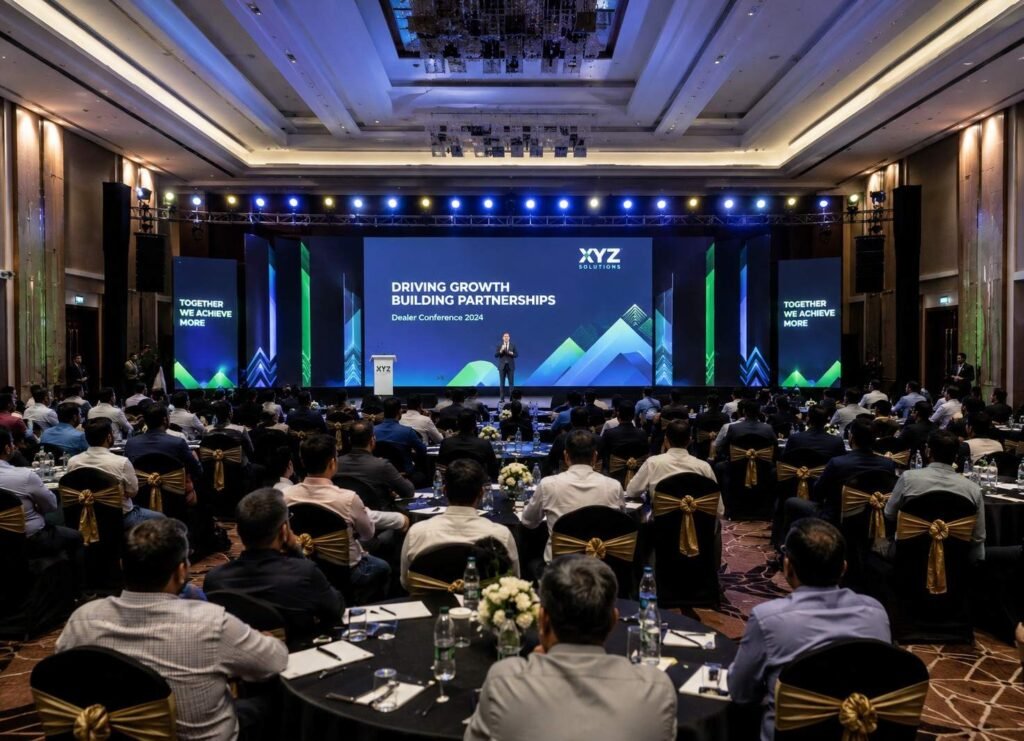
 

Corporate dealer meet event

What Is a Corporate Dealer Meet?

A corporate dealer meet is a business event where a company brings together dealers, distributors or channel partners to discuss business priorities, share product and market updates, recognise achievements and strengthen partner relationships. Unlike an internal sales meeting, it is designed around the needs of an external partner network. The format can vary according to the objective. A manufacturer may use a dealer meet to introduce a new product range, an automotive brand may focus on sales performance and market opportunities, while a company with a large national network may organise a dealer conference. Common objectives include:

  • Launching a new product or service
  • Communicating business strategy
  • Improving dealer engagement
  • Recognising high-performing partners
  • Gathering market feedback
  • Introducing new incentives or initiatives
  • Strengthening relationships with key dealers

The objective should come first. A product launch may need demonstrations and hands-on experiences; a relationship-focused meet may need more leadership interaction and smaller conversations. The event format should follow the outcome, not the other way around.

Why Dealer Meets Are More Than Business Meetings
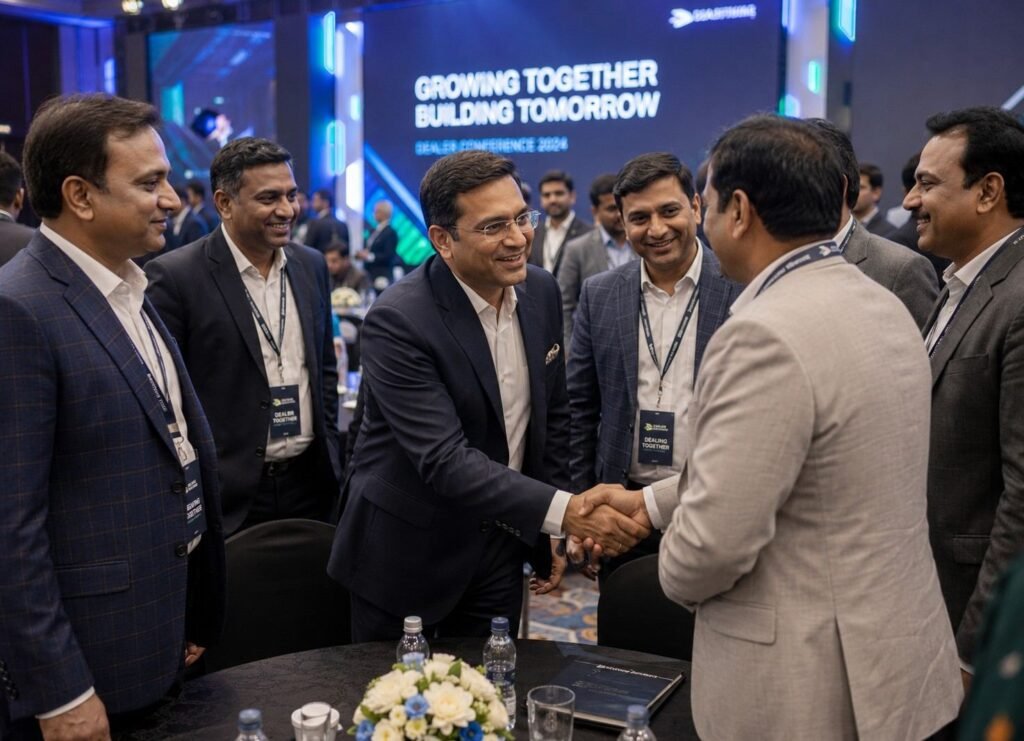
Corporate dealer meeting

A dealer meet can bring together business presentations, product updates and performance discussions, but its value extends beyond the information shared on stage. Dealers experience the company through every interaction, from the first invitation and arrival to conversations with leadership and follow-up after the event. That makes a dealer meet an opportunity to strengthen the relationship, not simply communicate a business message. A useful approach to corporate dealer meet planning is to consider three questions: What should dealers know? What should they feel? What should they do next?


Give Dealers Business Clarity

Dealers need a clear understanding of where the company is heading and what that direction means for them. Leadership sessions, market updates and product presentations can address questions such as:

  • What opportunities are emerging in the market?
  • Which products or categories are likely to receive greater focus?
  • What changes should dealers prepare for?
  • What support will the company provide?
  • What are the priorities for the coming period?

The objective is not to fill the agenda with information. It is to make the information relevant to the people who will act on it.


Make Partners Feel Recognised

A dealer relationship is not based on sales numbers alone. Long-term partners also want to know that their contribution is noticed. Recognition can take many forms, including performance awards, loyalty milestones, dealer success stories or direct interaction with senior leadership. The important part is making the recognition meaningful rather than treating it as a routine ceremony. A well-designed experience can communicate something simple but important: “Your contribution matters to our business.”


Give Dealers a Voice

Dealer meetings should not be entirely one-way. Dealers often have first-hand knowledge of customer expectations, regional market conditions and challenges faced at the point of sale. Panels, workshops, live Q&A sessions and structured feedback discussions can create space for those insights. This benefits both sides. Dealers get an opportunity to be heard, while companies gain perspectives that may not emerge through regular business communication.


Create Opportunities to Connect

Bringing partners together in one location creates opportunities that may not exist during everyday business interactions. Leadership roundtables, curated networking sessions and dealer-to-dealer discussions can encourage useful conversations. These interactions can help strengthen relationships between partners as well as between dealers and the company. Networking, however, should have a purpose. Simply adding a networking break to the schedule does not guarantee meaningful engagement.


Think Beyond the Event Day

The relationship does not end when the final session closes. Feedback collection, sharing relevant event material, following up on dealer questions and connecting sales teams with specific partner requirements can extend the value of the meet. This is why a dealer meet should be viewed as a before-during-after journey, rather than a single day on the corporate calendar. When companies plan around that journey, the event becomes more than a business meeting. It becomes a structured opportunity to create clarity, encourage participation, recognize contribution and strengthen long-term partner relationships.

The Dealer Relationship Journey: 7 Touchpoints That Build Stronger Partnerships
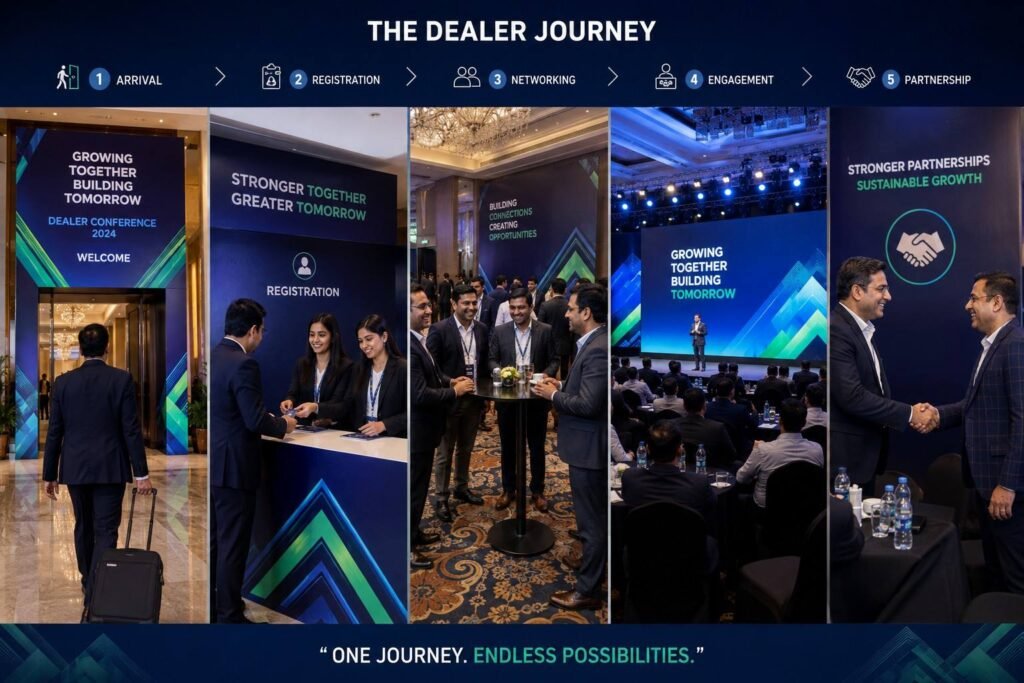
7 Touchpoints That Build Stronger Partnerships

A dealer meet begins before the first guest reaches the venue and continues after the closing session. Planning around these seven touchpoints helps keep the experience connected rather than treating invitations, sessions, networking and follow-up as separate tasks.


1. Invite: Set the Expectation

The invitation should explain why the gathering matters, not only provide the date and venue. Clear travel information, reminders and relevant event details reduce uncertainty, and help dealers understand what to expect.


2. Welcome: Make Arrival Effortless

Registration, signage, guest assistance, hospitality and venue movement should work without unnecessary friction. A smooth arrival tells dealers that their presence has been planned for.


3. Inform: Give Dealers Business Clarity

Leadership, market and product sessions should answer questions that matter to dealers: What is changing? What opportunities are emerging? What should partners prepare for? What support will the company provide?


4. Involve: Give Dealers a Voice

Dealer panels, live Q&A, workshops, polls, demonstrations and roundtables can turn a presentation-led event into a two-way conversation. Dealers often have first-hand insight into customer objections, regional demand and competitive activity, so participation also creates a useful feedback channel for the company.


5. Recognise: Make Achievement Specific

Recognition is stronger when it connects an award to a genuine contribution, milestone or success story. Performance, growth, loyalty and regional achievement can all be recognised when the criteria are clear and credible.


6. Connect: Design Networking Intentionally

Do not assume that adding a networking break will create useful conversations. Decide which relationships need attention first, then design roundtables, seating, breakout groups or peer discussions around those connections.


7. Continue: Turn Conversations Into Next Steps

After the event, share relevant materials, respond to questions and connect dealers with the right sales or leadership teams. If a dealer raises a product enquiry or business concern, assign a clear next step rather than leaving the conversation at the venue.


This journey provides the experience framework. The detailed planning decisions below should support it.

How to Plan a Corporate Dealer Meet Step by Step

Once the partner journey is clear, move into the practical planning decisions.


1. Define the Business Objective

Before planning the event, be clear about what you want to achieve. It could be a product launch, business update, dealer recognition, market feedback or stronger partner relationships. A simple way to define this is: What should dealers understand, experience or take away from the event?.


This will also help shape the agenda. For example, if the goal is to introduce a new product, dealers may need more time for demonstrations and questions. If the goal is relationship building, there should be more room for conversations and interaction. For larger dealer meets, avoid filling the schedule with presentations. Go through each session and ask whether it really needs to happen on stage or whether the information could be shared before or after the event. This leaves more time for the conversations and experiences that dealers actually came for.


2. Understand and Segment the Dealer Audience

Look at region, performance, partnership tenure, revenue contribution, growth potential and product focus. Use segmentation only where it changes the experience. Newer partners may need stronger product orientation; strategic partners may need leadership access; regional groups may need market-specific discussion.


3. Select the Right Event Format

Choose the format that supports the objective. Options include a national dealer conference, regional dealer meet, product launch, awards event, workshop, leadership gathering or destination meet. A smaller strategic group may benefit from an intimate discussion-led format, while a large national network may need common business communication plus focused breakouts.


4. Choose the Venue

Assess accessibility, capacity, accommodation, production infrastructure, breakout areas, product-display possibilities, dining and guest movement. The most impressive venue is not automatically the most useful one.


5. Build a Purposeful Agenda

Create a flow between business communication, participation, recognition and connection. Avoid filling every minute with presentations. Include transition time and enough space for questions and dealer interaction.


6. Design the Experience Around the Message

Stage design, audiovisual production, product displays, interactive zones and hospitality should reinforce the business story. If innovation is the message, for example, a working demonstration may communicate it better than another slide.


7. Plan Recognition and Engagement

Define award criteria early and choose engagement formats that support the objective. Panels, demonstrations, workshops, polls, leadership Q&A and curated networking are useful when they give dealers a reason to participate.


8. Coordinate Production, Logistics and Execution

Travel, accommodation, transport, registration, stage and set, audiovisual production, branding, catering, speaker management, rehearsals and on-ground staffing need clear ownership. Prepare a detailed run-of-show and contingency plan so the team can respond to delays or technical issues without losing the event’s purpose.


9. Plan Follow-Up Before the Event

Decide in advance how questions, enquiries, feedback and partner requests will be captured and assigned. This makes post-event action part of the event design rather than an afterthought.


10. Measure Against the Original Objective

Choose the few metrics that prove whether the objective was achieved. Depending on the event, these may include participation, feedback, product enquiries, meetings, opportunities, partner satisfaction or post-event actions.

How to Choose the Right Dealer Meet Format

The right dealer meet format depends on what the company wants to achieve, who the partners are and how much interaction the event requires. A large national network may need a different approach from a small group of strategic dealers. Choosing the format should therefore begin with the business objective, not with the venue or event style.

Dealer Meet Format

Best Suited For

Primary Objective

Relationship Benefit

National Dealer Conference

Large, geographically distributed networks

Business alignment and growth planning

Creates a shared direction across the network

Regional Dealer Meet

Dealers within a specific market

Regional priorities and market discussions

Enables more relevant local conversations

Product Launch Meet

New products or portfolio launches

Product awareness and education

Builds dealer confidence in the offering

Dealer Awards Event

High-performing or long-term partners

Recognition and motivation

Reinforces appreciation and loyalty

Dealer Workshop

Product, sales or capability development

Knowledge sharing and skill building

Encourages active participation

Leadership Meet

Strategic or key partners

Senior-level interaction

Builds direct access and trust

Destination Dealer Meet

Selected or high-value partners

Relationship building and networking

Creates more informal opportunities to connect


National Dealer Conference

A national dealer conference works well when a company needs to bring a large partner network together around common business priorities. The challenge is keeping the content relevant to dealers operating in different markets. A combination of company-wide communication, regional discussions, interactive sessions and networking can help maintain that balance.


Regional Dealer Meet

A regional format allows the company to address market-specific conditions and challenges. Because the audience is more focused, there can be greater room for direct discussion around local customer behaviour, sales opportunities and partner concerns. This format can also make networking more relevant because dealers may share similar market experiences.


Product Launch Meet

When introducing a new product, the event should help dealers understand more than its features. Demonstrations, application-based experiences, interactive product zones and question-and-answer sessions can help partners understand how the offering works and how they can present it to customers. For technical products, this hands-on approach can be particularly valuable.


Dealer Awards Event

An awards-led event puts partner recognition at the centre of the experience. Instead of treating awards as a short segment added to a business conference, the programme can give greater attention to dealer achievements, milestones and success stories. Recognition is most effective when it feels specific and credible. Categories should reflect genuine contributions and business priorities.


Dealer Workshop

A workshop is useful when the company wants dealers to actively develop knowledge or capabilities. Rather than relying entirely on presentations, workshops can use practical exercises, discussions, demonstrations and problem-solving activities. This format works particularly well when the event objective is learning rather than simply information sharing.


Leadership Meet

A smaller leadership meeting can be valuable for strategic partners who would benefit from direct interaction with senior decision-makers. Roundtables, closed discussions, and informal conversations can create space for dealers to discuss business challenges more openly. This can be more effective than placing the same group into a large conference where individual interaction is limited.


Destination Dealer Meet

A destination meeting can provide additional time for informal conversations and relationship building. Because participants spend more time together outside formal sessions, it can create opportunities for deeper interaction. However, the destination should support the purpose of the event. The location and activities should enhance the relationship experience rather than overshadow the business objective.

Why Dealer Segmentation Matters When Planning a Meet

A dealer network is rarely a uniform audience. Partners can differ by region, performance, tenure, revenue contribution, product focus and growth potential. Segmentation helps the planning team identify where those differences should affect the experience.


Segment Around Meaningful Criteria

Use only criteria that change what a partner needs from the event. High-performing dealers may need meaningful recognition; newer partners may need product education; strategic partners may benefit from leadership interaction.


Use Segmentation to Shape Selected Touchpoints

The main event does not need a different agenda for every group. A common leadership session can be followed by regional, product or performance-focused discussions. Targeted invitations, breakout sessions, recognition and follow-up can add relevance without multiplying complexity.


Keep Personalisation Practical

The goal is not to make every dealer feel as though they attended a different event. It is to make important moments more relevant. Small changes in communication, seating, discussion groups or follow-up can often achieve that.

9 Dealer Meet Engagement Ideas That Give Partners a Reason to Participate  
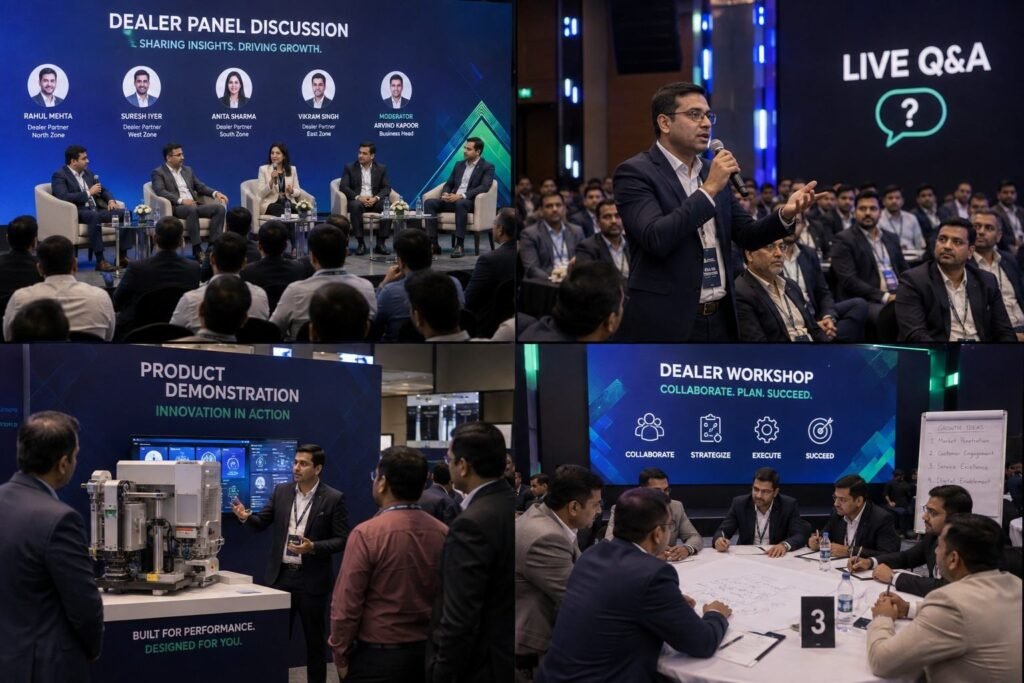
9 Dealer Meet Engagement Ideas

A dealer meet becomes more valuable when partners have opportunities to participate rather than simply listen. The most effective dealer meet engagement ideas should support a clear business or relationship objective, giving dealers a reason to contribute to the conversation. Instead of adding activities simply to make the event entertaining, ask what each experience should help dealers understand, discuss, experience or remember.


1. Dealer Panels

A dealer panel can bring real market perspectives into the event. Selected dealers can share their views on customer expectations, regional challenges, product experiences or changing market conditions. This gives other partners an opportunity to learn from their peers while showing that the company values the experience and knowledge within its dealer network. It also creates a more balanced conversation between the brand and its partners.


2. Live Q&A With Leadership

Leadership presentations become more engaging when dealers have an opportunity to ask questions directly. A moderated Q&A can open up discussions around market conditions, product plans, dealer support, customer trends and future opportunities. Questions can be collected beforehand to identify common concerns, while live questions can keep the conversation more natural and responsive.


3. Interactive Product Demonstrations

When a dealer meeting includes a product launch or portfolio update, dealers should have an opportunity to experience the offering rather than only hear about it. Interactive demonstrations, product displays and hands-on sessions can help partners understand applications, features and customer benefits more clearly. This can be particularly useful for technical or complex products that are difficult to explain through presentations alone.


4. Dealer Workshops

Workshops can turn business or product communication into practical learning. Instead of simply presenting information, dealers can work through real situations involving customer objections, new products, market changes, sales challenges or potential business opportunities. The format works best when dealers are encouraged to contribute their experiences and ideas rather than simply receive information from the company.


5. Market Insight Discussions

Dealers are often close to customers and can provide valuable insight into what is happening in their markets. Structured discussions can explore questions such as what customers are asking for, which products are gaining attention, what challenges dealers are facing and how competitors are approaching the market. These conversations make the dealer meeting useful for both sides: partners get a platform to share their views, while the company gains a better understanding of market realities.


6. Recognition Moments

Recognition can acknowledge performance, loyalty, growth and other meaningful contributions. Rather than treating it as a short awards segment, companies can build stories around dealer achievements and highlight the contribution behind the result. A well-planned recognition moment can make partners feel appreciated while reinforcing the value of the relationship.


7. Curated Networking

Networking becomes more useful when there is a clear reason behind the interaction. Leadership roundtables, regional discussions, product-focused conversations and dealer-to-dealer exchanges can create more relevant connections than an unstructured networking break. The format should depend on the relationships the company wants to encourage, and the type of conversations dealers are likely to find valuable.


8. Interactive Polls and Feedback

Live polls can encourage participation, particularly when a dealer meet has a large audience. Questions around market trends, customer behaviour or product priorities can generate immediate responses and give the company a snapshot of what partners are thinking. Discussing the results during the session also makes feedback part of the event itself rather than something collected only through a post-event survey.


9. Experiential Brand and Product Zones

Interactive brand or product zones can give dealers another way to explore the company’s offering. Depending on the industry, these could include product demonstrations, application showcases, interactive displays, technology-led experiences or brand storytelling installations. The important thing is to connect the experience to a business message. An experiential zone should help dealers understand or remember something valuable rather than simply occupy space at the venue.


Choose Engagement Ideas Based on the Objective

Not every activity belongs in every dealer meet.

Objective

Suitable Engagement Approach

Build product confidence

Demonstrations and hands-on experiences

Gather dealer feedback

Panels, polls and roundtables

Improve knowledge

Workshops and product sessions

Strengthen leadership relationships

Leadership Q&A and small-group discussions

Recognize partners

Awards and dealer success stories

Encourage dealer networking

Curated networking and peer discussions


The strongest dealer meet ideas are therefore not necessarily the most elaborate ones. They are the ones that give partners a meaningful role in the experience while supporting what the company wants to achieve. When engagement is planned with purpose, dealers are more likely to leave with something beyond information: a clearer understanding of the business, a stronger connection with the brand and a reason to continue the conversation after the event.

How to Build a Dealer Meet Agenda Without Overloading Partners With Presentations

The agenda should create enough business clarity without turning the event into a full day of passive listening.


  • Start With the Objective: Define the one or two messages dealers must take away. Then decide where live communication, discussion or demonstration adds value.
  • Create a Logical Flow: A useful structure is: Welcome → Business Context → Strategy/Product → Interaction → Recognition → Networking → Closing. The exact sequence can change, but each session should have a clear role.
  • Balance Presentations With Participation: Use dealer panels, Q&A, workshops, demonstrations and roundtables where interaction is important. Do not give live stage time to information that could be sent before or after the event.
  • Give Recognition Enough Time: If recognition matters, do not squeeze it into the final minutes. Give achievements enough context to feel specific and credible.
  • Design Networking With Purpose: Match networking to the relationships you want to strengthen. Leadership roundtables, regional conversations and peer discussions are more useful than an undefined networking block.
  • Leave Room for Flexibility: Build transition time into the run-of-show. A practical agenda has enough breathing room to absorb a late arrival, speaker overrun or technical issue.
  • End With a Clear Next Step: Close with three answers: What did dealers learn? Why does it matter? What happens next? This connects the event to the ongoing partner relationship.

How to Measure the Success of a Dealer Meet

A smooth event and strong attendance are useful execution indicators, but they do not prove that the meet achieved its purpose. Measurement should start with the objective defined during planning.


Track the Right Signals

Depending on the objective, useful measures can include:

  • Attendance and participation by relevant dealer groups
  • Questions, poll responses, workshop participation and product interactions
  • Feedback on content, leadership access, hospitality and overall relevance
  • Product enquiries, demonstration requests and follow-up meetings
  • Business opportunities or actions created after the event
  • Qualitative relationship signals such as continued communication or participation in future initiatives


Measure What Happens After the Event

The strongest question is not only “Did dealers enjoy the event?” but “What changed because the event happened?”

Set a follow-up window that fits the business cycle and review whether agreed actions were completed. A product launch may require enquiry and conversion tracking; a relationship-focused meet may need feedback and continued engagement measures. The metrics should be selected before the event so the team knows what to capture during the experience and what to review afterwards.

Practical Dealer Meet Planning Timeline

Timeline

Key Tasks

12–16 Weeks Before

Confirm objective, audience and guest count; select format and shortlist venues; establish budget and team responsibilities; identify major content, speakers and recognition requirements

8–12 Weeks Before

Confirm venue and production approach; finalize guest segmentation and invitation strategy; develop agenda framework; confirm travel and accommodation; begin award criteria, content and engagement planning

4–8 Weeks Before

Send invitations and manage registrations; confirm speakers, sessions and demonstrations; finalize recognition categories and dealer stories; confirm branding, stage, AV and experiential requirements; build the run-of-show

1–4 Weeks Before

Confirm attendee, travel and rooming details; complete presentations, scripts and signage; conduct technical checks and speaker briefings; finalize staffing, transport, registration and contingency plans; prepare feedback and follow-up capture

Event Day

Check registration and guest movement; brief speakers and teams; track timing and participation; capture questions, enquiries and follow-up requirements

1–14 Days After

Share agreed materials; send feedback survey; assign dealer questions and business leads; review initial engagement and completed actions

2–8 Weeks After

Review business and relationship outcomes; compare results with the original objective; record lessons for the next dealer meet


Corporate Dealer Meet Planning Checklist

Planning Area

Readiness Check

Business Objective

The business objective is written in one clear sentence

Dealer Audience

The target dealer groups and their needs are defined

Format & Venue

The format and venue support the objective

Agenda

Every major agenda session has a clear purpose

Presentations

Presentations have been reviewed for unnecessary live content

Dealer Interaction

Enough time is reserved for dealer questions and interaction

Networking

Networking has a defined purpose or audience

Recognition

Recognition criteria and dealer information are verified

Product Experience

Product demonstrations and experiential elements have been tested

Team & Ownership

Speakers, production and logistics have clear owners

Run-of-Show

The run-of-show includes transition and contingency time

Feedback & Enquiries

Questions, enquiries and feedback can be captured during the event

Post-Event Follow-Up

Follow-up owners and deadlines are assigned

Measurement

Success metrics are defined before the event

Conclusion: Turning a Dealer Meet Into a Long-Term Partner Experience

A successful dealer meet is not defined only by an impressive venue or a packed agenda. Its value comes from how well the experience helps the company communicate clearly, listen to partners, recognise contributions and create useful next steps. Effective corporate dealer meet planning starts with a defined outcome and carries that purpose through the invitation, welcome, business programme, participation, recognition, networking and follow-up. Think of the experience as: Invite → Welcome → Inform → Involve → Recognise → Connect → Continue. When each stage has a clear role, the dealer meet becomes more than a corporate gathering. It becomes a practical opportunity to strengthen the channel relationship and create momentum for the conversations that follow

FAQs

1. What is the purpose of a corporate dealer meeting?

A corporate dealer meet brings dealers, distributors or channel partners together to communicate business priorities, share product information, recognise achievements, gather feedback and strengthen relationships. The specific purpose should be established before planning the event so that the agenda, format and experience support a defined business outcome.

Dealer meetings can strengthen partner relationships by creating opportunities for direct communication, recognition, networking, product education and feedback. When dealers feel informed, heard and appreciated, the event can help reinforce trust and encourage continued engagement with the company.

Start by defining the business objective and understanding the dealer audience. Then select the right format and venue, develop a purposeful agenda, create relevant engagement opportunities, plan recognition, coordinate logistics and establish a post-event follow-up process.

A dealer meeting can include leadership communication, business updates, product demonstrations, interactive discussions, workshops, networking, recognition and entertainment. The mix should depend on the event objective, audience profile and desired outcome rather than following a fixed formula.

Dealer panels, live Q&A sessions, interactive product demonstrations, workshops, market discussions, polls, leadership roundtables and curated networking can encourage participation. The best activities are those that give dealers a meaningful role while supporting the business purpose of the event.

A dealer meet agenda can include a welcome session, leadership communication, business updates, product or strategy presentations, interactive sessions, networking, recognition and a closing message. The agenda should balance information with participation and allow enough time for meaningful conversations.

A dealer meeting generally focuses on a company’s dealers, while a channel partner meeting may include a wider group such as distributors, resellers, agents or other business partners. The terms can overlap, so the event format should be based on the specific partner network involved.

Companies can measure success through attendance, participation, feedback, dealer satisfaction, product enquiries, follow-up meetings, business opportunities and post-event engagement. The most useful metrics should be connected to the objectives established before the event.

Dealer meetings can support partner loyalty by making dealers feel informed, recognised, and involved. Meaningful leadership interaction, relevant business communication, personalised recognition and continued follow-up can help turn a single event into a longer-term relationship-building opportunity.

The timeline depends on the event’s scale, number of attendees, venue, production requirements, travel arrangements and programme complexity. A large national dealer conference generally requires more preparation than a smaller regional gathering. Starting early provides greater flexibility for venue selection, communication, production and guest management.