Technology in Experiential Marketing: AR, VR, AI, and Interactive Installations

Technology in Experiential Marketing: AR, VR, AI, and Interactive Installations

Introduction

Technology has transformed almost every aspect of marketing, but nowhere is its impact more evident than in experiential marketing. Research from Mosaic and Event Marketer’s EventTrack survey found that 91% of consumers say participating in a brand experience or activation makes them more inclined to purchase provided it’s a product they were already interested in. Today’s consumers are no longer satisfied with passive advertisements or one-way brand messaging. Instead, they seek memorable experiences that allow them to interact with products, participate in brand stories, and build genuine emotional connections. This shift has encouraged businesses to move beyond traditional promotional tactics and embrace immersive marketing technology that makes every customer interaction more engaging, personalised, and measurable.


Experiential marketing has evolved from simple product demonstrations and live activations into technology-powered experiences that seamlessly blend the physical and digital worlds. Innovations in experiential marketing technology trends such as Augmented Reality (AR), Virtual Reality (VR), Artificial Intelligence (AI), and interactive installations enable brands to create dynamic environments where audiences can explore products, receive personalised recommendations, participate in gamified activities, and engage with digital content in real time. Rather than replacing face-to-face interactions, these technologies enhance them by making experiences more interactive, data-driven, and memorable.


The growing adoption of these solutions has also changed how businesses evaluate campaign success. Beyond attracting attendees or generating social media buzz, brands can analyse visitor behaviour, track engagement patterns, personalise customer journeys, and collect actionable insights. However, technology alone does not guarantee success. The most effective campaigns combine innovation with clear business objectives, creative storytelling, and meaningful human interaction to deliver experiences that create lasting customer engagement and measurable business results.

What Is Technology in Experiential Marketing?
What Is Technology in Experiential Marketing?


Technology in experiential marketing refers to the strategic deployment of interactive event technology and digital platforms to create engaging, immersive, and personalised brand experiences. Rather than simply showcasing a product or delivering a marketing message, these solutions encourage audiences to actively participate, interact, and form meaningful connections with a brand. From AI-powered recommendations and augmented reality product visualisations to virtual reality simulations and interactive displays, technology transforms passive attendees into active participants while providing businesses with valuable insights into customer behaviour. Unlike traditional event tools which primarily focus on operational tasks such as registration, ticketing, or venue management, experiential marketing software and activations focus directly on enhancing the customer experience. Their purpose is not just to improve event efficiency but to create memorable moments that capture attention, encourage participation, and strengthen emotional engagement throughout the customer journey.


How Technology Has Redefined Experiential Marketing

Experiential marketing has always centred on creating memorable brand interactions. In the past, these experiences often relied on physical demonstrations, product sampling, promotional booths, or live entertainment. While these methods remain valuable, today’s audiences expect experiences that are more personalised, interactive, and digitally connected.Modern experiential marketing tools have expanded what brands can achieve by making experiences more immersive and measurable. Customers can now visualise products in their own environment using augmented reality, explore virtual spaces through VR headsets, interact with AI-powered assistants that provide personalised recommendations, or engage with motion-sensitive installations that respond instantly to their actions. These innovations make every interaction more engaging while generating data that helps marketers understand audience preferences and optimize future campaigns. As consumer expectations continue to evolve, technology has become an essential enabler of experiential marketing rather than an optional enhancement. It allows brands to deliver experiences that are not only memorable but also scalable, measurable, and adaptable to different audiences and event formats.


The Difference Between Traditional Event Technology vs. Experiential Marketing Technology 

Attribute

Traditional Event Technology

Experiential Marketing Technology

Primary Focus

Operational logistics, ticketing, and attendee tracking

Immersive engagement, storytelling, and brand affinity

Core Value

Efficiency, schedule control, and basic administrative data

Deep participation, emotional connection, and behavioral intelligence

Primary Tech Stack

Registration forms, badge scanners, and basic venue Wi-Fi

AR/VR environments, spatial AI, and interactive installations

Success Metric

Attendance headcount and check-in speed

Dwell time, interaction rate, brand recall, and lead qualification

Core Technologies Powering Experiential Marketing
Core Technologies Powering Experiential Marketing


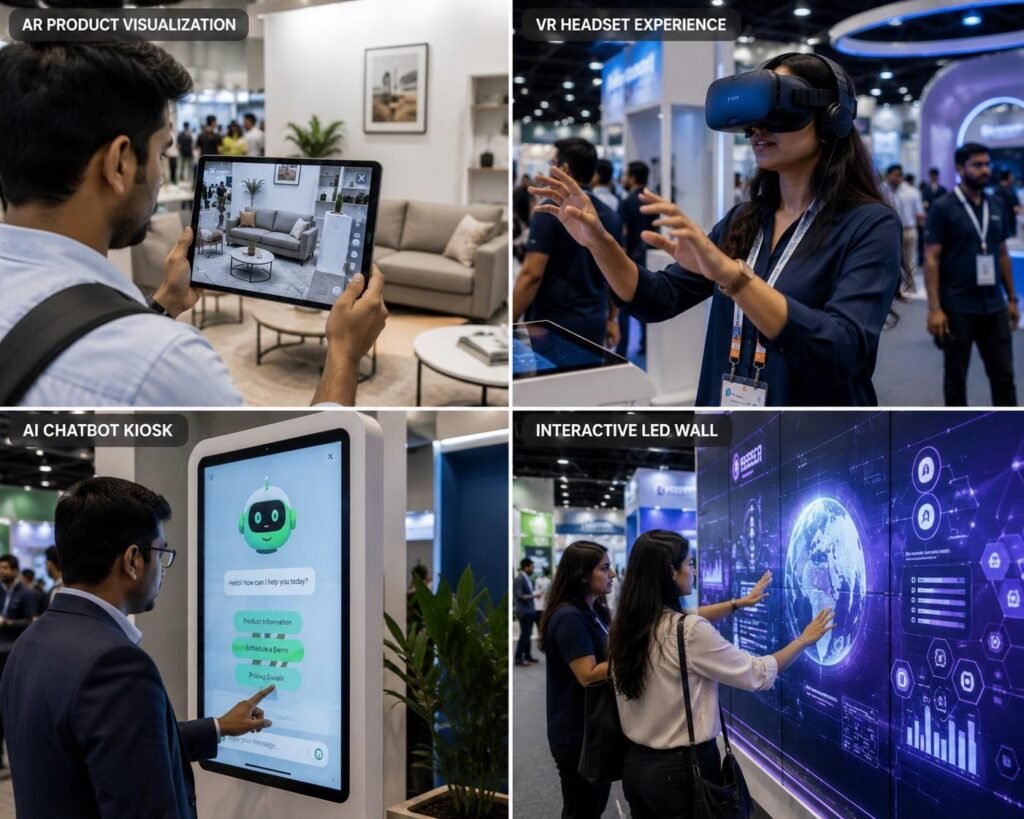
Modern experiential marketing is driven by a combination of technologies that make brand interactions more immersive, personalised, and measurable. Rather than relying on a single solution, brands often combine multiple technologies to create seamless customer experiences tailored to different campaign objectives. The core technologies shaping experiential marketing today include Augmented Reality (AR), Virtual Reality (VR), Artificial Intelligence (AI), Interactive Installations, and Extended Reality (XR). Each serves a distinct purpose, whether its helping customers visualise products, creating immersive virtual environments, personalising interactions through AI, or encouraging hands-on participation with interactive displays. The following sections explore how each of these technologies works, where it delivers the greatest value, and how brands can use it to create more engaging and impactful experiential marketing campaigns.
Why Technology Is Transforming Experiential Marketing

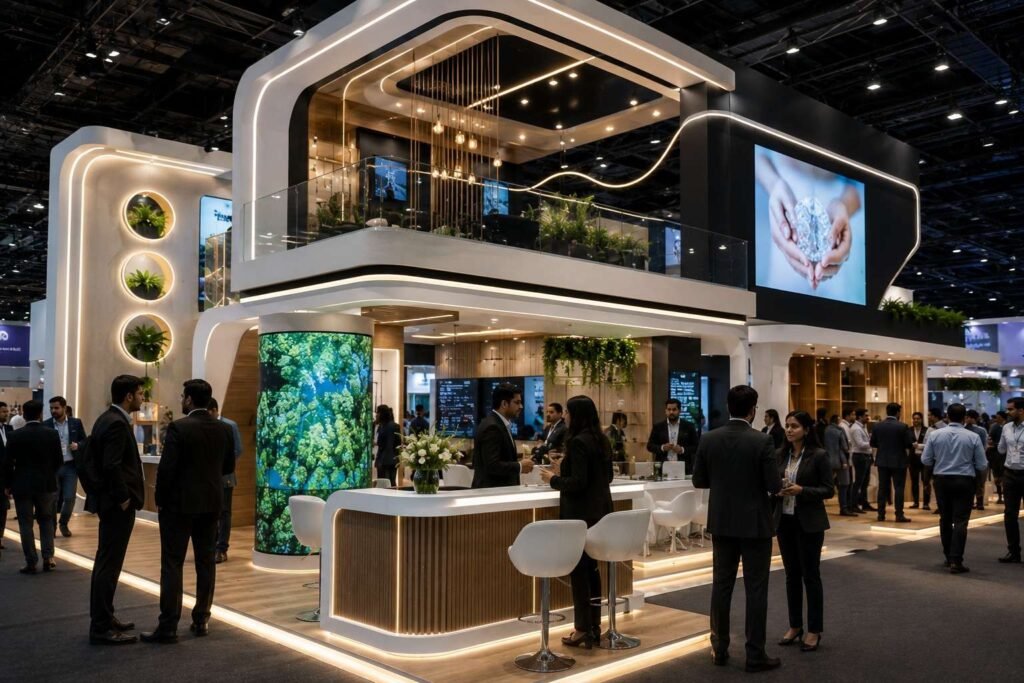
Technology has changed experiential marketing by making brand experiences more interactive, personalised, and measurable. Instead of relying on one-way communication, brands can now create experiences that actively involve customers while gaining valuable insights into their behaviour and preferences.


From Passive Audiences to Active Participants

Today’s consumers expect to engage with brands rather than simply observe them. Technologies such as AR, VR, AI, and interactive installations encourage people to explore products, participate in activities, and become part of the experience. This active involvement creates stronger emotional connections and makes brand interactions more memorable.


Personalised Experiences at Scale

Every customer has different interests and expectations. AI and behavioural analytics enable brands to deliver personalised recommendations, tailor content, and adapt interactions based on real-time data. These personalised experiences make customers feel more valued while improving overall engagement.


Measurable Engagement and Better Decision-Making

One of technology’s greatest advantages is its ability to generate actionable insights. Brands can track metrics such as dwell time, interaction rates, product interests, and lead quality to understand what resonates with their audience. These insights help optimise future campaigns, demonstrate marketing ROI, and continuously improve customer experiences.


Augmented Reality (AR) in Experiential Marketing

Augmented Reality (AR) enhances real-world environments by adding digital elements such as 3D models, animations, videos, and interactive content. Instead of replacing reality, it enriches it, allowing people to interact with products and brand stories more engagingly. In experiential marketing, AR turns visitors from passive observers into active participants. Whether at exhibitions, retail stores, product launches, or promotional events, people can explore products, customise features, and access information using their smartphones or AR-enabled devices. Since it doesn’t require specialized headsets, AR is one of the most accessible immersive technologies available today.


How Does Augmented Reality Work in Experiential Marketing?

AR uses a device’s camera along with technologies like image recognition and motion tracking to overlay digital content onto physical objects or spaces in real time. For example, looking at AR activation examples in the automotive sector, visitors at an exhibition can point their phones at a display vehicle to change its colour, explore its interior options, or visualise internal engine components without physically modifying the car. These interactive experiences make product demonstrations far more informative and memorable.


Why More Brands Are Investing in AR Experiences

Brands are increasingly using AR because it helps them create interactive experiences without overwhelming visitors with printed materials or lengthy presentations. People can explore information at their own pace while staying engaged throughout the experience. Some of the biggest advantages include:

  • Capturing attention in crowded event spaces.
  • Simplifying complex product demonstrations.
  • Increasing audience participation.
  • Improving brand recall.
  • Encouraging social sharing.
  • Extending engagement beyond the event.

Rather than replacing face-to-face conversations, AR supports them by making brand interactions more engaging and meaningful.


Common Uses of AR in Experiential Marketing

  • Product Visualisation: AR allows customers to explore products from different angles, view hidden features, and place virtual products in real environments before purchasing.
  • Interactive Product Demonstrations: Brands use AR to explain complex products through animations, virtual walkthroughs, and interactive visualisations.
  • Gamified Brand Activations: Digital treasure hunts, interactive challenges, and AR games encourage visitors to explore exhibition spaces, increasing participation and dwell time.
  • Event Navigation: At large exhibitions and conferences, AR helps attendees find booths, meeting rooms, sessions, and nearby activities.
  • Immersive Brand Storytelling: AR transforms brand stories into interactive experiences through virtual characters, animated timelines, digital packaging, and behind-the-scenes content.


Benefits and Challenges of AR

AR keeps visitors engaged by encouraging them to interact instead of simply observing. It also makes complex products easier to understand through visual demonstrations, helping customers make informed decisions. Furthermore, interactive experiences improve brand recall while encouraging attendees to share content on social media. However, brands need to ensure their experiences work smoothly across different mobile devices, invest in high-quality 3D assets, and maintain reliable internet connectivity during live events. If an activation requires excessive instructions or fails to load quickly, user engagement drops significantly.

Virtual Reality (VR) in Experiential Marketing

Virtual Reality (VR) allows brands to place customers inside fully immersive digital environments where they can explore products, services, or brand stories in ways that aren’t possible through traditional marketing. Instead of viewing a presentation or display, visitors become active participants, making the experience more engaging and memorable. Unlike Augmented Reality, which adds digital elements to the real world, VR replaces the physical environment entirely. Using a VR headset, users can interact with realistic simulations that make product demonstrations, storytelling, and training experiences far more immersive.


How Does Virtual Reality Work in Experiential Marketing?

Virtual Reality combines 3D environments, motion tracking, spatial audio, and interactive elements to create lifelike experiences. Once users wear a VR headset, they can move around virtual spaces, interact with objects, and experience products as though they were physically present. Examining VR activation examples across industries demonstrates this impact clearly: a real estate developer can offer a virtual tour of an under-construction property, while an industrial manufacturer can transport trade show attendees inside an operating facility thousands of miles away.


Why More Brands Are Using VR

Consumers increasingly expect experiences rather than traditional product presentations, and VR helps brands meet those expectations by creating highly interactive and memorable engagements. Key business drivers for VR adoption include:

  • Demonstrating products in realistic, controlled environments.
  • Creating emotionally resonant brand storytelling.
  • Simplifying complex technical concepts through simulations.
  • Standing out in competitive, high-noise event environments.


Common Uses of VR in Experiential Marketing

  • Immersive Product Demonstrations: VR allows visitors to explore products in realistic environments, understand technical features, and experience products at full scale, particularly useful in automotive, aerospace, and heavy equipment sectors.
  • Virtual Showrooms: Brands can create digital showrooms where customers browse product ranges, compare models, and customise configurations without requiring massive floor space.
  • Experiential Brand Storytelling: VR places audiences directly inside a narrative, showcasing manufacturing processes, sustainability initiatives, or customer success stories.
  • Virtual Tours: Real estate developers, tourist destinations, and healthcare providers use VR to offer realistic tours to customers before purchasing or booking.
  • Training and Educational Experiences: Hands-on learning simulations allow participants to practice procedures and explore technical systems safely in virtual environments.


Benefits and Challenges of VR

One of the main advantages of VR is its ability to fully occupy the user’s visual and auditory attention by blocking out the surrounding environment, which supports deeper emotional engagement and stronger memory retention than passive formats. However, deployment requires careful planning regarding hardware upkeep, queue management, throughput rate, equipment hygiene, and staff assistance to prevent bottlenecks or motion discomfort during peak event hours.

Artificial Intelligence (AI) in Experiential Marketing

Artificial Intelligence (AI) is changing experiential marketing by helping brands create smarter, more personalised experiences before, during, and after an event. Rather than focusing solely on visual elements, AI works behind the scenes to analyse data, understand customer behaviour, automate tasks, and deliver relevant interactions in real time. Whether recommending sessions, matching attendees with exhibitors, or sending personalised follow-up messages, AI helps brands improve customer experiences while making activations more efficient and measurable.


How Does AI Work in Experiential Marketing?

AI uses technologies such as machine learning, predictive analytics, natural language processing (NLP), and computer vision to analyse large volumes of customer and event data. It identifies patterns, predicts visitor preferences, and automates routine tasks, allowing brands to respond quickly to attendee needs. Instead of treating every visitor the same, AI personalises recommendations, suggests networking opportunities, qualifies sales leads, and provides instant support throughout the event lifecycle.


Common Uses of AI in Experiential Marketing

  • Personalised Event Experiences: AI analyses attendee profiles to recommend sessions, exhibitors, products, or activities matching their exact professional interests.
  • AI-Powered Chatbots & Assistants: Virtual assistants provide instant answers to common questions, helping attendees navigate venues without waiting for staff support.
  • Intelligent Networking: Matchmaking algorithms recommend high-value business connections based on industries, goals, and behavioral profiles.
  • Lead Qualification: AI evaluates attendee behaviors such as booth visits, content downloads, and interaction duration to automatically score lead intent for sales teams.
  • Real-Time Analytics: AI monitors crowd density and engagement trends, allowing event directors to make operational adjustments while the activation is live.

Interactive Installations That Drive Engagement

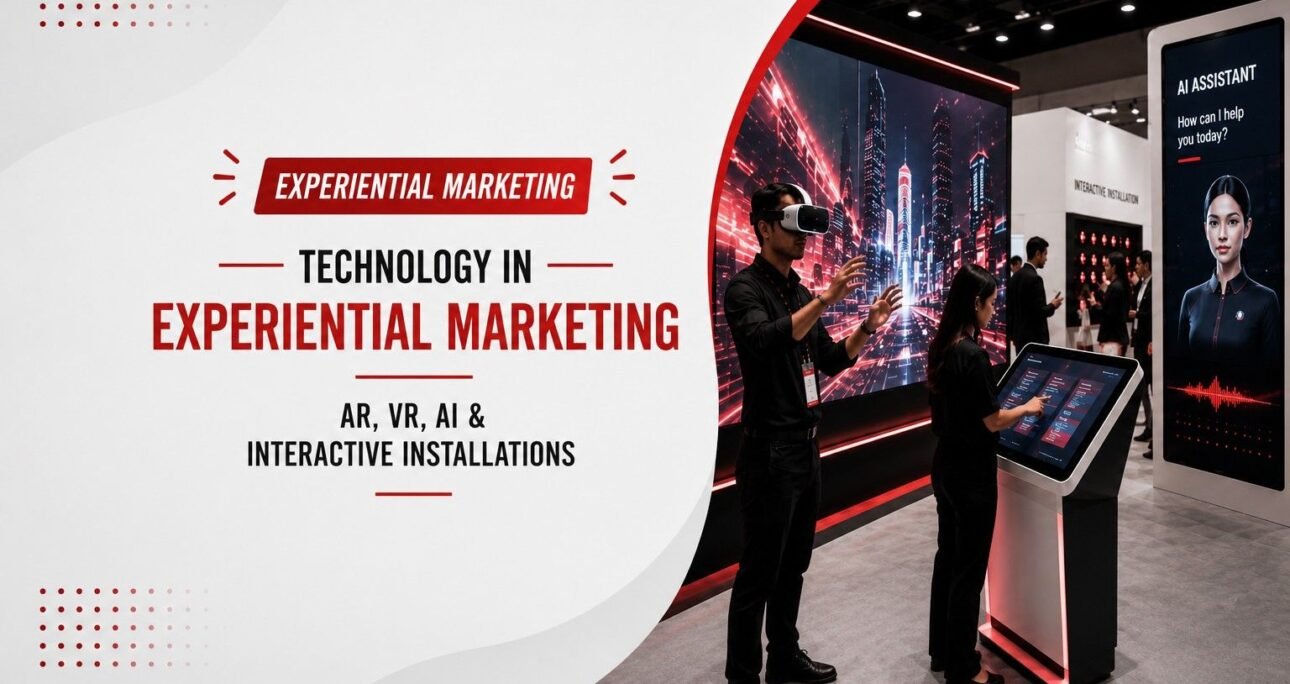
Interactive installations transform visitors from passive observers into active participants. Using technologies such as touchscreens, motion sensors, projection mapping, gesture recognition, LED walls, and digital displays, brands create environments where audiences can explore, interact, and influence content. Unlike AR, VR, or AI, which often focus on individual user journeys, interactive installations are designed for shared spaces. Whether at trade shows, retail environments, or public activations, they capture attention, encourage group participation, and create communal moments.

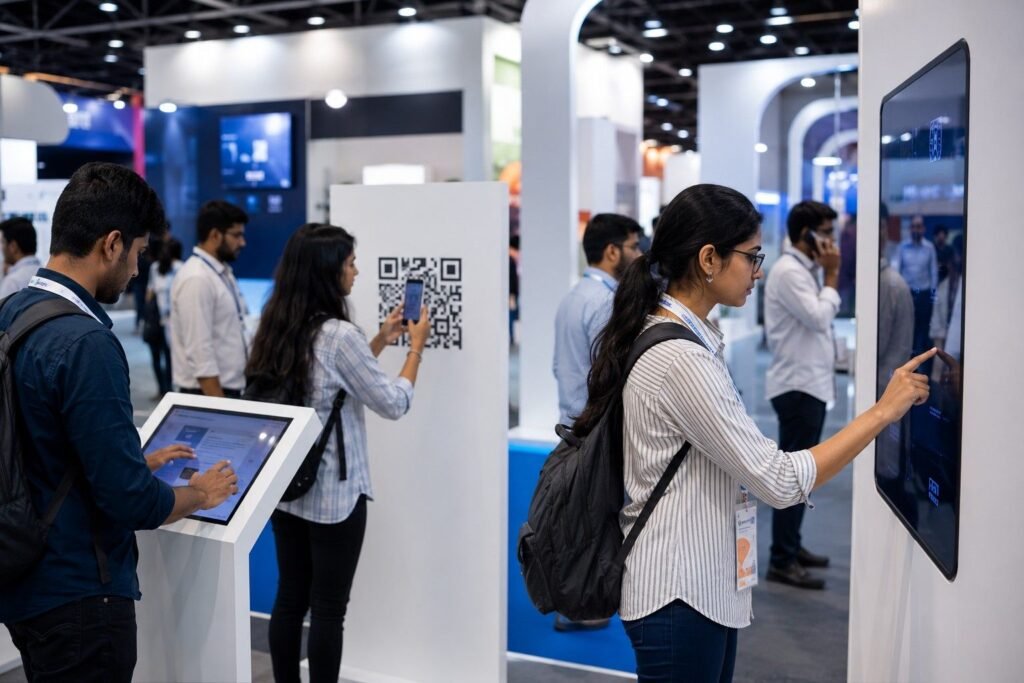
  • Touchscreens and Digital Kiosks: Allow visitors to browse product catalogues, register for events, or complete interactive self-assessments independently.
  • Interactive LED Walls: Large-format displays that react to movement or touch, serving as focal points for product reveals, social feeds, and gamified challenges.
  • Projection Mapping: Projects dynamic digital content onto physical structures, turning ordinary walls, floors, or objects into animated canvases.
  • Motion & Gesture Recognition: Touchless sensor installations that react to human movement, ideal for interactive games, high-traffic retail, and hygienic environments.
  • Gamified Brand Experiences: Prize wheels, digital leaderboards, and trivia challenges that increase dwell time and turn brand learning into play.


Industry Comparison: Which Technologies Deliver the Greatest Impact?


Industry

Most Effective Technologies

Primary Business Objective

Retail

AR, AI, Smart Mirrors

Product visualisation and purchase confidence

Healthcare

VR, AR, AI

Education and product demonstration

Automotive

VR, AR, Interactive Installations

Product experience and customisation

Real Estate

VR, Digital Twins, AR

Property visualisation and sales

Hospitality

VR, AI, AR

Destination marketing and bookings

Education

VR, AR, AI

Interactive learning and training

FMCG

AR, Interactive Installations

Product engagement and brand awareness

B2B Events

AI, Interactive Displays

Networking and lead generation

Technology & SaaS

AI, VR, Interactive Demos

Product education and sales enablement

Luxury

Mixed Reality, Holograms, AI

Premium storytelling and exclusivity

Decision Matrix

Business Goal

Recommended Technology

Primary Benefit

Key Operational Metric

Complex Product Explanation

Augmented Reality (AR)

Simplifies features visually without heavy physical inventory

Interaction Depth & Feature Views

High Emotional Impact & Storytelling

Virtual Reality (VR)

100% focused, distraction-free sensory immersion

Completion Rate & Dwell Time

Crowd Attraction & Dwell Time

Interactive LED / Gesture Walls

Draws foot traffic and drives shared social engagement

Footfall Capture Rate & Social Shares

Lead Qualification & Scaling

AI Event Technology

Automates matchmaking, scoring, and real-time support

Sales Qualified Leads (SQLs) Generated

Frameworks & Execution Checklists


The SMART Tech Framework for Experiential Marketing

To ensure experiential marketing innovations translate into measurable business outcomes, apply the SMART Tech Framework during campaign strategy:

 S – Strategy First

 M – Match Technology to Audience

 A – Align with Business Goals

 R – Reduce Complexity

 T – Track Performance


1. Strategy First: Define the narrative and creative core before selecting any digital tools. Technology must serve the experience, not define it.

2. Match Technology to Audience: Choose tools that align with your demographic’s tech comfort. Avoid high-friction downloads or overly complex hardware for fast-moving crowds.

3. Align with Business Goals: Ensure every digital interaction captures actionable data or drives a specific step in the sales funnel.

4. Reduce Complexity: Minimise onboarding steps. Strive for frictionless participation such as WebAR accessed via simple QR scanning rather than app installations.

5. Track Performance: Establish clear analytics tracking beforehand to measure interaction rates, dwell time, and post-event lead conversions.


Technology Readiness Checklist

Before launching a technology-driven experiential marketing campaign, use the following checklist to ensure your activation is fully prepared for a seamless audience experience.

Checklist AreaKey Considerations
ObjectivesDefine clear KPIs such as dwell time, qualified leads, engagement rate, content shares, and ROI targets.
AudienceVerify your audience’s technical readiness, accessibility needs, and familiarity with the chosen technology.
BudgetAllocate budget for hardware, software licensing, contingency equipment, and on-site technical support.
ConnectivityEnsure reliable high-speed venue Wi-Fi, dedicated internet bandwidth, and cellular backup for cloud-based applications.
TestingConduct end-to-end testing of all software and hardware under real-world conditions before the event.
AccessibilityMake sure digital and physical experiences are accessible, including appropriate screen height, colour contrast, captions, and audio alternatives where required.
Staff TrainingTrain event staff and brand ambassadors to operate the technology, troubleshoot common issues, and assist attendees effectively.
Data PrivacyEnsure compliance with applicable privacy regulations (such as GDPR or CCPA) when collecting attendee data or using AI and facial recognition technologies.
AnalyticsVerify tracking tools, event dashboards, CRM integration, and data collection processes before the activation begins.
Post-Event ReportingPrepare automated reporting templates to evaluate engagement, campaign performance, and business outcomes after the event.


Building an Integrated Event Tech Stack

Executing modern interactive activations requires an integrated event tech stack where data flows seamlessly between physical interactions and digital software tools. A well-architected stack connects initial audience registration directly to post-event lead nurture streams.


Experiential Event Tech Stack Architecture

Stack Category

Technology Function

Primary Objective

Integration Point

Registration & Ticketing

Pre-event sign-up and check-in

Frictionless attendee entry and badge generation

CRM & Marketing Automation

Experience Engine

Technology activation ideas (AR, VR, Displays)

Core audience participation and brand immersion

Real-time Analytics Dashboard

Engagement & AI

Matchmaking apps and interactive chat

Live personalization and audience routing

Central Data Engine

Lead Capture & Capture

Badge scanning, RFID, and digital forms

High-intent contact collection

CRM Sales Pipeline

Analytics & Attribution

Dwell tracking, engagement scoring, and ROI reporting

Performance evaluation and campaign optimization

Executive Dashboard


Conclusion

Technology has become a powerful enabler of experiential marketing, helping brands create experiences that are more engaging, personalised, and measurable than ever before. From AR and VR to AI and interactive installations, these innovations allow businesses to move beyond traditional marketing and build deeper, more meaningful connections with their audiences. However, successful experiential marketing isn’t about using the newest technology; it’s about using the right technology for the right purpose. Every digital tool should support a clear objective, enhance the customer journey, and make the experience easier, more memorable, and more valuable for participants. As immersive technologies continue to evolve, the brands that stand out won’t necessarily be those with the biggest budgets or the most advanced tools. They’ll be the ones that combine creativity, strategy, and technology to create authentic experiences that people genuinely remember. When innovation strengthens human interaction rather than replacing it, experiential marketing delivers lasting value for customers and measurable results for businesses.


FAQs

1. How do brands choose the right technology for an experiential marketing campaign?

The right technology depends on your campaign objectives, target audience, event format, budget, and desired customer experience. Instead of selecting the latest technology, businesses should choose solutions that enhance storytelling, encourage participation, and deliver measurable results aligned with their marketing goals.

Yes. Small and medium-sized businesses can use affordable technologies such as AI chatbots, QR code activations, interactive kiosks, AR product visualisation, and digital contests to create engaging customer experiences. The key is to focus on technologies that support business objectives rather than investing in expensive solutions.

There is no single technology that guarantees the highest return on investment. The best results come from selecting technologies that match campaign objectives and audience expectations. AI often improves operational efficiency and personalisation, while AR, VR, and interactive installations typically increase engagement, brand recall, and lead generation.

Businesses can evaluate ROI by tracking key performance indicators such as engagement rates, dwell time, qualified leads, conversion rates, customer satisfaction, social media engagement, and post-event sales. Combining these metrics with customer feedback provides a more accurate understanding of campaign success.

Absolutely. Many successful campaigns combine technologies such as AI, AR, VR, interactive installations, RFID, and mobile applications to create a seamless customer journey. Integrating multiple technologies often improves engagement while providing richer customer insights throughout the experience.

Common mistakes include choosing technology because it is trendy, overcomplicating the customer experience, ignoring accessibility, failing to train event staff, and measuring success using only attendance numbers. Technology should always support the overall marketing strategy rather than become the centre of attention.

Technology helps businesses capture more meaningful customer data by monitoring visitor interactions, product interests, session attendance, and engagement levels. These insights allow sales teams to identify high-intent prospects, personalise follow-ups, and improve conversion rates after the event.

Data enables brands to understand how customers interact with experiences, identify popular content, measure engagement, and optimise future campaigns. Real-time analytics also allow marketers to make informed decisions during live events, improving both customer satisfaction and overall campaign performance.

No. Technologies such as AI, AR, and VR are designed to enhance human interactions rather than replace them. The most successful experiential marketing campaigns combine digital innovation with meaningful conversations, expert guidance, and authentic customer engagement.

Technology should always support a clear campaign objective and fit naturally within the customer journey. Keeping experiences intuitive, accessible, and easy to use ensures that technology adds value without overwhelming attendees or shifting attention away from the brand message.