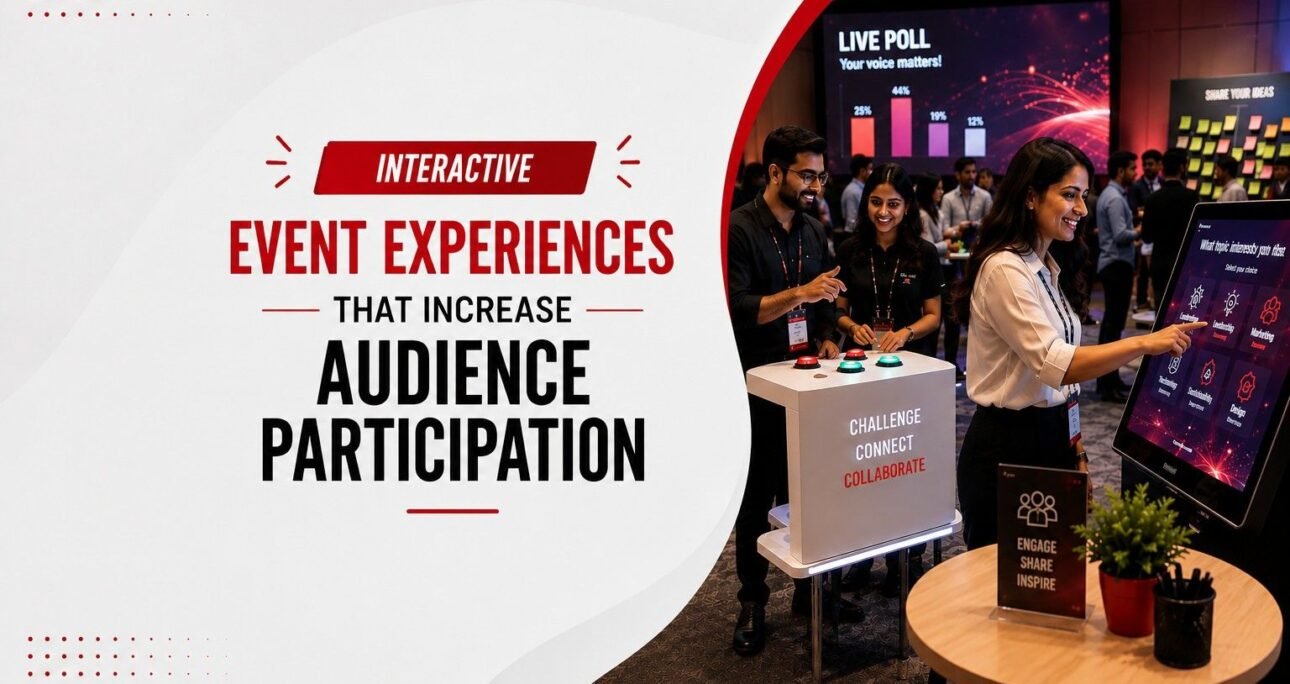
Interactive Event Experiences That Increase Audience Participation

Interactive Event Experiences That Increase Audience Participation

Introduction

Today’s audiences expect far more than sitting through presentations or watching a stage from the sidelines. Whether it’s a corporate conference, exhibition, product launch, or brand activation, attendees want opportunities to interact, contribute, and connect in meaningful ways. This shift has made interactive event experiences that increase audience participation an essential part of successful event planning, helping organisers transform passive attendees into active participants. Interactive experiences do more than make events enjoyable. They encourage conversations, strengthen networking, improve knowledge retention, and create memorable moments that attendees are more likely to share online and remember long after the event ends. For businesses, this translates into higher engagement, stronger brand recall, better lead generation, and improved event ROI.


Advancements in audience engagement technology have expanded what’s possible. Live polling, AI-powered networking, gamification, augmented reality, collaborative workshops, and interactive installations enable organisers to personalise attendee experiences throughout the event journey. However, technology alone doesn’t guarantee success. The most effective events combine strategic audience participation ideas with experiences that align with audience expectations and core business goals. Whether you’re planning a conference, trade show, corporate gathering, hybrid event, or experiential marketing campaign, understanding how to design meaningful interactions is becoming just as important as selecting the venue or inviting keynote speakers.

What Are Interactive Event Experiences?

Interactive event experiences are activities, environments, and digital formats that encourage attendees to actively participate instead of simply observing. Rather than sitting through presentations or walking past exhibition booths, participants engage through discussions, hands-on demonstrations, workshops, networking sessions, live polls, and interactive installations. Unlike traditional events that rely on one-way communication, interactive events create opportunities for two-way engagement between organisers, speakers, exhibitors, sponsors, and attendees. Whether someone is asking questions during a keynote, testing a product, or collaborating in a workshop, every interaction adds value to the attendee experience while helping organisers better understand audience interests and behaviour.


How Interactive Event Experiences Differ from Traditional Events

Traditional events are designed to deliver information, with attendees mainly listening to presentations or visiting exhibition booths. While this approach can be informative, it often limits participation and meaningful interaction. Interactive event experiences put attendees at the centre of the experience. Instead of simply consuming content, participants are encouraged to ask questions, exchange ideas, collaborate with others, and engage with products or activities. This active involvement creates more memorable experiences while improving networking, learning, and overall satisfaction.

Why Audience Participation Matters More Than Ever
Why Audience Participation Matters More Than Ever

The success of an event is no longer measured by attendance alone. While registrations and footfall indicate interest, they don’t reveal whether attendees were genuinely engaged, built valuable connections, or left with a positive impression. Today, meaningful participation is what separates an average event from one that delivers lasting business impact. Modern audiences expect more than presentations and product displays. Whether they’re attending a conference, exhibition, corporate event, product launch, or brand activation, they want opportunities to interact, contribute, and connect. Events that encourage active involvement create experiences that feel more personal, memorable, and valuable for everyone involved.


Active Participation Creates More Memorable Experiences

People naturally remember experiences they actively take part in more than those they simply observe. Asking questions during a keynote, testing a product, contributing to a discussion, or participating in a workshop transforms attendees from passive listeners into active participants. These moments create stronger emotional connections with the event and the brands behind it, making attendees more likely to remember the experience, recommend it to others, and return for future events.


Engagement Improves Learning and Networking

Participation also makes educational content more effective. Interactive formats such as live polling, workshops, roundtable discussions, and audience Q&A encourage attendees to think critically, exchange ideas, and apply what they learn instead of passively consuming information. At the same time, structured networking activities help people connect more naturally. Guided introductions, collaborative exercises, and small-group discussions remove the awkwardness often associated with networking and lead to more meaningful professional relationships.


Stronger Participation Creates Better Business Outcomes

For organisers, exhibitors, and sponsors, audience participation delivers measurable value. Interactive product demonstrations, hands-on experiences, and collaborative brand activities encourage attendees to spend more time engaging with products and services rather than simply collecting brochures. This deeper engagement often leads to stronger brand recall, higher-quality conversations, better lead generation, increased sponsor visibility, and improved event ROI. Every interaction also provides valuable insights into attendee interests and behaviour, helping organisers refine future events based on real engagement data rather than assumptions.


Audience Expectations Have Changed

Today’s audiences are accustomed to personalised digital experiences where they can interact, share opinions, and receive instant responses. They expect the same level of engagement from in-person and hybrid events. Whether through AI-powered networking, collaborative workshops, live discussions, or immersive brand experiences, attendees want to play an active role rather than simply watch from the sidelines. Organisations that embrace this shift are better positioned to create events that stand out, encourage meaningful participation, and deliver lasting value. 

The Psychology Behind Interactive Event Experiences


1. Active Participation Improves Attention and Retention

Listening to a presentation requires relatively little involvement, which is why attention often fades during long sessions. Interactive experiences ask attendees to make decisions, answer questions, solve problems, or share opinions. This active involvement keeps the mind engaged and makes information easier to remember.

Example: Instead of explaining a new marketing strategy through slides alone, a speaker divides attendees into small groups and asks them to develop a campaign for a fictional brand. By applying the concepts themselves, participants retain the information far better than through passive listening.


2. People Value Experiences They Help Create

When attendees contribute to discussions, vote in live polls, participate in brainstorming sessions, or shape conversations through Q&A, they feel ownership over the event experience. Rather than simply consuming content, they become part of it. This involvement increases satisfaction because people naturally place greater value on experiences they’ve actively influenced.

Example: A conference organiser asks attendees to vote for the final panel discussion topic before the event begins. Since participants helped shape the agenda, they’re more likely to attend the session and actively contribute to the discussion.


3. Curiosity Encourages Exploration

Curiosity is one of the strongest drivers of engagement. When an event offers opportunities to discover something unexpected, whether an interactive product demonstration, an immersive installation, or a gamified challenge, attendees are more likely to participate voluntarily.

Example: At a product launch, visitors scan QR codes hidden around the venue to unlock exclusive demonstrations and behind-the-scenes content. The desire to discover what’s next encourages attendees to explore the entire event venue.


4. Collaboration Creates Stronger Connections

Many attendees join events to learn from peers as much as from speakers. Collaborative activities such as roundtable discussions, workshops, networking exercises, and group challenges help people exchange ideas and build relationships naturally. These shared experiences spark conversations that continue long after the event.

Example: During a leadership summit, attendees work in small groups to solve a real business challenge before presenting their solutions. The shared problem-solving experience sparks conversations that continue during networking breaks.


5. Event Gamification Ideas Motivate Participation

Gamification applies elements like points, challenges, badges, leaderboards, or rewards to encourage engagement. While competition can be motivating, the real value lies in giving attendees a clear reason to participate across different areas of the venue.

Example: At a trade show, visitors earn points by attending product demonstrations, participating in live quizzes, and visiting exhibitor booths. Those who complete the challenge receive exclusive rewards, encouraging broader exploration of the exhibition floor.


6. Personalisation Makes Experiences More Relevant

No two attendees have identical interests or goals. Some look to network, while others want to learn about new products, discover industry trends, or connect with partners. Interactive events offering personalised agendas, AI-powered networking recommendations, or customised content help attendees focus on what matters most to them.

Example: An event app recommends sessions based on each attendee’s industry and suggests networking meetings with professionals who share similar business interests. Instead of searching through dozens of sessions, attendees receive a tailored agenda matching their goals.


7. Recognition Encourages Continued Engagement

People appreciate being recognised for their contributions, whether through audience shout-outs, participation certificates, contest leaderboards, or showcasing attendee-generated content during the event. Simple forms of recognition reinforce positive behaviour and encourage participants to stay involved.

Example: During a successful corporate conference, organisers display attendee insights and questions on the main screen and recognise the most active contributors at the closing session. This acknowledgement motivates broader participation throughout the event.


8. Emotional Connections Make Experiential Event Ideas Memorable

Facts and presentations are important, but emotions are what people remember. Experiential event ideas create moments of excitement, achievement, surprise, collaboration, or inspiration that leave a lasting impression.

Example: Instead of unveiling a new product through a presentation slide, attendees are invited to test it firsthand in a live demonstration zone. Interacting with the product creates a stronger emotional connection than watching a promotional video.


9. Designing Experiences Around People, Not Just Audience Engagement Technology

Technology enhances participation, but it should never become the sole focus. Effective interactive events begin with a simple question: What will help attendees connect, contribute, and gain value?

Example: Rather than introducing virtual reality simply because it’s trending, an organiser uses VR to allow attendees to explore a manufacturing facility that would otherwise be inaccessible. Here, the technology serves a clear practical purpose.

Planning Interactive Experiences Across the Event Journey
Planning Interactive Experiences Across the Event Journey

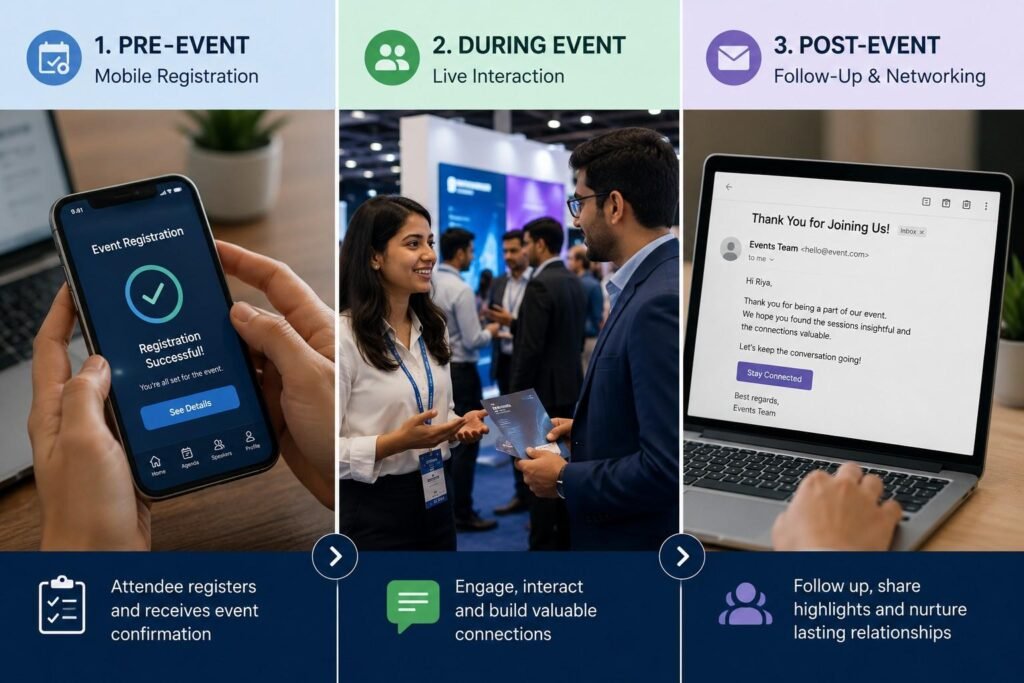
Interactive event experiences shouldn’t start when attendees arrive at the venue or end when they leave. Successful events keep audiences engaged throughout the entire journey: before, during, and after the event.


The Three Stages of Audience Engagement


Before the Event: Build Excitement Before Attendees Arrive

The attendee experience begins well before event day. The period between registration and arrival is an opportunity to build anticipation, encourage interaction, and help participants feel connected. Instead of limiting communication to confirmation emails, involve attendees through agenda voting, speaker Q&A submissions, community discussions, polls, surveys, AI-powered networking setup, and conference icebreakers. These early touchpoints help attendees arrive feeling informed and ready to contribute.

Example: A conference invites registered attendees to vote on breakout session topics two weeks before the event. The most popular topics are added to the agenda, giving participants a sense of ownership while boosting attendance.


During the Event: Turn Attendance into Participation

The event itself should encourage active participation rather than passive observation. Instead of relying solely on lectures, successful events combine learning, networking, collaboration, and interactive moments throughout the day. Live polls, hands-on workshops, product demonstrations, AI networking, gamification, and interactive discussions help attendees stay engaged while creating meaningful experiences.

Example: Rather than saving Q&A until the end of a keynote, the speaker uses live polls throughout the session to gather opinions and shape the discussion in real time. This keeps attendees engaged and makes the session feel dynamic.


After the Event: Extend the Experience

Audience engagement should continue after the event concludes. A thoughtful follow-up strategy reinforces key messages, strengthens relationships, and maximises event ROI. Sharing recap emails, session recordings, personalised content, feedback surveys, online communities, exclusive webinars, and digital certificates keeps attendees connected while encouraging future participation.

Example: Following a leadership summit, attendees receive personalised recommendations based on the sessions they attended, along with presentation recordings, networking resources, and invitations to exclusive quarterly webinars.

Interactive Event Experiences That Increase Audience Participation

Not every interactive activity delivers the same results. The most effective experiences are those that align with your event objectives and audience expectations. Below are some of the most practical engagement experiences, organised by purpose.


Event Networking Activities That Spark Meaningful Conversations

Networking is often a primary reason people attend business events, yet many conversations never happen without structure. Interactive event networking activities make introductions straightforward and build relevant connections.

  • Speed Networking: Short, timed conversations allow attendees to meet multiple peers in a structured format. This works well for conferences, startup events, and B2B gatherings.
  • AI-Powered Matchmaking: Modern event platforms recommend relevant connections based on attendee profiles, industries, or business objectives, improving conversation quality.
  • Networking Challenges: Simple activities like digital stamp collecting, networking bingo, or group missions encourage attendees to engage with a wider range of participants.


Learning Experiences That Encourage Active Audience Engagement

Educational sessions become more valuable when attendees contribute instead of simply listening. Practical learning activities keep audiences focused while improving knowledge retention.

  • Live Polling and Audience Voting: Real-time polls encourage attendees to share opinions during keynotes or panel discussions. Speakers can instantly adapt their presentations based on responses.
  • Interactive Workshops: Hands-on workshops invite participants to solve problems, analyse case studies, or collaborate on exercises, creating immediate opportunities to apply learning.
  • Roundtable Discussions: Smaller group conversations encourage knowledge sharing between peers rather than one-way communication from a single speaker.


Audience Engagement Technology That Enhances Participation

Technology should support participation rather than distract from it. When integrated thoughtfully, audience engagement technology makes events more personalised, efficient, and interactive.

  • Gamification Systems: Points, leaderboards, digital badges, and achievement challenges motivate attendees to participate in sessions, visit exhibition booths, or explore the venue.
  • Augmented and Virtual Reality Experiences: AR and VR allow attendees to interact with products, visual concepts, or simulations that wouldn’t be possible through traditional slides.
  • Interactive Event Apps: Event apps centralise schedules, networking tools, live polls, session feedback, venue maps, and personalised agendas in one accessible place.


Brand Engagement Experiences That Create Lasting Impressions

For exhibitors and sponsors, interactive brand experiences encourage attendees to spend more time exploring products and services.

  • Live Product Demonstrations: Allowing attendees to test products firsthand builds confidence and sparks genuine business conversations.
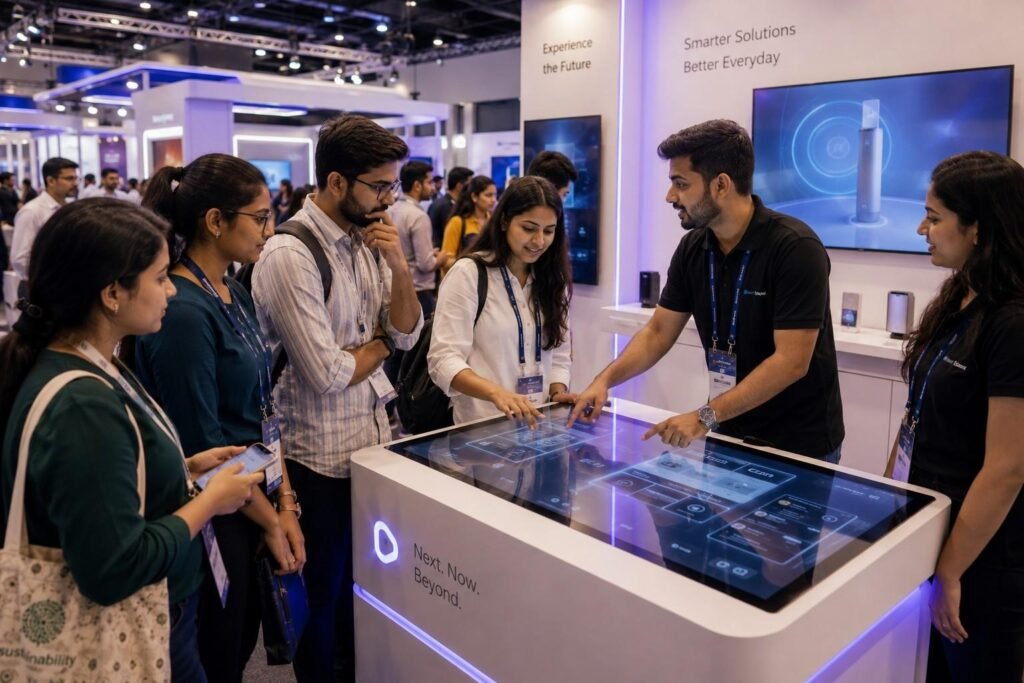
  • Interactive Exhibition Booths: Touchscreens, digital displays, product simulations, and hands-on stations encourage visitors to explore rather than simply collect brochures.
  • Creative Brand Activations: Customisation stations, interactive installations, or immersive storytelling help brands connect emotionally with attendees while encouraging social sharing.


Collaborative Experiences That Build Community

Events become memorable when attendees create something together. Collaborative activities encourage teamwork while strengthening professional networks.

  • Idea Labs and Brainstorming Sessions: Small groups work together to solve industry challenges, generate ideas, or discuss emerging trends.
  • Collaborative Walls: Digital or physical idea boards allow participants to share insights, answer questions, or contribute suggestions throughout the event.
  • Innovation Challenges: Hackathons, design sprints, or problem-solving competitions encourage teams to collaborate under time constraints to generate creative solutions.


Entertainment and Wellness Activities That Maintain Energy

Long event schedules can lead to fatigue, reducing participation as the day progresses. Incorporating targeted breaks helps attendees’ recharge while keeping energy levels consistent.

  • Interactive Photo and Video Stations: Photo booths, 360-degree video stations, and branded content creation zones allow attendees to capture moments while generating user-created content.
  • Wellness Zones: Quiet lounges, guided meditation sessions, stretching breaks, or relaxation spaces provide opportunities to recharge before returning to sessions.
  • Live Competitions and Quizzes: Friendly contests or team quizzes create excitement and encourage lighthearted interaction among participants.

Choosing the Right Interactive Experience for Different Event Types
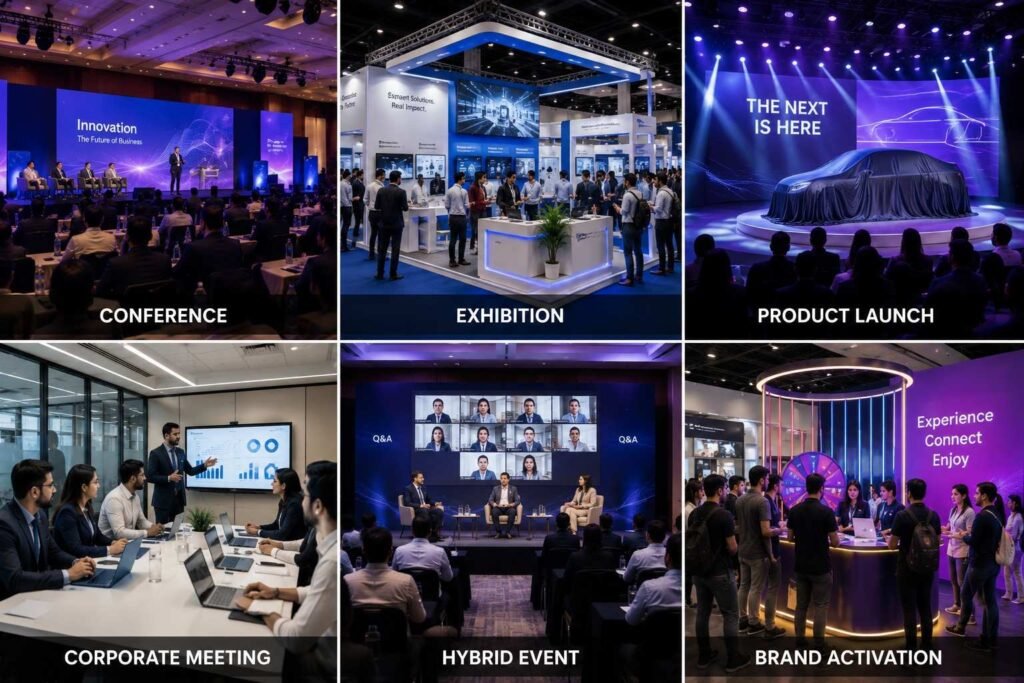
Choosing the Right Interactive Experience for Different Event Types

Every event has a different purpose, audience, and measure of success. The most effective interactive experiences are those that support your event objectives rather than simply following the latest trends. Instead of trying to include every engagement activity, focus on the experiences that deliver the greatest value for your specific event format.


Conferences: Encourage Learning and Meaningful Discussions

Conference attendees typically want to learn from industry experts, exchange ideas, and build professional relationships. Interactive experiences should therefore support knowledge sharing without disrupting the flow of presentations.

Recommended experiences:

  • Live polling and audience voting
  • Interactive Q&A sessions
  • Breakout workshops
  • Roundtable discussions
  • AI-powered networking

These activities keep attendees actively involved while encouraging valuable discussions that continue beyond the session itself.


Corporate Events: Strengthen Collaboration and Team Engagement

Corporate events often focus on improving communication, encouraging innovation, or strengthening company culture. Interactive experiences should bring employees and stakeholders together through collaboration rather than passive presentations.

Recommended experiences:

  • Team-building challenges
  • Innovation workshops
  • Interactive town halls
  • Leadership simulations
  • Employee recognition activities

By involving employees in conversations and collaborative activities, organisations create stronger engagement and more meaningful outcomes.


Exhibitions and Trade Shows: Drive Visitor Engagement

Exhibition visitors usually have limited time and many booths competing for their attention. Brands need experiences that quickly capture interest while encouraging visitors to stay longer and start conversations.

Recommended experiences:

  • Live product demonstrations
  • Interactive touchscreens
  • Booth gamification
  • AR and VR product experiences
  • Digital quizzes and giveaways

The goal is to create hands-on experiences that showcase products while generating qualified business conversations.


Product Launches: Let People Experience the Product

A successful product launch should move beyond presentations and allow attendees to experience the product firsthand. Giving people the opportunity to explore, test, and ask questions builds confidence far more effectively than simply explaining features.

Recommended experiences:

  • Guided product demonstrations
  • Hands-on product trials
  • Experience zones
  • Personalised consultations
  • Immersive storytelling

These experiences help attendees understand how the product solves real-world problems while creating stronger brand recall.


Brand Activations: Create Memorable Brand Connections

Brand activations are designed to generate participation, conversation, and shareable moments. The focus should be on creating experiences that encourage people to interact with the brand naturally rather than simply promoting products.

Recommended experiences:

  • Interactive installations
  • Gamified brand challenges
  • User-generated content stations
  • Personalised brand experiences
  • Experiential storytelling

When attendees become part of the experience, they are more likely to remember the brand and share it with others.


Hybrid Events: Deliver Equal Engagement for Every Attendee

Hybrid events must provide meaningful participation opportunities for both in-person and virtual audiences. Rather than treating online attendees as spectators, organisers should create shared experiences that connect everyone regardless of location.

Recommended experiences:

  • Live polling
  • Interactive Q&A sessions
  • Virtual networking
  • Online breakout rooms
  • Digital collaboration whiteboards

The objective is to ensure every attendee can contribute, collaborate, and engage throughout the event, whether they are joining in person or remotely.

The Future of Interactive Event Experiences

Audience expectations continue to evolve, alongside the strategies organisers use to keep people engaged. While face-to-face interaction remains at the heart of successful events, technology and data make those interactions more personalised, inclusive, and measurable.

  • AI Will Deliver More Personalised Event Journeys: Artificial intelligence is changing how attendees experience events. Instead of following static agendas, participants can receive personalised session recommendations, networking suggestions, and content tailored to their industry, role, or professional goals. For organisers, AI helps analyse attendee movement, predict session popularity, and optimise event layouts.
  • Hybrid Events Will Become More Immersive: Hybrid events are moving beyond standard livestreams. Future formats focus on equal participation opportunities for on-site and remote audiences alike. Shared live polls, virtual breakout rooms, collaborative whiteboards, and unified networking tools ensure every participant can contribute equally regardless of physical location.
  • Data Will Drive Better Engagement Decisions: Modern event platforms provide actionable insights into attendee behavior—from session attendance and networking activity to booth dwell time and content preferences. Organisers can use this real-time data to refine event design and adapt schedules while the event is still in progress.
  • Immersive Technologies Will Be Used More Strategically: Augmented reality (AR), virtual reality (VR), and interactive digital environments will continue to expand across conferences and trade shows. Their role is shifting from novelty to solving practical business challenges such as demonstrating complex equipment, simulating real-world scenarios, or delivering hands-on training.

The CONNECT Framework: A Practical Approach to Designing Interactive Events

Creating an engaging event isn’t about adding as many interactive activities as possible. The most successful events follow a structured approach that aligns audience engagement with clear business objectives. The CONNECT Framework provides a simple planning model that helps organisers design meaningful experiences from start to finish.


C – Clarify Your Objectives

Every successful event begins with clearly defined goals. Before selecting technologies or planning activities, identify what success looks like for your organisation and your attendees.

Ask yourself:

  • What business outcome should this event achieve?
  • What do attendees hope to gain?
  • What actions do we want participants to take during the event?

When business goals and attendee expectations are aligned, every interactive experience becomes more purposeful and measurable.


O – Organise the Audience Journey

Audience engagement should be planned across the entire event lifecycle, not just on the event day. Structure interactions around three key stages:

  • Before the event: Build anticipation through registration campaigns, agenda previews, networking setup, and pre-event surveys.
  • During the event: Keep attendees actively involved through discussions, demonstrations, workshops, networking, and live engagement tools.
  • After the event: Extend the experience with follow-up resources, feedback surveys, community engagement, and personalised communication.

Planning the complete attendee journey creates a more consistent and memorable event experience.


N – Navigate with the Right Engagement Strategy

Not every interactive activity is suitable for every audience. The best results come from selecting experiences that match your event type, audience size, available budget, and primary objective.


For example:

Event Goal

Recommended Approach

Increase participation

Live polls, workshops, Q&A sessions

Improve networking

Speed networking, AI matchmaking, roundtable discussions

Showcase products

Demonstrations, interactive booths, AR/VR experiences

Build collaboration

Brainstorming sessions, innovation challenges, group activities

Choosing the right engagement format is often more effective than simply increasing the number of activities.


N – Network with Purpose

Networking shouldn’t be left to chance. Creating structured opportunities for conversation helps attendees build stronger professional relationships while making networking feel more natural. Simple formats such as guided introductions, themed discussion tables, speed networking, and collaborative group activities encourage meaningful interactions throughout the event.


E – Engage Through Meaningful Experiences

Technology should enhance participation, not become the centre of attention. Focus on experiences that encourage attendees to explore, contribute, collaborate, and interact with your content or brand. Whether through live demonstrations, interactive workshops, gamification, or immersive experiences, every activity should support your event objectives and provide genuine value for participants. Meaningful engagement is always more effective than engagement for its own sake.


C – Check Performance and Continuously Improve

The event doesn’t end when attendees leave the venue. Measuring engagement helps organisers understand what worked well and where improvements can be made. Track metrics such as:

  • Session participation
  • Live poll responses
  • Networking activity
  • Booth engagement
  • Event app usage
  • Attendee feedback
  • Lead generation and conversions

Reviewing these insights after every event allows organisers to refine future strategies and deliver even stronger attendee experiences.

Event Planning Resources

Successful interactive events are built on thoughtful planning rather than last-minute decisions. The following resources provide a practical reference for selecting the right engagement strategies, coordinating activities, and measuring success throughout the event lifecycle.


Interactive Event Planning Checklist

Use this checklist to ensure every stage of your event includes meaningful opportunities for audience participation.

Planning Stage

Key Actions

Pre-Event

Define engagement goals, identify your target audience, choose the right engagement tools, encourage networking before the event, and brief speakers on interactive elements.

During the Event

Test event technology, encourage live participation, facilitate networking sessions, monitor attendee engagement, and collect real-time feedback.

Post-Event

Share session recordings and event resources, send personalised follow-up emails, gather attendee feedback, analyse engagement metrics, and document key learnings for future events.


Decision Table: Choosing the Right Engagement Strategy

Not every event requires the same type of interaction. Use this table to match your primary objective with suitable engagement activities.

Event Objective

Recommended Interactive Experiences

Increase Audience Participation

Live polling, interactive Q&A, workshops, audience participation games

Improve Networking

Speed networking, AI-powered matchmaking, roundtable discussions, conference icebreakers

Boost Brand Engagement

Product demonstrations, interactive exhibition booths, experiential brand activations, gamified challenges

Improve Learning

Case-study workshops, collaborative problem-solving sessions, audience voting

Engage Hybrid Audiences

Virtual breakout rooms, digital whiteboards, live polling, online networking, interactive Q&A


Event Engagement Timeline

Interactive engagement should be planned throughout the attendee journey—not just during the event itself.

Timeline

Focus

8–12 Weeks Before

Define objectives, identify your audience, and select engagement formats and technology.

4–6 Weeks Before

Promote networking opportunities, finalise interactive sessions, and encourage attendee participation before arrival.

1–2 Weeks Before

Share event information, event app access, personalised agendas, and networking recommendations.

Event Day

Facilitate participation, monitor engagement, encourage networking, and collect real-time feedback.

After the Event

Share follow-up resources, analyse engagement data, gather attendee feedback, and identify opportunities for improvement.


These planning resources are designed to complement the strategies discussed throughout this guide. By combining clear objectives with the right engagement activities and continuous evaluation, organisers can create events that deliver meaningful experiences for attendees while achieving measurable business outcomes.

Conclusion

Interactive event experiences are no longer optional; they’re a key part of creating events that people genuinely enjoy and remember. Whether you’re planning a conference, exhibition, corporate event, product launch, or brand activation, meaningful audience participation leads to stronger engagement, better networking, improved learning, and greater business impact. The most successful events don’t rely on technology or entertainment alone. They combine thoughtful planning, purposeful interactions, and attendee-focused experiences that encourage people to contribute rather than simply observe. From pre-event engagement to post-event follow-up, every touchpoint is an opportunity to build stronger relationships and deliver lasting value. As attendee expectations continue to evolve, organisations that design events around participation instead of passive attendance will be better positioned to stand out in a competitive landscape. By choosing the right engagement strategies, measuring what matters, and continuously improving the attendee experience, you can create events that leave a lasting impression long after they end.

FAQs

1. How do you choose the right interactive activity for an event?

The best interactive activity depends on your event’s objective, audience profile, budget, and format. A conference may benefit from workshops and live polls, while an exhibition often sees better results with product demonstrations, gamified booths, and immersive brand experiences. Always select activities that support meaningful participation rather than adding interaction for its own sake.

Audience engagement refers to how interested and emotionally connected attendees are throughout an event, while audience participation measures the actions they take, such as asking questions, joining discussions, attending workshops, or participating in networking activities. Engagement reflects interest, whereas participation reflects involvement.

Yes. Interactive experiences encourage attendees to spend more time engaging with content, exhibitors, and sponsors, often leading to better networking, stronger brand recall, higher-quality leads, and improved attendee satisfaction. These outcomes contribute to stronger event ROI over time.

You don’t need expensive technology to increase participation. Simple ideas like live Q&A sessions, audience voting, networking icebreakers, collaborative brainstorming, panel discussions, and small group activities can significantly improve engagement while keeping costs manageable.

Interactive experiences should be planned during the initial event strategy phase, ideally several months before the event. Early planning allows organisers to align engagement activities with event objectives, coordinate technology requirements, brief speakers, and promote participation before attendees arrive.

Virtual and hybrid events can incorporate live chats, breakout rooms, audience polls, collaborative whiteboards, digital networking, virtual product demonstrations, and interactive Q&A sessions to keep remote attendees actively involved throughout the event.

Interactive experiences provide sponsors with more meaningful opportunities to connect with attendees. Product demonstrations, branded challenges, immersive installations, and hands-on experiences often generate higher-quality conversations, stronger brand recall, and more qualified leads than traditional promotional displays.

Maintaining engagement requires balancing educational sessions with interactive activities. Short networking breaks, live polling, collaborative workshops, wellness experiences, product demonstrations, and audience discussions help maintain energy levels and reduce attendee fatigue throughout the day.

Interactive event experiences are valuable across many industries, including technology, healthcare, finance, education, manufacturing, retail, hospitality, automotive, and professional services. Any organisation that wants to educate, network, showcase products, or strengthen customer relationships can benefit from increasing audience participation.

After the event, organisers should review attendee feedback, participation rates, networking activity, session engagement, sponsor performance, lead quality, social media engagement, and overall event objectives. Analysing these insights helps identify successful strategies and areas for improvement, making future events more engaging and effective.