
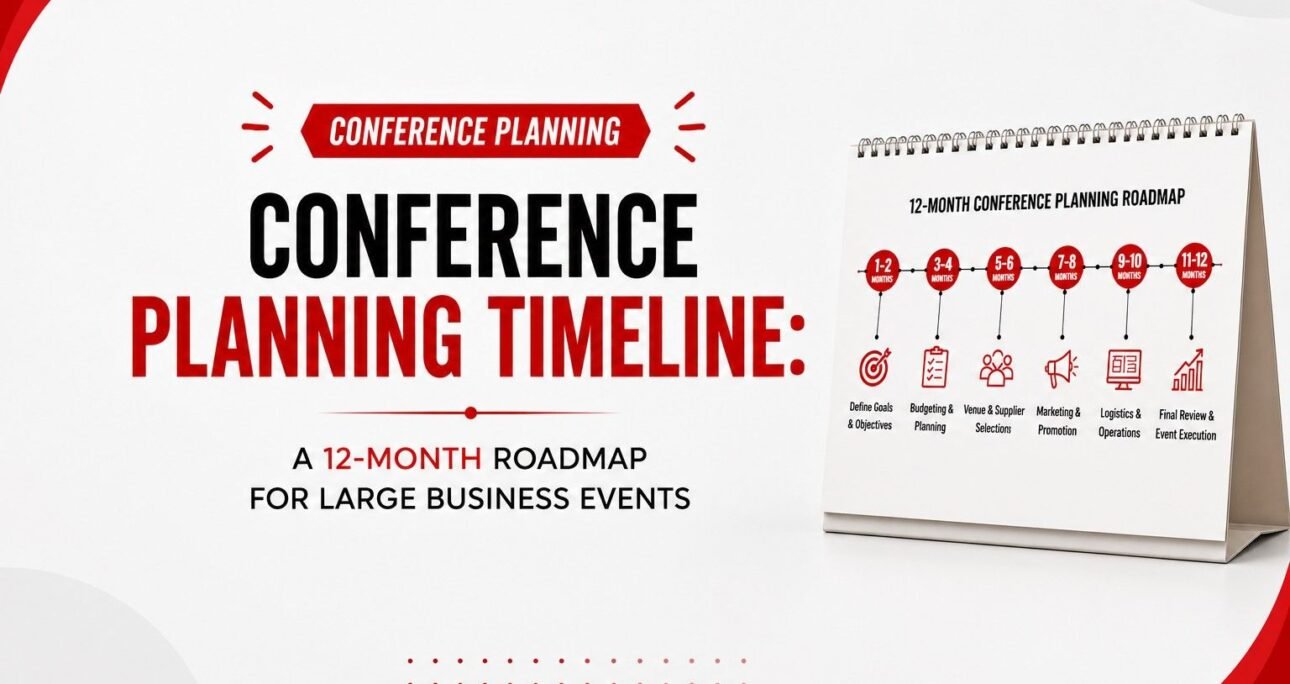
12-Month Conference Planning Timeline

12 Months Before the Conference: Build the Foundation
The first few months of planning are about creating a clear direction for your conference. Before discussing venues, speakers, or sponsorship packages, spend time defining what the event should achieve. A strong strategy makes every decision that follows more purposeful and helps keep stakeholders aligned throughout the planning process.
1. Define Your Conference Goals
Every successful conference starts with a clear objective. Some events are designed to generate business leads, while others focus on strengthening customer relationships, launching new products, or positioning a company as an industry leader. Knowing your primary goal helps you decide where to invest your time and budget. Rather than measuring success only by attendance, think about the outcomes you want to achieve. This could include the quality of leads generated, sponsor satisfaction, attendee engagement, or the number of meaningful networking opportunities created during the event. Setting these expectations early makes it easier to evaluate the conference once it’s over.
2. Understand Your Audience
The most memorable conferences are designed around the people attending them. Understanding your audience goes beyond knowing their industry or job title; it’s about understanding why they’re choosing to attend and what they expect to gain from the experience. These insights will influence everything from the conference agenda and speaker selection to networking sessions, exhibition areas, and even the registration journey. When every element is designed with the audience in mind, the event feels more relevant and engaging.
3. Build the Right Planning Team
A large business conference is rarely managed by one person. Marketing, operations, sponsorship, finance, production, and speaker management all play an important role, so responsibilities should be clearly defined from the beginning. Giving each team ownership of their workstream not only improves collaboration but also speeds up decision-making as planning becomes more detailed. Regular check-ins and a shared planning timeline help everyone stay aligned and reduce the chances of important tasks being overlooked.
4. Create a Realistic Budget
Your budget should support the experience you’re trying to create, not just cover operational costs. Along with venue hire, catering, and production, remember to account for event technology, branding, registration systems, sponsor activations, and a contingency fund for unexpected expenses. If your conference includes exhibitors or sponsorship opportunities, estimate those revenue streams early as well. Having a realistic financial picture allows you to make confident decisions without compromising the quality of the event later.
5. Shortlist Dates and Venues
Once your objectives and budget are in place, you can begin evaluating venues. While availability and pricing are important, they shouldn’t be the only deciding factors. Think about how the venue supports the attendee experience. Is there enough space for networking? Can sponsor zones and exhibition areas be integrated naturally? Does the venue have the technical infrastructure needed for live production or a hybrid audience? Choosing a venue that supports your vision often creates a much better event than simply choosing the cheapest option.
6. Build Your Planning Roadmap
With the foundations in place, it’s time to create a high-level planning timeline. This doesn’t need to include every individual task, but it should map out the major milestones such as venue confirmation, speaker outreach, sponsorship sales, marketing campaigns, registration launches, and production deadlines.
Having a shared roadmap helps every team understand what needs to happen next while giving you enough flexibility to adapt if plans change.
7. Identify Risks Early
Every conference comes with challenges, whether it’s a speaker cancelling, registrations being lower than expected, or a supplier running behind schedule. Identifying these risks early allows you to prepare practical contingency plans rather than making rushed decisions closer to the event. Experienced event teams know that not everything will go exactly as planned. The difference is that they’re prepared to respond quickly because they’ve already considered the possibilities.
10–11 Months Before the Conference: Turn the Vision into a Plan
With the strategy in place, it’s time to start turning ideas into commitments. This is one of the busiest phases of the planning process because many of the decisions you make now will influence registrations, sponsorships, marketing, and the overall attendee experience. Rather than trying to do everything at once, focus on securing the elements that are difficult to change later, such as the venue, keynote speakers, and key suppliers.
1. Finalise the Venue and Event Date
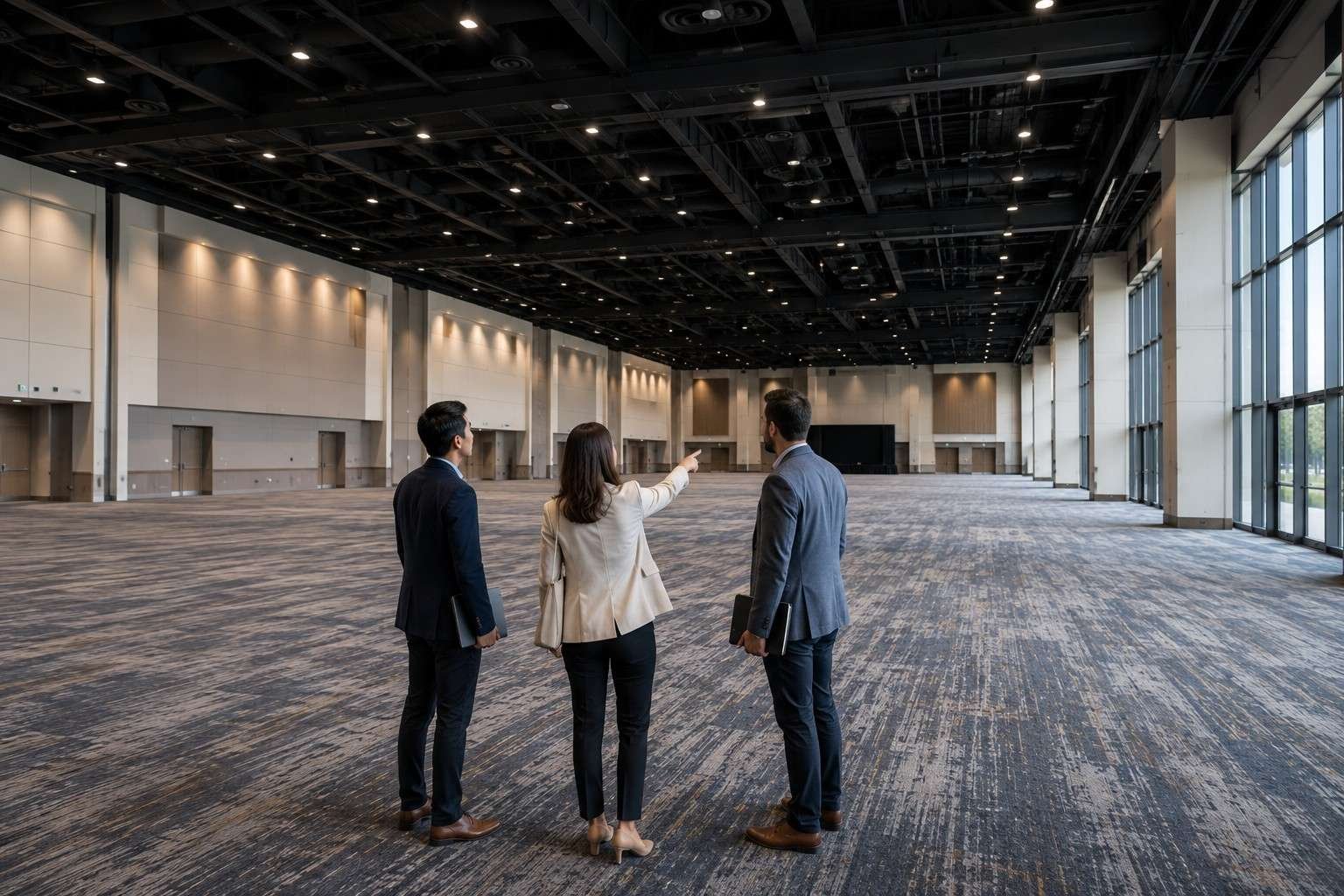
By now, you should be ready to confirm your venue and lock in the event dates. While cost and availability matter, don’t let them be the only deciding factors. Think about how the venue will support the experience you want to create. Consider how attendees will move through the space, where networking will happen, how exhibition areas and sponsor zones will fit into the layout, and whether the venue has the infrastructure to support your production and technology requirements. If you’re planning a hybrid conference, this is also the stage to confirm streaming capabilities and internet reliability.
2. Develop Your Conference Brand
Your conference brand is much more than a logo or colour palette. It’s the identity that attendees, sponsors, and speakers will associate with the event long before they arrive. Develop a consistent theme and visual identity that can be carried across your website, social media, stage design, signage, presentations, and delegate materials. When every touchpoint feels connected, the conference looks more professional and becomes easier to recognise and remember.
3. Start Speaker and Sponsorship Outreach
High-profile speakers and sponsors often commit to events months in advance, so don’t wait too long to start these conversations. When approaching speakers, focus on why your audience is worth speaking to and how they’ll benefit from being part of the event. With sponsors, move beyond logo placement. Show how your conference can help them connect with attendees through networking sessions, interactive activations, exhibition spaces, or branded experiences that deliver genuine engagement.
4. Choose the Right Event Partners
The suppliers you choose can have a significant impact on how smoothly your conference runs. Look beyond quotations and consider each vendor’s experience with business events, communication style, and ability to handle unexpected situations. This is also a good time to shortlist your event technology partners. Whether you’re using an event app, digital registration, AI-powered networking, or lead capture tools for exhibitors, selecting the right platform early gives your team enough time to integrate and test it before launch.
5. Launch Your Conference Website
Your website will become the central source of information for attendees, speakers, sponsors, and exhibitors. Even if registrations haven’t opened yet, it should clearly communicate the purpose of the conference, key dates, venue details, and what people can expect. As more information becomes available, continue updating the website with confirmed speakers, agenda highlights, sponsorship opportunities, and frequently asked questions. An active website builds confidence and supports your marketing efforts throughout the planning journey.
6. Build Your Marketing Plan
A successful conference rarely fills up overnight. It takes consistent communication over several months to build awareness and encourage registrations. Plan how you’ll use email campaigns, social media, content marketing, PR, partner promotions, and paid advertising to reach your audience. Rather than simply promoting the event, focus on the value attendees will gain, whether that’s learning from industry experts, discovering new solutions, or building meaningful business connections.
7. Create the First Version of Your Agenda
Your agenda doesn’t have to be final at this stage, but it should provide enough direction to support marketing and speaker discussions. Think about creating a balanced programme instead of filling every available time slot. Leave room for networking, sponsor interactions, and breaks between sessions. In many business conferences, these informal moments are where some of the most valuable conversations take place.
8–9 Months Before the Conference: Bring the Conference to Life
By this stage, the foundations are in place. Your venue is confirmed, the conference has an identity, and key suppliers are on board. The focus now shifts to building momentum and giving attendees, speakers, sponsors, and exhibitors a reason to get excited about the event. This is also when your planning becomes more visible. Registrations begin to grow, marketing campaigns gather pace, and sponsors start planning how they’ll make an impact. The decisions you make during this phase will influence not only attendance but also the overall quality of the conference experience.
1. Open Registration
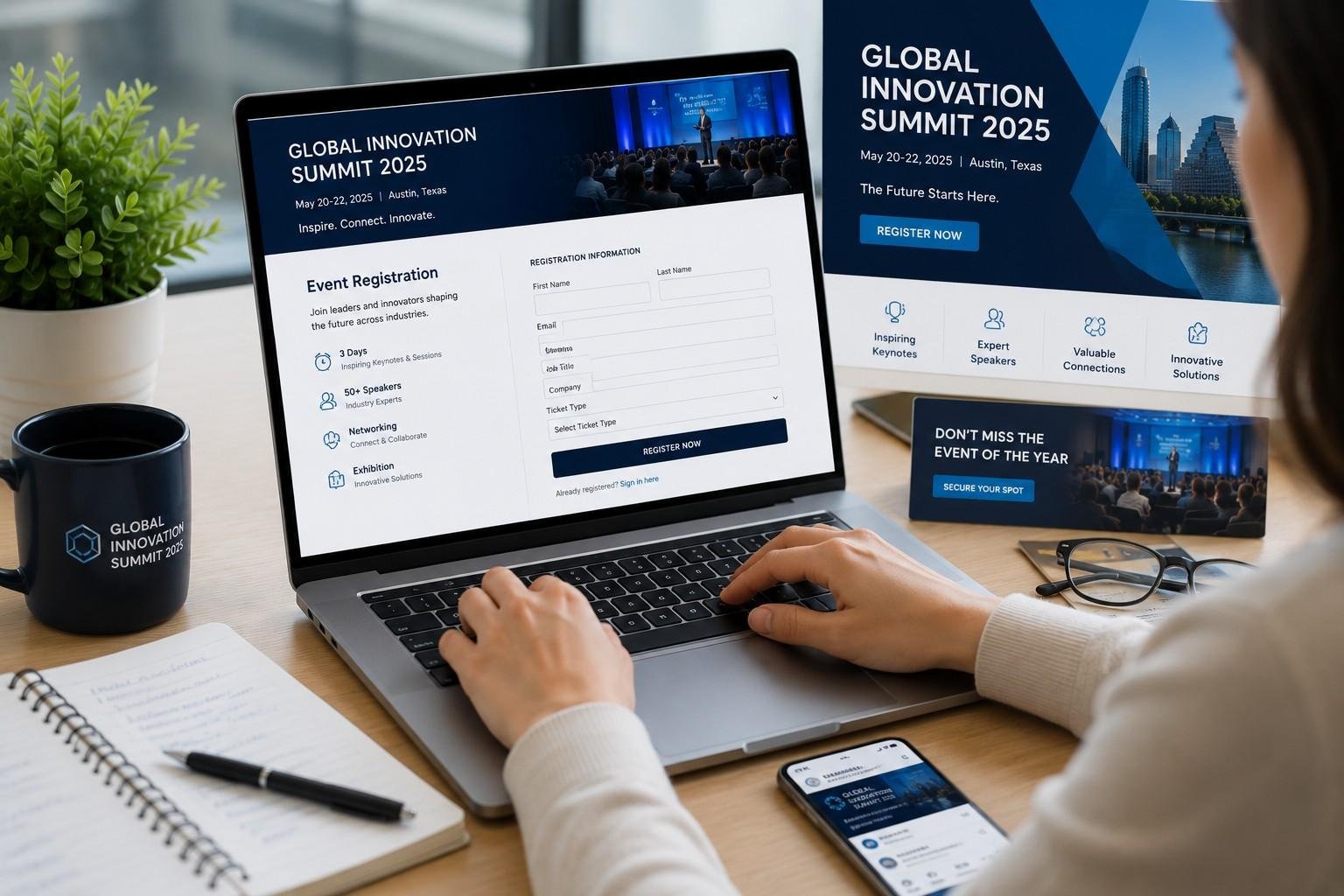
Once registrations go live, every interaction shapes a potential attendee’s first impression of your conference. A complicated registration process can discourage people from completing their booking, while a simple and intuitive journey creates confidence from the very beginning. Make sure the registration platform is easy to navigate, works well across devices, and clearly communicates ticket options, pricing, and what’s included. Automated confirmations, calendar reminders, and personalised communication can also help keep attendees engaged long before the event takes place.
2. Confirm Speakers and Build the Programme
As more speakers confirm their participation, start developing a programme that balances learning, interaction, and networking. While keynote sessions often attract registrations, they’re only one part of a successful conference. Think about how attendees will move through the day. Avoid scheduling back-to-back sessions without breaks and create opportunities for informal conversations between presentations. Panel discussions, fireside chats, workshops, and Q&A sessions often encourage more participation than presentation-heavy agendas. It’s also worth reviewing your speaker lineup to ensure it reflects a variety of perspectives and expertise. A diverse programme generally creates richer discussions and broader audience appeal.
3. Strengthen Sponsor and Exhibitor Engagement
Sponsors should feel like partners in the conference rather than organisations that have simply purchased space. Regular communication during this stage helps them prepare their activations, promotional campaigns, and exhibition plans well before the event. Discuss how they’ll engage with attendees instead of focusing only on branding opportunities. Interactive demonstrations, networking lounges, product showcases, and educational sessions often create more value for both sponsors and delegates than traditional exhibition booths alone. If your conference includes an exhibition area, begin planning the floor layout now. A well-designed exhibition encourages visitors to explore naturally rather than directing all footfall to a handful of prominent stands.
4. Expand Your Marketing Campaigns
Marketing should evolve as more conference details become available. With speakers, agenda highlights, and sponsors confirmed, you now have stronger stories to share across different channels. Instead of repeatedly promoting ticket sales, focus on the value attendees will gain. Share speaker interviews, behind-the-scenes updates, industry insights, and early programme announcements to build anticipation. Featuring sponsors, exhibitors, or previous attendee experiences can also add credibility and encourage registrations. This is also a good time to encourage speakers and partners to promote the conference through their own networks, helping you reach audiences beyond your existing community.
5. Refine Your Event Technology
By now, your technology choices should move from planning to implementation. Registration platforms, event apps, badge printing, lead capture tools, and audience engagement software all need enough time for testing and integration. If you’re hosting a hybrid conference, begin mapping the online attendee journey as carefully as the in-person experience. Virtual participants should have opportunities to watch sessions, interact with speakers, and connect with other attendees rather than simply viewing a livestream. Starting these preparations early gives your team time to identify potential issues before they become last-minute problems.
6. Review the Attendee Experience
Before moving into the next phase of planning, take a step back and look at the conference from an attendee’s perspective. Consider what someone will experience from the moment they discover the event until they leave the venue. Are there enough networking opportunities? Will registration and check-in feel straightforward? Does the agenda allow time to explore exhibition areas, meet sponsors, and take meaningful breaks? Answering these questions now is much easier than trying to redesign the experience a few weeks before the conference. The strongest business events aren’t remembered because everything ran on schedule; they’re remembered because every stage of the attendee journey felt thoughtful, engaging, and worthwhile.
6–7 Months Before the Conference: Focus on the Experience
With registrations underway and the conference gaining visibility, it’s time to shift your attention from planning individual elements to connecting them into a cohesive experience. At this stage, attendees shouldn’t just be coming to a conference; they should be looking forward to it. This is also when the event begins to take shape behind the scenes. Production plans become more detailed, exhibitors need clear guidance, and sponsors start preparing activations. Bringing these workstreams together early helps avoid rushed decisions closer to the event.
1. Finalise the Conference Agenda
By now, your agenda should move beyond a draft. Confirm session timings, speaker formats, and room allocations while ensuring the programme flows naturally throughout the day. Avoid packing every minute with presentations. Delegates also need time to network, visit exhibition areas, meet sponsors, or simply recharge between sessions. These informal moments often lead to the conversations attendees remember most, so treat them as an intentional part of the programme rather than empty gaps. As you review the schedule, think about the overall pace of the event. A balanced agenda keeps energy levels high and prevents information overload.
2. Plan the Exhibition and Sponsor Experience
If your conference includes exhibitors, now is the time to finalise the floor plan and begin coordinating with participating brands. Think carefully about how attendees will move through the exhibition space instead of simply assigning booths based on availability. Create layouts that encourage exploration, leave enough room for conversations, and make sponsor activations feel like part of the attendee journey. Interactive product demonstrations, networking lounges, and experience zones often attract more engagement than traditional stand-alone displays because they give people a reason to stay and interact. Providing exhibitors with clear timelines, setup guidelines, and branding requirements at this stage also helps reduce last-minute questions.
3. Strengthen Production Planning
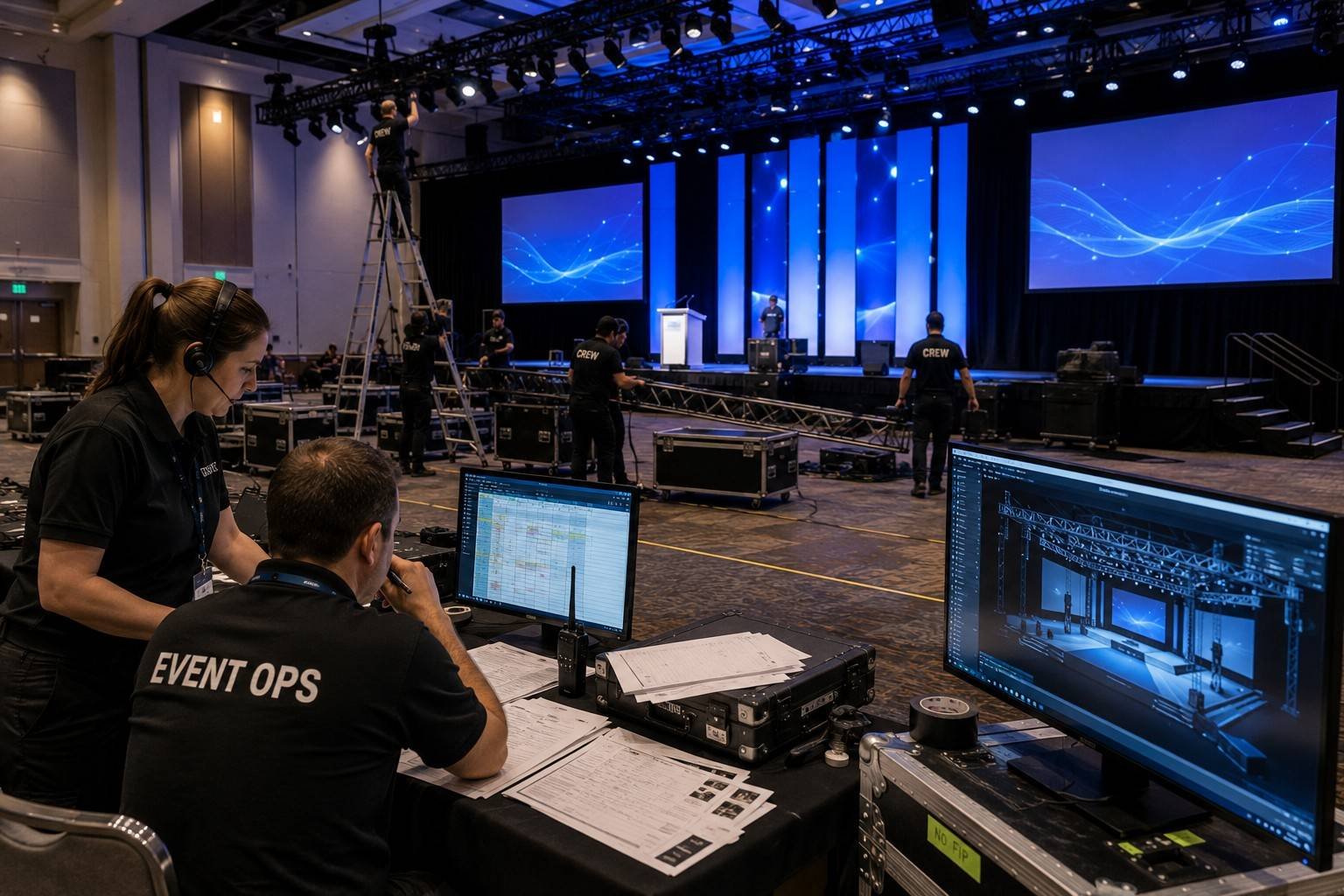
Production involves far more than arranging microphones and presentation screens. It’s responsible for creating the atmosphere attendees experience from the moment they enter the venue. Begin refining stage layouts, presentation formats, lighting, signage, and digital displays while keeping your conference branding consistent throughout the venue. Every element should contribute to a professional and engaging environment, whether attendees are sitting in keynote sessions, walking through exhibition spaces, or participating in networking activities. If you’re incorporating experiential marketing ideas like installations or interactive features, this is the ideal stage to review designs, confirm technical requirements, and coordinate with suppliers.
4. Prepare Your Event Technology
Technology should now move into testing rather than planning. Registration systems, event apps, QR code check-in, audience polling, lead capture tools, and communication platforms should all be reviewed together to ensure they work as one connected ecosystem. For hybrid conferences, give equal attention to the virtual audience. Test streaming platforms, session access, audience interaction features, and speaker workflows so remote participants enjoy an engaging experience instead of feeling like passive viewers. The more thoroughly technology is tested now, the fewer surprises your team will face during the final weeks.
5. Keep Attendees Engaged
After someone registers, your communication shouldn’t stop until the event begins. Consistent updates help maintain excitement while reducing uncertainty about what attendees can expect. Share speaker announcements, agenda updates, networking opportunities, travel information, and practical event tips over the coming months. These touchpoints keep the conference top of mind while encouraging delegates to plan their schedules. If your event app is ready, consider launching it early so attendees can start exploring sessions, connecting with other delegates, and building their personal agendas before they arrive.
6. Review Sustainability and Accessibility
As operational planning becomes more detailed, take the opportunity to review how the conference can be more sustainable and inclusive. Simple decisions such as reducing unnecessary printed materials, using digital signage, choosing reusable event assets, or working with local suppliers can significantly reduce environmental impact without affecting the attendee experience. Accessibility deserves the same level of attention. Review venue access, session layouts, signage, dietary requirements, and digital accessibility to ensure every attendee can participate comfortably. Conferences that are designed to be inclusive tend to create better experiences for everyone, not just those with specific requirements.
4–5 Months Before the Conference: Refine Every Detail
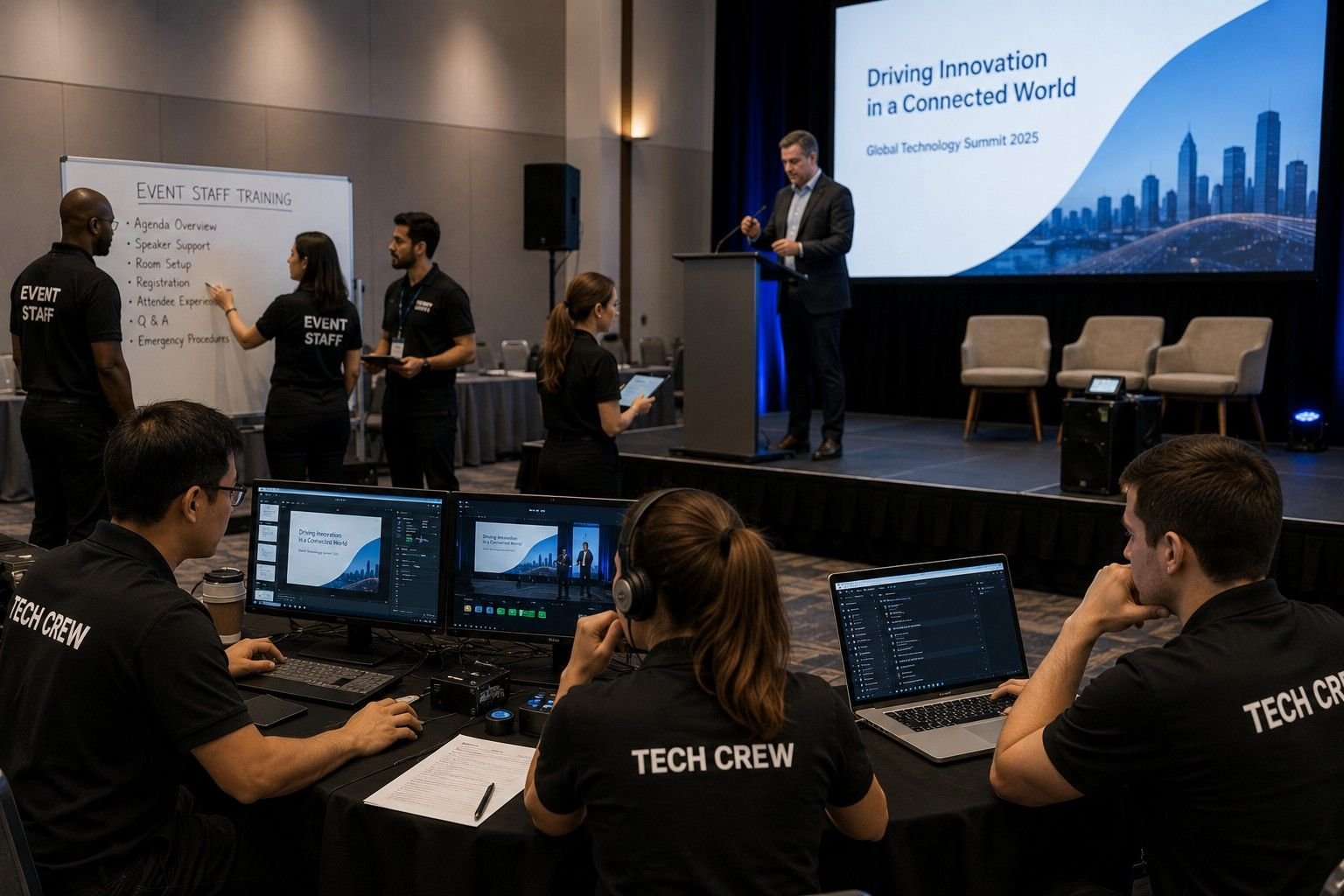
With the major decisions behind you, the focus now shifts to refinement. This is the stage where the conference starts feeling real, not just for your team, but also for attendees, speakers, sponsors, and exhibitors. While registrations should continue to be a priority, equal attention should be given to the quality of the experience you’re creating. Rather than introducing new ideas, spend this phase strengthening what’s already been planned. Small improvements made now are often what separate a well-organised conference from one that’s truly memorable.
1. Confirm Suppliers and Production Requirements
By this point, your production partners should have a clear understanding of the event schedule, venue layout, and technical requirements. Confirm delivery timelines, installation schedules, staffing plans, and contingency measures so every supplier knows what’s expected. Review the production plan from an attendee’s perspective as well. Consider how stage transitions will work, whether signage is easy to follow, and if audiovisual elements will enhance the experience rather than distract from it. Taking time to fine-tune these details now will reduce pressure during the final weeks.
2. Coordinate with Speakers, Sponsors, and Exhibitors
Your speakers, sponsors, and exhibitors will now be preparing their own presentations, activations, and logistics. Maintaining regular communication helps ensure everyone is working towards the same vision for the conference. Provide speakers with presentation guidelines, deadlines, and information about the audience so they can tailor their sessions effectively. Sponsors and exhibitors should receive clear instructions about booth setup, branding specifications, delivery schedules, and venue access. The better prepared they are, the smoother the event will run. This is also a good opportunity to encourage collaboration. Sponsors may wish to host networking sessions or product demonstrations, while exhibitors could contribute to educational content or live experiences that add value for attendees.
3. Enhance the Attendee Journey
As registrations continue to grow, start reviewing the entire attendee journey from arrival to departure. Think about every interaction someone will have with your conference and whether it feels simple, engaging, and well organised. Review the registration process, badge collection, venue navigation, networking opportunities, refreshment breaks, and session transitions. Even small adjustments such as clearer wayfinding or better spacing between sessions can make the day feel more enjoyable and less rushed. If you’re using an event app, encourage attendees to build personalised schedules, book meetings, or explore exhibitors before the conference. Giving delegates useful tools in advance helps them make the most of their time on-site.
4. Strengthen Your Marketing Campaigns
Your marketing should now create excitement rather than simply announce the event. With the programme largely confirmed, highlight the people, conversations, and experiences attendees can expect instead of listing session titles. Share speaker interviews, behind-the-scenes updates, sponsor spotlights, and previews of exhibition features across your communication channels. Testimonials from previous attendees or participating brands can also build credibility and reassure prospective delegates that the conference is worth attending. If registrations are slower than expected, this is the right time to adjust your messaging or promotional strategy rather than waiting until the final month.
5. Test Systems and Review Operations
Operational planning becomes increasingly important as the conference approaches. Registration platforms, payment systems, event apps, badge printing, lead capture tools, and communication platforms should all be tested together to identify any issues before they affect attendees. Work through different scenarios with your team, including delayed speaker arrivals, long registration queues, technical failures, or changes to the agenda. While you can’t predict every challenge, preparing for the most likely situations makes your team far more confident on event day.
6. Review Progress Against Your Goals
With only a few months remaining, take a step back and compare your progress against the objectives you set at the beginning of the project. Are registrations meeting expectations? Have sponsorship commitments been fulfilled? Is the attendee experience still aligned with your original vision? This review gives you time to make meaningful improvements while there is still flexibility in the schedule. The strongest conferences aren’t built by constantly adding new ideas. They’re built by reviewing, refining, and making deliberate improvements at every stage of the planning process.
2–3 Months Before the Conference: Prepare for Flawless Execution
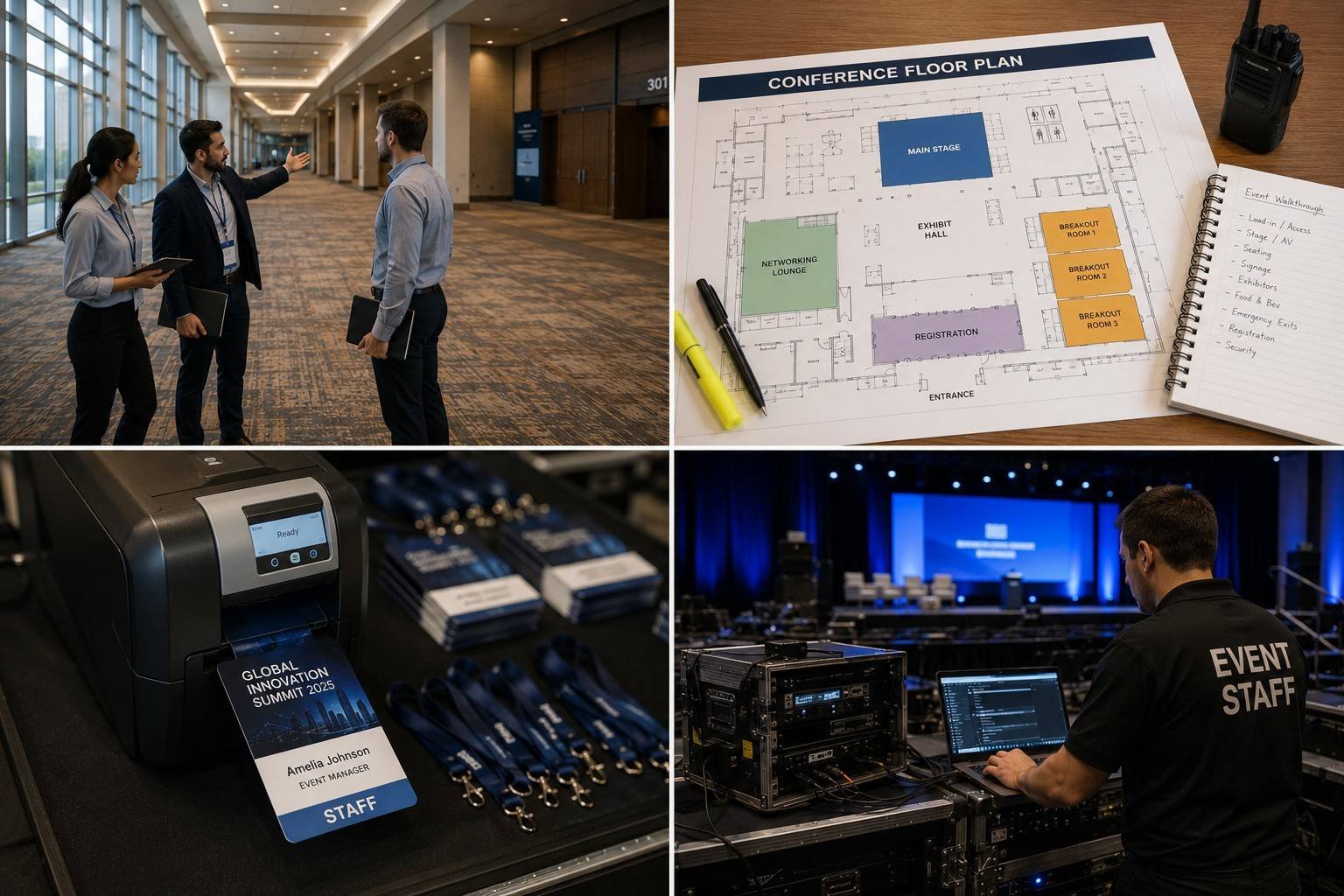
As the conference draws closer, planning becomes more operational. Most of the major decisions have already been made, so the priority now is making sure every team, supplier, speaker, sponsor, and exhibitor is prepared to deliver exactly as planned. This is also the stage where attention to detail makes the biggest difference. Small issues that go unnoticed now can quickly become larger challenges on event day, so it’s worth reviewing every aspect of the conference with fresh eyes.
1. Finalise Operational Plans
Bring all your workstreams together and review the event schedule from start to finish. Everyone should understand what needs to happen, who’s responsible for each task, and how different teams will communicate throughout the conference. Confirm supplier arrival times, loading schedules, venue access, security arrangements, catering, housekeeping, and emergency procedures. A detailed operational plan helps the entire team work more confidently when the venue becomes busy.
2. Complete Speaker Coordination
Most speakers will now be preparing their presentations, so regular communication becomes even more important. Confirm session timings, presentation formats, travel arrangements, accommodation, and any technical requirements well in advance. Request presentation slides early enough to review branding, formatting, and compatibility with your production setup. If multiple speakers are sharing a session, make sure they understand the flow of the discussion and who’s responsible for each segment. Scheduling rehearsal sessions, particularly for keynote speakers or live demonstrations, can also prevent avoidable technical issues on the day.
3. Support Sponsors and Exhibitors
Sponsors and exhibitors should now have everything they need to prepare for the event. Share final setup schedules, floor plans, exhibitor manuals, branding specifications, and venue access information so there are no surprises during move-in. Rather than focusing only on logistics, encourage sponsors to think about how they’ll engage visitors throughout the event. Interactive product demonstrations, live experiences, networking activities, or educational sessions often create stronger connections than simply displaying products or promotional material. It’s also worth reviewing the exhibition layout one final time to ensure attendee movement feels natural and high-traffic areas don’t become overcrowded.
4. Keep Attendees Informed
The weeks leading up to the conference are the perfect time to reduce uncertainty for attendees. Clear and timely communication helps people arrive feeling prepared instead of overwhelmed. Share practical information such as travel guidance, parking, accommodation, venue maps, registration timings, dress codes, Wi-Fi details, and frequently asked questions. If your conference app is available, encourage attendees to download it early so they can personalise their schedules, connect with other delegates, and explore exhibitors before arriving. These updates may seem routine, but they play a significant role in creating a smooth and stress-free experience.
5. Test Every Piece of Event Technology
No matter how reliable your technology partners are, every system should be tested under real event conditions before the conference begins. Review registration and check-in systems, badge printing, presentation laptops, audience polling tools, live streaming platforms, mobile apps, lead capture devices, and internet connectivity. Testing each system individually is important, but testing how they work together is even more valuable. For hybrid conferences, conduct full rehearsal sessions involving both in-person and virtual audiences to make sure presentations, audience interaction, and streaming quality meet expectations.
6. Prepare Your Team
Your event team should feel just as prepared as your suppliers. Organise briefing sessions so everyone understands the conference schedule, escalation procedures, communication channels, and their individual responsibilities. Provide staff with clear contact lists, venue maps, emergency information, and contingency plans. When every team member knows where to be and what to do, the conference runs more efficiently even when unexpected situations arise.
7. Review the Conference Through an Attendee’s Eyes
Before moving into the final month, take one last walk through the conference journey. Imagine arriving at the venue for the first time. Is registration easy to find? Are signs clear? Can delegates move comfortably between sessions, networking areas, and exhibition spaces? Does the agenda provide enough time for meaningful conversations without making people feel rushed? Looking at the event from the attendee’s perspective often reveals small improvements that planning documents alone can miss. Those final refinements are usually what transform a well-managed conference into an exceptional one.
Final Month to Conference Week: Focus on Readiness, Not Last-Minute Planning
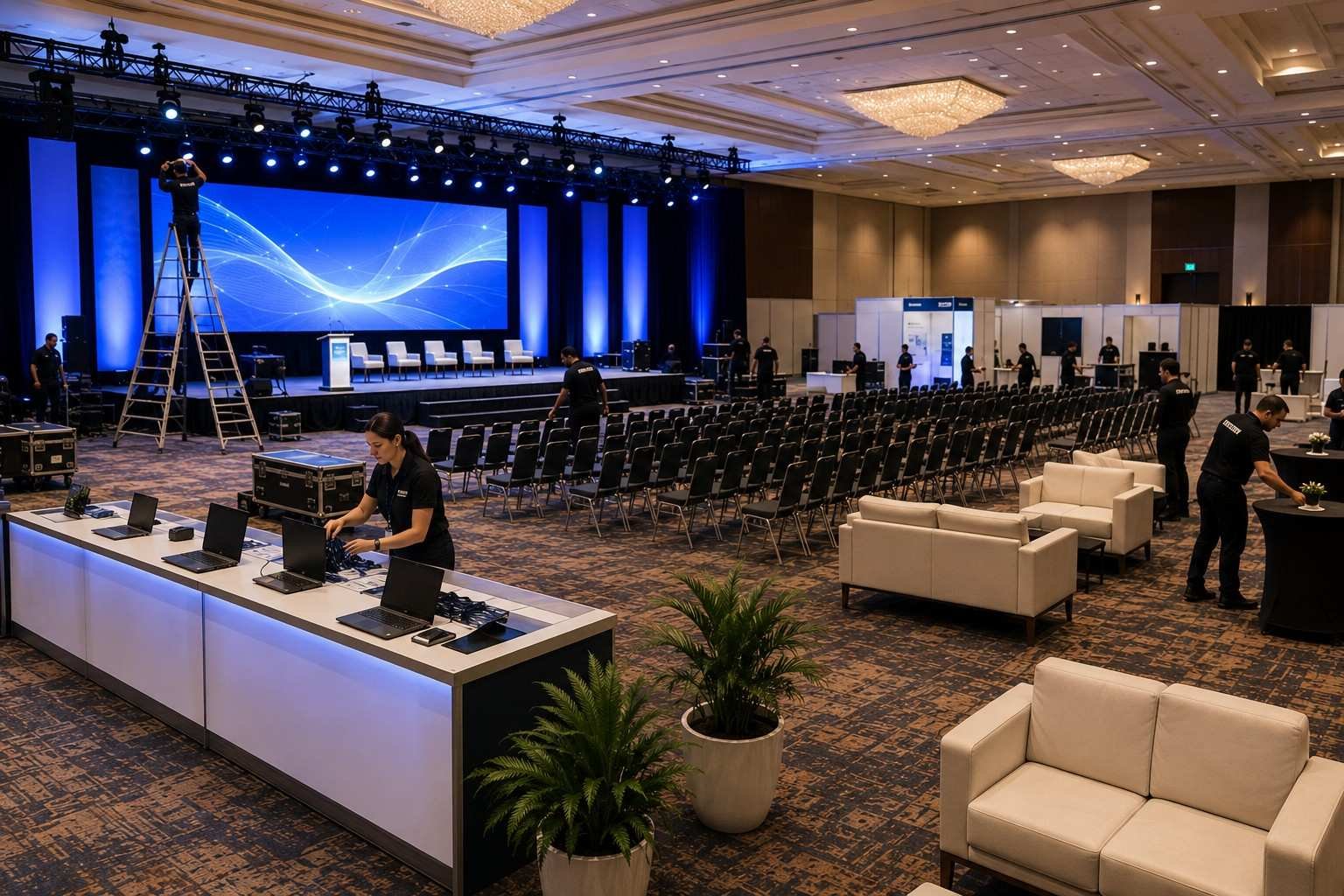
The final month is about bringing everything together, not introducing new ideas. If you’ve followed the timeline so far, this stage should be spent confirming details, rehearsing key moments, and making sure every person involved knows exactly what to expect. It’s natural for last-minute requests and changes to come in, but avoid making significant adjustments unless they’re necessary. Every change has a ripple effect, and protecting the plan you’ve carefully built will help the conference run more smoothly.
1. Confirm Every Detail
This is the time to revisit every workstream and ensure nothing has been overlooked. Review timelines with suppliers, confirm delivery schedules, check venue access arrangements, and make sure all approvals have been completed. Create a final event schedule that includes setup, rehearsals, registration opening times, session transitions, networking breaks, and venue breakdown. Everyone from your internal team to external vendors should be working from the same version of the plan.
2. Conduct Production Rehearsals
A successful conference often looks effortless because of the preparation that happens beforehand. Run through keynote sessions, lighting cues, presentation transitions, video playback, live demonstrations, and audio checks. If multiple speakers are involved, schedule rehearsals so they’re comfortable with the stage, timing, and presentation format. For hybrid events, carry out a complete technical rehearsal that includes streaming, audience interaction, and virtual moderation. Testing everything together helps identify small issues before attendees arrive.
3. Prepare the Venue
As the venue begins to take shape, look beyond logistics and focus on the overall experience. Walk through the space exactly as an attendee would. Check that registration desks are easy to find, signage is visible, exhibition areas are easy to navigate, sponsor activations are fully operational, and networking spaces feel inviting rather than overcrowded. Small adjustments to furniture layouts, branding, or wayfinding can make a noticeable difference on the day. This is also the right time to verify accessibility features, ensuring every attendee can move comfortably through the venue.
4. Brief Your Team
Everyone involved in delivering the conference should understand not only their own responsibilities but also how the event will operate as a whole. Hold a final briefing to review the event schedule, communication channels, escalation procedures, emergency contacts, and contingency plans. Encourage team members to ask questions now rather than trying to solve problems during the event. A confident, well-informed team creates a much calmer experience for attendees.
5. Keep Attendees Excited
The final weeks are an opportunity to build anticipation rather than simply send reminders. Share practical information alongside engaging content such as speaker highlights, networking opportunities, venue previews, and useful tips for making the most of the conference. Encourage attendees to download the event app, explore the agenda, arrange meetings, and connect with other delegates before they arrive. These touchpoints help attendees feel prepared while increasing engagement before the event even begins.
6. Conference Week: Stay Flexible
Once setup begins, your role shifts from planner to problem solver. No matter how detailed the preparation has been, unexpected situations are part of every conference. A delayed delivery, a travel disruption, or a last-minute speaker change shouldn’t derail the event if the team is ready to adapt. Instead of reacting to every issue individually, keep your attention on the bigger picture. Prioritise attendee experience, communicate clearly with your team, and resolve challenges without disrupting the flow of the event. Most attendees won’t remember the problems you solved; they’ll remember how smoothly everything felt.
7. Deliver an Exceptional Conference Experience
When conference day arrives, avoid getting caught up in individual tasks. Spend time observing how attendees are interacting with the event. Are registration queues moving quickly? Are networking spaces being used as intended? Are sponsors seeing consistent visitor engagement? Are sessions running on time without feeling rushed? Walking the venue regularly allows you to identify and resolve small issues before they affect the wider experience. The most successful conferences don’t just follow a schedule; they create an environment where attendees can learn, connect, and engage effortlessly. If your planning has been thorough, the event should feel seamless, even though months of preparation made it possible.

After the Conference: Measure Success and Build on What You’ve Learned
The conference may be over, but the planning process isn’t. What happens after the event is just as important as what happens on the day itself. This is your opportunity to understand what worked, identify areas for improvement, and strengthen relationships with attendees, speakers, sponsors, and exhibitors. Rather than moving straight to planning the next event, take time to evaluate the results while the experience is still fresh.
1. Gather Feedback from Every Stakeholder
Different groups experience your conference in different ways, so don’t rely on attendee feedback alone. Collect insights from speakers, sponsors, exhibitors, suppliers, and your internal team to get a complete picture of the event. Ask questions that go beyond general satisfaction. Find out what people found most valuable, where they faced challenges, and what improvements they’d like to see next time. These insights often reveal opportunities that analytics alone can’t identify.
2. Measure Performance Against Your Goals
Go back to the objectives you set at the beginning of the planning process and evaluate how well the conference delivered against them. If your goal was to generate leads, look at the quality and volume of enquiries rather than simply the number of registrations. If the focus was thought leadership, review session attendance, audience engagement, and post-event content performance. For internal conferences, measure employee participation, knowledge sharing, or stakeholder feedback. Looking at meaningful outcomes instead of vanity metrics provides a much clearer picture of success.
3. Evaluate Sponsorship and Exhibitor ROI
Sponsors and exhibitors invest in conferences to achieve specific business outcomes, so demonstrating value is essential if you want them to return. Share relevant performance data such as attendee numbers, exhibition footfall, lead generation, app engagement, session attendance, or branded activation participation. Pairing these metrics with attendee feedback gives sponsors a better understanding of the impact their investment delivered. Following up with sponsors after the event also opens the door to early conversations about future partnerships.
4. Analyse Registration and Engagement Data
Your event technology can provide valuable insights into attendee behaviour. Review registration trends, session popularity, networking activity, app usage, exhibition traffic, and engagement with interactive features. Understanding how people interact with different parts of the conference can help you make more informed decisions when planning future events. You may discover, for example, that shorter breakout sessions attracted larger audiences or that networking lounges generated more engagement than expected. These findings turn data into practical improvements rather than just reporting numbers.
5. Thank Your Community
A simple thank-you message goes a long way in strengthening relationships after the conference. Reach out to attendees, speakers, sponsors, exhibitors, volunteers, and suppliers while the event is still fresh in their minds. Share event highlights, presentation recordings, photographs, or key takeaways that continue providing value after the conference has ended. Maintaining communication beyond event day helps keep your brand visible and builds anticipation for future conferences.
6. Document Lessons for Future Events
Every conference offers lessons, regardless of how successful it was. Before your team moves on to other projects, organise a debrief session to discuss what worked well, what could have been handled differently, and which processes should be improved. Document these observations in a central location so they’re available when planning your next event. Recording lessons while they’re still fresh saves time, prevents repeated mistakes, and helps your team build on previous successes year after year. Ultimately, a successful conference isn’t measured only by what happened on stage. It’s measured by the business outcomes it delivered, the relationships it strengthened, and the improvements it inspires for the next event.