Why This Decision Matters More Than Most Businesses Realise

Choosing between renting and owning an exhibition stand is more than a budgeting decision; it’s a strategic investment that can influence your exhibition performance, brand consistency, operational efficiency, and long-term marketing ROI. The right choice depends on how often you exhibit, your business goals, and your plans for future growth. Exhibitions often represent one of the largest investments in a company’s marketing strategy. Along with floor space, businesses invest in stand design, logistics, staffing, product displays, travel, and promotional activities. As the centrepiece of this investment, your exhibition stand plays a major role in attracting visitors, creating strong first impressions, and supporting meaningful business conversations.
The decision to rent or own also affects how efficiently you manage exhibition costs over time. Renting offers flexibility and removes responsibilities such as storage, maintenance, refurbishment, and transportation, making it well suited to businesses that exhibit occasionally or regularly update their branding. Ownership, on the other hand, can provide greater long-term value for companies that exhibit frequently by reducing average costs over multiple events and delivering a consistent brand experience. As businesses expand into new markets, the decision becomes even more important. International exhibitions introduce additional considerations such as logistics, customs, storage, and transportation, while business growth may require larger or more adaptable exhibition stands in the future.
Instead of asking, “Is renting cheaper than buying?”, consider questions like:
- How often will we exhibit over the next three to five years?
- What will the total lifecycle cost be beyond the initial investment?
- How important is consistent branding across multiple exhibitions?
- Do we have the resources to manage storage, maintenance, and logistics?
- Will our exhibition requirements change as the business grows?
Looking at these factors together provides a much clearer basis for decision-making than comparing upfront costs alone. The following sections explore each of these considerations in detail to help you choose the exhibition stand strategy that best supports your business.
Exhibition Stand Ownership vs Rental: A Side-by-Side Comparison
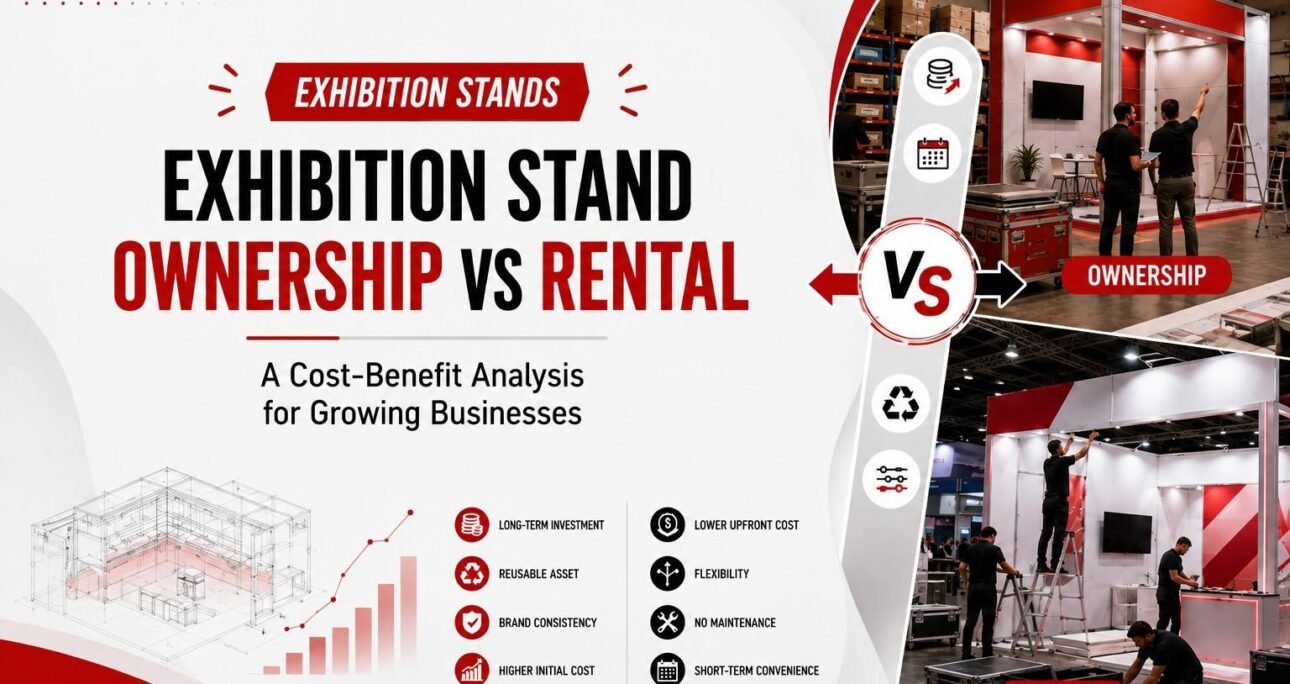
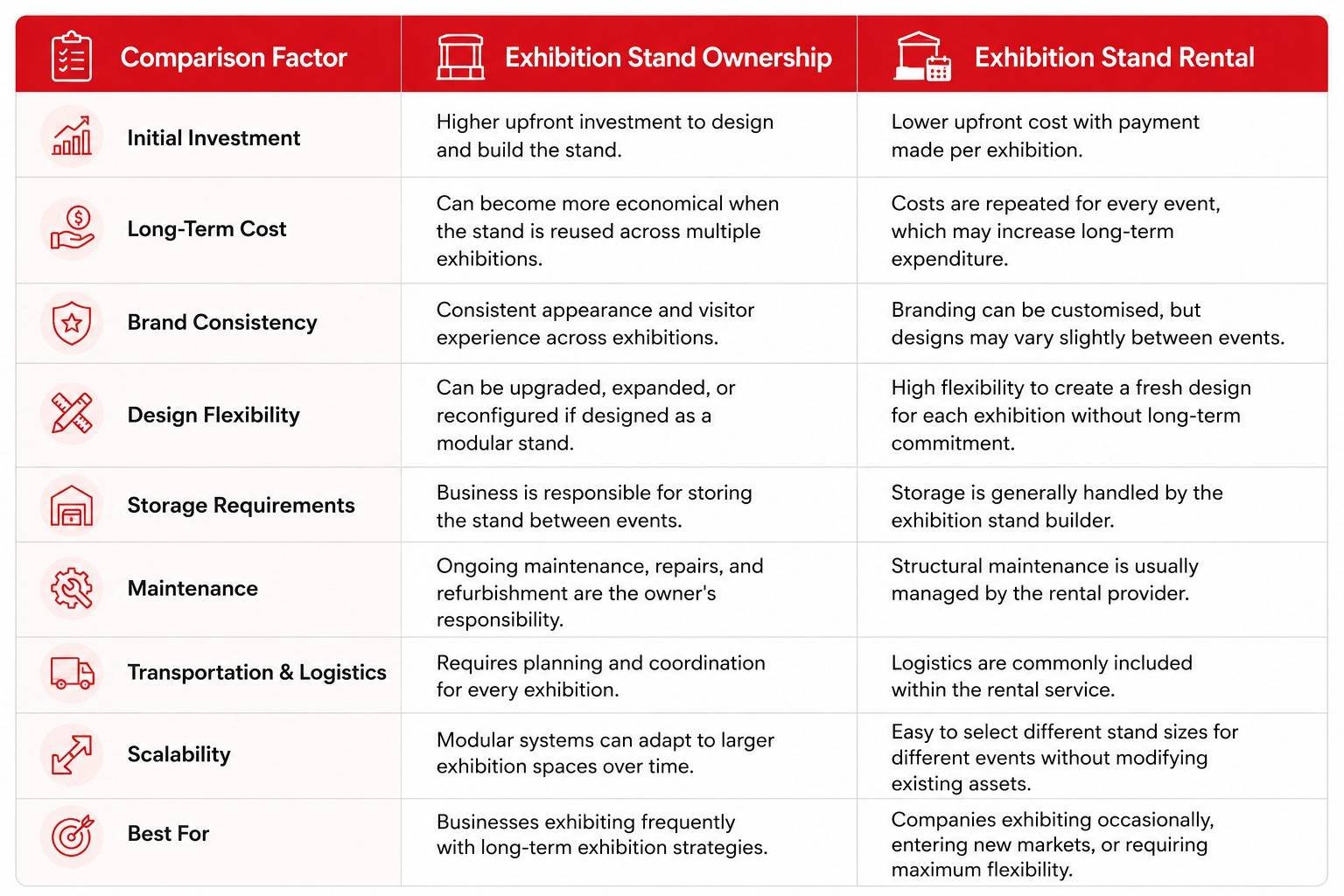
There is no universally better option between exhibition stand ownership and rental. The right choice depends on your exhibition frequency, budget, branding goals, operational capabilities, and long-term marketing strategy. Renting offers flexibility and lower upfront costs, while ownership provides greater control, consistent brand presentation, and the potential for lower costs over multiple exhibitions. Before evaluating costs or calculating return on investment, it’s helpful to understand how both options compare across the factors that most influence exhibition success.
Upfront Cost Is Only One Part of the Decision
Many businesses compare ownership and rental based solely on the initial quotation. While this is understandable, it rarely reflects the true financial impact of either option. A rented stand generally requires a lower initial investment because the business pays only for the exhibition in question. This makes rental attractive for companies with limited budgets or uncertain exhibition schedules. An owned stand, however, represents a capital investment that can be reused for several years. Although the initial cost is higher, that investment is distributed across multiple exhibitions. As participation increases, the average cost per event often decreases, making ownership more financially attractive over the long term.
Operational Responsibility Changes Significantly
The financial comparison is only part of the picture. Ownership also brings additional operational responsibilities. Businesses that own an exhibition stand need to organise storage, transportation, installation, maintenance, refurbishment, and graphic updates. These tasks require planning, resources, and ongoing budget allocation. With rental, many of these responsibilities remain with the exhibition stand builder. This reduces internal workload and allows marketing teams to focus more on exhibition planning, visitor engagement, and lead generation rather than asset management.
Flexibility Depends on Your Exhibition Strategy
Flexibility means different things to different businesses. For companies that launch new products regularly or attend exhibitions across different industries, rental offers the freedom to redesign the stand for each event. Layouts, messaging, colours, and visitor experiences can all evolve without modifying an existing structure. Ownership, particularly through modular exhibition systems, offers a different kind of flexibility. Instead of creating an entirely new stand each time, businesses can reconfigure existing components to suit different floor spaces, exhibition objectives, or product launches while maintaining a consistent brand identity. The better option depends on whether your priority is design variety or long-term brand consistency.
Branding Considerations
Exhibitions are often one of the few opportunities where potential customers interact directly with your products, team, and brand. A consistent exhibition environment can strengthen recognition and reinforce trust, particularly when participating in multiple events throughout the year. Owning a stand makes it easier to maintain a familiar visual identity across exhibitions. Every event reinforces the same brand image, helping visitors recognise your business regardless of location. Rental stands can also deliver excellent branding, especially when customised effectively. However, businesses choosing rental may update layouts or structural elements more frequently, resulting in slight variations between exhibitions.
Hidden Costs of Exhibition Stand Ownership and Rental That Businesses Often Overlook
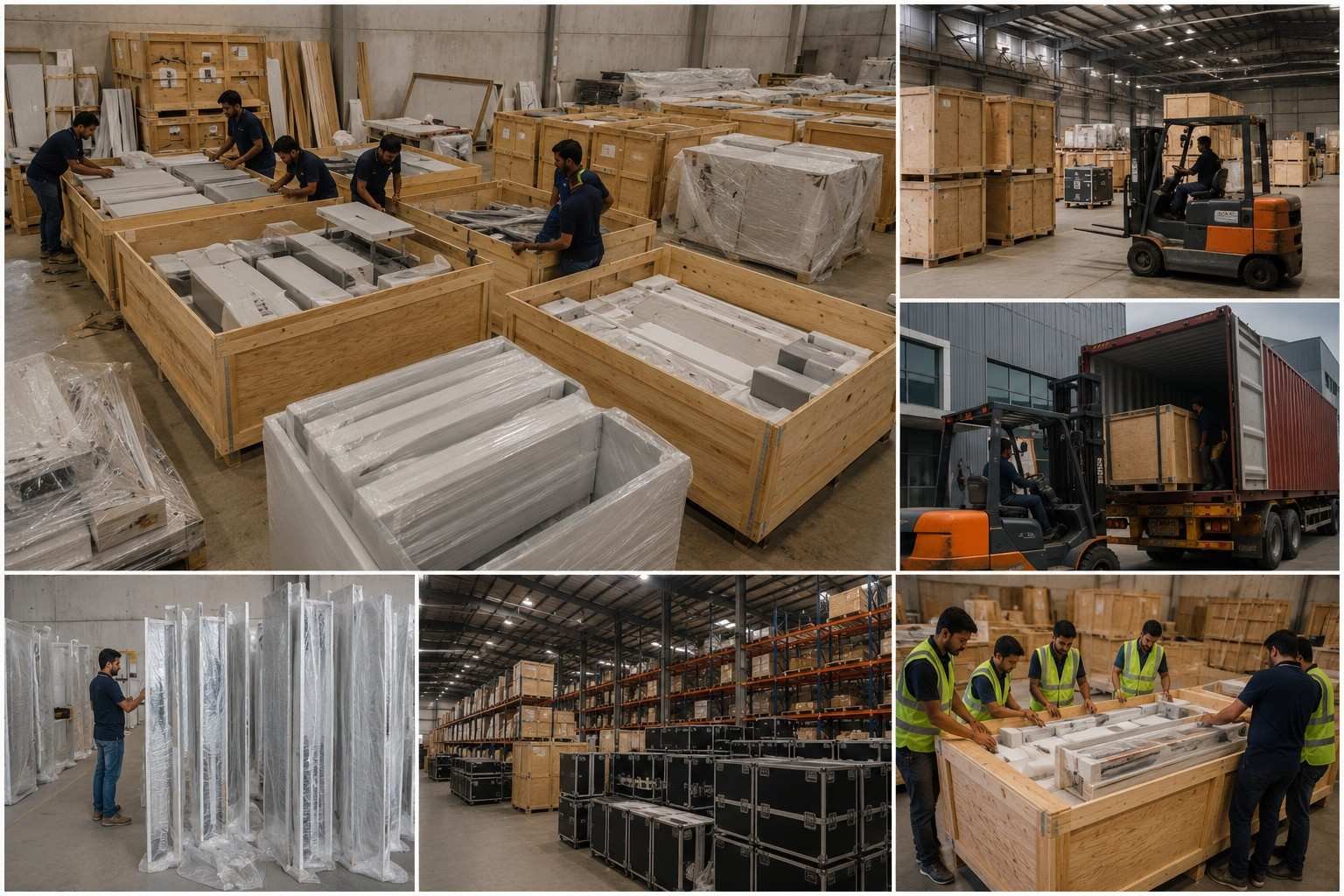
The true cost of an exhibition stand extends far beyond the initial purchase price or rental fee. Whether you choose ownership or rental, additional expenses such as transportation, storage, maintenance, graphic updates, installation, and operational resources can significantly influence your total exhibition budget. Evaluating these hidden costs provides a more accurate basis for comparing both options. When businesses request quotations from exhibition stand builders, they often compare only the headline figures without considering the costs incurred before, during, and after an exhibition. As a result, a solution that appears more affordable initially may become more expensive over several years, while a higher upfront investment may deliver better long-term value. Understanding these ongoing expenses helps businesses calculate the total cost of ownership (TCO) rather than focusing solely on the initial investment.
Hidden Costs of Exhibition Stand Ownership
Owning an exhibition stand provides long-term advantages, but it also introduces operational responsibilities that continue throughout the stand’s lifecycle.
1. Storage Costs: An owned exhibition stand needs to be stored safely between events. Depending on its size and construction, businesses may require dedicated warehouse space or third-party storage facilities. Over several years, storage can become a recurring operational expense that should be factored into the overall investment.
2. Transportation and Logistics: Every exhibition requires the stand to be transported from storage to the venue and back again. Transport costs vary depending on stand size, destination, shipping method, and whether the exhibition is domestic or international. For businesses exhibiting in multiple countries, freight charges, customs documentation, insurance, and local handling fees can substantially increase logistics costs.
3. Installation and Dismantling: Even when a business owns its exhibition stand, professional installation and dismantling services are often required. Complex structures, integrated lighting, audiovisual systems, and large modular components typically require experienced installation teams to ensure safety and compliance with venue regulations.
4. Maintenance and Repairs: Exhibition stands experience wear and tear over time. Components may become damaged during transportation, surfaces can show signs of use, and lighting or display systems may require replacement. Routine maintenance helps preserve the stand’s appearance and functionality, ensuring it continues to represent the business professionally at every event.
5. Graphic Updates: Marketing messages rarely remain unchanged for several years. Product launches, brand refreshes, acquisitions, new certifications, or updated campaigns may require replacing graphics, signage, and printed panels. While the structural framework may remain reusable, visual elements often need periodic updates to stay relevant.
6. Refurbishment: After multiple exhibitions, even well-maintained stands may require refurbishment to maintain a modern appearance. Flooring, furniture, finishes, display counters, and architectural elements may need refreshing to meet evolving visitor expectations and industry design trends.
Hidden Costs of Exhibition Stand Rental
Rental simplifies many operational responsibilities, but it also involves costs that are sometimes underestimated.
1. Repeated Rental Fees: Unlike ownership, rental costs are incurred every time a business participates in an exhibition. While each event may require a relatively modest investment, repeated rental over several years can exceed the cost of owning a reusable stand.
2. Customisation Costs: Basic rental packages may not include every design feature a business requires. Additional branding elements, premium finishes, interactive displays, bespoke furniture, or specialised product demonstration areas can increase the overall project cost. Understanding what is included in the quotation helps avoid unexpected expenses later in the planning process.
3. Graphic Production: Although the structural components of rental stands are often reusable, graphics are usually produced specifically for each client or campaign. Businesses participating in multiple exhibitions with different marketing messages may need new graphics for every event.
4. Optional Service Charges: Many exhibition stand builders offer services such as audiovisual equipment, digital displays, hospitality areas, internet connectivity, lead capture systems, project management, or on-site technical support as optional additions. These services can significantly improve the visitor experience but should be included when comparing total exhibition budgets.
Lifecycle Cost Analysis: Which Option Costs Less Over Time?
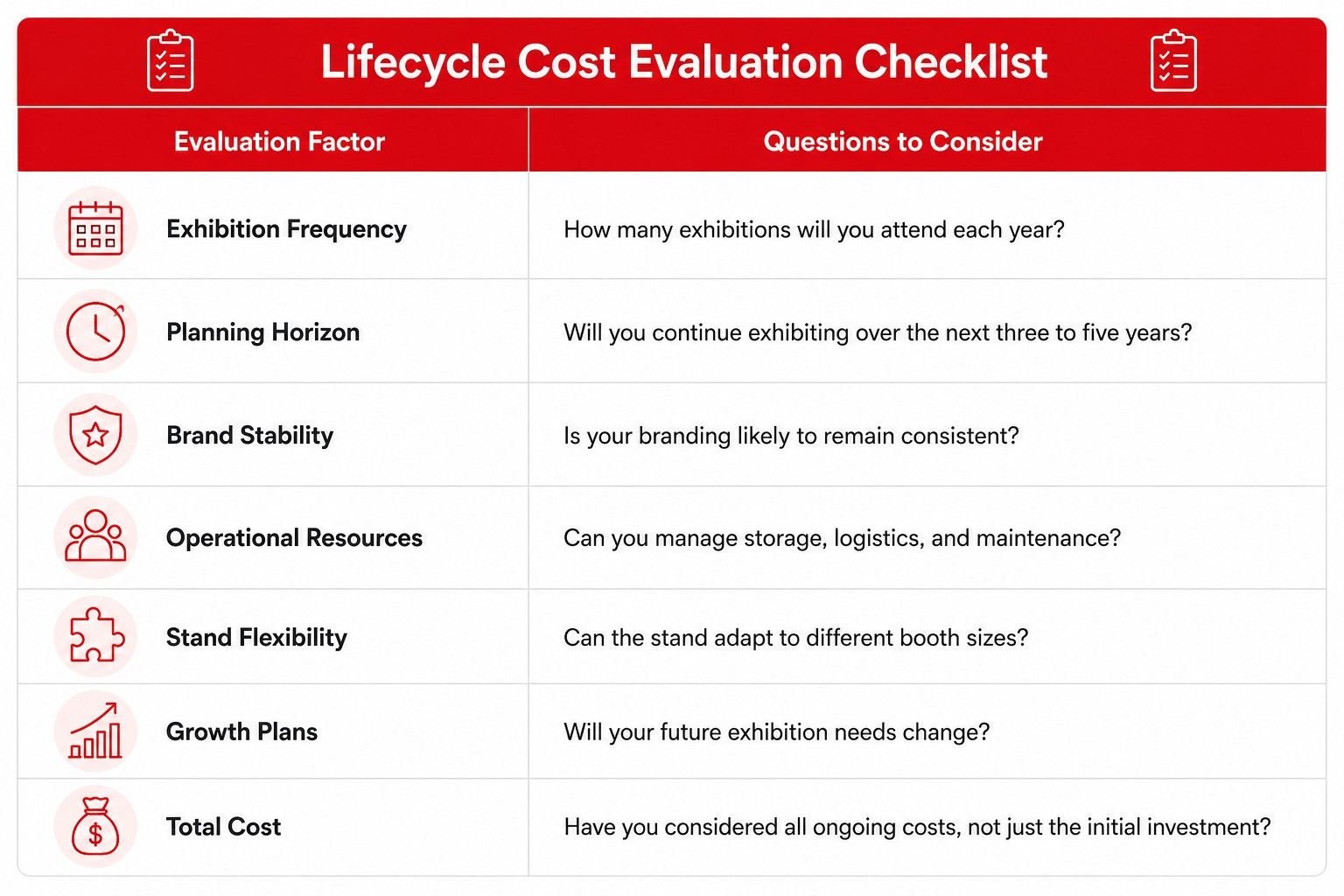
Neither exhibition stand ownership nor rental is automatically the more cost-effective option. The better choice depends on how often your business exhibits, how long you plan to use the stand, and the ongoing costs of storage, transportation, maintenance, and refurbishment. Looking at the total lifecycle cost rather than just the upfront investment provides a more accurate comparison. Many businesses compare costs one exhibition at a time. While this works for occasional exhibitors, it doesn’t reflect the long-term investment required for businesses that participate in multiple trade shows every year. An exhibition stand should be evaluated over its entire lifespan, not just its initial cost.
What Is Lifecycle Cost Analysis?
Lifecycle cost analysis looks beyond the initial price of an exhibition stand and considers what it will cost to use and maintain over its entire lifespan. Instead of comparing only the purchase price or rental fee, it accounts for all expenses incurred before, during, and after each exhibition. For an owned stand, these costs can include design and fabrication, transportation, installation and dismantling, storage, maintenance, repairs, graphic updates, refurbishment, and insurance. For a rented stand, the ongoing costs are usually rental fees for each event, customised graphics, design modifications, and any additional services or upgrades required. Considering these costs together provides a more realistic picture of the overall investment and helps businesses make a decision based on long-term value rather than just the upfront expense.
Why Upfront Cost Can Be Misleading
A rental stand usually requires a lower initial investment, making it attractive for businesses that exhibit occasionally. However, repeated rental fees, design updates, and project costs can add up over time. Ownership follows a different pattern: the largest investment is made upfront, while future costs are mainly related to transportation, storage, maintenance, and periodic updates. As the stand is reused, the average cost per exhibition may gradually decrease.
How Exhibition Frequency Influences Costs
The more often you exhibit, the more important the lifecycle cost becomes. Businesses attending only one or two exhibitions a year often benefit from the flexibility of renting. Those with a busy exhibition calendar may achieve better long-term value by reusing an owned modular stand across multiple events.
Before making a decision, ask yourself:
- How many exhibitions will we attend over the next three to five years?
- Will our branding remain consistent?
- Can the stand adapt to different exhibition spaces?
- Do we have the resources to manage storage and logistics?
These questions provide a better basis for decision-making than comparing quotations alone.
Think Beyond Cost
The goal isn’t simply to spend less; it’s to maximise the value of your exhibition investment. A reusable modular stand can strengthen brand consistency and improve cost efficiency over time. On the other hand, businesses that frequently change their branding or marketing campaigns may benefit more from the flexibility of rental.
Break-Even Analysis: When Does Buying an Exhibition Stand Make Financial Sense?
There is no fixed number of exhibitions after which buying an exhibition stand becomes cheaper than renting. The break-even point varies depending on the stand’s design, purchase price, rental costs, logistics, storage expenses, maintenance requirements, and how frequently the stand will be used. Calculating these factors together provides a far more reliable basis for deciding whether ownership is a worthwhile investment. One of the most common questions businesses ask is: “How many exhibitions do we need to attend before owning a stand becomes more cost-effective?” While it’s an important question, there isn’t a universal answer. Two companies exhibiting the same number of times each year can reach completely different financial outcomes because their exhibition strategies, stand specifications, and operational costs are rarely identical.
What Is the Break-Even Point?
The break-even point is the stage at which the total cost of owning an exhibition stand becomes equal to or lower than the cumulative cost of renting one over the same period. Before reaching this point, renting may represent a lower financial commitment. After it, continued use of an owned stand can reduce the average cost per exhibition because the initial investment has already been absorbed. However, calculating this point requires looking beyond the purchase price.
Factors That Influence the Break-Even Point
Several variables determine how quickly ownership begins to deliver financial value.
Exhibition Frequency
The number of exhibitions you attend each year has one of the biggest influences on the break-even point. A business participating in a single annual exhibition is unlikely to use the stand enough to maximise its long-term value. In contrast, companies exhibiting regularly can spread the initial investment across multiple events, reducing the average cost of each exhibition over time.
Stand Complexity
A simple modular exhibition stand generally requires a lower investment than a highly customised double-decker or architecturally complex structure. The more sophisticated the stand, the longer it may take for ownership costs to be recovered through repeated use.
Rental Costs
Rental pricing varies based on stand size, level of customisation, event location, and the services included in the package. If your exhibition programme consistently requires premium rental solutions with bespoke features, ownership may become financially attractive sooner than expected.
Storage and Logistics
Owning a stand means planning for storage, transportation, installation, and maintenance between exhibitions. Businesses with efficient logistics processes or existing warehouse facilities may incur lower operational costs than organisations relying entirely on third-party services. These differences directly affect the break-even calculation.
Branding Strategy
Companies that maintain a consistent visual identity for several years can often maximise the value of an owned stand through repeated reuse. Businesses that frequently rebrand, launch entirely new product ranges, or significantly change their exhibition messaging may require regular design updates, making rental a more flexible option.
Signs That Ownership May Be Worth Considering
Rather than focusing on a specific number of exhibitions, look for business indicators that suggest ownership could deliver stronger long-term value. Ownership may be suitable if your business:
- Exhibits regularly as part of its annual marketing strategy.
- Uses similar stand sizes at most exhibitions.
- Maintains consistent branding across multiple years.
- Has the resources to manage storage and logistics efficiently.
- Wants greater control over stand design and visitor experience.
- Views exhibitions as a long-term lead generation and brand-building channel rather than occasional marketing activities.
Signs That Rental May Continue to Be the Better Choice
Renting often remains the more practical solution when your exhibition strategy prioritises flexibility over long-term asset ownership. Rental may be the better option if your business:
- Participates in only a few exhibitions each year.
- Frequently changes branding, products, or marketing campaigns.
- Tests different industries or international markets.
- Requires different booth sizes at every exhibition.
- Prefers to avoid managing storage, maintenance, and transportation.
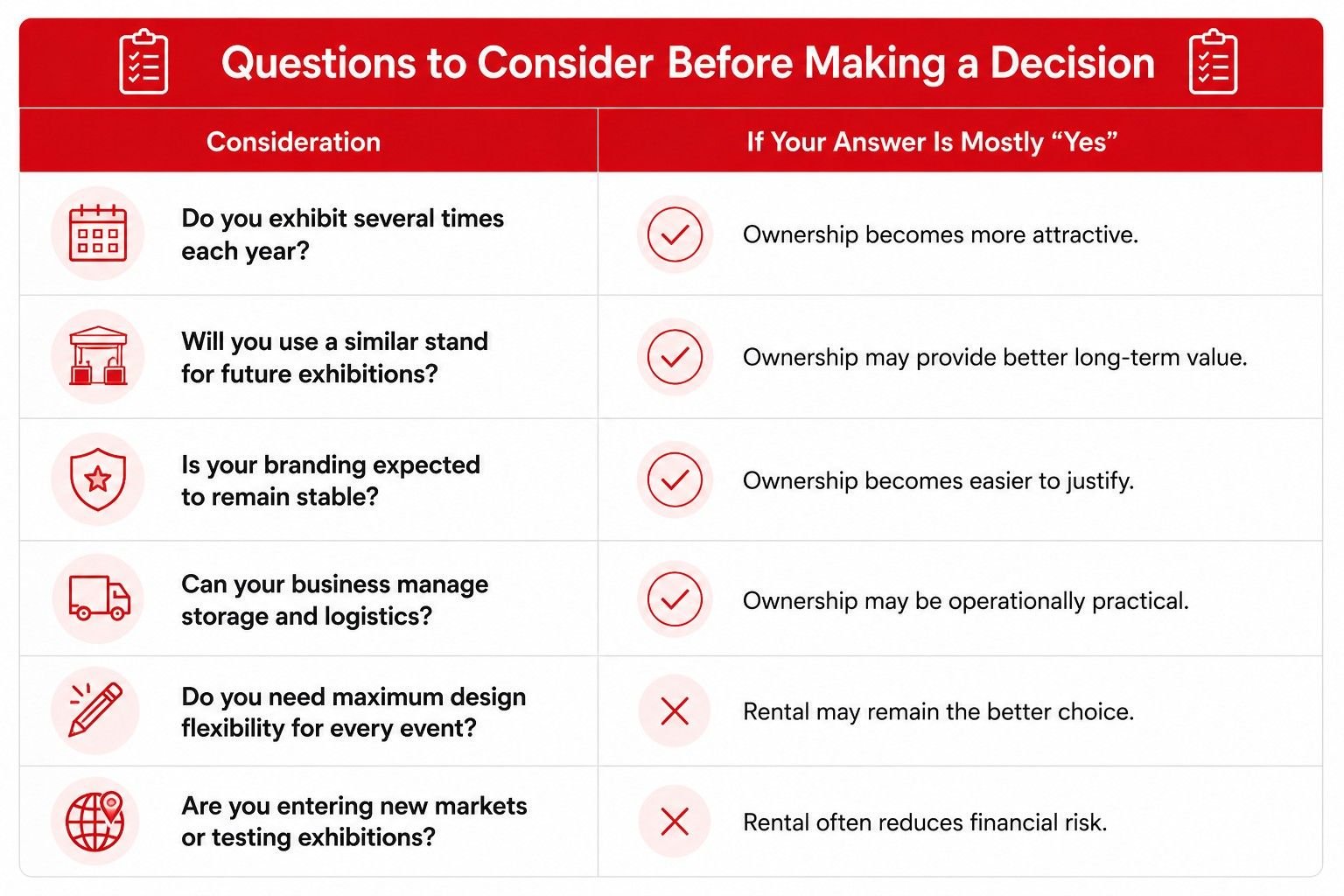
A Practical Break-Even Checklist
Instead of asking “How many exhibitions justify buying?”, ask these questions before making a decision.
Flexibility and Customisation: Which Option Adapts Better to Your Business Needs?
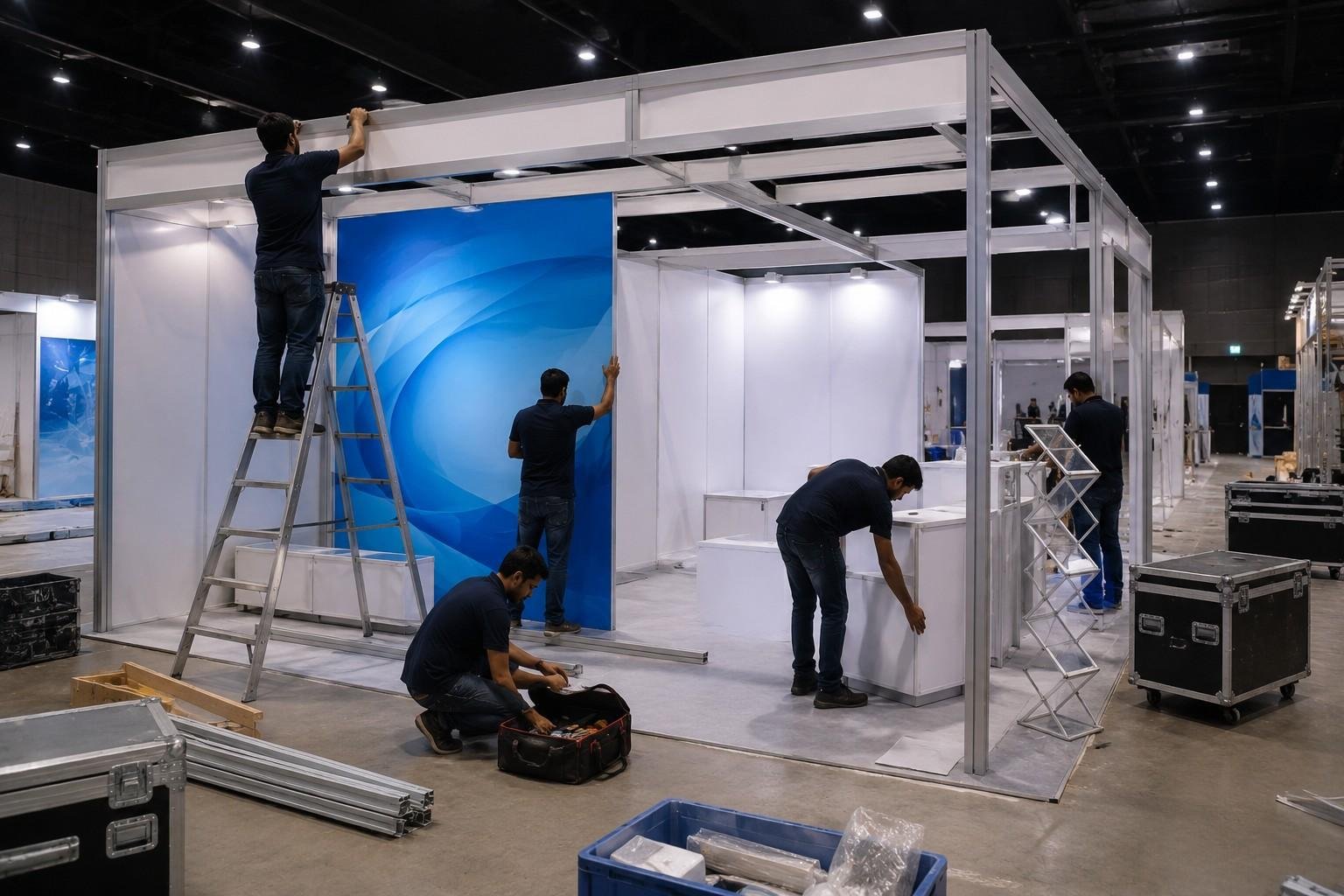
Both exhibition stand ownership and rental offer flexibility, but they do so in different ways. Rental provides the freedom to redesign your exhibition presence for each event, while ownership offers the ability to build, refine, and reuse a stand that evolves alongside your business. The better option depends on how frequently your marketing objectives, branding, products, and exhibition requirements change. Flexibility is often cited as one of the biggest advantages of renting an exhibition stand. While this is true, it’s only part of the picture. Businesses also need to consider long-term adaptability, scalability, and how easily a stand can support future growth. Understanding these differences helps ensure your exhibition investment continues to deliver value as your business expands.
Design Flexibility
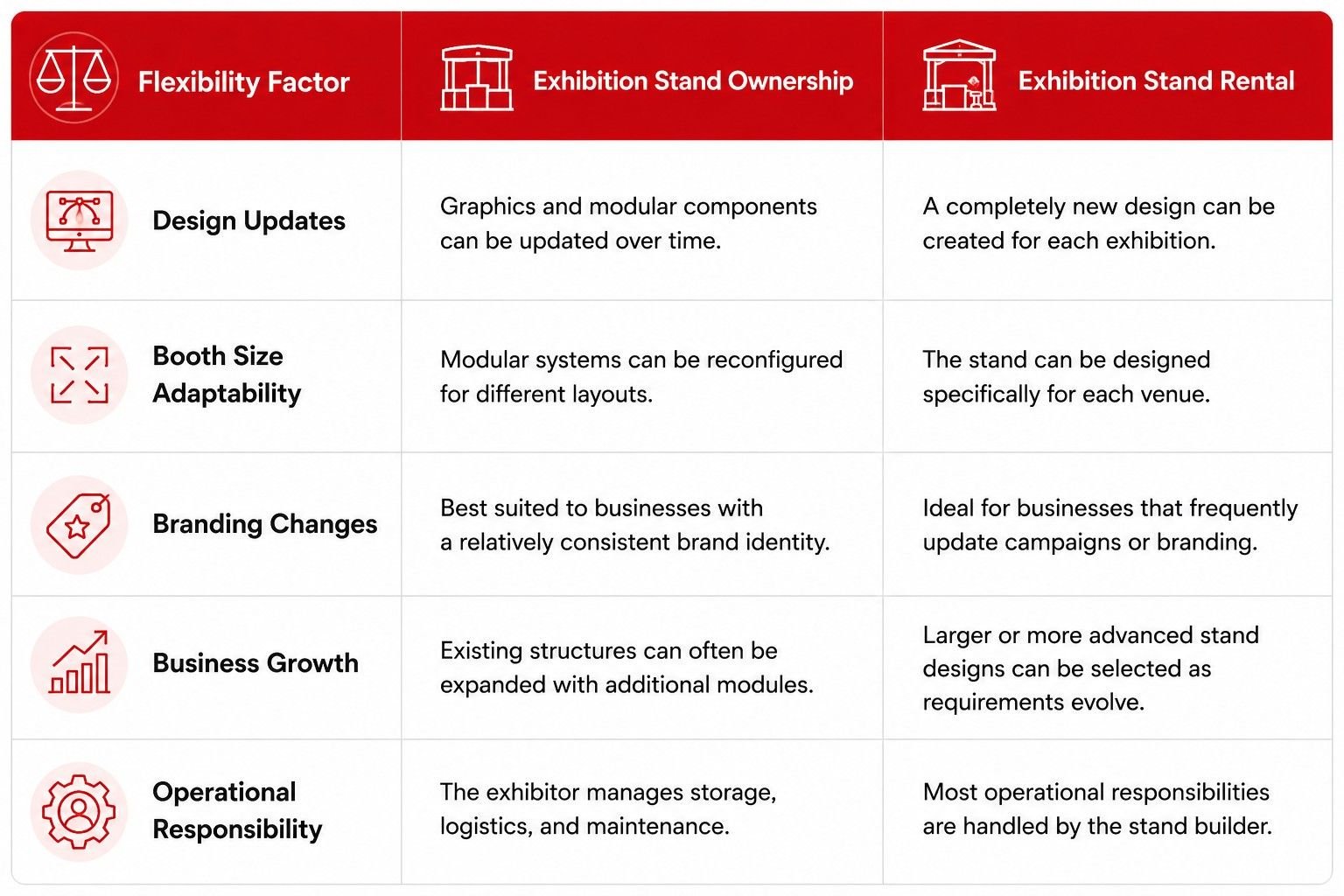
Every exhibition presents unique opportunities. Some events focus on product launches, while others are centred on networking, distributor meetings, or lead generation. As exhibition objectives change, the stand often needs to evolve as well. Renting offers a high level of design flexibility because each stand is created for a specific event. Businesses can introduce new layouts, graphics, colours, visitor experiences, and product displays without being limited by an existing structure. This makes rental a good choice for companies that regularly launch new products, exhibit across different industries, refresh their branding frequently, or want a completely new look for each major event. Ownership provides flexibility differently. A well-designed modular exhibition stand can be updated over time by replacing graphics, adding new components, or reconfiguring the layout to suit different floor plans. Rather than starting from scratch for every exhibition, businesses can build on an existing system that evolves alongside their marketing strategy while maintaining a consistent brand presence.
Adapting to Different Booth Sizes
Booth sizes rarely remain the same from one exhibition to another. You might have a compact corner space at one event and a much larger island stand at the next. Because of this, it’s important to choose a solution that can adapt without compromising the visitor experience or your brand presentation. Both rental and ownership can accommodate changing layouts, but they do so in different ways. A modular owned stand is designed to be reconfigured, allowing sections to be rearranged or expanded to suit different floor plans while maintaining a consistent look. Rental stands offer even greater flexibility, as the exhibition stand builder can develop an entirely new design for each venue based on the available space and your objectives. The right option depends on whether you prefer evolving an existing stand or creating a fresh concept for every exhibition.
Branding and Marketing Flexibility
Brand messaging naturally evolves. New products are introduced, campaigns change, and businesses often refresh their visual identity to reflect changing market priorities. Your exhibition stand should be able to support these changes without creating unnecessary cost or complexity. Renting provides complete creative freedom because every stand is designed specifically for the event. Businesses can experiment with new layouts, colours, graphics, and visitor experiences without being tied to an existing structure. Ownership offers flexibility in a different way. Most modern modular stands allow graphics, signage, digital displays, and branded panels to be replaced independently of the structural framework, making it possible to refresh the stand while continuing to use the same core system. If your branding changes frequently, renting may be the more practical choice. If your brand identity remains relatively consistent, ownership provides a stable foundation that can be updated whenever required.
Scalability as Your Business Grows
Exhibition requirements often change as businesses expand. A stand that works well today may need to accommodate larger product displays, additional meeting areas, interactive technology, hospitality zones, or private discussion spaces a few years from now. This is where scalability becomes an important consideration. Businesses that own modular exhibition stands can often expand their existing structure by adding new components instead of investing in an entirely new stand. Rental solutions are equally scalable, but the approach is different. Rather than modifying an existing asset, businesses simply select a larger or more sophisticated stand design whenever their exhibition objectives change. Both options support growth; the decision depends on whether you want to build on an existing investment or redesign your presence for each event.
Operational Flexibility
Flexibility isn’t only about design. It also extends to the day-to-day management of your exhibition programme. With ownership, businesses are responsible for coordinating storage, transportation, installation, maintenance, and refurbishment between events. For organisations with dedicated exhibition teams, these responsibilities are often part of an established process. Renting removes much of this operational burden, as the exhibition stand builder typically manages logistics, installation, dismantling, and storage. This allows internal teams to focus on marketing, networking, and engaging visitors rather than managing exhibition assets.
Flexibility Should Support Your Long-Term Exhibition Strategy
The most flexible solution is not necessarily the one that changes the most; it is the one that supports your business goals with the least operational complexity and the greatest long-term value. If your exhibitions vary significantly in size, audience, or marketing objectives, renting offers the freedom to create a tailored experience for each event. If exhibitions are a consistent part of your business development strategy and your branding remains relatively stable, a modular owned stand can provide both flexibility and continuity while strengthening long-term brand recognition. The next consideration is equally important but often underestimated: the ongoing responsibilities of storage, transportation, maintenance, and refurbishment. These operational factors can have a significant impact on both cost and convenience throughout the life of an exhibition stand.
Decision Framework: Should You Rent or Own an Exhibition Stand?
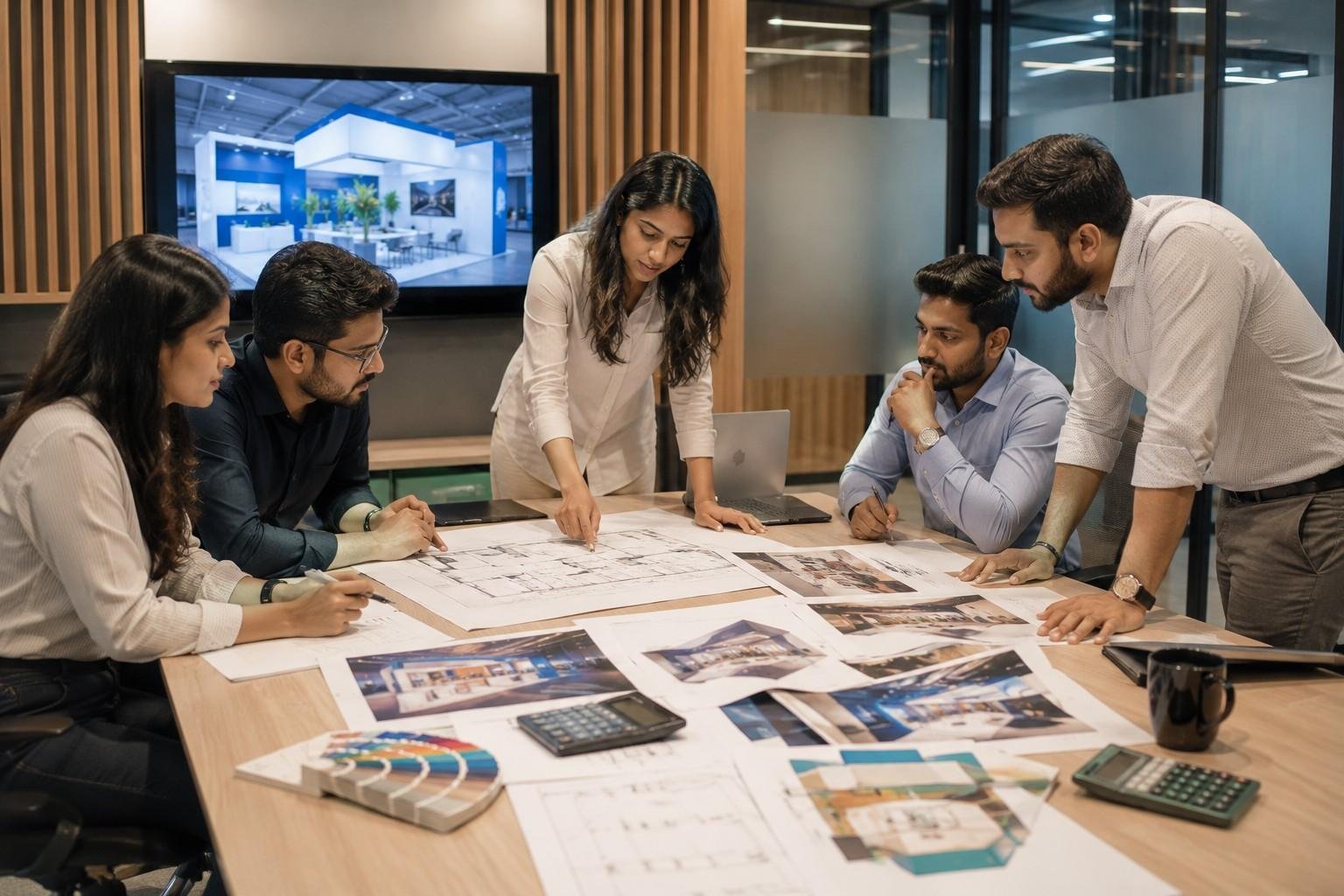
The best exhibition stand strategy is the one that aligns with your exhibition programme, business objectives, and long-term growth plans. Instead of making the decision based on price alone, evaluate how each option supports your marketing goals, operational capacity, branding requirements, and expected exhibition schedule. After comparing costs, lifecycle value, flexibility, logistics, and return on investment, it’s clear that neither ownership nor rental is universally better. The right choice depends on how exhibitions fit into your overall business strategy. The following framework can help you evaluate which approach is likely to deliver the greatest value.
Step 1: Assess Your Exhibition Frequency
Begin by looking beyond your next exhibition. Ask yourself:
- How many exhibitions will we attend each year?
- Is our exhibition calendar likely to grow?
- Are exhibitions a regular lead generation channel or occasional marketing activity?
If your participation is occasional, renting often provides greater flexibility and lower financial commitment. If exhibitions form a significant part of your marketing strategy, ownership may become a worthwhile long-term investment.
Step 2: Define Your Business Objectives
Different businesses attend exhibitions for different reasons. Your stand requirements will vary depending on whether your primary objective is:
- Launching new products.
- Generating qualified leads.
- Meeting existing customers.
- Building brand awareness.
- Expanding into international markets.
- Recruiting distributors or channel partners.
- Demonstrating complex products or technologies.
The clearer your objectives, the easier it becomes to determine which exhibition stand strategy best supports them.
Step 3: Evaluate Your Operational Capacity
Owning a stand involves ongoing responsibilities beyond the initial investment. Consider whether your business has the resources to manage:
- Storage between exhibitions.
- Transportation and logistics.
- Installation and dismantling.
- Maintenance and repairs.
- Graphic updates.
- Refurbishment when required.
If these responsibilities place unnecessary pressure on your marketing team, renting may provide a more efficient solution.
Step 4: Consider Your Branding Strategy
Think about how your brand is expected to evolve over the next several years. Questions worth asking include:
- Will our branding remain relatively consistent?
- Are frequent campaign changes expected?
- Do we require identical brand presentations across multiple exhibitions?
- Will new product launches significantly alter our exhibition messaging?
Stable branding often supports long-term ownership, while rapidly changing campaigns may benefit from the flexibility of rental.
Step 5: Look Beyond the Initial Investment
Comparing quotations alone rarely produces the best decision. Instead, evaluate the complete financial picture, including:
- Initial investment.
- Repeated rental fees.
- Transportation.
- Storage.
- Installation.
- Maintenance.
- Graphic updates.
- Refurbishment.
- Operational resources.
This broader perspective provides a more realistic understanding of long-term value.
Step 6: Plan for Future Growth
An exhibition stand should continue supporting your business as it expands. Consider whether future growth may require:
- Larger exhibition spaces.
- Additional meeting rooms.
- More product displays.
- Interactive technology.
- International exhibitions.
- Expanded branding opportunities.
Choosing a solution that can adapt over time helps protect your investment and reduces the need for unnecessary redesigns.
Quick Decision Guide or At-a-Glance Recommendation.
If your business… | Recommended approach | Reason |
Exhibits once or twice a year | Rent an exhibition stand | Keeps upfront costs low while avoiding storage, maintenance, and logistics. |
Is exhibiting for the first time or entering a new market | Rent an exhibition stand | Provides flexibility while you evaluate exhibition performance and market opportunities. |
Frequently updates branding, products, or marketing campaigns | Rent an exhibition stand | Makes it easier to create a fresh stand design for different events. |
Exhibits regularly throughout the year | Own an exhibition stand | Reusing the same stand can improve long-term value and reduce the average cost per exhibition. |
Wants a consistent brand presence across multiple events | Own an exhibition stand | Creates a recognisable exhibition experience and reinforces brand identity over time. |
Has the resources to manage storage, logistics, and maintenance | Own an exhibition stand | Makes it easier to maximise the value of a reusable exhibition asset. |
Needs both consistency for regular events and flexibility for special exhibitions | Adopt a hybrid approach | Use an owned stand for recurring exhibitions and rent for international events, larger spaces, or unique exhibition requirements. |