Introduction
Choosing the right conference format is no longer just an event planning decision; it’s a strategic business choice that can influence audience engagement, brand perception, networking opportunities, and overall return on investment (ROI). As organisations adapt to changing attendee expectations and advances in event technology, both hybrid and in-person conferences have become valuable formats for delivering meaningful experiences. A hybrid conference combines a physical event with a virtual component, allowing attendees to participate either on-site or remotely. An in-person conference, on the other hand, brings everyone together at a single venue, creating an immersive environment for face-to-face interactions, live presentations, and relationship building. While both formats can deliver successful outcomes, they serve different business objectives and audience needs.
The right choice depends on several factors, including your target audience, event goals, budget, accessibility requirements, and the type of experience you want to create. A product launch aimed at strengthening customer relationships may benefit more from an in-person setting, whereas a knowledge-sharing conference with a global audience could achieve greater reach through a hybrid approach. Rather than asking which conference format is universally better, businesses should focus on which format is better for their specific objectives. Understanding the strengths, limitations, and practical applications of each approach is essential for making an informed decision that supports both immediate event success and long-term business growth. In this guide, we’ll compare hybrid conferences vs in-person conferences across the factors that matter most, including audience reach, networking, attendee engagement, costs, technology, sponsorship opportunities, and ROI to help you determine which format delivers the best results for your organisation.
Understanding Both Conference Formats
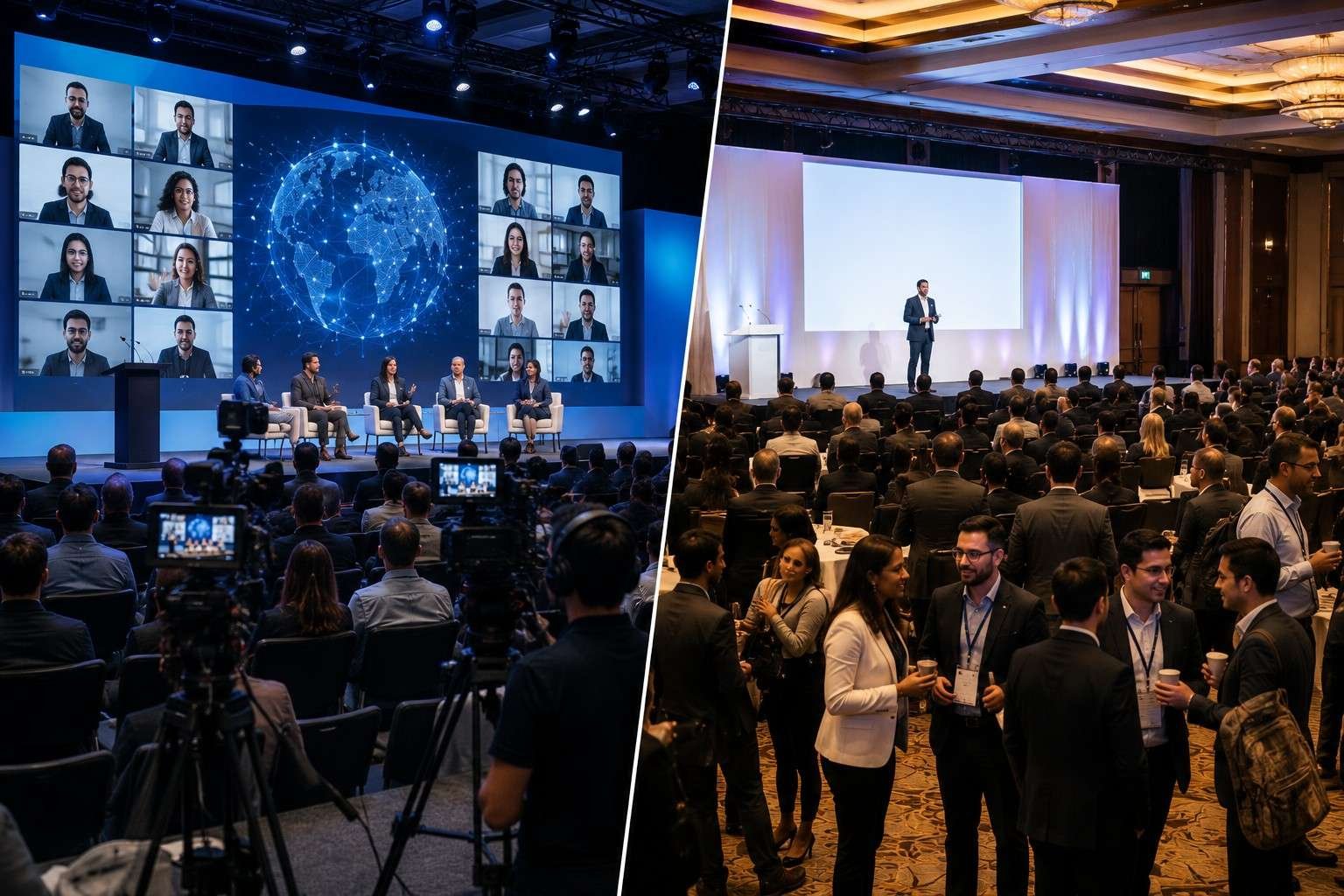
Before comparing the two, it’s important to understand what each conference format involves. While both aim to educate, connect, and engage attendees, they differ in how participants experience the event and how organisers deliver it.
What Is a Hybrid Conference?
A hybrid conference combines a physical event with a virtual experience, allowing attendees to participate either in person or online. On-site participants benefit from face-to-face networking, live sessions, and interactive experiences, while virtual attendees can join keynote presentations, panel discussions, workshops, and networking activities through a digital event platform. Modern hybrid conferences often include live streaming, on-demand session recordings, real-time Q&A, audience polling, virtual exhibitor booths, AI-powered networking, and event analytics. This format enables organisers to reach a wider audience without requiring everyone to travel to the venue. Hybrid conferences are particularly well suited for organisations looking to engage national or international audiences, improve accessibility, extend event reach, and offer greater flexibility to attendees.
What Is an In-Person Conference?
An in-person conference is a traditional event where speakers, exhibitors, sponsors, and attendees gather at a physical venue to participate in presentations, discussions, workshops, and networking activities. The greatest strength of this format lies in its ability to create meaningful face-to-face interactions. Conversations happen naturally, demonstrations are more immersive, and networking opportunities often extend beyond scheduled sessions through informal meetings, social events, and exhibitor interactions. In-person conferences are commonly chosen for product launches, leadership summits, industry conventions, partner meetings, and business events where relationship building, hands-on experiences, and direct engagement are the primary objectives.
Hybrid Conferences vs In-Person Conferences: Key Differences
Both hybrid and in-person conferences can deliver successful outcomes when planned strategically, but they differ in how they engage audiences, support business objectives, and create value. Understanding these differences helps organisations select a format that aligns with their event goals rather than following industry trends.
Audience Reach and Accessibility
One of the biggest advantages of a hybrid conference is its ability to remove geographical barriers. Attendees can participate from different cities or countries without travelling, making it easier for organisations to reach a broader audience and accommodate varying schedules. In-person conferences, while limited by venue capacity and travel requirements, often attract attendees who are more committed to participating throughout the event. This can result in higher-quality interactions and stronger engagement among participants.
Key takeaway: If expanding your audience is a priority, a hybrid conference offers greater reach. If your goal is to create a focused experience for a dedicated audience, an in-person conference is often the stronger choice.
Networking and Relationship Building
Networking is often one of the primary reasons people attend conferences. In-person events naturally encourage spontaneous conversations, informal meetings, and relationship building through shared experiences such as workshops, networking sessions, and social gatherings. Hybrid conferences can also support networking through virtual meeting rooms, AI-powered matchmaking, live chats, and one-to-one appointments. However, digital interactions may not always replicate the depth and trust that develop through face-to-face conversations.
Key takeaway: For businesses where partnerships, client relationships, or sales conversations are central to event success, in-person conferences generally provide a stronger networking environment.
Attendee Engagement
Hybrid conferences offer interactive features such as live polls, Q&A sessions, quizzes, chat discussions, and on-demand content that allow both virtual and in-person audiences to participate. Keeping remote attendees engaged, however, requires thoughtful planning and dedicated digital content. In-person conferences benefit from a more immersive atmosphere where attendees can actively participate in presentations, product demonstrations, workshops, and networking activities without the distractions often associated with remote participation.
Key takeaway: Hybrid conferences provide flexible engagement opportunities, while in-person conferences typically create deeper and more immersive attendee experiences.
Cost and Budget Considerations
Budget plays an important role in selecting a conference format, but the lowest-cost option does not always deliver the greatest value. Hybrid conferences may reduce travel expenses for attendees and speakers, but they also require investment in live streaming, virtual event platforms, technical production, and digital support teams. In-person conferences involve venue hire, catering, accommodation, logistics, and on-site production costs. However, they may require less investment in complex digital infrastructure. Rather than comparing overall costs, businesses should evaluate which format offers the best return based on attendance, engagement, lead generation, and long-term business objectives.
Key takeaway: Compare value rather than cost alone, as the most effective conference format is the one that supports your event goals and delivers measurable results.
Sustainability and Environmental Impact
Sustainability is becoming an important consideration for many organisations when planning conferences. While both hybrid and in-person events can be organised responsibly, they have different environmental impacts. Hybrid conferences often reduce the need for travel, accommodation, and printed materials, making them a practical option for businesses looking to lower their carbon footprint. This can be especially beneficial for events that attract attendees from multiple cities or countries. In-person conferences can also support sustainability through thoughtful planning. Choosing eco-friendly venues, reducing waste, using digital event materials, and working with local suppliers are all simple ways to make a physical event more environmentally responsible.
Key takeaway: If sustainability is one of your priorities, consider the environmental impact alongside budget, attendee experience, and business objectives when choosing your conference format.
Event Technology Requirements
Technology plays a role in every modern conference, but its importance varies between formats. Hybrid conferences rely heavily on reliable internet connectivity, live streaming platforms, event apps, audience interaction tools, registration systems, and analytics to create a seamless experience for both virtual and in-person attendees. In-person conferences primarily focus on venue technology such as audiovisual equipment, presentation systems, digital signage, registration kiosks, and on-site event management tools.
Key takeaway: Hybrid events require a more comprehensive technology strategy, while in-person conferences place greater emphasis on delivering a seamless on-site experience.
Sponsorship and Brand Visibility
Sponsors increasingly look beyond logo placement and exhibition space when evaluating conference opportunities. Hybrid conferences can extend sponsor visibility through virtual booths, digital branding, sponsored sessions, online advertisements, downloadable resources, and recorded content that remains accessible after the event. In-person conferences create stronger opportunities for face-to-face product demonstrations, personalised conversations, and experiential brand activations that often leave a lasting impression on attendees.
Key takeaway: Hybrid conferences provide longer-lasting digital exposure, while in-person conferences excel at creating memorable brand experiences and direct customer interactions.
Hybrid Conferences vs In-Person Conferences: Quick Comparison
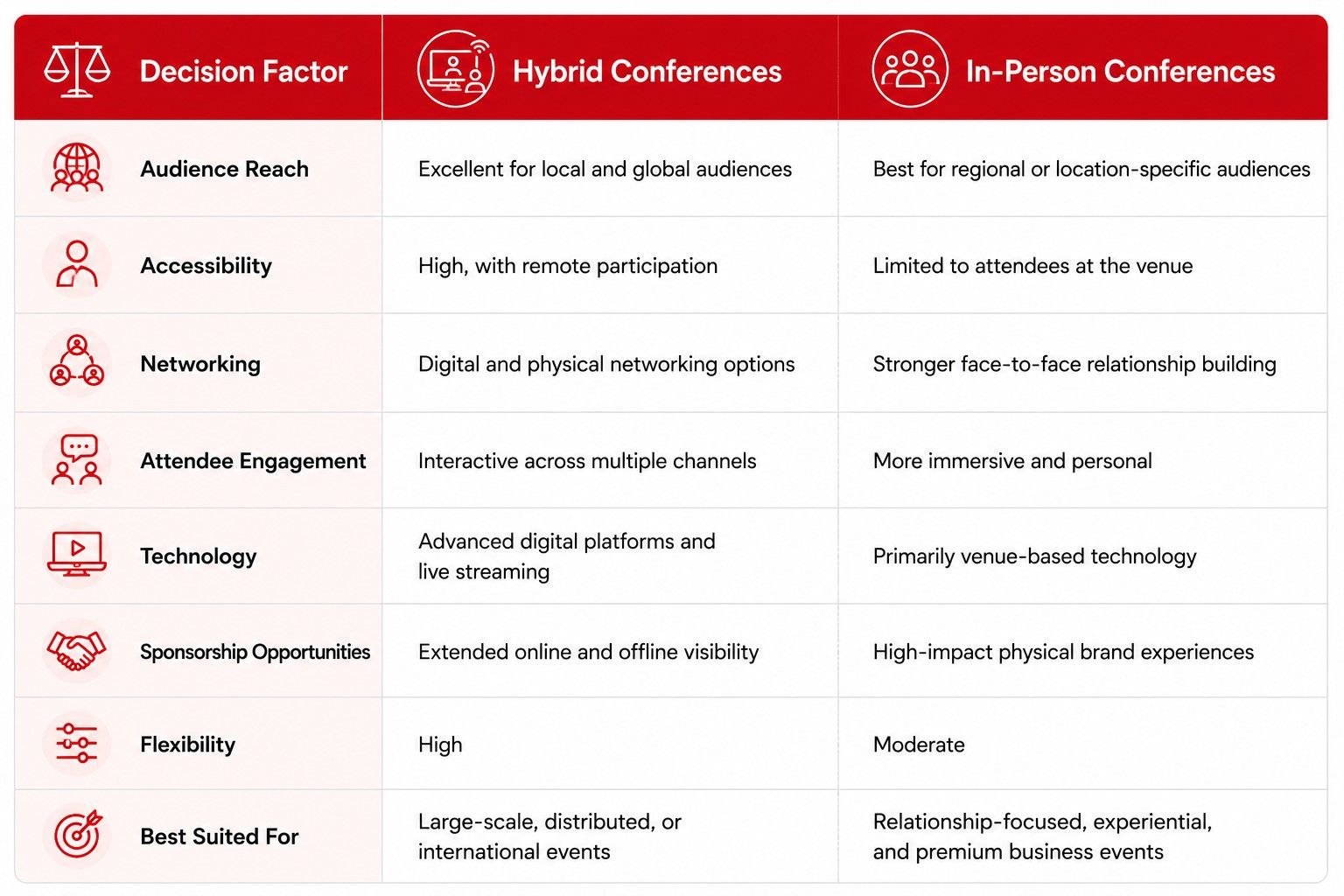
There is no single conference format that outperforms the other in every situation. Hybrid conferences are designed to maximise accessibility, flexibility, and audience reach, while in-person conferences continue to offer unmatched opportunities for personal interaction and immersive experiences. The most effective choice depends on your business objectives, audience expectations, and the outcomes you want your event to achieve.
Which Format Delivers Better Results?
The success of a conference is not determined by whether it is hybrid or in-person. It depends on how effectively the chosen format supports your business objectives, engages your audience, and delivers measurable outcomes. Rather than asking which format is better overall, organisations should evaluate which one is better suited to the results they want to achieve.
Return on Investment (ROI)
A successful conference generates value beyond attendance numbers. ROI should be measured by factors such as qualified leads, attendee satisfaction, sponsor performance, brand visibility, content engagement, and long-term business opportunities. Hybrid conferences often deliver a higher return when the goal is to maximise audience reach and extend the lifespan of event content through live streaming and on-demand sessions. In-person conferences, however, frequently produce stronger returns when relationship building, sales conversations, and high-value networking are the primary objectives. When evaluating conference performance, it’s important to look beyond registration numbers. Metrics such as attendee engagement, session participation, sponsor feedback, networking outcomes, and post-event conversions provide a much clearer picture of whether the event achieved its objectives. For hybrid conferences, virtual attendance, content views, and platform engagement can offer additional insights into overall success.
Business insight: The best ROI comes from aligning the conference format with your strategic goals and measuring success against meaningful business outcomes rather than attendance alone.
Lead Generation and Business Growth
For many organisations, conferences are an opportunity to generate new business opportunities rather than simply attract attendees. Hybrid conferences can increase lead volume by removing geographical barriers and allowing more people to register and participate. They also provide valuable attendee data, making it easier to track engagement and nurture leads after the event. In-person conferences generally produce fewer but often more qualified leads, as attendees invest time and resources to participate. Face-to-face conversations, live demonstrations, and networking sessions can help build trust and accelerate decision-making.
Business insight: If your objective is to expand market reach, hybrid conferences can generate broader opportunities. If your focus is building stronger client relationships and higher-quality prospects, in-person conferences often deliver better results.
Brand Visibility and Audience Experience
Conferences are an extension of your brand, and the experience attendees have can influence how they perceive your organisation long after the event ends. Hybrid conferences increase brand exposure by reaching audiences beyond the venue through digital sessions, social sharing, recorded content, and virtual sponsor activations. This extended visibility can continue generating engagement even after the event has concluded. In-person conferences create memorable experiences through live interactions, immersive environments, product demonstrations, and personal connections. These experiences often leave a stronger emotional impression and strengthen brand credibility.
Business insight: Hybrid conferences maximise brand reach, while in-person conferences create deeper brand experiences that foster trust and long-term relationships.
Long-Term Value
The impact of a conference should be measured over months, not just during the event itself. Hybrid conferences create valuable digital assets, including recorded sessions, downloadable resources, and attendee engagement data that can support future marketing campaigns and ongoing audience engagement. In-person conferences contribute long-term value by strengthening professional relationships, encouraging repeat attendance, and building communities through meaningful face-to-face interactions.
Business insight: Consider the lasting value your event can generate after it ends, whether through reusable digital content or stronger business relationships.
So, Which Format Should You Choose?
There is no one-size-fits-all answer because every organisation has different priorities.
A hybrid conference is often the better choice if your goal is to increase accessibility, reach a wider audience, and combine physical engagement with digital flexibility.
An in-person conference is generally more effective when success depends on relationship building, immersive experiences, hands-on demonstrations, and meaningful networking.
Ultimately, the format that delivers the best results is the one that aligns with your audience’s expectations, supports your business objectives, and creates measurable value before, during, and after the event. By evaluating success through outcomes rather than attendance alone, organisations can choose a conference format that drives stronger engagement, greater ROI, and long-term business growth.
When Should You Choose Each Format?
There is no universal conference format that guarantees success. The right choice depends on your objectives, audience preferences, available resources, and the type of experience you want to create. Evaluating these factors before planning your event will help ensure your conference delivers meaningful business outcomes rather than simply attracting attendees.
Choose a Hybrid Conference If…
A hybrid conference is a good choice when your goal is to reach more people without limiting participation to those who can attend in person. By combining a physical event with a virtual experience, you can make your conference more accessible while giving attendees the flexibility to participate in the way that suits them best. This format works particularly well if your audience is spread across different locations or if some attendees may find travelling difficult. It also allows you to continue engaging participants even after the event through recorded sessions and on-demand content.
A hybrid conference is worth considering if you want to:
- Reach audiences across different cities or countries.
- Increase attendance by offering both in-person and virtual participation.
- Make your event accessible to people who cannot travel.
- Record sessions for on-demand viewing after the conference.
- Gain valuable insights through attendee engagement data and event analytics.
- Invite speakers or panellists to join remotely.
- Give sponsors greater visibility through both physical and digital branding opportunities.
Hybrid conferences are especially well suited to educational events, industry forums, corporate knowledge-sharing sessions, association conferences, and organisations looking to connect with a larger or more geographically diverse audience.
Choose an In-Person Conference If…
If your conference is centred on building relationships, creating memorable experiences, and encouraging meaningful conversations, an in-person event is often the stronger option. Bringing everyone together in the same space creates opportunities for networking, collaboration, and engagement that are difficult to recreate online. This format is particularly valuable when attendees need to experience products first-hand, participate in interactive workshops, or have conversations that rely on trust and personal connection.
An in-person conference is likely to be the right choice if you want to:
- Build stronger relationships with clients, partners, or stakeholders.
- Launch a new product or showcase solutions through live demonstrations.
- Create meaningful networking opportunities.
- Deliver workshops or training sessions that require hands-on participation.
- Host leadership summits, executive meetings, or collaborative industry events.
- Create a memorable brand experience through live presentations and interactive activities.
In-person conferences are commonly chosen for product launches, leadership summits, sales meetings, annual conferences, and industry events where personal interaction and relationship building play a key role in achieving business objectives.
A Simple Way to Decide
If you’re still deciding between the two formats, start by identifying the primary goal of your conference.
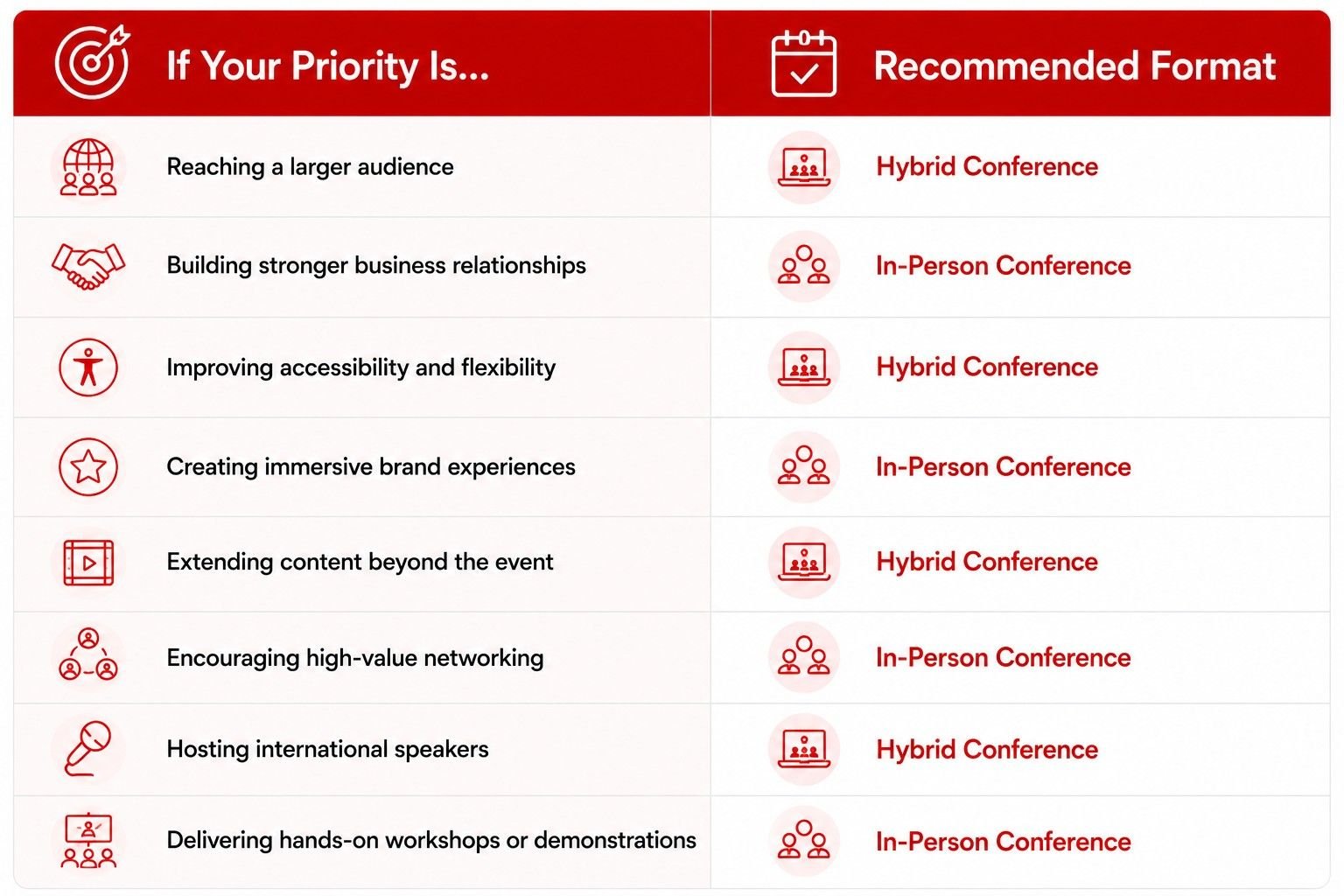
Ultimately, the most successful conferences are those designed around attendee expectations and business goals, not simply the latest event trend. By choosing the format that aligns with your objectives, you can create a conference that delivers meaningful engagement, measurable results, and lasting value for everyone involved.
Which Conference Format Works Best Across Different Industries?
There’s no one-size-fits-all approach to conferences. The right format often depends on your industry, your audience, and what you want people to take away from the event. While every organisation is different, some industries naturally benefit more from one format than the other.
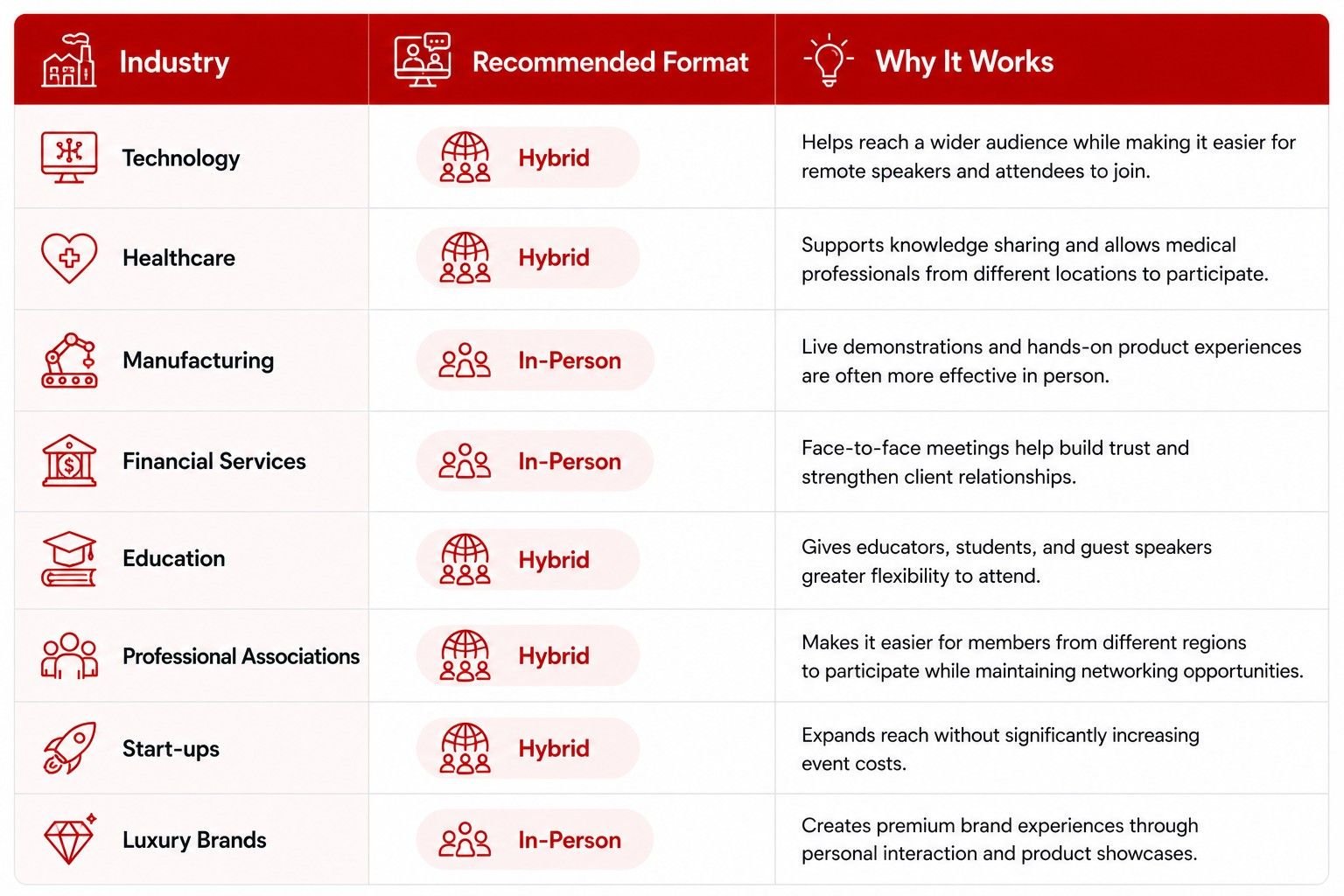
These recommendations are a useful starting point, but they aren’t fixed rules. The best conference format will always depend on your business objectives, audience preferences, budget, and the experience you want to create.
Common Mistakes Businesses Make When Choosing a Conference Format
Selecting the right business conference format involves more than comparing costs or following industry trends. Many organisations choose a hybrid or in-person conference based on assumptions rather than business objectives, which can affect attendee satisfaction, engagement, and overall event success. Avoiding these common mistakes can help ensure your conference delivers meaningful results.
Choosing a Format Based Only on Budget
Cost is an important consideration, but it should not be the deciding factor. A lower-cost event that fails to achieve its objectives often delivers less value than a higher investment that generates qualified leads, strengthens relationships, or enhances brand visibility. Instead of focusing solely on expenses, evaluate how each conference format supports your expected outcomes, including audience engagement, networking opportunities, sponsor value, and long-term return on investment.
Ignoring Audience Preferences
A successful conference is designed around its attendees. Choosing a format without understanding your audience’s location, availability, travel preferences, or expectations can reduce participation and engagement. For example, an international audience may benefit from the flexibility of a hybrid conference, while a regional business community may place greater value on meeting face to face. Gathering attendee feedback before planning your event can help you make a more informed decision.
Underestimating Technology Requirements
Technology plays a critical role in modern conferences, particularly hybrid events. Poor internet connectivity, unreliable streaming, technical issues, or complicated virtual platforms can negatively affect the attendee experience. Whether your event is hybrid or in-person, ensure your technology, audiovisual systems, registration process, and technical support are thoroughly tested before the conference begins.
Focusing on Attendance Instead of Engagement
Large attendance numbers do not automatically indicate a successful conference. What matters is how actively attendees participate, interact with speakers, visit exhibitors, and build meaningful connections. Measure success using engagement-focused metrics such as session participation, networking activity, audience feedback, sponsor interactions, and post-event conversions rather than registrations alone.
Overlooking the Post-Event Experience
Many organisations concentrate all their efforts on the conference itself and overlook what happens afterwards. Following up with attendees, sharing presentation recordings, collecting feedback, and nurturing new business opportunities are essential for maximising the long-term value of any event. A well-planned post-event strategy helps maintain engagement, strengthens relationships, and ensures the conference continues to deliver value long after it has ended.
The Future of Conference Formats
The conference industry is evolving rapidly as organisations respond to changing attendee expectations, advances in event technology, and the growing demand for more flexible event experiences. Rather than one format replacing another, businesses are increasingly choosing conference formats based on their objectives, audience needs, and desired outcomes.
Hybrid Conferences Will Continue to Expand
Hybrid conferences are expected to remain a preferred choice for organisations looking to increase accessibility and reach wider audiences. By combining in-person experiences with virtual participation, they enable businesses to engage attendees regardless of location while extending the value of event content beyond the conference itself. Emerging technologies such as AI-powered networking, personalised event agendas, multilingual live captions, real-time audience engagement tools, and advanced event analytics are making hybrid conferences more interactive and data-driven than ever before.
In-Person Conferences Will Remain Essential
Despite the growth of hybrid events, in-person conferences continue to offer advantages that virtual experiences cannot fully replicate. Face-to-face networking, hands-on product demonstrations, collaborative workshops, executive meetings, and immersive brand experiences remain key reasons organisations continue to invest in physical events. For industries where trust, collaboration, and relationship building are central to business success, in-person conferences will continue to play an important role.
Businesses Are Adopting More Flexible Event Strategies
Instead of relying on a single conference format, many organisations are adopting a more flexible approach. Some events are designed as fully in-person experiences, while others incorporate hybrid elements to improve accessibility and extend audience reach. The decision increasingly depends on factors such as event objectives, attendee preferences, budget, audience location, and the level of engagement businesses want to achieve.
What Does This Mean for Event Organisers?
The future of conferences is not about choosing between hybrid and in-person events; it’s about selecting the format that delivers the greatest value for your audience and business goals. Organisations that invest in thoughtful planning, the right event technology, and engaging attendee experiences will be better positioned to deliver successful conferences regardless of the format they choose.
As conference expectations continue to evolve, businesses that remain adaptable and place attendee experience at the centre of their event strategy will be best equipped to achieve long-term success.
Conclusion
Choosing between a hybrid conference and an in-person conference is not about identifying a universally better format; it’s about selecting the one that best supports your business objectives, audience expectations, and desired outcomes.
Hybrid conferences provide greater flexibility, wider audience reach, and opportunities to extend engagement through digital experiences and on-demand content. They are well suited for organisations looking to increase accessibility, connect with geographically diverse audiences, and maximise the long-term value of their event.
In-person conferences, however, continue to offer unmatched opportunities for face-to-face networking, relationship building, hands-on experiences, and immersive brand interactions. For events where trust, collaboration, and meaningful personal connections are essential, a physical conference remains a highly effective choice.
Before making a decision, consider what success looks like for your organisation. Whether your priority is expanding your audience, generating qualified leads, strengthening client relationships, or creating memorable event experiences, your conference format should align with those goals rather than simply following industry trends. Ultimately, the most successful conferences are those that are thoughtfully planned, centred around attendee needs, and measured by the value they create, not just the number of people who attend. By choosing the right format and executing it effectively, businesses can deliver conferences that drive engagement, strengthen their brand, and produce measurable results long after the event has ended.
FAQs
1. What is the difference between a hybrid conference and an in-person conference?
A hybrid conference combines a physical event with virtual participation, allowing attendees to join either on-site or online. An in-person conference takes place entirely at a physical venue, where attendees, speakers, and exhibitors interact face to face. Hybrid conferences focus on accessibility and wider audience reach, while in-person conferences prioritise immersive experiences and personal interaction.
2. Which conference format is better for networking?
In-person conferences generally offer stronger networking opportunities because they encourage spontaneous conversations, face-to-face meetings, and relationship building. While hybrid conferences include virtual networking features such as live chats, video meetings, and AI-powered matchmaking, they may not fully replicate the depth of in-person interactions.
3. Which conference format delivers better ROI?
Neither format is inherently better. The return on investment depends on your event objectives. Hybrid conferences often deliver greater audience reach, valuable attendee data, and long-term content value, while in-person conferences frequently generate stronger business relationships, higher-quality leads, and more meaningful networking opportunities.
4. Are hybrid conferences more cost-effective than in-person conferences?
Not always. Hybrid conferences can reduce travel and accommodation costs for attendees, but they also require investment in live streaming, virtual event platforms, and technical support. In-person conferences involve venue, logistics, and hospitality costs. The most cost-effective option is the one that best supports your business goals and delivers measurable results.
5. Are hybrid conferences harder to organise?
Hybrid conferences can be more complex to manage because organisers must deliver a seamless experience for both in-person and virtual audiences. This often involves additional planning, technology, live streaming, and technical support. However, with the right conference management team and event technology, hybrid events can be executed successfully and provide significant long-term value.
6. Which conference type generates more leads?
The answer depends on your business goals. Hybrid conferences often generate a larger number of leads by attracting a wider audience, while in-person conferences typically produce more qualified leads through face-to-face interactions and stronger relationship building. Businesses should focus on lead quality as well as lead volume when measuring success.
7. Which format attracts more sponsors?
Both formats offer valuable sponsorship opportunities, but in different ways. Hybrid conferences provide extended digital visibility through virtual booths, sponsored content, and online branding, while in-person conferences allow sponsors to interact directly with attendees through exhibitions, demonstrations, and networking. The best format depends on the sponsor’s marketing objectives and target audience.
8. Can conferences switch from in-person to hybrid?
Yes. Many organisations now design conferences that can transition to a hybrid format when required. Adding virtual participation can increase accessibility, expand audience reach, and provide greater flexibility for attendees. However, this requires careful planning, reliable event technology, and a clear strategy to ensure both in-person and online participants have a positive experience.
9. Which conference format is more sustainable?
Hybrid conferences are generally considered more sustainable because they reduce the need for travel, accommodation, and printed materials, helping lower the event’s overall environmental impact. In-person conferences can also adopt sustainable practices, such as reducing waste and using eco-friendly venues, but hybrid events often have a smaller carbon footprint.
10. Can hybrid conferences replace in-person conferences?
Hybrid conferences have expanded the way organisations connect with audiences, but they are unlikely to replace in-person conferences entirely. Face-to-face interaction remains essential for events focused on relationship building, product demonstrations, executive meetings, and high-value networking. Many organisations now choose the format based on the purpose of each event rather than replacing one with the other.
11. Which conference format is better for international audiences?
Hybrid conferences are generally the better choice for international audiences because they remove geographical barriers and allow attendees to participate remotely. This increases accessibility, reduces travel costs, and enables organisations to engage participants from multiple locations without requiring everyone to attend in person.
12. What factors should businesses consider before choosing a conference format?
Businesses should evaluate their event objectives, target audience, budget, networking requirements, accessibility needs, technology capabilities, sponsorship opportunities, and expected ROI. Choosing a conference format based on these factors helps ensure the event delivers meaningful engagement and measurable business outcomes.
13. How do you measure the success of a conference?
Conference success should be measured using key performance indicators (KPIs) that align with your objectives. These may include attendee engagement, qualified leads, networking outcomes, sponsor satisfaction, session participation, audience feedback, post-event conversions, and overall return on investment rather than attendance numbers alone.