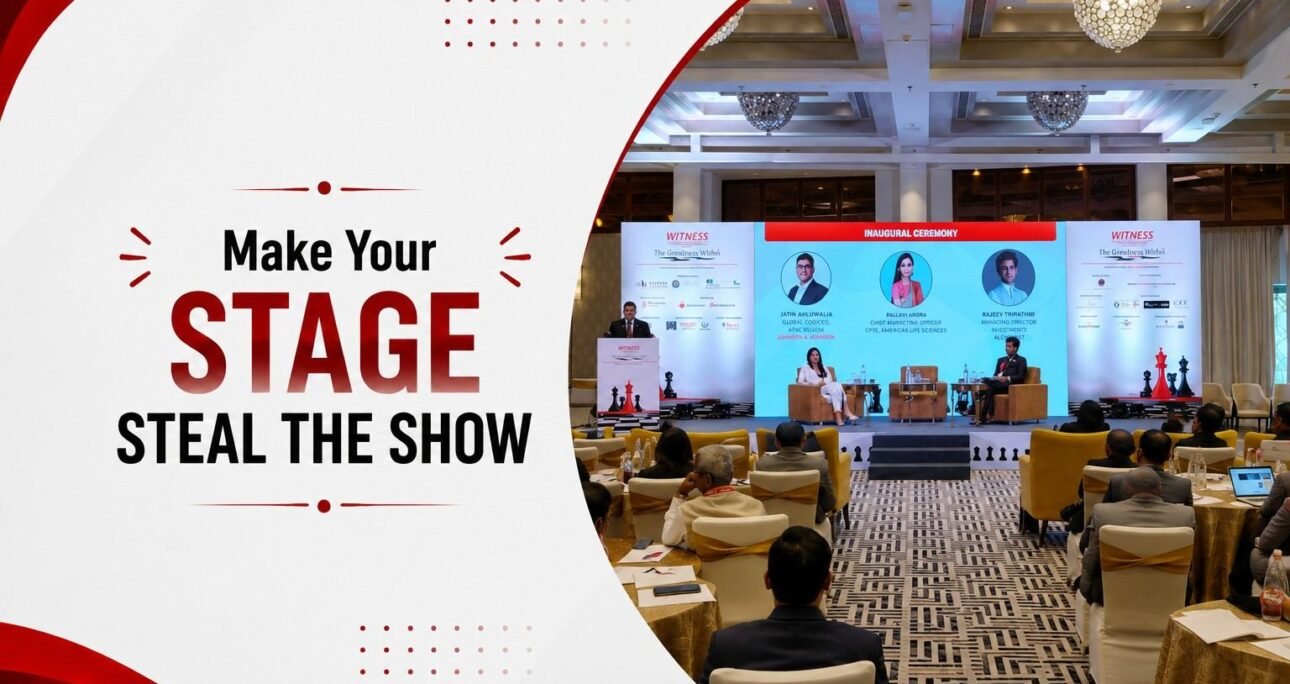
A corporate event stage does more than provide a backdrop for speakers. It becomes the visual centre of the event, carrying the brand, presentations, announcements and key moments while shaping how the audience experiences the programme. Effective corporate event stage design brings these elements together through the right layout, lighting, branding, screens and technical planning. The strongest stages are not simply impressive to look at. They are designed around what the event needs to communicate and how the audience will experience the programme.
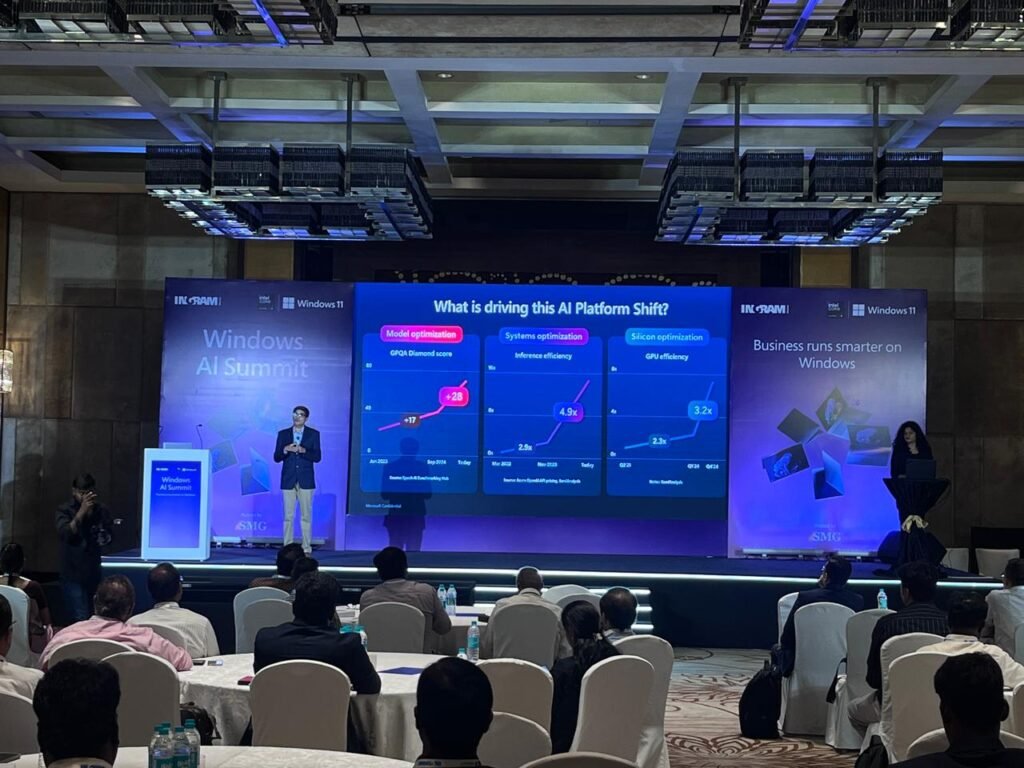
Quick Answer: What Makes a Good Corporate Event Stage?
A good corporate event stage is designed around five essentials: purpose, audience experience, visual hierarchy, technical integration and brand consistency. The stage should first reflect the type of event and what the audience needs to understand or experience. Its layout should provide clear visibility for speakers and screens, while LED, AV and lighting should support the programme rather than compete with it. Branding should be recognisable without overpowering presentations or speakers. In simple terms, effective corporate stage design is about making the stage look appropriate for the event, work smoothly in the venue and communicate the right message clearly.
What Makes a Corporate Event Stage Impactful?
An impactful corporate event stage creates the right balance between visual presence and communication. Instead of asking how to elaborate the stage can be, the better question is whether the design helps the audience focus on the right thing at the right moment.
1. It Creates a Clear Visual Hierarchy
A strong stage makes it obvious where the audience should look. During a keynote, attention should remain on the speaker. During a video or presentation, the screen should become the primary visual focus. During an award or reveal, the stage should help make that moment feel important. Stage architecture, graphics, lighting and screens should therefore have defined roles rather than competing for attention.
2. It Matches the Event Format
Different corporate events require different visual environments. A leadership summit may benefit from a refined and focused stage, while a product launch may need more dramatic visual transitions. A dealer meet may need space for presentations, awards and recognition moments, whereas a conference may prioritise long-duration viewing comfort. The stage becomes more effective when its design reflects the programme instead of following a generic template.
3. It Works for the Entire Audience
The stage should provide a consistent viewing experience across the room. Important content should remain visible from different seating areas, including the back and sides. This is particularly important when presentations, videos and speaker-led communication make up a large part of the programme. A stage that looks impressive from the front but creates blocked views or difficult screen angles is not successful stage design.
4. It Uses Technology to Improve Communication
Technology can increase the impact of a stage, but its value comes from how effectively it supports the programme. LED screens can improve content visibility, lighting can create atmosphere and AV systems can support presentations and live production. These elements become more effective when they are selected according to the event rather than added simply for visual impact.
5. It Makes the Brand Recognisable Without Overbranding
A corporate stage should clearly belong to the brand, but that does not mean filling every surface with logos. Brand colours, typography, graphics, architectural forms and screen content can create a recognisable environment while leaving space for speakers and event content. The result should feel like a branded experience rather than a wall of corporate messaging.
Start With the Event Objective, Not the Stage
Before developing the visual concept, identify what the event needs the audience to understand, feel or remember. The objective influences the type of stage environment required, the amount of presentation space, the role of LED screens and the level of visual drama appropriate for the programme.
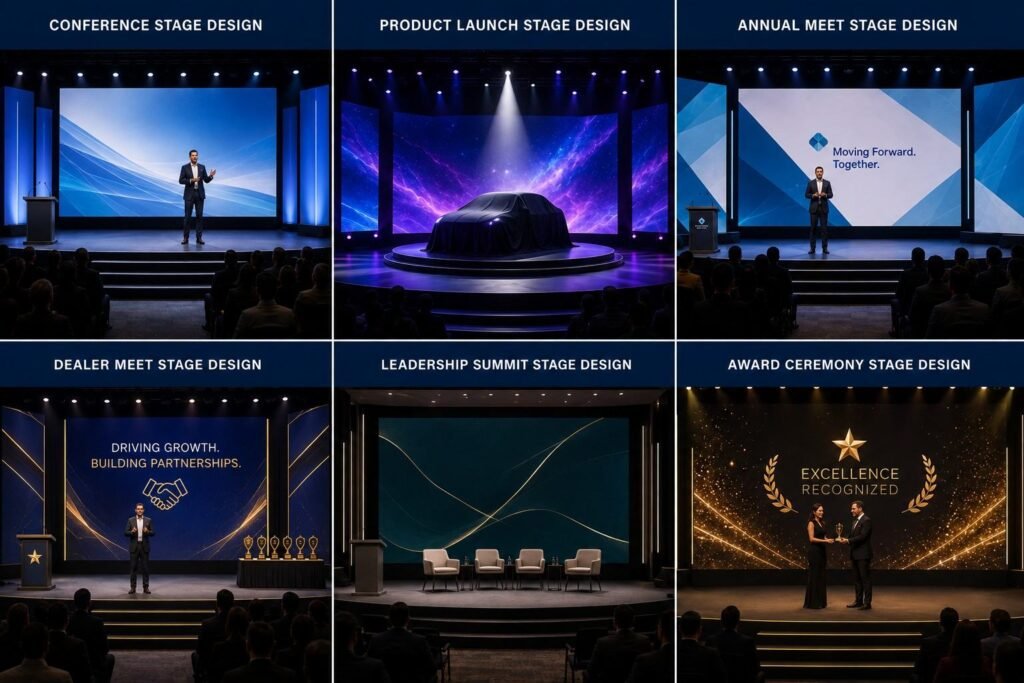
Conference Stage Design
A conference stage needs to support communication over an extended period. Speakers, presentations, panel discussions and videos may all share the same space, making readability and flexibility important. A clean stage architecture combined with well-positioned screens can provide presentation support without distracting from the speaker.
Product Launch Stage Design
A product launch usually places greater emphasis on anticipation, storytelling and the reveal itself. The stage can therefore be designed around a sequence of visual moments. Lighting transitions, LED content, scenic elements and movement can build anticipation before the product appears. The stage should support the story while ensuring the product remains the centre of attention.
Annual Meet Stage Design
An annual meet often combines company achievements with future goals. The stage can become part of this corporate narrative by connecting milestones, leadership communication and future direction through screen content and visual design. The overall environment should remain consistent with the company’s identity.
Dealer Meet Stage Design
A dealer meet often combines business communication, recognition and relationship building. The stage therefore needs to accommodate presentations, leadership addresses, awards and other programme elements. Recognition moments may require strong photography opportunities, while business presentations require straightforward screen visibility.
Leadership Summit Stage Design
A leadership summit generally benefits from a more focused environment. A less cluttered stage can give senior speakers greater presence while still allowing presentations, panels or fireside conversations to take place without disrupting the programme.
Award Ceremony Stage Design
An award ceremony needs to make recognition moments clear and visually important. Winners should be visible to both the audience and cameras, while the stage needs to provide an appropriate background for photographs. Stage access, presenter positions and camera angles should be considered as part of the event format. The key takeaway is that there is no single best corporate stage design. The appropriate design depends on the event purpose, programme, audience and venue.
How to Plan Corporate Event Stage Design Step by Step
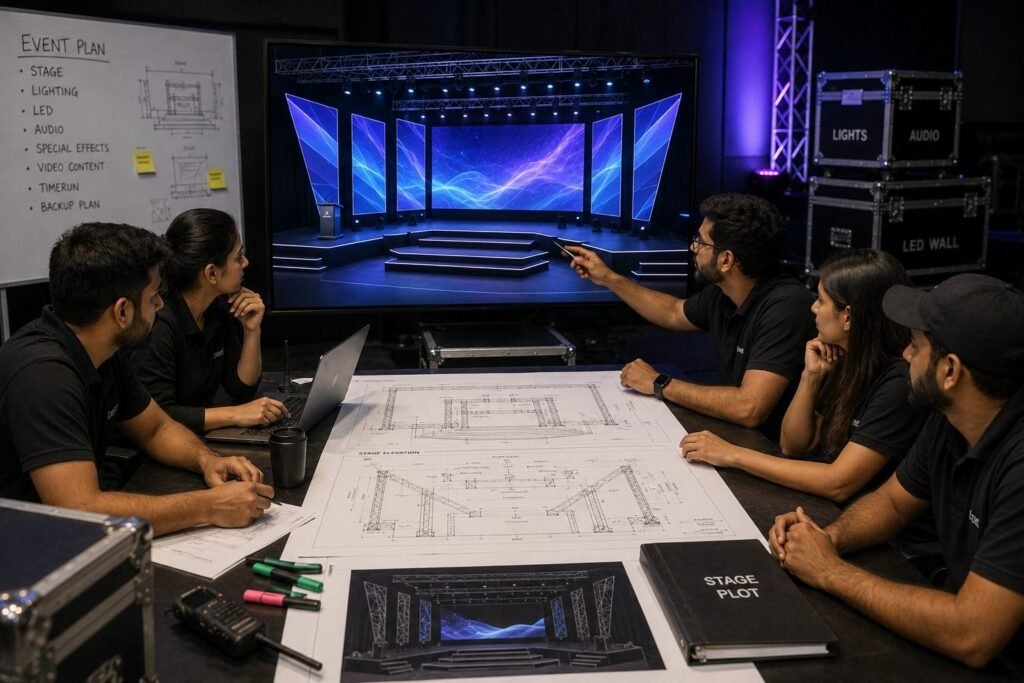
Once the event requirements are clear, the next challenge is turning them into an executable stage. A structured planning process helps move from the initial brief to final production while ensuring that creative, practical and technical decisions are made in the right order.
Step 1: Define the Stage Requirements
Start by identifying everything the stage needs to accommodate during the event. This could include keynote presentations, panel discussions, fireside conversations, product reveals, awards, videos, entertainment, leadership addresses or audience interaction. Understanding the programme at this stage helps determine how much space, flexibility and functionality the stage will require before any visual concept is developed.
Step 2: Assess the Venue
The stage design needs to work within the physical and technical limitations of the venue. Review the available floor space, ceiling height, audience capacity, entry and exit routes, loading access, rigging restrictions, power availability, installation timings and existing technical infrastructure. These factors determine what can realistically be built, installed and operated at the venue.
Step 3: Establish the Audience Layout
Next, determine how the audience will be seated and how the room will be used throughout the programme. The seating arrangement provides a basis for deciding stage dimensions, speaker positions and screen placement. It also helps identify potential visibility issues before the design is finalised, particularly for attendees seated toward the sides or back of the room.
Step 4: Choose the Stage Configuration
With the venue and audience layout understood, select a stage configuration that suits the programme. Depending on the event, this could be a wide stage, central stage, multi-level arrangement, extended runway or modular setup. The chosen configuration should provide enough space for speakers, furniture, panels and movement while maintaining a comfortable relationship between the stage and audience.
Step 5: Develop the Creative Direction
Once the functional requirements are established, develop the visual concept for the stage. This is where the event theme, brand identity, stage architecture, graphics and overall atmosphere come together. The creative direction should create a distinctive visual environment while remaining flexible enough to support presentations, discussions, reveals, awards and other live moments during the programme.
Step 6: Build the Technical Plan
The technical requirements should be developed alongside the creative concept rather than treated as a separate stage of production. Consider LED screens, content formats, audio, presentation systems, playback, lighting, camera positions, video switching and streaming requirements where applicable. Planning these elements together helps ensure that the proposed stage can support the programme without requiring major changes later.
Step 7: Develop Content and Lighting
Once the stage configuration and technical requirements are established, prepare the content and lighting around the actual setup. Presentation slides, videos, animations and motion graphics should be suitable for the chosen screen format and remain clear to the audience. Lighting cues should also be developed for different programme moments, including presentations, awards, transitions and product reveals, so the visual environment changes appropriately throughout the event.
Step 8: Test, Rehearse and Refine
Before the audience enters the venue, test the complete stage environment under real operating conditions. Check presentation output, screen content, audio, lighting cues, speaker positions, camera framing, stage movement, transitions and important programme moments. A full rehearsal can reveal practical issues that may not be obvious in drawings or design renders, allowing the production team to refine the setup before the event begins.
Key Elements of High-Impact Corporate Stage Design
Once the planning framework is established, the stage itself is built from several physical and technical components. Each element has a specific role in shaping how the stage looks, functions and supports the overall event experience.
1. Stage Architecture and Layout
Stage architecture provides the physical foundation of the setup. It includes the platform, overall width and height, different levels, scenic structures and areas required for presenters or programme activities. The layout should provide sufficient space for the event while maintaining a balanced appearance and avoiding a stage that feels unnecessarily heavy or crowded.
2. Corporate Branding and Visual Identity
Branding gives the stage a clear corporate identity and helps create consistency across the event environment. It can be expressed through brand colours, typography, graphics, scenic forms, screen content and architectural details. Rather than relying on repeated logo placement, combining these elements can create a more integrated and recognisable brand presence while leaving room for speakers and event content.
3. LED Screens and Digital Displays
LED screens provide a flexible visual surface for presentations, videos, graphics, branding and live content. Their effectiveness depends on how well the screen configuration matches the programme and the content being displayed. Screen size, aspect ratio and viewing distance should be considered so that presentations and other important visuals remain clear and readable for the audience.
4. Audio and AV Systems
Audio and AV systems provide the technical foundation needed for clear communication during the event. Depending on the programme, these can include microphones, playback systems, presentation systems, video switching, live feeds and other production equipment. The equipment needs to be reliable and positioned appropriately so that it supports the programme without unnecessarily interfering with the visual appearance or movement on stage.
5. Lighting
Lighting helps shape the atmosphere of the stage while directing attention toward speakers, architectural features and important programme moments. It can illuminate presenters, highlight scenic elements, reinforce brand colours and create transitions for presentations, awards or reveals. For events that are photographed, recorded or streamed, the lighting should also create suitable conditions for cameras and avoid unwanted reflections or visual interference.
6. Stage Backdrop
The stage backdrop provides the main visual surface behind speakers and presenters. Depending on the event, it may use physical scenic structures, LED displays, printed graphics, architectural elements or a combination of these approaches. The right choice depends on the communication requirements, event format and desired visual environment, while ensuring that the backdrop supports rather than competes with the programme.
7. Camera and Content Infrastructure
For events that are photographed, recorded or streamed, the stage also needs to work effectively as a content environment. Camera positions, framing, presenter movement, screen content and background graphics can all influence how the stage appears on video and in photographs. These factors become especially important when key event moments are expected to be reused later in corporate videos, presentations or social media content.
Corporate Event Stage Design Trends That Matter in 2026
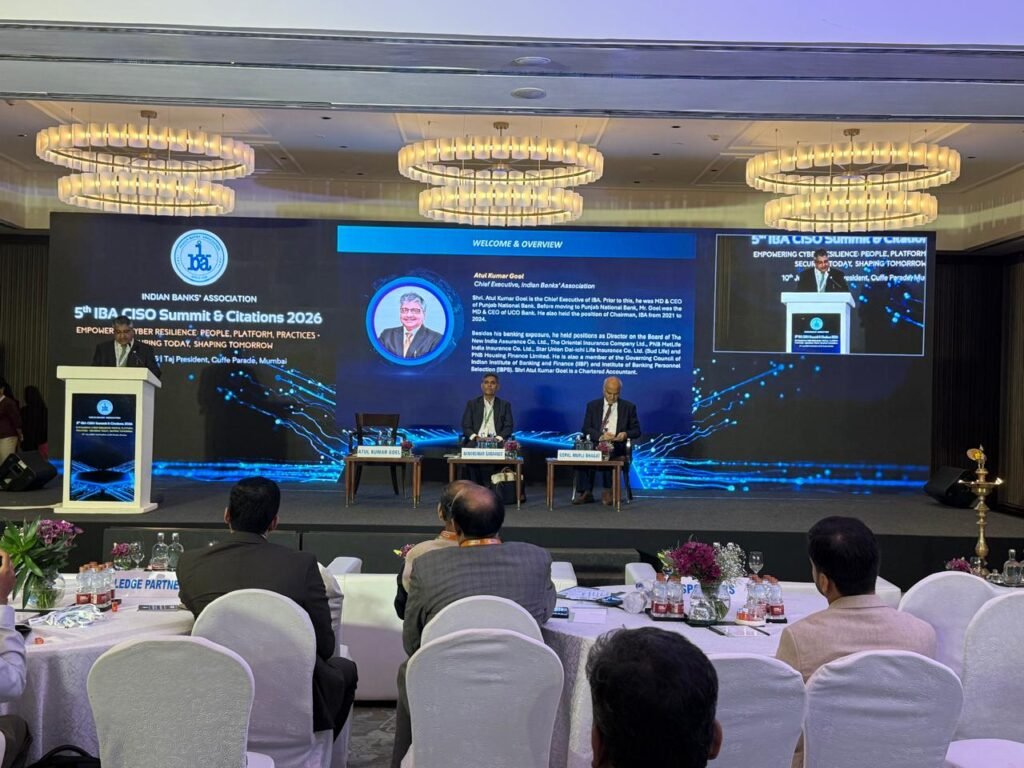
Corporate stage design in 2026 is moving beyond creating a large visual backdrop and adding technology for effect. The focus is increasingly on creating stages that are flexible, content-driven and suitable for both live audiences and digital platforms. The most useful trends are those that improve how the stage communicates while also making production more adaptable.
Camera-First Stage Planning
Corporate events are increasingly captured through photography, video, livestreams and social media. This means the stage needs to look effective not only from the audience but also through different camera angles. Camera positions, framing, speaker movement, LED brightness and background graphics should be considered during the design process. A stage that looks balanced in the venue can appear crowded or poorly framed on camera. Planning for cameras early helps important presentations, product reveals and leadership moments translate effectively into photographs, videos and livestreams.
Content-Led Stage Architecture
Stage architecture and digital content are increasingly being planned together. Instead of deciding on the physical structure first and adding an LED wall later, designers can consider screen proportions, content formats and visual transitions while developing the stage concept. This creates a stronger connection between the physical and digital elements. It also allows presentations, videos, animations and live speakers to move naturally between different visual formats without making the stage feel disconnected.
More Responsible Fabrication
Sustainability is becoming a more practical consideration in corporate event production. Brands that conduct several events can reduce unnecessary production waste by considering how scenic components can be reused, adapted or dismantled efficiently. Reusable panels, modular structures and adaptable branding can be modified for different events rather than being built for one-time use. This can also help brands maintain a consistent visual identity across multiple events while reducing the need for completely new scenic fabrication each time.
Modular Scenic Systems
Modular scenic systems give event teams greater flexibility when working across different venues and event formats. A reusable structural framework can be changed through graphics, lighting, furniture, screen arrangements and other visual treatments. This is particularly useful for companies that organise conferences, dealer meets, annual meets and leadership events throughout the year. Instead of starting from a completely new physical design for every event, selected components can be reconfigured to suit the venue and programme.
Immersive Technology With a Purpose
Projection, extended LED surfaces and interactive technologies can make an event more memorable, but their presence should have a clear purpose. Technology becomes more effective when it contributes to storytelling or creates a specific audience experience. For example, a product launch may use immersive visuals to build anticipation before a reveal, while a leadership presentation may benefit from a simpler environment that keeps attention on the speaker. The important shift is therefore not toward using more technology, but toward using the right technology at the right moment.
Brand Environments Instead of Logo-Focused Stages
Corporate branding is increasingly being integrated into the complete stage environment rather than relying on repeated logos. Brand colours, typography, graphics, architectural forms, lighting and screen content can work together to create a recognisable visual identity. This approach can make a stage feel more sophisticated while keeping presentations and speakers visually clear. The brand becomes part of the environment instead of competing with the content.
Flexible Stage Configurations
Corporate programmes often include several formats within the same event, such as keynote presentations, panels, fireside conversations, awards and entertainment. A fixed stage can make these transitions feel repetitive or require significant changes between sessions. Flexible furniture, modular scenic elements, adaptable screen configurations and programmable lighting can help the same stage support different programme formats. This makes the setup more practical while allowing the visual identity to remain consistent throughout the event.
The Larger Shift in Corporate Stage Design
The common thread across these trends is a move toward integrated and adaptable stage environments. Architecture, digital content, branding, lighting, cameras and technical production are increasingly being considered together rather than as separate elements. For corporate brands, this means the most effective stage in 2026 is not necessarily the one with the largest LED wall or the most technology. It is the one that can adapt to the programme, communicate clearly, work well on camera and create a consistent brand experience for the audience.
What Affects Corporate Event Stage Design Cost in India?
There is no single price for corporate event stage design in India. Cost depends on the scale, venue, production requirements and level of customisation.
- Stage Size and Structure: Larger platforms require more structural materials, scenic components, flooring and installation work. Multi-level stages and customised structures can increase complexity further.
- Fabrication and Scenic Elements: Custom arches, panels, branded structures, platforms and dimensional scenic elements can add considerably to the production scope. Material choice, detailing and reusability also influence the budget.
- LED Screens: LED cost varies according to screen size, specification, pixel pitch and configuration. A standard presentation screen has different requirements from a panoramic LED wall or multiple creative display surfaces.
- Lighting: Lighting requirements range from basic speaker illumination to complex programmed systems involving architectural, scenic and moving fixtures.
- Audio and AV: Microphones, playback systems, presentation systems, video switching, live feeds and streaming requirements can all affect the technical budget.
- Venue and Installation Requirements: Loading access, installation timings, rigging permissions, power availability and venue-specific restrictions can add to production requirements.
- Content Production: Motion graphics, presentations, videos, animations and screen-specific creative assets may need to be produced separately for the event.
- Installation, Dismantling and Rehearsals: The budget should also account for installation, testing, rehearsals, event-day technical support and dismantling.
- Level of Customisation: A standard stage and a completely custom-built environment cannot be compared on price alone. Unusual structures, multiple LED surfaces and specialised technical requirements naturally increase production complexity.
For this reason, the best way to estimate corporate event stage design cost is to begin with the event brief and venue. A professional quotation should clearly identify design, fabrication, LED, lighting, AV, installation, technical support and dismantling.
Common Corporate Event Stage Design Mistakes to Avoid
1. Designing Before Understanding the Venue
A concept may look excellent in a 3D render but prove difficult to build because of floor space, ceiling height, rigging restrictions or installation access.
How to avoid it: Assess the venue before finalising the design.
2. Prioritising Visuals Over Audience Experience
Oversized scenic elements, excessive LED content or heavy branding can distract from speakers and presentations.
How to avoid it: Review the stage from different audience positions and maintain a clear visual hierarchy.
3. Choosing Technology Without a Clear Purpose
Adding technology simply because it is available can increase complexity without improving the programme.
How to avoid it: Identify the audience experience first and then select technology that supports it.
4. Ignoring Content and Camera Requirements
A stage can look strong in the venue but perform poorly on camera. Presentation content can also fail when it is not designed for an unusual screen format.
How to avoid it: Test content, framing, lighting and screen output before the event.
5. Leaving Technical Planning Until the End
Late decisions about LED, lighting, audio, power, rigging or fabrication can create production delays.
How to avoid it: Establish the technical requirements while the creative concept is being developed.
How to Choose a Corporate Event Stage Design Company
Choosing the right company means looking beyond attractive stage visuals. The partner should be able to understand the event, develop a practical concept and manage the design through production and event-day execution.
- Look Beyond the Portfolio: Review projects across different corporate events, venues and levels of technical complexity to understand the company’s range of experience.
- Check Creative and Technical Capability: The company should understand stage structures, LED, lighting, AV, content, rigging, venue restrictions, installation and dismantling alongside visual design.
- Understand the Design Process: Ask whether the company provides concepts, moodboards, 3D visualisations, technical drawings or production plans before fabrication begins.
- Check Venue Understanding: The design should consider the venue’s dimensions, ceiling height, audience layout, loading access, rigging, power and installation requirements.
- Assess Execution Capability: Find out who handles fabrication, transportation, installation, technical testing and dismantling. A strong concept also needs reliable on-site execution.
- Ask About Testing and Rehearsal: For events involving LED, presentations, lighting or live video, confirm how content and technical elements are tested before the event.
- Evaluate Communication: The company should be able to coordinate with marketing teams, event managers, venues and technical suppliers while managing revisions clearly.
Ultimately, choose a partner that can take the stage from concept to execution, rather than simply providing an impressive visual design.
Corporate Event Stage Design Checklist
Check | What to Confirm |
Event objective | Does the stage support the purpose and message of the event? |
Venue | Are the space, ceiling height, access, power and restrictions clear? |
Stage layout | Can speakers, panels and programme elements work comfortably? |
Sightlines | Can the audience clearly see the stage and screens? |
Branding | Does the stage follow the brand identity without feeling overcrowded? |
LED & content | Are screen sizes, formats and presentation content compatible? |
Lighting & AV | Are speakers, screens, sound and lighting coordinated? |
Camera angles | Will the stage work for photography, video and livestreaming? |
Technical plan | Have power, rigging, drawings and installation requirements been checked? |
Rehearsal | Have content, speakers, lighting and technical cues been tested? |
Conclusion
An impactful corporate event stage is not created simply by adding larger screens, more lighting or elaborate structures. It begins with understanding what the event needs to communicate and translating that requirement into a stage that works for the venue and programme. The design process should move logically from event requirements to venue assessment, stage configuration, creative development, technical planning and rehearsal. The finished stage should then bring its individual components together: architecture provides the structure, screens support communication, lighting creates atmosphere, AV enables the programme and branding establishes the corporate identity.
For companies planning conferences, product launches, dealer meets, annual meets or leadership events, an experienced corporate event stage design company can help connect these creative and technical requirements. Ultimately, the best stage is not necessarily the largest or most technologically advanced. It is the one that looks appropriate, works reliably and helps the audience remember what the event was meant to communicate.
FAQs
1. What is corporate event stage design?
Corporate event stage design is the planning of a stage’s physical structure, visual identity, lighting, screens, AV and related elements around the purpose of a corporate event. It combines creative and technical decisions to support speakers, presentations, branding and audience experience.
2. What makes an impactful corporate event stage?
An impactful stage creates a clear visual hierarchy, reflects the event format, supports audience visibility and uses branding and technology without distracting from the main message.
3. How do you design a corporate event stage?
Start with the event requirements and venue. Then establish the audience layout, stage configuration, creative direction and technical requirements before testing the complete setup through rehearsal.
4. What are the key elements of corporate stage design?
Key elements include stage architecture, branding, LED screens, digital content, audio, AV, lighting, backdrop design and camera infrastructure.
5. How should LED screens be used in corporate stage design?
LED screens should support presentations, videos, graphics, branding and other event content. Their size, configuration and content should be selected according to viewing distance, programme requirements and the overall stage design.
6. How does lighting improve corporate stage design?
Lighting helps illuminate speakers, establish atmosphere, highlight important stage elements and create transitions for presentations, awards and reveals.
7. How much does corporate event stage design cost in India?
There is no fixed cost. The budget depends on stage size, fabrication, LED, lighting, AV, scenic elements, venue requirements, content production, installation, dismantling and customisation.
8. How early should corporate stage design be planned?
The timeline depends on the scale and complexity of the event. Custom fabrication, extensive LED, complex AV and multiple technical requirements require more preparation for design development, production, testing and rehearsal.
9. How do you choose a corporate event stage design company?
Look for a company with both creative and technical capabilities. Review its portfolio, design process, venue experience, fabrication capabilities, technical planning, installation process, rehearsal approach and project management.