What Is Considered a Small Exhibition Booth?
A small exhibition booth is generally any exhibition space that offers limited floor area but can still be strategically designed to showcase products, engage visitors, and generate business opportunities. While dimensions vary between venues and organisers, compact booths are among the most common options for startups, SMEs, first-time exhibitors, and brands participating in international trade shows with controlled marketing budgets.
The most common small booth formats include:
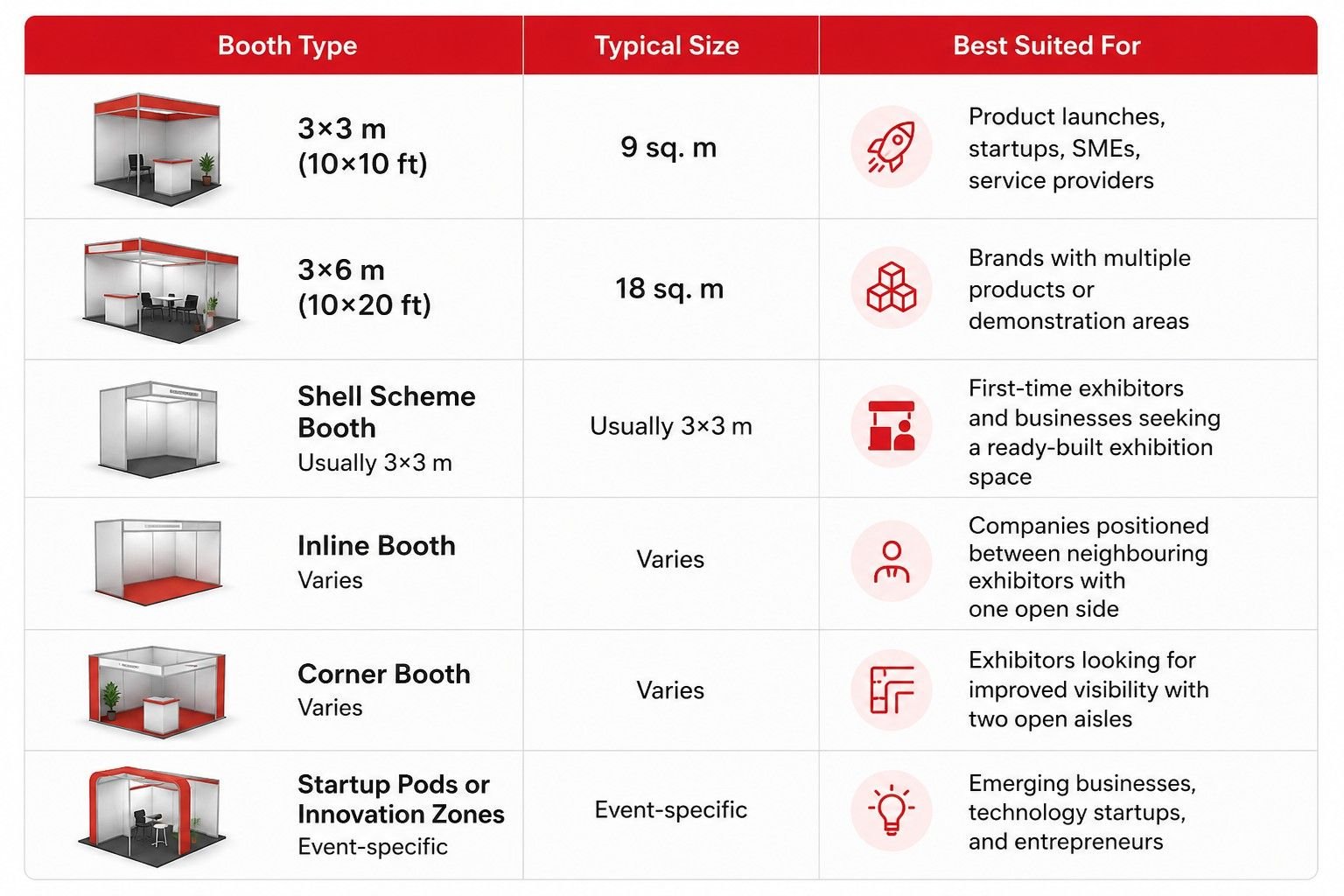
Although these booth sizes offer less floor space than island or double-decker stands, they can still create a strong brand presence when designed with a clear purpose. The key is to focus on quality rather than quantity. Instead of trying to fit every product, marketing message, or piece of furniture into the booth, successful exhibitors prioritise the elements that contribute most to visitor engagement and business objectives.
Small Booths Are More Than Just Limited Space
One of the biggest misconceptions is that a compact booth is simply a scaled-down version of a larger stand. In reality, designing for a smaller footprint requires a different approach. Every design decision from booth layout and product placement to storage, lighting, graphics, and staff positioning has a greater impact because there is less room for error. For example, placing oversized furniture in a small exhibition booth layout can quickly make the space feel crowded, while excessive branding or too many product displays can overwhelm visitors instead of attracting them. On the other hand, a clean layout with clear messaging, well-planned circulation, and carefully selected displays often makes a compact booth feel more open, professional, and inviting.
Why Understanding Booth Type Matters
Before designing your small exhibition stand, it’s important to understand the strengths and limitations of your allocated space. An inline booth faces different visibility challenges than a corner booth, while a shell scheme booth comes with fixed structural elements that influence the layout and branding. Knowing your booth type early helps you plan the right layout, optimise visitor flow, position displays effectively, and make better use of lighting, storage, and furniture. By designing around your booth’s unique characteristics, you can maximise every square metre while creating a functional and engaging visitor experience.
Why Small Booths Can Deliver Big Results
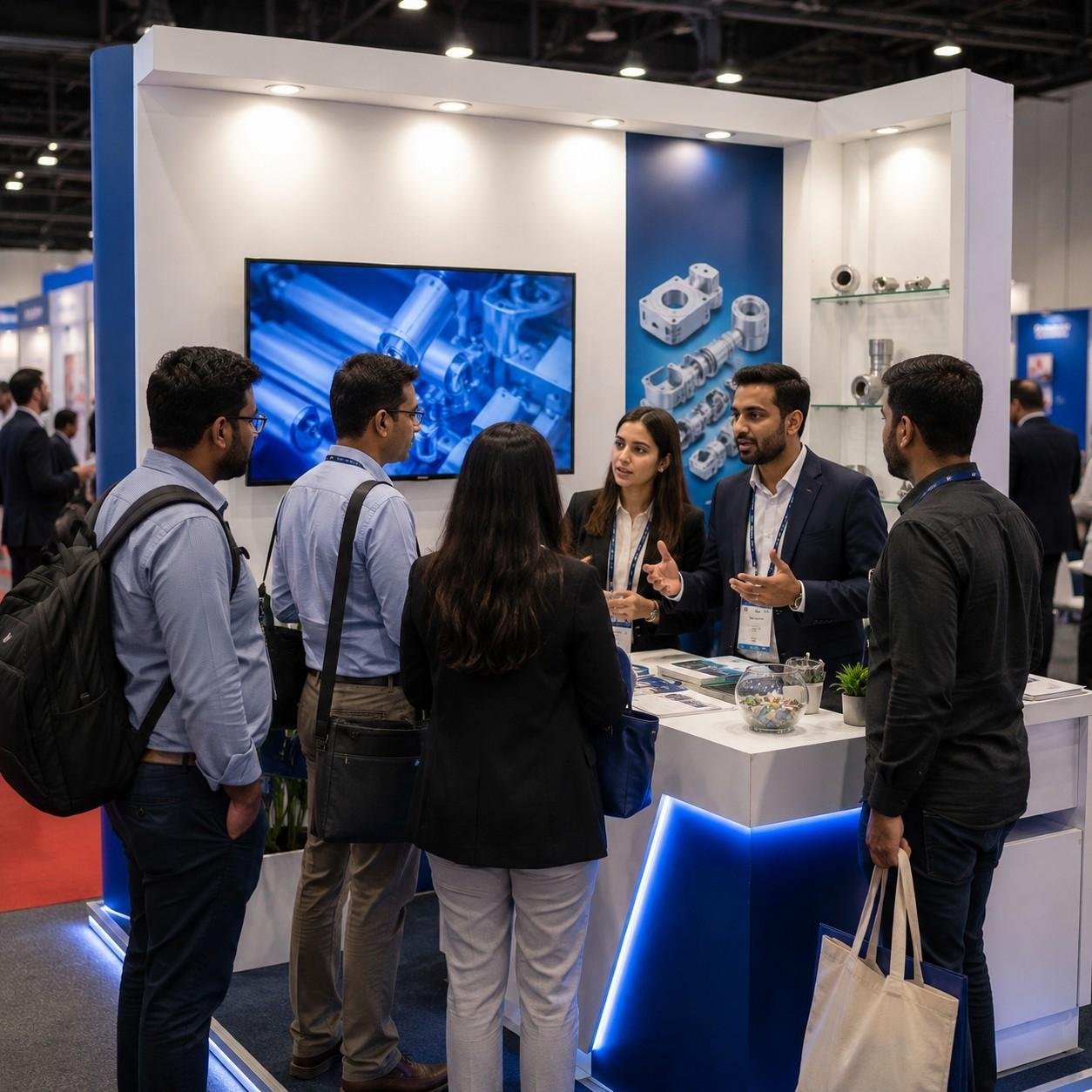
A small exhibition booth can deliver excellent results when every element is designed with a clear purpose. Exhibition success is not determined by the size of your stand but by how effectively it attracts the right visitors, communicates your value, and converts conversations into business opportunities. Many exhibitors with compact booths outperform larger competitors because they focus on strategy rather than scale. One of the greatest advantages of a small booth is that it naturally encourages more personal and meaningful interactions. Instead of trying to manage large crowds, your team can spend more time understanding visitor needs, demonstrating products, and building relationships with qualified prospects. These focused conversations often lead to stronger connections and higher-quality leads than brief interactions in larger, busier exhibition spaces.
A Smaller Space Encourages Smarter Planning
Limited space forces exhibitors to prioritise what truly matters. Rather than filling every corner with products, banners, and promotional materials, successful brands identify the most important message they want visitors to remember and build the booth around that objective. A focused approach creates a more organised and engaging booth experience. With fewer distractions, visitors can quickly understand your brand, easily identify your key products, move comfortably through the space, engage more effectively with demonstrations, and make faster, more confident decisions about your solutions. When visitors can quickly understand who you are, what you offer, and why it matters, they are more likely to stop, engage, and continue the conversation.
Better Quality Conversations Lead to Better Business Outcomes
A common misconception is that exhibition success depends solely on attracting the highest number of visitors. In reality, the quality of those interactions is often a far more meaningful measure of performance. A thoughtfully designed small exhibition booth creates an environment where visitors can comfortably ask questions, explore products, and have uninterrupted discussions with your team. This is especially valuable for B2B industries, where purchasing decisions typically involve technical evaluations, long sales cycles, and relationship building rather than impulse buying. For many exhibitors, ten meaningful conversations with qualified decision-makers are far more valuable than a hundred casual booth visits with little commercial potential.
Compact Booths Can Improve Exhibition ROI
Smaller exhibition spaces generally require lower investment in floor space, construction, logistics, and operational costs. While budget savings should never come at the expense of visitor experience, they do create an opportunity to allocate resources more strategically.
For example, instead of investing in a larger footprint, exhibitors can direct their budget towards:
- High-quality booth graphics and branding.
- Interactive product demonstrations.
- Professional lighting.
- Digital engagement tools.
- Pre-event marketing campaigns.
- Staff training.
- Post-show lead nurturing.
This balanced investment often delivers a stronger return because it focuses on activities that directly influence visitor engagement and lead conversion rather than simply increasing booth size.
Focus Creates a Stronger Brand Experience
Visitors attending trade shows are exposed to hundreds of brands in a single day. In such a competitive environment, clarity is often more memorable than complexity. A well-planned small exhibition stand design allows exhibitors to present a focused story instead of overwhelming visitors with excessive information. By highlighting one or two hero products, using concise messaging, and creating a visually organised environment, brands make it easier for visitors to understand their value proposition within the few seconds available to capture attention. This clarity not only improves the visitor experience but also strengthens brand recall long after the exhibition has ended.
Success Comes From Strategy, Not Square Metres
The highest-performing compact exhibition booth designs share one characteristic: every design decision supports a defined business objective. The layout encourages movement, the branding communicates a clear message, the displays showcase the right products, and the staff know how to engage visitors effectively. Ultimately, maximising limited exhibition space is about making every square metre purposeful. When strategy drives design, even the smallest booth can become a powerful platform for generating leads, building relationships, and achieving measurable exhibition success.
Common Challenges of Limited Exhibition Space
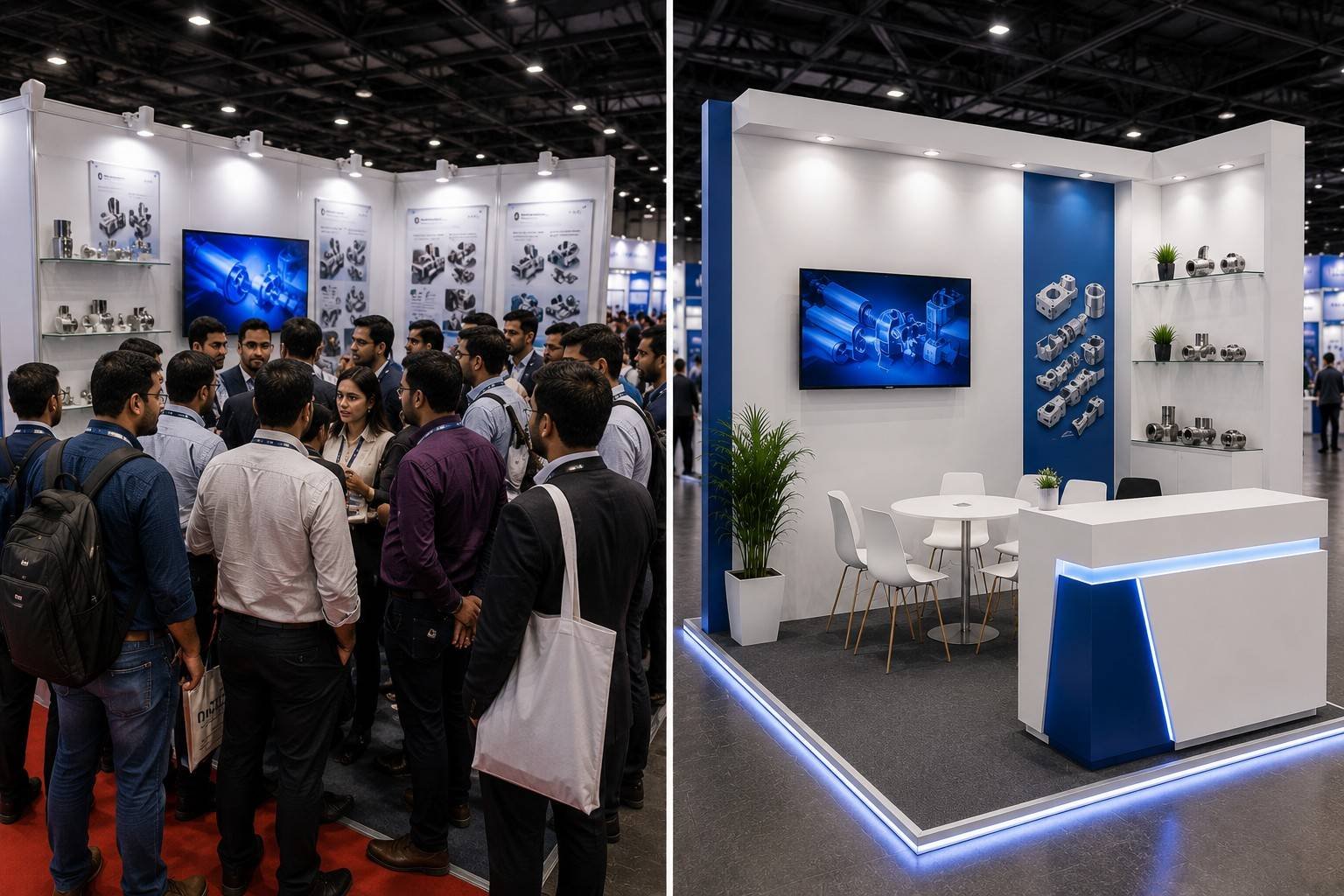
Limited exhibition space creates design and operational challenges, but most can be overcome with thoughtful planning. The biggest obstacle isn’t the booth size itself; it’s trying to fit too much into a compact area. When every square metre has a defined purpose, even a small booth can remain functional, visually appealing, and effective at engaging visitors. Understanding these challenges before designing your booth helps you make better decisions about layout, branding, furniture, product displays, and visitor interaction.
Limited Visibility in Busy Exhibition Halls
One of the first challenges small exhibitors face is getting noticed. Large exhibition stands often use towering structures, multiple display zones, and prominent branding to attract attention from across the hall. A compact booth doesn’t have the same physical presence, making it easier for visitors to walk past without noticing it. The solution isn’t to overload the booth with oversized graphics or promotional materials. Instead, focus on creating a strong visual hierarchy with one clear brand message, bold yet uncluttered graphics, strategic lighting, and a well-defined focal point that immediately captures attention.
Balancing Product Displays Without Creating Clutter
Many exhibitors feel compelled to display every product or service they offer. In a small booth, this approach usually has the opposite effect. Too many products compete for attention, making it harder for visitors to understand your core offering. A more effective strategy is to showcase only your most relevant or highest-value products. Supporting information can be presented through digital displays, brochures, or conversations with booth staff, keeping the exhibition space organised while still providing visitors with access to additional details.
Managing Visitor Flow
A compact booth can quickly become crowded, especially during busy periods. If visitors struggle to enter, move around, or interact with displays, they may leave before engaging with your team. An effective small exhibition booth layout creates a natural path for visitors without unnecessary obstacles. Open entrances, strategically positioned displays, and carefully selected furniture help improve circulation and make the booth feel more welcoming, even when several visitors are present at the same time.
Limited Storage Space
Storage is often overlooked during the planning stage, yet it has a significant impact on the overall appearance of a booth. Boxes, promotional materials, personal belongings, and product stock left in visible areas can make even a professionally designed stand appear untidy. Integrating hidden storage into counters, display units, or modular furniture keeps essential items accessible while maintaining a clean and organised presentation throughout the event.
Creating Comfortable Spaces for Conversations
For businesses that rely on consultations, product demonstrations, or B2B meetings, finding space for meaningful conversations can be challenging. Placing large tables or multiple chairs inside a compact booth often reduces visitor movement and makes the area feel confined. Instead, consider designing flexible interaction zones. A standing discussion area, a compact meeting counter, or multifunctional furniture can provide opportunities for productive conversations without occupying unnecessary floor space.
Making the Booth Feel Open and Inviting
Visitors are naturally drawn to booths that feel open, welcoming, and easy to explore. Even if your exhibition space is compact, thoughtful design can make it appear larger and more inviting. Keep sightlines clear from the aisle, avoid blocking the entrance with furniture or displays, use vertical elements to maximise space, and keep branding clean and uncluttered. These simple design choices create a comfortable environment that encourages visitors to step inside and start a conversation.
Keeping Staff and Visitors Comfortable
Another common challenge is accommodating booth staff without disrupting the visitor experience. Too many team members in a compact booth can unintentionally block entrances, crowd displays, or discourage visitors from approaching. Assigning clear staff roles, scheduling breaks, and limiting the number of people inside the booth at any given time helps maintain a welcoming atmosphere. Staff should be positioned to greet visitors naturally while allowing enough open space for comfortable movement.
Every Challenge Is an Opportunity to Design Smarter
Small exhibition booths require more deliberate planning because every design decision has a visible impact on functionality and visitor experience. Rather than viewing limited space as a disadvantage, successful exhibitors treat it as a design constraint that encourages greater focus, efficiency, and creativity. By recognising these challenges early and addressing them strategically, you can create a compact exhibition stand that feels organised, attracts the right audience, and supports meaningful business conversations throughout the event.
Start With Exhibition Objectives Before Designing Your Booth
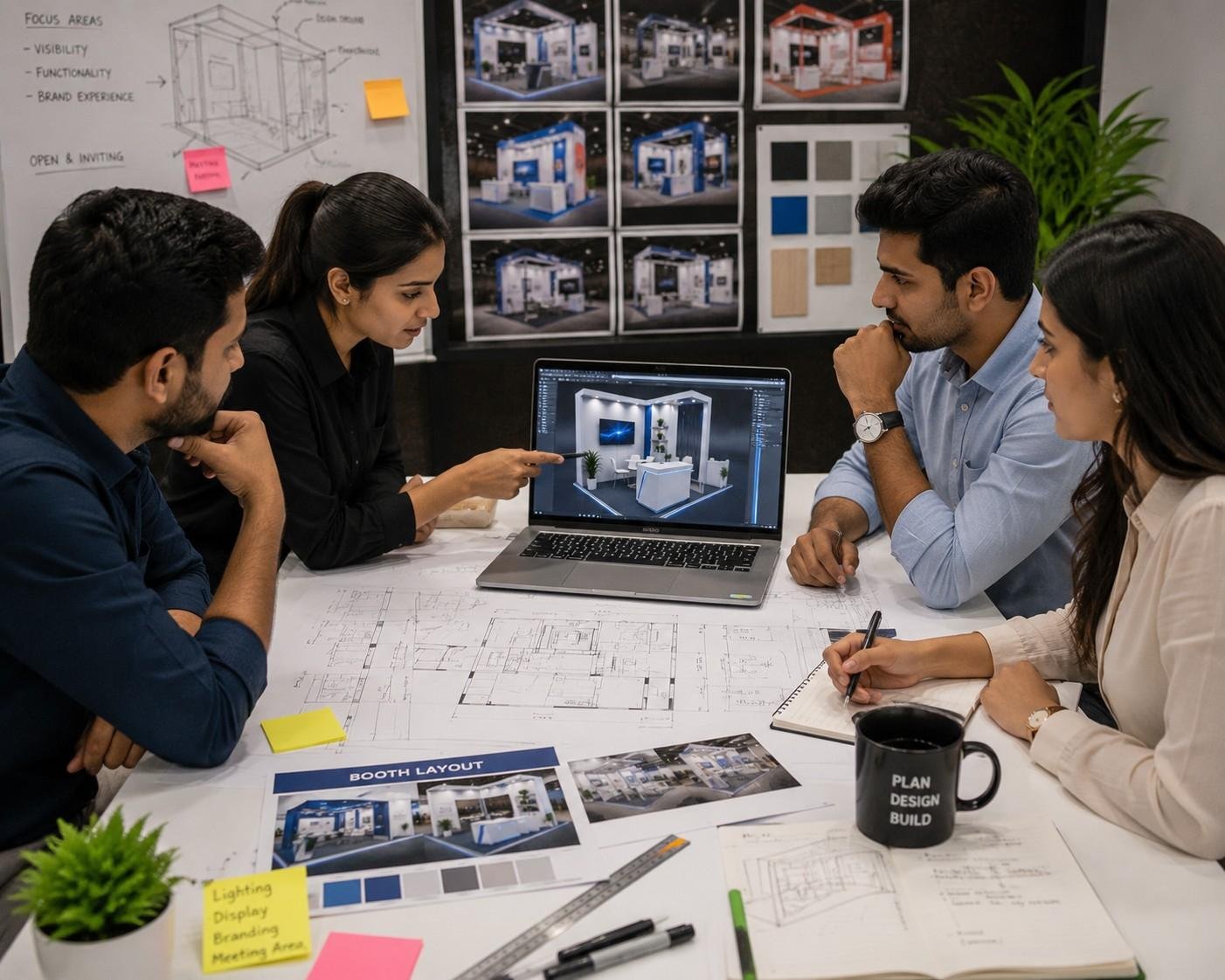
The most successful small exhibition booths are designed around clear business objectives not around furniture, graphics, or available floor space. Before choosing a layout or selecting display elements, define what you want your booth to achieve. A clear objective influences every design decision and ensures that limited exhibition space is used with purpose rather than filled with unnecessary features. Many exhibitors make the mistake of discussing stand design before agreeing on their exhibition goals. As a result, they end up with attractive booths that fail to support meaningful business outcomes. Whether your objective is generating qualified leads, launching a new product, increasing brand awareness, or meeting existing clients, your booth should be planned to support that specific goal.
Define One Primary Goal
A compact booth cannot effectively accomplish every objective at once. Trying to promote every product, attract every visitor, and communicate every message often leads to a cluttered experience that dilutes your brand.
Instead, identify one primary objective that will guide your booth strategy.
For example:
Primary Objective | Booth Design Priority |
Lead generation | Open layout, quick conversations, digital lead capture, clear call-to-action |
Product launch | Hero product display, live demonstrations, impactful lighting |
Brand awareness | High-visibility branding, memorable graphics, interactive experiences |
Distributor or partner meetings | Semi-private discussion area, presentation screens, comfortable seating |
Product demonstrations | Dedicated demo zone, audience space, supporting digital content |
When your objective is clear, every square metre of your small exhibition booth serves a purpose instead of competing for attention.
Understand Who You’re Trying to Attract
An effective booth isn’t designed for everyone, it is designed for the right audience.
Before planning your small exhibition stand design, ask questions such as:
- Who are the visitors you want to engage?
- What challenges are they trying to solve?
- Which products or services are most relevant to them?
- What information will help them make a decision?
- What action do you want them to take before leaving your booth?
The answers will influence your messaging, product displays, visitor journey, and even how your team approaches conversations. For example, a technology company targeting CIOs will design its booth differently from a food manufacturer seeking retail buyers or distributors. Although both may have the same booth size, their objectives and visitor expectations are entirely different.
Align the Booth Layout With Your Objective
Once you’ve defined your goal, design your booth to support it. If your focus is lead generation, keep the layout open and inviting so visitors can walk in easily and start a conversation. If you’re launching a new product, make it the centre of attention with the right lighting, graphics, and displays. If your goal is building relationships, create a comfortable space for meaningful discussions instead of filling the booth with too many displays. When your booth layout matches your objective, visitors naturally experience your brand the way you intended.
Define Success Before the Event Begins
Clear objectives also make it easier to measure exhibition performance.
Rather than evaluating success based only on visitor numbers, establish measurable goals such as:
- Number of qualified leads generated.
- Product demonstrations completed.
- Meetings held with existing clients.
- Distributor or partner enquiries.
- QR code scans or brochure downloads.
- Sales opportunities created after the event.
Tracking meaningful metrics helps you understand whether your booth strategy achieved its intended outcome and provides valuable insights for future exhibitions.
Let Strategy Drive Design
Design should always support business objectives, not the other way around. A visually impressive booth may attract attention, but without a clear purpose, it rarely delivers consistent commercial results.
Before choosing colours, graphics, furniture, or technology, define what success looks like for your business. When every design decision aligns with a specific objective, your small exhibition booth becomes more than a display space; it becomes a strategic marketing tool that attracts the right audience, encourages productive conversations, and contributes to measurable exhibition ROI.
Understand Visitor Behaviour Inside Exhibition Halls
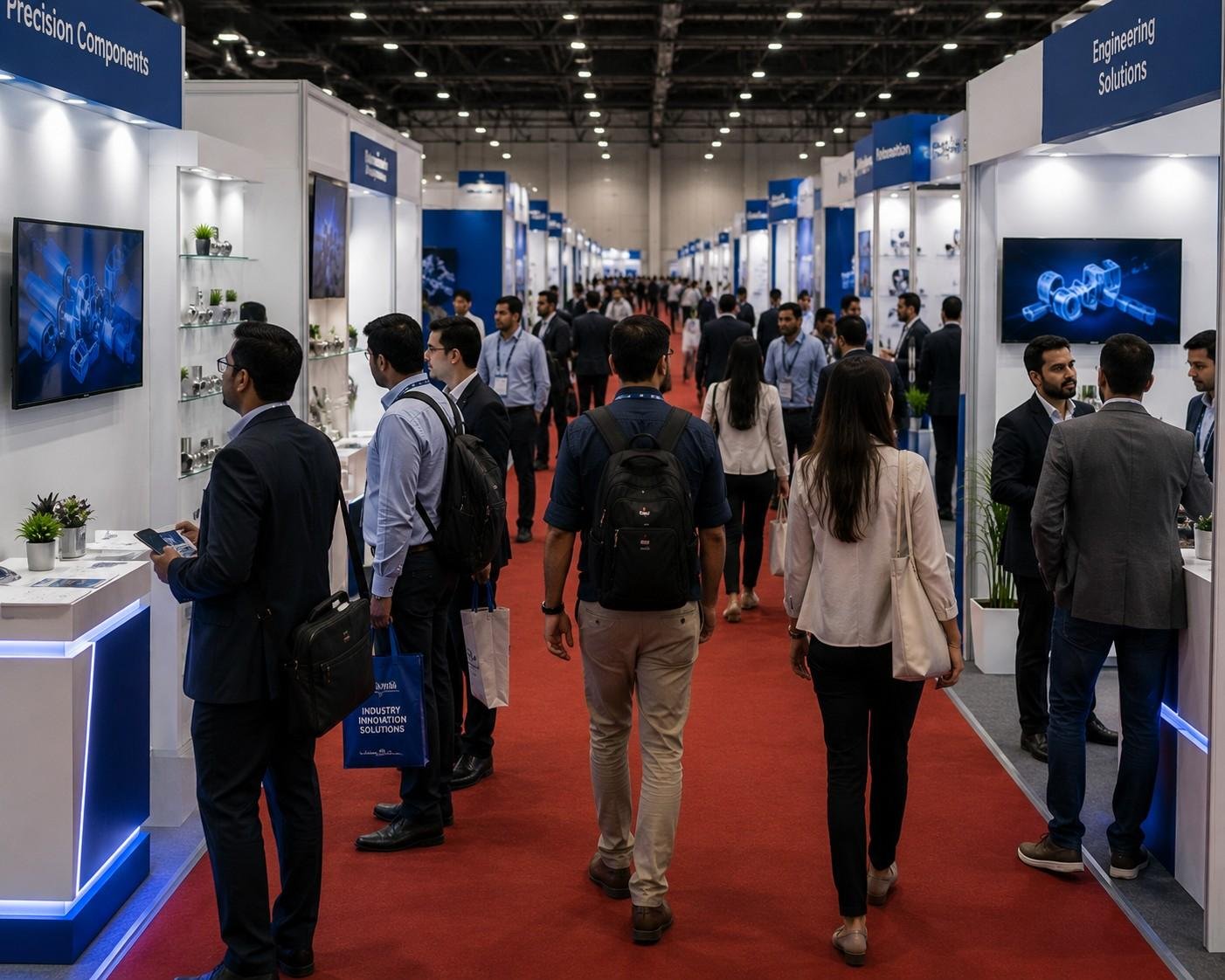
A successful small exhibition booth is designed around how visitors behave, not just how it looks. In a busy exhibition hall, attendees make quick decisions about which booths to visit. Within a few seconds, they judge whether your stand is relevant, approachable, and worth their time. Understanding these natural behaviours helps you design a booth that attracts attention and encourages meaningful interactions.
Visitors Decide Within Seconds
First impressions happen almost instantly. Before reading your graphics or speaking to your team, visitors subconsciously evaluate your booth based on its visual appeal, accessibility, and clarity. A clean layout, a clear brand message, a welcoming entrance, and one strong focal point make it easier for people to stop and explore. If visitors have to figure out what your business offers, they’ll often keep walking.
People Scan Before They Stop
Exhibition visitors rarely examine every booth in detail. Instead, they scan the exhibition floor looking for visual cues that match their interests. That’s why your small exhibition stand design should communicate four things immediately: who you are, what you offer, why it matters, and what visitors should do next. Clear messaging and a strong visual hierarchy help your booth stand out in a crowded hall.
Accessibility Encourages Engagement
Even an attractive booth can be overlooked if it feels difficult to enter. Large counters, bulky furniture, or blocked entrances create psychological barriers that discourage visitors. An open layout with clear pathways makes your booth feel more welcoming and allows people to step inside comfortably without feeling they’re interrupting a conversation.
One Focal Point Creates Stronger Impact
Trying to highlight everything often means nothing stands out. Whether it’s a flagship product, a live demonstration, or an interactive digital display, every small exhibition booth should have one clear focal point that immediately captures attention. Supporting graphics and displays should guide visitors naturally towards that feature instead of competing for attention.
Simplicity Improves Decision-Making
Displaying too many products or promotional messages can overwhelm visitors and make your booth feel cluttered. A more effective approach is to showcase one or two key solutions and use conversations or digital content to introduce additional products. A focused presentation makes it easier for visitors to understand your value and remember your brand.
People Buy From People
Creative design may attract visitors, but meaningful conversations are what generate business opportunities. Friendly, knowledgeable staff who actively engage visitors, ask relevant questions, and listen carefully create stronger connections than any graphic or display. In a compact booth, these personal interactions often become your biggest competitive advantage.
Design for Behaviour, Not Assumptions
The best small exhibition booth ideas are built around real visitor behaviour rather than assumptions about what looks impressive. When your branding captures attention, your layout guides movement, and your team creates engaging conversations, every square metre works harder. That’s how a compact booth transforms from a limited space into a memorable experience that attracts qualified visitors and delivers better exhibition results.
Create a Visitor Journey Instead of Filling Every Corner
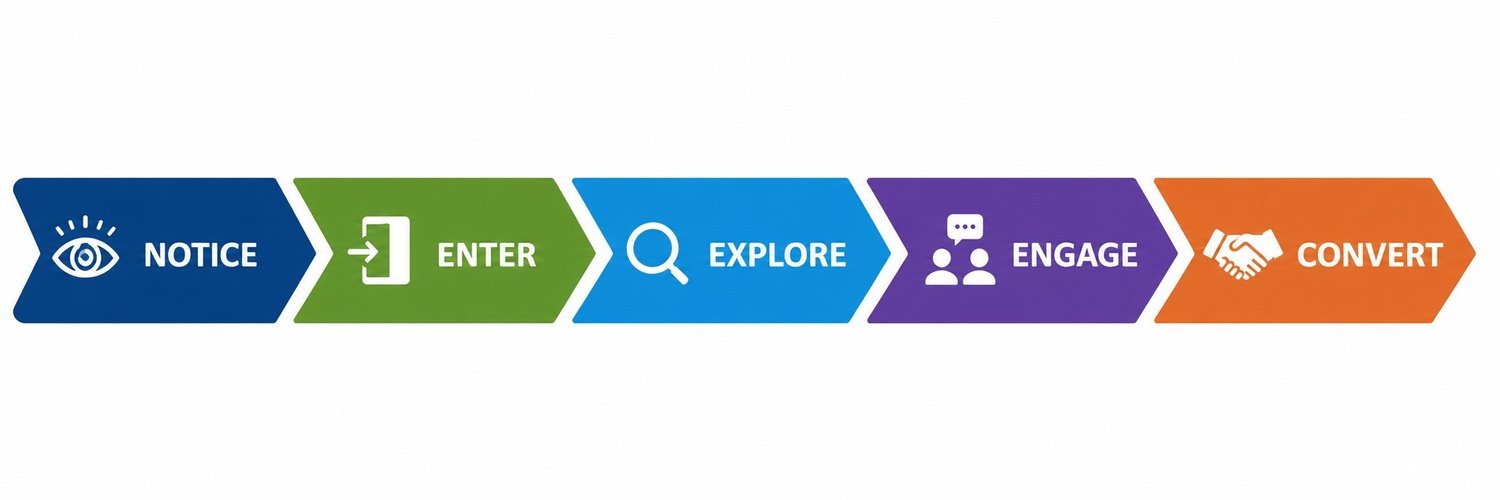
One of the biggest mistakes exhibitors make is trying to use every available centimetre of their booth. They add more products, more banners, more furniture, and more promotional materials, believing that more displays create more opportunities. In reality, the opposite is often true. A crowded booth makes it harder for visitors to understand your message, navigate the space, and start a conversation. Instead of asking “How can we fit everything into this booth?”, ask a more important question: “What journey do we want visitors to experience from the moment they notice our booth until they walk away?” The most successful small exhibition booth ideas aren’t designed around products; they’re designed around people. Every element should guide visitors naturally from curiosity to engagement and, ultimately, to action.
Capture Attention Before Visitors Even Stop
The visitor journey begins long before someone enters your booth. As attendees walk through exhibition aisles, they’re constantly scanning their surroundings for brands, products, or solutions that match their interests. In those few seconds, your booth needs to answer one simple question: “Why should I stop here?” Rather than overwhelming visitors with information, focus on creating an immediate visual impact through a clear value proposition, strong branding, a well-defined focal point, and clean graphics. Thoughtful lighting can further draw attention to your most important products or messages, making your booth easier to notice in a busy exhibition hall. The objective isn’t to explain everything at once; it’s simply to give visitors a reason to take the next step.
Make Entering the Booth Feel Natural
Once you’ve captured attention, the next challenge is encouraging visitors to step inside. Many exhibitors unintentionally create barriers by placing large reception counters, bulky furniture, or display units directly at the entrance. Although these elements may seem practical, they can make a compact booth feel closed and discourage visitors from approaching. A welcoming small exhibition booth layout feels open rather than restrictive. Visitors should be able to enter without wondering where to stand or whether they’re interrupting a conversation. The easier it is to step inside, the more likely people are to engage with your team.
Guide Visitors Towards What Matters Most
Every booth should have one clear focal point. Whether it’s a newly launched product, a live demonstration, an interactive digital display, or a solution to a common industry challenge, visitors should immediately know where to direct their attention. One of the biggest mistakes exhibitors make is giving equal importance to everything. When every product, banner, and message competes for attention, visitors often remember very little. Instead, use graphics, lighting, and product placement to naturally lead visitors towards the experience you want them to have. A clear focal point creates clarity, while supporting elements reinforce your message instead of competing with it.
Turn Interest Into Meaningful Conversations
Getting visitors into your booth is only half the job. What happens next determines whether your exhibition delivers real business results. A small exhibition booth should encourage conversations rather than simply display products. Design the space so your team can comfortably interact with visitors without blocking movement or creating congestion. Standing discussion areas, compact consultation counters, or live demonstration spaces often work far better than large meeting tables in smaller booths. The goal is to create an environment where visitors feel comfortable asking questions, exploring solutions, and discussing their business challenges.
End Every Visit With a Clear Next Step
Every visitor interaction should lead somewhere. Too many promising conversations end without a follow-up because exhibitors don’t make the next step clear. Before visitors leave your booth, they should know exactly what happens next. Depending on your exhibition objectives, this could be scheduling a meeting, requesting a quotation, booking a product demonstration, downloading a digital catalogue, scanning a QR code, or speaking with a technical specialist. A simple and well-defined call to action helps turn conversations into qualified leads and ensures the momentum created during the exhibition continues afterwards.
A Simple Visitor Journey Framework
Instead of thinking about your booth as a collection of displays, think of it as a carefully planned experience. Every visitor should move naturally through the following stages.
Visitor Stage | Booth Objective | What You Should Focus On |
Notice | Capture attention | Clear branding, lighting, and a compelling value proposition |
Enter | Encourage exploration | Open layout with an inviting entrance |
Explore | Showcase your solution | Hero products, demonstrations, and concise messaging |
Engage | Build trust | Knowledgeable staff, meaningful conversations, and product demonstrations |
Convert | Generate business opportunities | Lead capture, meeting bookings, QR codes, and clear calls to action |
When every stage is intentionally designed, visitors experience a smooth journey rather than a confusing collection of displays.
Design From the Visitor’s Perspective
The easiest way to improve a compact exhibition stand is to stop thinking like an exhibitor and start thinking like a visitor.
Instead of asking:
- Where can we fit another banner?
- How many products can we display?
- What else can we add?
Ask more valuable questions:
- Can visitors immediately understand what we do?
- Is it easy for them to enter the booth?
- What will they remember after leaving?
- Have we made the next step obvious?
These questions shift your focus from filling space to creating experiences.
When every stage of the visitor journey is intentional, a small exhibition booth feels organised, welcoming, and easy to navigate. More importantly, it creates memorable interactions, strengthens brand recall, and generates higher-quality business opportunities proving that thoughtful planning always has a greater impact than simply filling every available corner.
Strategies for Maximising Limited Exhibition Space
A successful small exhibition booth isn’t defined by how much it contains; it’s defined by how efficiently every square metre is used. The most effective compact booths don’t try to imitate larger stands. Instead, they focus on creating a seamless visitor experience where branding, layout, product displays, and conversations work together toward one goal. The following strategies will help you transform a limited exhibition space into a booth that attracts attention, encourages engagement, and delivers measurable business results.
1. Use Vertical Space to Expand Your Brand Presence
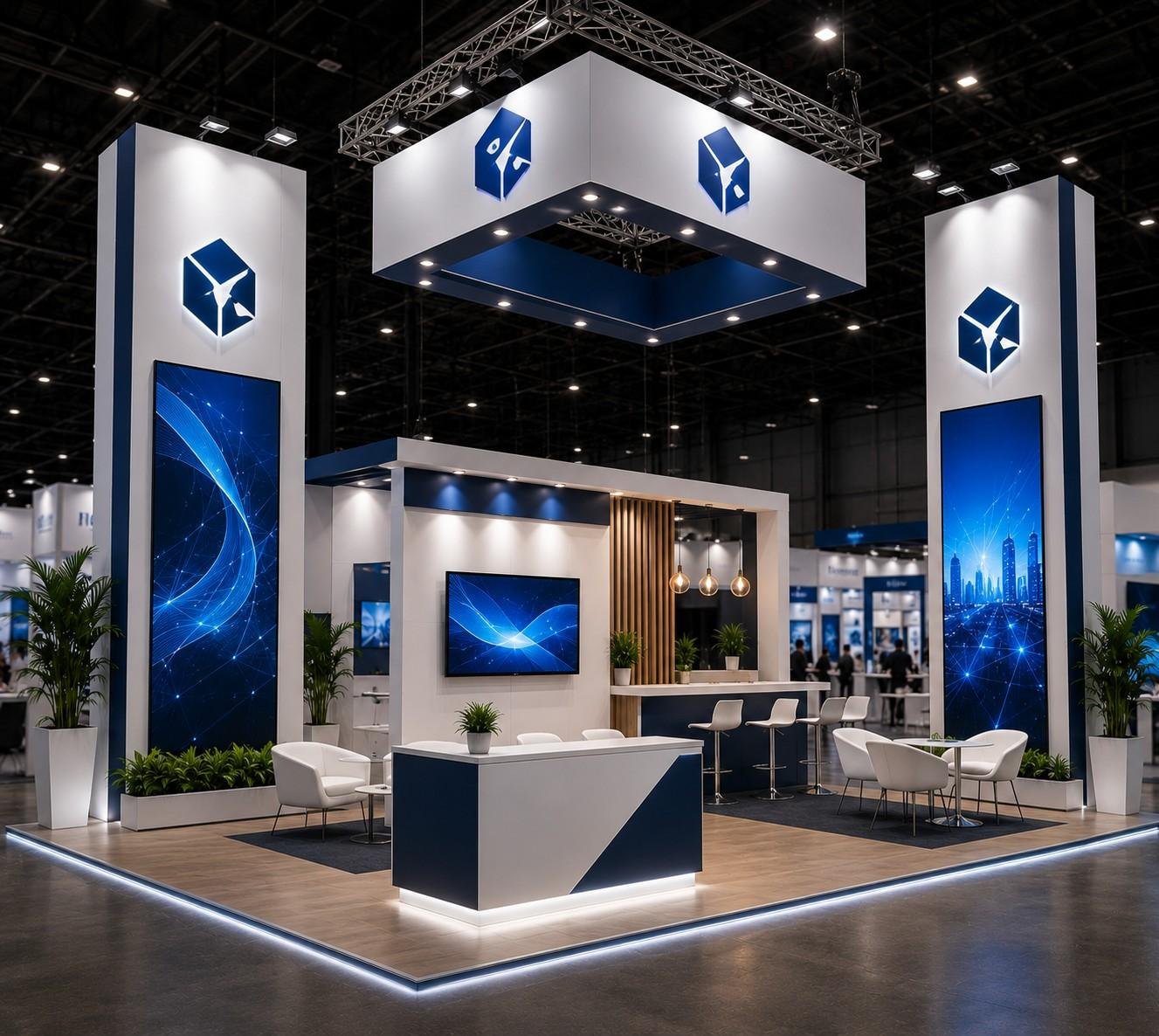
When exhibitors think about booth design, they usually focus on the floor. However, one of the biggest opportunities in a compact exhibition space is the area above eye level.
Vertical space allows you to increase brand visibility without sacrificing valuable room for visitors. Tall graphic panels, suspended branding, digital screens, and vertical display shelves naturally draw attention from across the exhibition hall while keeping the booth open and easy to navigate. Rather than filling the floor with additional displays, use height to communicate your brand and guide visitors towards your booth.
Best Practice: Place your logo and primary brand message at the highest visible point, while keeping products and interactive displays between waist and eye level for easier engagement.
2. Showcase Hero Products Instead of Your Entire Catalogue
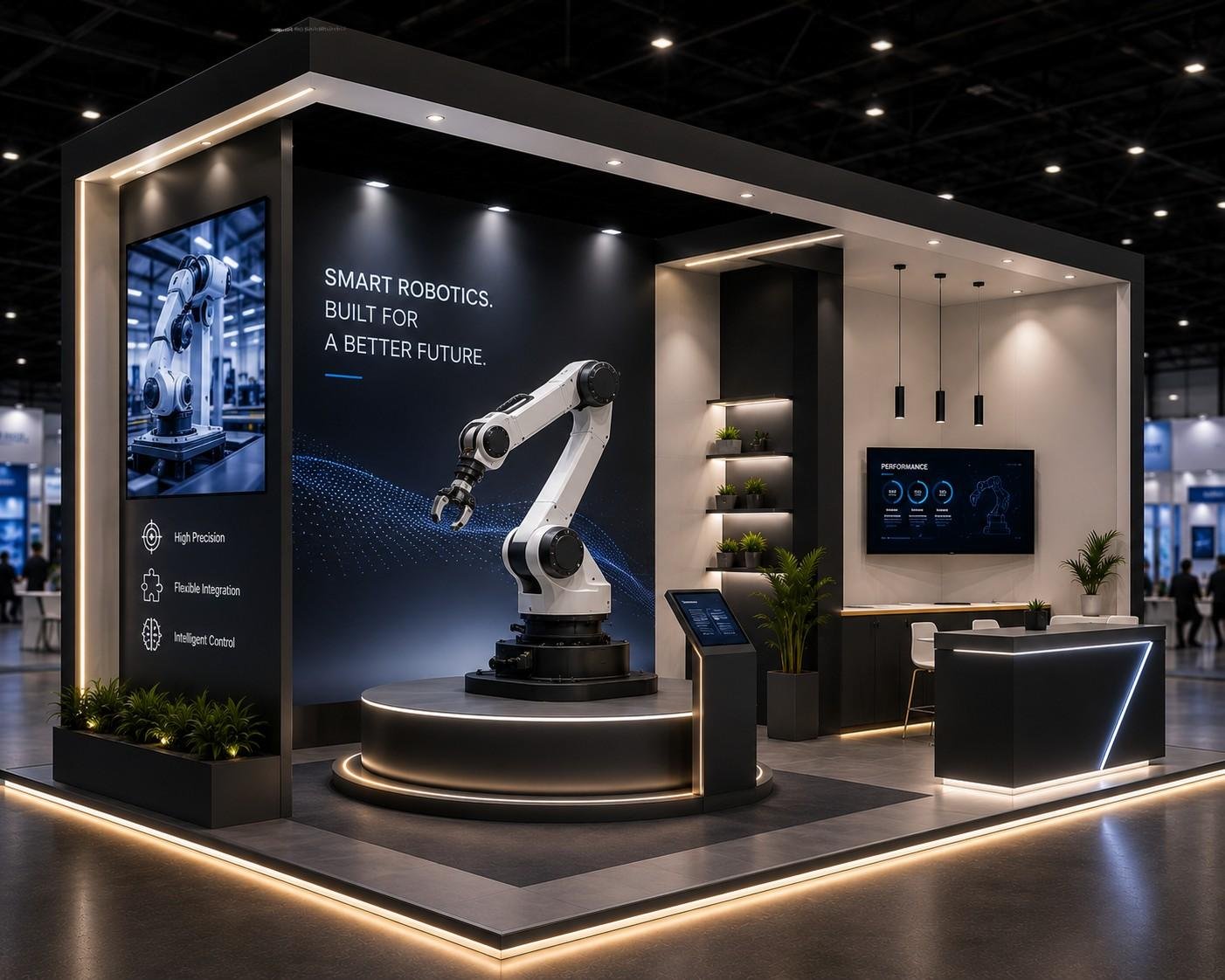
It’s tempting to display every product or service you offer, especially when you want visitors to see the full range. But in a small exhibition booth, too many products can make the space feel cluttered and leave visitors unsure about what your business actually specialises in. Instead, highlight one or two flagship products that best represent your brand. Let these take centre stage, while using demonstrations, videos, or digital catalogues to introduce other offerings during conversations. A focused display is easier to remember, sparks curiosity, and gives your team a natural way to start meaningful discussions.
Best Practice: Ask yourself, “If visitors remember just one product after leaving our booth, which one should it be?” Then build your booth around that answer.
3. Keep Your Branding Simple but Impossible to Miss
Visitors rarely stop to read long paragraphs while walking through an exhibition. They scan booths in seconds, making quick decisions about whether to stop or continue walking.
Your branding should answer four questions almost immediately:
- Who are you?
- What do you offer?
- Why should visitors care?
- What should they do next?
Strong headlines, consistent colours, clean graphics, and a clear value proposition are far more effective than covering every wall with text. Remember, clarity attracts attention. Complexity often loses it.
Best Practice: If someone walking past can understand your business in less than five seconds, your branding is doing its job.
4. Choose Furniture That Works Harder
In a compact booth, furniture should support the visitor experience not dominate the space. Oversized meeting tables, bulky chairs, and unnecessary decorative pieces reduce flexibility and make movement difficult. Instead, choose modular furniture that serves multiple purposes, such as reception counters with hidden storage, foldable meeting tables, or display units that double as storage cabinets. Every piece should contribute to functionality while preserving an open and welcoming layout.
Best Practice: Before including any furniture, ask whether it helps visitors engage with your business. If not, it probably doesn’t belong in the booth.
5. Hide the Clutter Before Visitors See It
Nothing makes a compact exhibition stand feel smaller than visible clutter. Boxes, spare brochures, packaging materials, personal belongings, and unused equipment quickly reduce the professional appearance of the booth. By integrating hidden storage into counters or display units, you maintain a clean environment that allows visitors to focus on your products rather than distractions. An organised booth also makes your team more efficient throughout the exhibition.
Best Practice: Start each exhibition day by removing anything visitors don’t need to see. A tidy booth always appears larger and more professional.
6. Use Lighting to Direct Attention
Lighting does much more than brighten a booth; it influences where visitors look and how they perceive your brand. Strategic lighting creates depth, highlights important products, and separates your booth from neighbouring exhibitors. Instead of relying entirely on standard exhibition hall lighting, combine ambient lighting for overall visibility with accent lighting that draws attention to hero products or demonstration areas. Well-planned lighting can completely change how a small booth feels.
Best Practice: Illuminate products, not space. Every spotlight should guide visitors towards something important.
7. Replace Printed Materials with Digital Experiences
Brochures have their place, but stacks of printed material often occupy valuable space while delivering limited engagement. Digital displays allow you to showcase videos, product demonstrations, technical specifications, and case studies without adding physical clutter. Interactive screens and QR codes also enable visitors to access information after the exhibition, reducing the need for excessive printed materials.
Best Practice: Let visitors take information with them digitally instead of carrying multiple brochures they’ll likely discard later.
8. Give Visitors Something to Experience
People remember experiences far more than displays. Whether it’s a live product demonstration, an interactive touchscreen, a software walkthrough, or a hands-on product trial, engaging experiences encourage visitors to stay longer and ask more questions. The objective isn’t to use technology simply because it’s available. Every interactive element should support your exhibition objectives and demonstrate real value.
Best Practice: If visitors can actively experience your product instead of simply looking at it, they’ll remember your brand for much longer.
9. Design for Movement, Not Decoration
A beautifully designed booth loses its impact if visitors struggle to move around it. Every layout should support a natural flow from entrance to product discovery, conversation, and lead capture. Avoid blocking pathways with furniture or displays and leave enough space for multiple visitors to interact comfortably without creating congestion. A good small exhibition booth layout should feel intuitive rather than complicated.
Best Practice: Walk through your booth before the exhibition opens. If you find yourself changing direction or avoiding obstacles, visitors will too.
10. Make Lead Capture Feel Effortless
A successful conversation shouldn’t end with, “We’ll find your details later.” Lead capture should be a seamless part of the visitor journey. QR codes, CRM-enabled apps, digital enquiry forms, and appointment scheduling tools allow your team to collect accurate information without interrupting the conversation. The easier the process, the more likely visitors are to complete it.
Best Practice: Complete lead capture while the conversation is still happening, not after visitors have left the booth.
11. Your Booth Team Is Part of the Design
Even the most creative small exhibition stand design cannot compensate for poor visitor interaction. Visitors are far more likely to remember how your team made them feel than the graphics on your walls. Friendly greetings, thoughtful questions, active listening, and confident product knowledge create conversations that lead to meaningful business opportunities. In a compact booth, your team becomes one of your strongest marketing assets.
Best Practice: Train staff to start conversations with questions about visitors’ challenges rather than immediately presenting products.
12. Remember: Every Square Metre Should Earn Its Place
Limited exhibition space isn’t a disadvantage; it’s an opportunity to be more intentional. Every display, light, graphic, product, and conversation should contribute to a specific purpose. If an element doesn’t help attract visitors, communicate your value, encourage engagement, or generate leads, reconsider whether it belongs in the booth. The most successful small exhibition booth ideas aren’t about making a compact space look bigger; they’re about making it perform better. When every square metre supports the visitor journey, even the smallest booth can create a lasting impression and deliver exceptional exhibition ROI.5
Small Booth Ideas by Industry
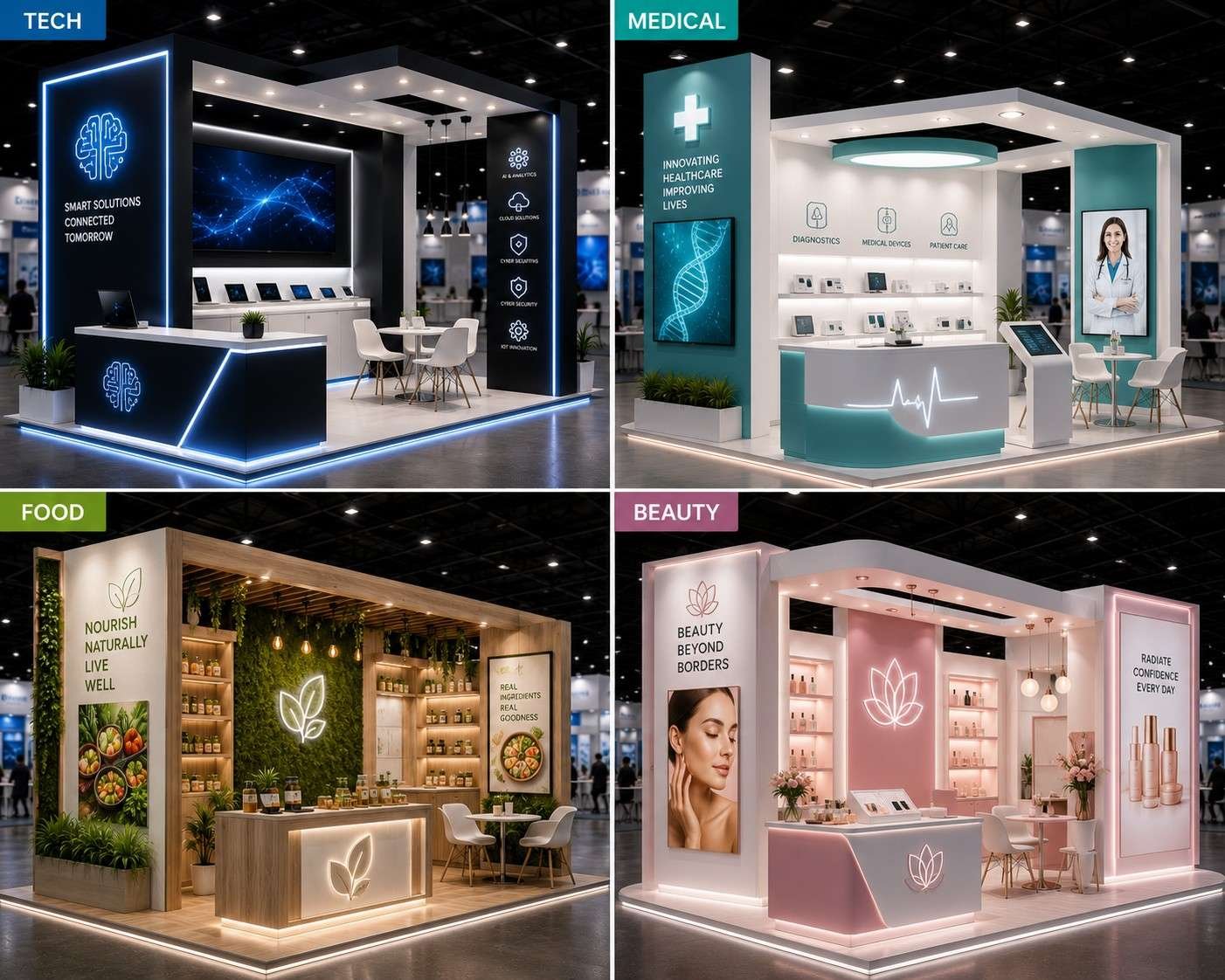
There is no one-size-fits-all approach to designing a small exhibition booth. The most effective booth design depends on your industry, target audience, exhibition objectives, and the type of conversations you want to have. A technology company showcasing software has very different requirements from a food manufacturer offering product samples or a healthcare company demonstrating medical equipment. Understanding industry-specific expectations helps you create a small exhibition stand design that feels relevant to visitors and supports meaningful engagement rather than simply looking attractive.
Technology and SaaS Companies
Technology brands often need to explain complex software or digital solutions. Instead of overwhelming visitors with technical details, focus on showing how your product solves a real business problem. Interactive software demos, short product videos, QR codes for detailed information, and open discussion areas help visitors quickly understand your solution while encouraging meaningful conversations.
Healthcare and Medical Device Companies
Healthcare booths should inspire confidence through a clean and organised presentation. Showcase only your key products, leave enough room for demonstrations, and use digital displays to explain technical information without cluttering the booth. If consultations are important, include a small, comfortable space for private discussions.
Manufacturing and Industrial Businesses
Large machinery isn’t always practical in a compact booth. Instead, use scale models, product cutaways, 3D visualisations, process videos, or touchscreen case studies to demonstrate your capabilities. This approach saves space while giving visitors a clear understanding of your products and manufacturing expertise.
Education and EdTech Providers
For universities, training institutes, and EdTech companies, conversations matter more than displays. Keep the booth open and welcoming, use digital screens for course information or campus tours, and let QR codes provide detailed brochures or admission details. Friendly, approachable staff often make a bigger impact than large amounts of printed material.
Food and Beverage Brands
The product itself should be the star of the booth. Well-organised sampling stations, attractive product displays, and integrated refrigerated storage create a smooth visitor experience without making the booth feel crowded. Keeping the tasting area tidy also helps prevent queues from blocking the entrance.
Beauty and Cosmetics Brands
Beauty brands thrive on hands-on experiences. Well-lit product displays, testing stations, mirrors, and digital tutorials encourage visitors to interact with the products before making purchasing decisions. A clean, premium presentation is usually more effective than displaying every product in the range.
Professional Services and Consulting Firms
Consulting, finance, legal, engineering, and marketing companies don’t need elaborate product displays. Instead, create a space that encourages conversations. Digital case studies, client success stories, and QR codes linking to company profiles or reports help build credibility while keeping the booth simple and professional.
Startup Booths
For startups, clarity is the biggest competitive advantage. Visitors should immediately understand what problem you solve, how you’re different, and why they should stop to talk. A strong brand message, one flagship product, an interactive demonstration, and an easy way to capture leads will almost always outperform an overdesigned booth with too many competing elements.
Common Small Booth Design Mistakes That Reduce Exhibition Success
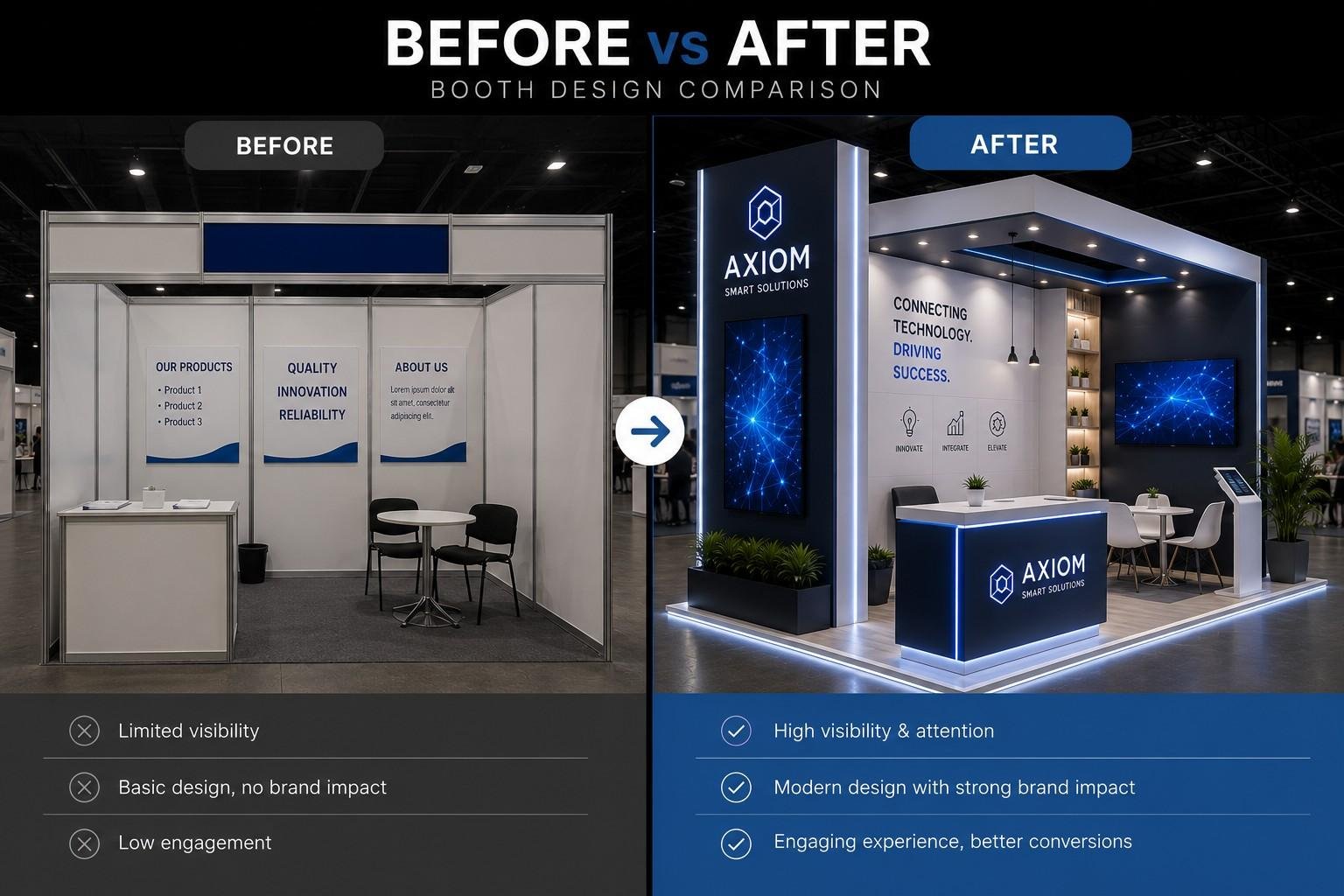
A small exhibition booth doesn’t fail because of its size; it usually underperforms because of poor planning. Many exhibitors invest in attractive displays but overlook the practical details that influence how visitors move, interact, and remember the brand. By recognising these common mistakes early, you can create a booth that feels more inviting, functions efficiently, and delivers better business results.
Trying to Display Everything
One of the biggest mistakes exhibitors make is trying to showcase their entire product range. While it may seem like offering visitors more choice, it often creates visual clutter and makes your message less memorable. Instead of displaying everything, focus on one or two flagship products that best represent your business and introduce additional solutions through conversations or digital content.
Overloading the Booth With Graphics
Your booth has only a few seconds to capture attention. Filling every wall with logos, lengthy text, and promotional messages makes it difficult for visitors to understand what your business offers. A clear headline, a concise value proposition, and strong visuals create a far greater impact than excessive information.
Blocking the Entrance
The entrance sets the tone for the entire visitor experience. Reception counters, furniture, or display units placed at the front of the booth can unintentionally discourage people from stepping inside. An open and accessible entrance makes the booth feel more welcoming and encourages visitors to explore.
Ignoring Visitor Flow
Even an attractive booth can become frustrating if visitors don’t know where to go. A confusing layout often leads to congestion, interrupted conversations, and missed engagement opportunities. A well-planned small exhibition booth layout should naturally guide visitors from the entrance to your key products, conversation areas, and lead capture point.
Choosing the Wrong Furniture
Oversized furniture quickly consumes valuable floor space and makes a compact booth feel crowded. Every piece should serve a practical purpose while supporting movement and interaction. Modular or multi-functional furniture helps maintain an open environment without compromising functionality.
Underestimating the Power of Lighting
Lighting is often treated as an afterthought, yet it has a major influence on how visitors perceive your booth. Poor lighting can make products look less appealing and reduce brand visibility, while well-planned lighting draws attention to key displays and creates a more inviting atmosphere.
Leaving Storage in Plain Sight
Boxes, brochures, packaging materials, and personal belongings can quickly make even a professionally designed booth look untidy. Visible clutter distracts visitors from your products and reduces the overall impact of your presentation. Hidden storage helps maintain a clean and organised space throughout the event.
Crowding the Booth With Staff
Having too many team members inside a compact booth can make the space feel intimidating and discourage visitors from entering. Instead of gathering together, staff should spread out, remain approachable, and focus on welcoming visitors with natural, engaging conversations.
Focusing on Decoration Instead of Function
An impressive-looking booth won’t achieve results if it doesn’t support visitor engagement. Every design element should have a purpose, whether it’s improving visibility, showcasing products, encouraging conversations, or capturing leads. If a feature doesn’t contribute to your exhibition objectives, it may simply be taking up valuable space.
Forgetting to Plan Lead Capture
Many promising conversations end without a follow-up because exhibitors haven’t prepared a simple lead capture process. Whether you use QR codes, digital forms, or a CRM-integrated app, collecting visitor information should be quick, seamless, and part of every meaningful interaction.
Measuring Success by Foot Traffic Alone
A busy booth doesn’t always translate into business success. While visitor numbers are important, the real measure of exhibition performance lies in the quality of leads generated, meetings scheduled, product demonstrations completed, and opportunities created after the event. Focusing on meaningful outcomes provides a much clearer picture of your exhibition ROI.