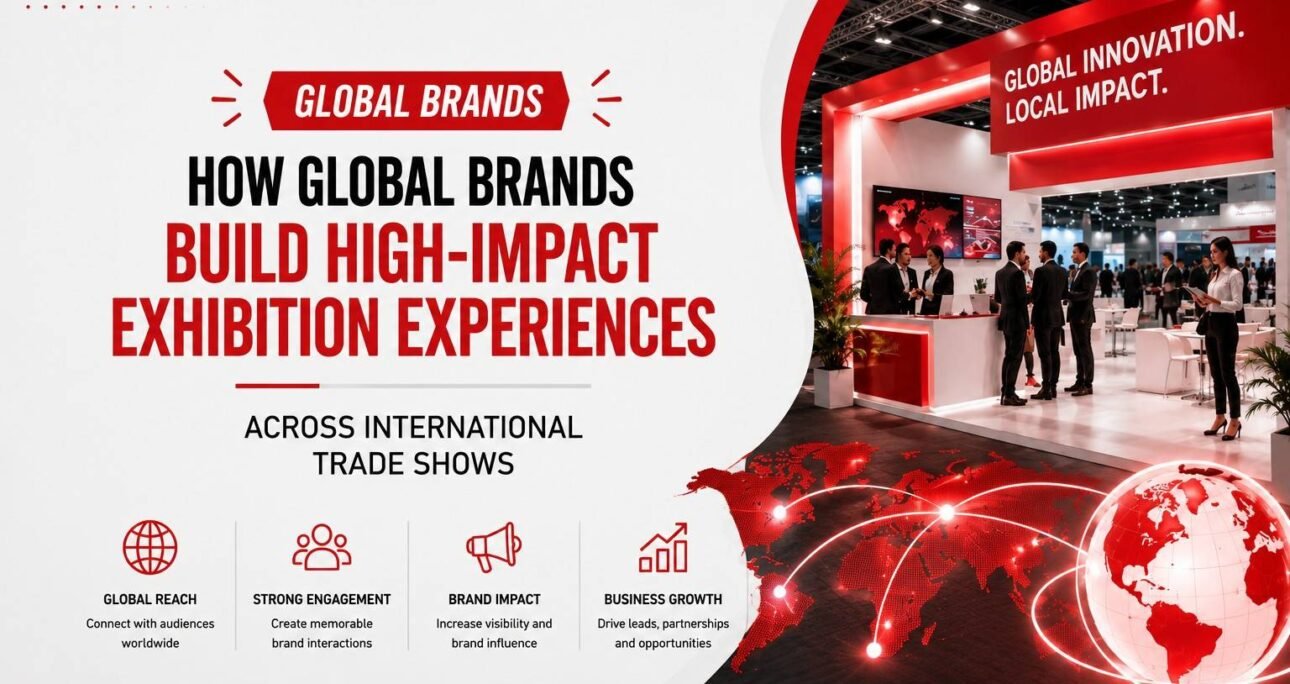
How Global Brands Build High-Impact Exhibition Experiences Across International Trade Shows

How Global Brands Build High-Impact Exhibition Experiences Across International Trade Shows

International trade shows continue to be one of the most effective ways for businesses to connect with decision-makers, showcase innovations, and build valuable commercial relationships. While digital marketing has transformed how companies generate awareness and nurture leads, it cannot fully replace the impact of meeting prospects face to face, demonstrating products in real time, and having meaningful business conversations.


However, simply booking exhibition space and building an attractive booth is no longer enough. Today’s visitors arrive with clear objectives, limited time, and access to extensive online research before they even step onto the exhibition floor. They already know the products they’re interested in, the companies they want to compare, and the questions they need answered. The brands that capture their attention are those that create an experience rather than just a display.


This shift has changed the way successful companies approach exhibitions. Instead of measuring success by booth traffic alone, they focus on attracting the right audience, encouraging genuine conversations, and creating experiences that guide visitors naturally from curiosity to confidence. Every element from exhibition stand design and messaging to staff interactions, technology, and follow-up is planned with a clear business objective in mind.


The most successful exhibitors also understand that trade shows are not isolated marketing events. They form part of a broader sales and marketing strategy, supporting product launches, strengthening customer relationships, entering new markets, and generating qualified business opportunities that continue long after the exhibition closes.


In this guide, we’ll explore how global brands consistently build high-impact exhibition experiences across international trade shows. You’ll learn the strategies behind effective exhibition planning, visitor-focused stand design, meaningful engagement, lead generation, technology integration, and post-show follow-up practical insights that can help businesses improve exhibition performance and maximise return on investment.

What Is a High-Impact Exhibition Experience?
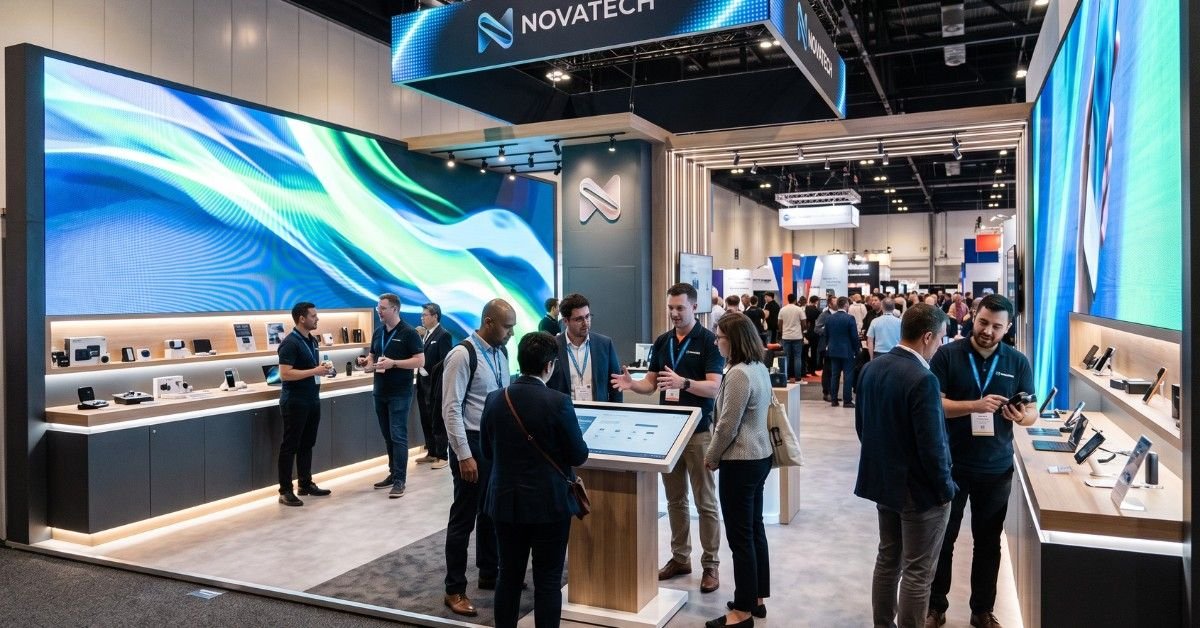
High-impact exhibition booth


A high-impact exhibition experience is much more than an eye-catching booth or a prime location on the show floor. It’s a carefully planned journey that helps visitors understand your brand, explore your solutions, and leave with confidence in your business. Think about the last time you visited a busy trade show. Hundreds of exhibitors were competing for attention, yet only a handful of stands genuinely stood out. It usually wasn’t because they had the biggest structure or the brightest LED screens. Instead, they created an environment that felt inviting, communicated their value clearly, and made it easy for visitors to engage.


That’s what defines a high-impact exhibition experience. Rather than focusing solely on attracting footfall, successful exhibitors design every interaction around the visitor. From the first glance at the booth to the final follow-up email, each touchpoint serves a purpose. The layout encourages exploration, the messaging answers real business challenges, product demonstrations simplify complex solutions, and knowledgeable staff build trust through meaningful conversations.


This visitor-first approach has become increasingly important as B2B buying behaviour continues to evolve. Decision-makers now arrive at exhibitions well informed, often having researched products, competitors, and suppliers before the event. They’re not looking for a sales pitch, they’re looking for expertise, practical solutions, and partners who understand their business needs.

As a result, leading companies no longer ask, “How do we attract more visitors?” Instead, they ask a more important question: “How do we create an exhibition experience that attracts the right visitors and helps them make informed decisions?” That simple shift in perspective changes everything. Booth design becomes more purposeful. Conversations become more relevant. Technology is used to support engagement rather than impress audiences. Most importantly, exhibitions become strategic business platforms that generate measurable results instead of one-time marketing activities.

The Five Elements Behind Every Successful Exhibition Experience

Although every exhibition is different, high-performing exhibitors consistently build their strategy around five connected elements:
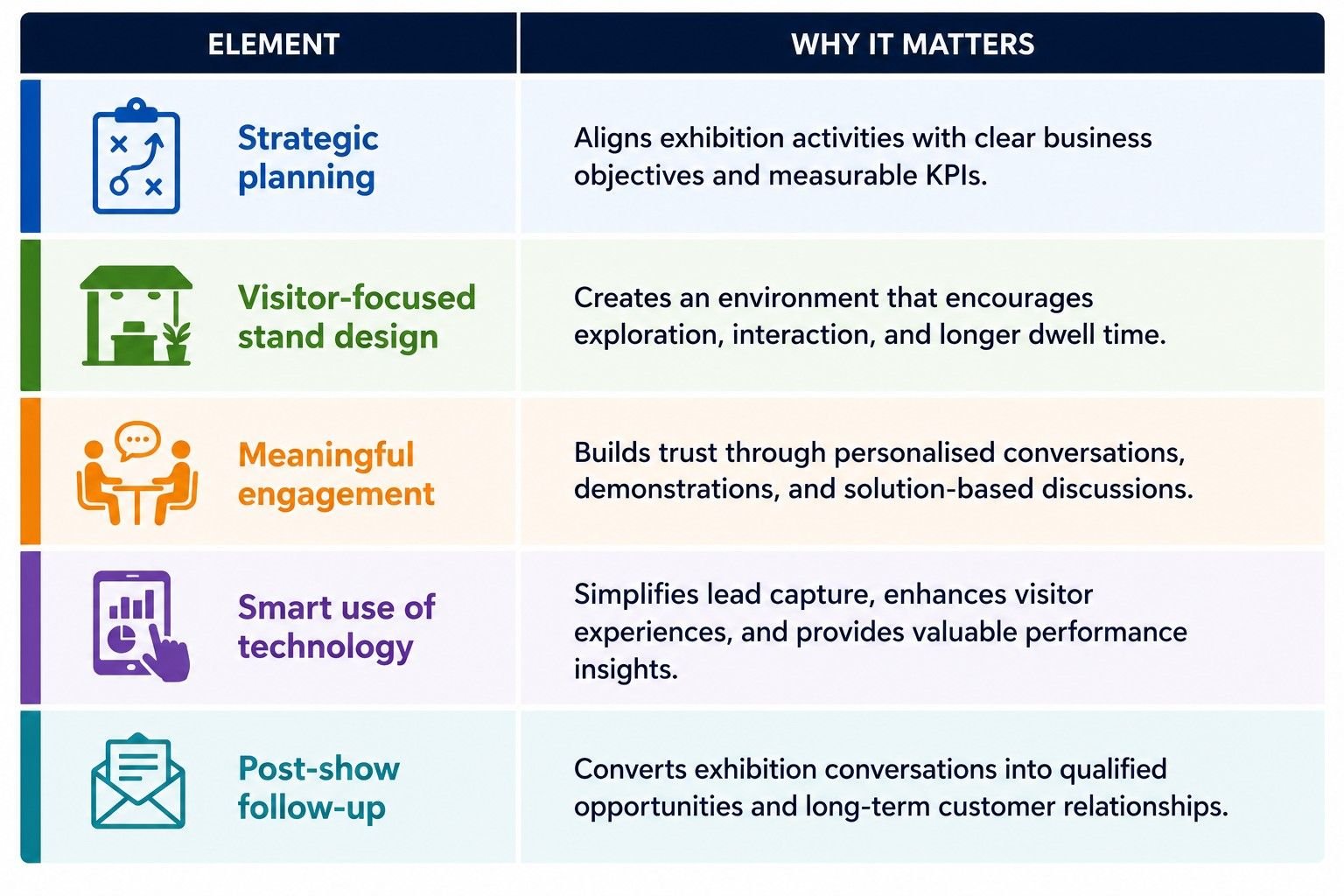
Successful exhibition booth design

None of these elements works effectively in isolation. A visually impressive exhibition stand may attract attention, but without trained staff, relevant messaging, and structured follow-up, that initial interest rarely turns into business results. The brands that consistently outperform their competitors understand this balance. They don’t build booths simply to be noticed; they create experiences that make every visitor interaction meaningful.

Why Global Brands Continue to Invest in International Trade Shows

Despite the rapid growth of digital marketing, international trade shows remain one of the most valuable channels for building business relationships. They bring together manufacturers, suppliers, distributors, investors, and decision-makers in one place, creating opportunities that are difficult to replicate through online campaigns alone. For many businesses, a trade show is far more than a marketing event. It’s an opportunity to launch new products, meet qualified buyers, strengthen existing customer relationships, explore new markets, and gain first-hand insights into industry trends. When planned strategically, a few days on the exhibition floor can generate months of sales opportunities and business conversations.


What makes exhibitions particularly valuable is the quality of interactions they create. Instead of relying on emails, video calls, or downloadable brochures, companies can demonstrate their products live, answer technical questions immediately, and understand customer challenges through direct conversations. This personal engagement often shortens sales cycles and builds confidence much faster than digital communication alone. Rather than viewing exhibitions as a one-time expense, leading organisations treat them as long-term investments that support broader business objectives such as market expansion, brand positioning, and revenue growth.


International Trade Shows Create Meaningful Business Opportunities

Every exhibition attracts visitors with different goals. Some are actively looking for suppliers, while others want to discover new technologies, compare solutions, or evaluate potential business partners. This creates a highly focused environment where conversations are more relevant and commercially valuable.

Businesses that exhibit strategically use international trade shows to:

  • Introduce new products and innovations to a targeted audience.
  • Meet buyers who are actively exploring solutions.
  • Strengthen relationships with existing customers and partners.
  • Connect with distributors and channel partners in new regions.
  • Understand changing customer expectations and industry trends.
  • Generate qualified sales opportunities through face-to-face discussions.

Unlike many other marketing channels, exhibitions allow companies to achieve several business objectives simultaneously. A single conversation can lead to a product demonstration, a partnership discussion, or the beginning of a long-term customer relationship.


Face-to-Face Conversations Still Drive Better Business Relationships

Technology has made communication faster, but trust is still built through personal interaction. At international trade shows, buyers have the opportunity to meet the people behind a brand, ask detailed questions, compare different solutions, and experience products before making important purchasing decisions. These conversations provide context that websites and brochures often cannot. This is particularly important for businesses offering technical products, industrial equipment, manufacturing solutions, or high-value services. Demonstrating how a product works in real time gives visitors greater confidence and helps them understand its practical benefits. Exhibitors also gain valuable insights during these conversations. They learn what challenges customers are facing, what features matter the most, and how market expectations are evolving. Those insights often influence future product development and marketing strategies.


International Exhibitions Support Business Growth Beyond Borders

For companies looking to expand internationally, trade shows provide access to markets that would otherwise take months or even years to develop. Instead of arranging multiple meetings across different countries, businesses can connect with buyers, distributors, consultants, and industry stakeholders from around the world during a single event. This not only saves time but also helps companies understand regional market dynamics before making larger investments. Exhibiting internationally also creates opportunities that extend well beyond lead generation. Businesses can explore new export markets, identify potential distributors and channel partners, evaluate competitor strategies, gain valuable insights into regional customer preferences, and build brand awareness in emerging markets. These insights not only support immediate exhibition objectives but also help shape long-term market expansion and international growth strategies.  For organisations entering unfamiliar markets, these insights are often just as valuable as the leads generated during the exhibition itself.


Why Exhibitions Remain a Strategic Business Investment

The companies that consistently achieve strong exhibition results share one common approach: they participate with clear objectives rather than simply aiming for visibility.

Instead of asking, “How many visitors came to our booth?”, they focus on more meaningful questions:

  • Did we meet the right decision-makers?
  • Did we strengthen relationships with existing customers?
  • Did we generate qualified sales opportunities?
  • Did we increase brand credibility within our industry?
  • Did the exhibition move us closer to our business goals?

This shift in mindset changes how exhibitions are planned, executed, and measured. Success is no longer defined by booth traffic alone but by the quality of conversations, the strength of relationships built, and the commercial opportunities created. When exhibitions become part of a broader business strategy rather than standalone marketing activities, they deliver value long after the event has ended.

The Global Exhibition Experience Framework: How Successful Brands Plan for Exhibition Success
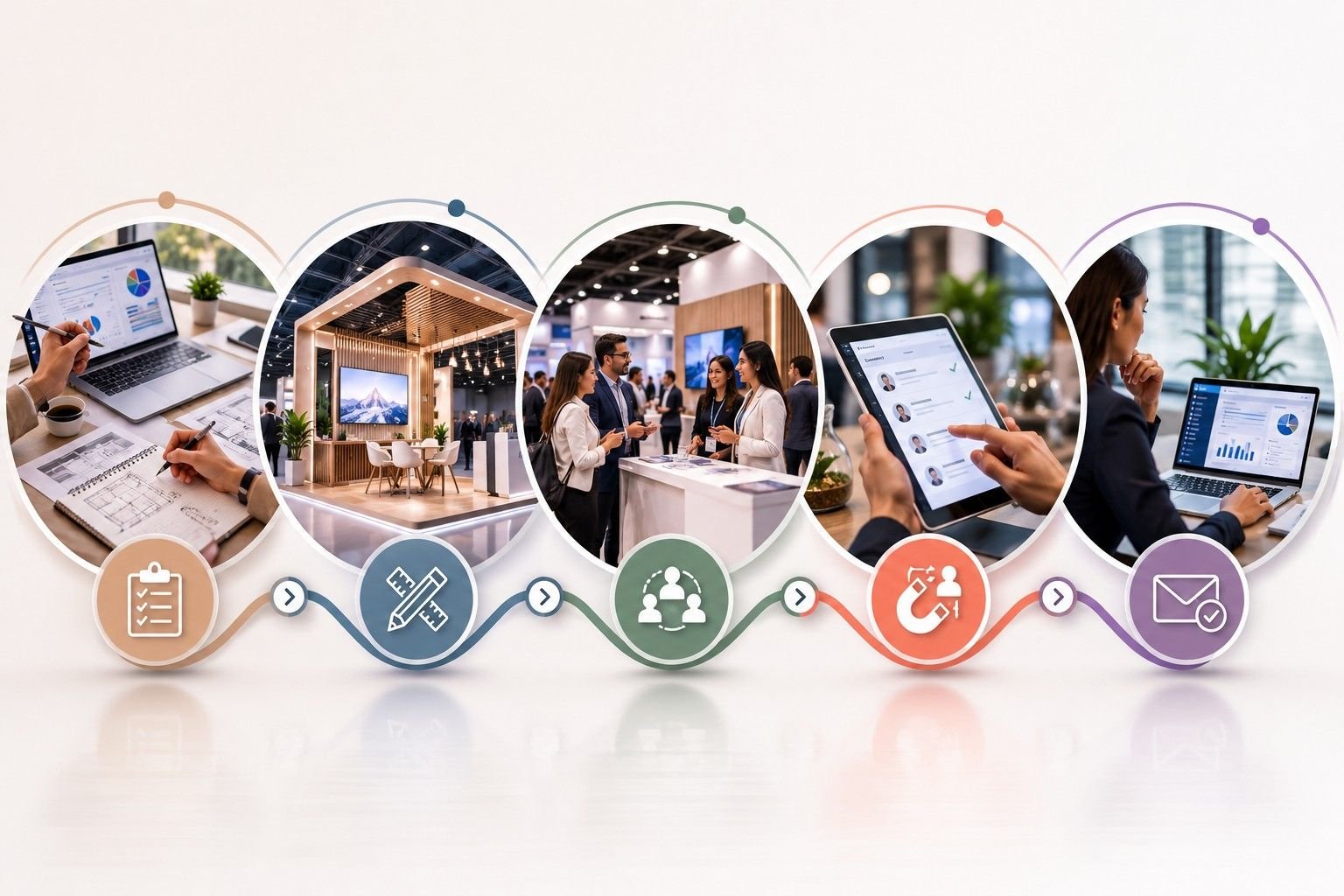
Global exhibition planning framework

Behind every successful exhibition is a strategy that starts long before the booth is built and continues well after the event ends. The companies that consistently generate qualified leads and strong business outcomes don’t rely on last-minute preparation or attractive stand designs alone. Instead, they follow a structured process that keeps every exhibition aligned with their commercial objectives. Rather than treating each trade show as a standalone marketing activity, experienced exhibitors view it as part of a continuous business strategy.


Every event becomes an opportunity to learn more about customers, strengthen market presence, and improve future exhibition performance. A practical way to approach this is by breaking the exhibition journey into seven connected stages. Each stage builds on the previous one, creating a seamless experience for both the exhibitor and the visitor.
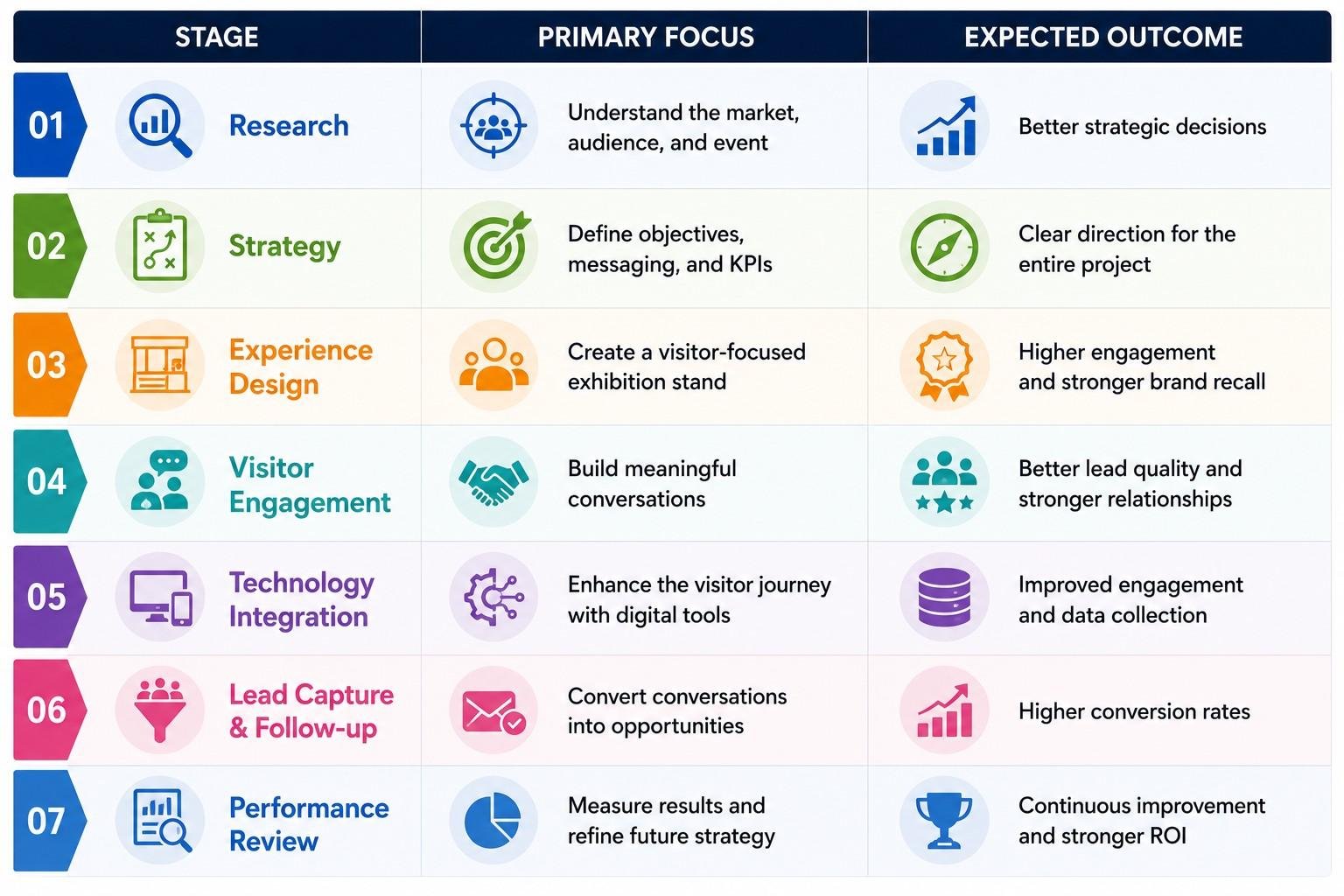
 

Exhibition success strategy


These stages are closely connected. Decisions made during the research phase influence the stand design, while the quality of visitor engagement directly affects the success of post-show follow-up. Looking at exhibitions as a complete journey not just a three-day event helps businesses create more consistent and measurable results.


1. Research: Build Your Strategy on Insights, Not Assumptions

Every successful exhibition starts with research. Before investing in exhibition stand design, marketing campaigns, or promotional materials, it’s important to understand whether an event is the right fit for your business goals. Not every exhibition attracts the same audience, and choosing the wrong event can limit the return on your investment, regardless of how impressive your booth looks.

Start by asking a few practical questions:

  • Who will be attending the exhibition?
  • Are the visitors decision-makers or general attendees?
  • Which competitors are exhibiting?
  • What products or innovations are likely to attract attention?
  • Does the exhibition align with your target market?

Answering these questions provides valuable direction for everything that follows, from booth messaging and staffing to marketing campaigns and lead generation. Businesses that invest time in research often make better decisions because they’re working with real market insights rather than assumptions.


2. Strategy: Define Success Before the Exhibition Begins

Once you’ve selected the right exhibition, the next step is deciding what success actually looks like. Many exhibitors make the mistake of setting broad goals such as “increase brand awareness” or “attract more visitors.” While those objectives are important, they don’t provide enough direction for planning or measuring results.

A stronger exhibition strategy focuses on measurable business outcomes.

For example, your objectives might include:

  • Generating a specific number of qualified leads.
  • Launching a new product to a targeted audience.
  • Scheduling meetings with existing clients.
  • Expanding into a new geographic market.
  • Building relationships with distributors or channel partners.

Clear objectives also help every department work towards the same outcome. Marketing can focus on attracting the right audience, the sales team knows how to qualify leads, and the exhibition stand can be designed to support those goals rather than simply looking impressive.

Example:

Investment Area

Priority

Why It Matters

Exhibition stand design & fabrication

High

Creates the physical brand experience

Pre-show marketing

High

Drives qualified visitor traffic

Booth staff training

High

Improves visitor engagement and lead quality

Interactive experiences & demonstrations

Medium–High

Encourages participation and dwell time

Technology & lead capture

Medium

Simplifies engagement and follow-up

Hospitality & networking

Medium

Supports relationship building

Post-show follow-up

High

Converts conversations into business opportunities


3. Experience Design: Create a Stand That Works for Visitors

An exhibition stand should do much more than showcase your brand. It should make visitors feel comfortable, guide them naturally through the space, and encourage conversations.

This is where many exhibitors get it wrong.

They focus on making the booth visually striking but overlook how visitors will actually move through it. Large graphics and impressive structures might attract attention, but if the layout feels crowded or confusing, people are less likely to stop and engage.

Visitor-focused exhibition stand design considers both aesthetics and functionality.

Some of the most effective exhibition stands share a few common characteristics:

  • Open entrances that are easy to access.
  • Clear messaging that’s visible from a distance.
  • Product displays arranged in a logical sequence.
  • Dedicated spaces for live demonstrations.
  • Comfortable meeting areas for private discussions.

Every design decision should make it easier for visitors to understand your business and interact with your team.


4. Visitor Engagement: Every Conversation Matters

Getting visitors to stop at your booth is only the beginning. The real opportunity lies in the conversations that follow.

Experienced exhibitors understand that meaningful engagement isn’t about delivering a sales pitch. It’s about listening first, understanding visitor needs, and offering relevant solutions.

Simple techniques can make a significant difference:

  • Welcome visitors naturally instead of waiting for them to approach.
  • Ask open-ended questions to understand their challenges.
  • Demonstrate products based on their interests rather than using a standard presentation.
  • Keep conversations focused on solving business problems.
  • Identify genuine buying intent before collecting contact details.

Visitors are far more likely to remember exhibitors who provide useful advice than those who simply distribute brochures or promotional gifts.


5. Technology Should Enhance the Experience, Not Dominate It

Technology has become an important part of modern exhibitions, but it should never become the centre of attention. Interactive displays, AI-powered lead capture, QR codes, digital catalogues, and immersive product demonstrations can all improve the visitor experience when used thoughtfully. However, technology should support conversations rather than replace them. For example, a touchscreen can help visitors explore a product range independently, while a CRM-integrated lead capture system allows sales teams to record valuable insights without interrupting the discussion. The goal isn’t to impress visitors with technology, it’s to make their experience smoother, more informative, and easier to remember.


6. Lead Capture and Follow-up: Where Exhibition ROI Is Won or Lost

Many businesses judge an exhibition by the number of leads collected. In reality, the quality of those leads and the speed of follow-up have a much greater impact on results. Collecting business cards without understanding visitor needs rarely leads to meaningful sales opportunities. Instead, successful exhibitors record useful information during each conversation, such as the visitor’s requirements, level of interest, purchasing timeline, and agreed next steps. Following up within 24 to 48 hours keeps the conversation fresh and demonstrates professionalism. Personalised emails, relevant product information, and scheduled meetings are far more effective than generic follow-up messages sent weeks later.


7. Measure Performance and Improve Every Exhibition

Every exhibition provides valuable lessons for the next one. Rather than focusing solely on visitor numbers, experienced exhibitors evaluate the outcomes that contribute directly to business growth.

These might include:

  • Qualified leads generated.
  • Meetings conducted.
  • Product demonstrations completed.
  • Sales opportunities created.
  • Pipeline value.
  • Exhibition ROI.
  • Feedback from visitors and booth staff.

Reviewing these metrics helps identify what worked well, where improvements are needed, and how future exhibitions can deliver even stronger results. The most successful brands don’t reinvent their exhibition strategy every year. They refine it continuously, using insights from one event to improve performance at the next.

Challenges of Visual-Driven Events

While visual-driven events marketing can deliver strong results, executing them effectively comes with several challenges. Many brands underestimate the level of strategy, coordination, and precision required to create truly impactful immersive event experiences.

Here’s a clear breakdown:

Challenge

Description

Impact on Event Success

High Production Costs

Advanced visuals like LED walls, projection mapping, and interactive installations require significant investment. Costs also include design, content creation, and technical setup.

Can limit scalability and ROI if not planned strategically.

Complex Planning & Coordination

Multiple elements such as creative direction, technology integration, and execution must work together seamlessly.

Misalignment can lead to a disjointed and confusing experience.

Execution Dependency

Success depends heavily on flawless on-ground execution and technical reliability.

Even small technical failures can negatively affect the audience experience.

Over-Prioritizing Visuals

Focusing too much on aesthetics without a clear message or purpose.

Results in short-term attention but weak long-term brand impact.

Weak Storytelling

Lack of a strong narrative connecting visuals to the brand message.

Reduces emotional engagement and overall effectiveness.

Audience Misalignment

Not all audiences respond the same way to brand immersive experiences.

Leads to low engagement despite high investment.

Difficult ROI Measurement

Impact is often indirect (engagement, recall, perception) rather than immediate sales.

Makes it harder to justify investment without clear metrics.

Understanding Visitor Psychology: Why Some Exhibition Stands Attract Crowds While Others Go Unnoticed
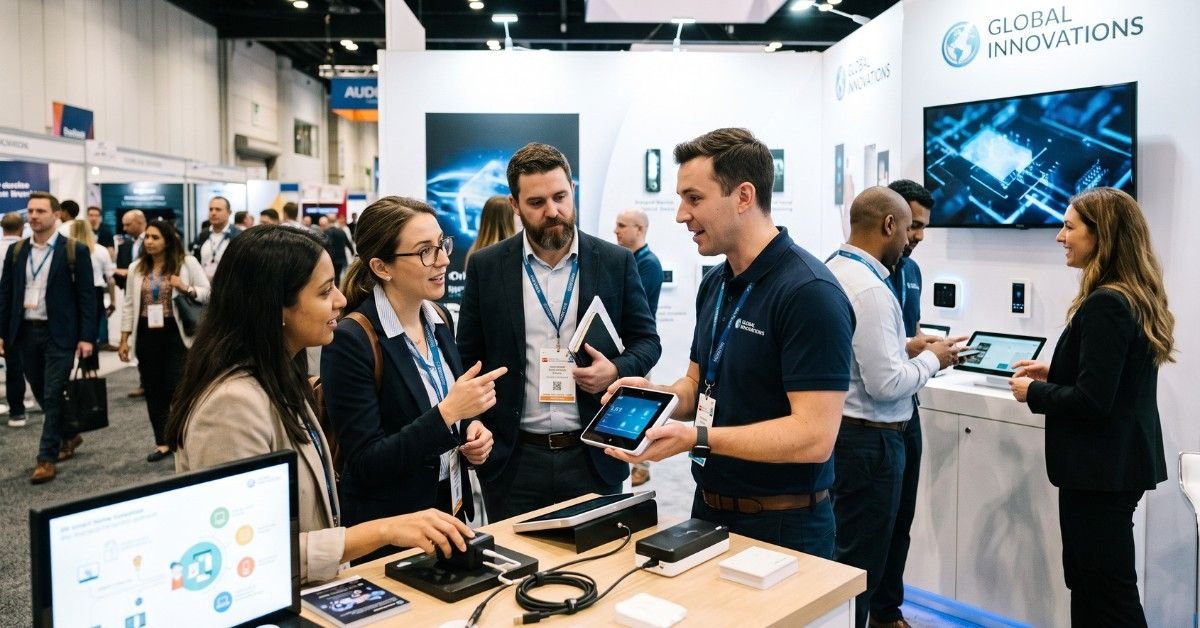
 

Exhibition stand attracting visitors


Walk through any major international trade show and you’ll notice an interesting pattern. Some exhibition stands are constantly filled with visitors, while others, despite having attractive displays, struggle to attract attention. The difference isn’t always the size of the booth or the marketing budget behind it. More often, it comes down to understanding how people behave in a busy exhibition environment.


Visitors make hundreds of decisions throughout the day. They choose which aisles to walk through, which booths deserve their attention, and which exhibitors are worth spending time with. Most of these decisions happen within a matter of seconds. This is why successful exhibition stand design is based on more than creativity. It combines design, communication, and behavioural insights to create an environment that feels inviting, easy to explore, and relevant to the visitor’s needs. Understanding these behaviours allows exhibitors to remove barriers, encourage conversations, and create experiences that naturally lead to stronger engagement.


Visitors Decide Within Seconds

Trade show visitors are surrounded by bright graphics, product demonstrations, digital displays, and hundreds of competing brands. They simply don’t have enough time to evaluate every exhibitor in detail.

Instead, they make quick decisions based on a few immediate questions:

  • What does this company do?
  • Is this relevant to my business?
  • Can I understand their offering quickly?
  • Does the booth look approachable?
  • Is it worth stopping here?

If visitors can’t answer these questions almost instantly, they’ll usually continue walking. That’s why the first impression of an exhibition stand matters so much. Clear messaging, an open layout, and visible product displays help visitors understand your brand before anyone from your team even starts a conversation.


Simplicity Always Outperforms Complexity

A common misconception is that adding more graphics, more products, and more information makes an exhibition stand more impressive. In reality, the opposite is often true. When visitors are presented with too many messages at once, they struggle to decide where to look first. This creates cognitive overload, making it easier to walk away than to process everything on display. The most effective exhibition stands communicate one clear message at a time. Instead of trying to showcase every product or service, they focus on the visitor’s biggest challenge and explain how the business solves it. Simple messaging doesn’t mean saying less, it means making it easier for people to understand your value quickly.


People Follow Natural Movement

Visitor movement inside an exhibition hall is rarely random. People naturally prefer wide walkways, open entrances, and booths that feel accessible. If a stand appears crowded, enclosed, or difficult to enter, many visitors will keep walking even if they’re interested in the products being displayed. Successful exhibitors design their booths with this behaviour in mind. They create layouts that encourage visitors to step inside without feeling committed to a sales conversation. Open corners, visible product zones, and clearly defined meeting spaces make the booth feel welcoming rather than intimidating. A well-planned layout also helps visitors move naturally from one area to another, making product demonstrations and discussions feel effortless.


People Remember Experiences More Than Displays

Visitors rarely remember every brochure they collect or every product they see during an exhibition. What stays with them is the experience they had while interacting with a brand. A helpful conversation with an industry expert, a live product demonstration that solves a real problem, or a hands-on experience with new technology leaves a much stronger impression than a wall of marketing messages. This is why leading exhibitors focus on creating moments rather than simply displaying products. Interactive demonstrations, personalised discussions, and practical examples help visitors connect with a brand on a deeper level, making it far more likely that they’ll remember the company after the exhibition.


Trust Is Built Through Conversations

No amount of impressive graphics or advanced technology can replace genuine human interaction. Visitors want to speak with people who understand their industry, answer technical questions with confidence, and provide honest advice rather than rehearsed sales pitches. The most successful booth teams spend more time listening than talking. Instead of immediately presenting products, they ask thoughtful questions, understand the visitor’s objectives, and tailor the conversation accordingly. This approach creates trust, improves lead quality, and often leads to stronger business relationships long after the exhibition has ended.


Small Details Influence Visitor Decisions

Visitor psychology isn’t shaped by one major design element. It’s influenced by dozens of small details that work together. Consider the difference between two exhibition stands displaying similar products. One has a closed entrance, cluttered graphics, poor lighting, and staff who remain seated behind a counter. The other has an open layout, clear messaging, well-lit product displays, and team members who actively welcome visitors with a friendly conversation. Even if both companies offer comparable solutions, most visitors will naturally feel more comfortable approaching the second booth. These small details may seem insignificant on their own, but together they shape how visitors perceive your brand and whether they choose to engage.


The Best Exhibition Stands Are Designed Around People

It’s easy to focus on the physical aspects of exhibition stand design graphics, lighting, furniture, or technology. While these elements certainly matter, they should always support one objective: creating a better experience for visitors.

The most successful exhibitors don’t ask, “How can we build the biggest booth?”

Instead, they ask:

“How can we make it easier for visitors to understand our business, explore our solutions, and start meaningful conversations?”

That shift in thinking changes every design decision.

When exhibition stands are built around visitor behaviour rather than visual impact alone, they become more welcoming, more memorable, and ultimately more effective at generating business opportunities.

How Global Brands Design Exhibition Stands That Deliver Real Business Results

A successful exhibition stand does much more than attract attention. It creates an environment where visitors feel comfortable exploring your brand, asking questions, and starting meaningful business conversations. While striking visuals can encourage someone to stop, they’re rarely the reason visitors remember a company after the event. What leaves a lasting impression is how easy the booth is to navigate, how clearly the brand communicates its value, and how confidently the team engages with potential customers.


That’s why experienced exhibitors don’t start with colours, graphics, or lighting. They start by asking a much more important question:

“What do we want visitors to experience when they walk into our stand?”

The answer shapes every design decision from the overall layout and messaging to product displays, meeting areas, and interactive experiences.


Design Around Business Objectives, Not Just Appearance

Every exhibition has a purpose. Some businesses are launching a new product, while others are entering a new market, strengthening relationships with existing customers, or generating qualified sales leads. The stand should support those objectives rather than simply showcase the brand.

For example, a company introducing complex industrial equipment may prioritise live demonstration areas where visitors can see the product in action. A software provider, on the other hand, may focus on interactive screens and private meeting spaces to explain customised solutions. When the design reflects the goals of the exhibition, every element has a clear role. Nothing is added simply because it looks impressive.

Before the design process begins, experienced exhibitors usually define:

  • Who they want to attract.
  • What message visitors should remember.
  • Which products or services deserve the most attention.
  • What action they want visitors to take before leaving the booth.

Having these answers early makes the entire design process more focused and effective.


Make It Easy for Visitors to Walk In

One of the biggest mistakes exhibitors make is unintentionally creating barriers between themselves and potential visitors. Tall counters near the entrance, enclosed structures, or cluttered layouts can make a stand feel intimidating, even if the design itself looks impressive. The most inviting exhibition stands feel open from every angle. Visitors should be able to understand what the company offers without stepping inside first. Product displays should be visible, walkways should be clear, and there should be enough space for people to move comfortably, even during busy hours. A welcoming layout encourages visitors to explore naturally instead of feeling like they’ve entered a sales meeting the moment they cross the threshold.


Tell One Clear Story Instead of Ten Different Ones

Many exhibitors try to communicate everything they do within a single booth. The result is often too much information competing for attention. Successful brands take a different approach. They identify one central message and build the entire exhibition experience around it. Instead of listing every product or service, they focus on the problems they solve and the value they create for customers.

That story should remain consistent across every touchpoint, including:

  • Booth graphics.
  • Product demonstrations.
  • Digital presentations.
  • Marketing materials.
  • Conversations with booth staff.

When every element reinforces the same message, visitors are far more likely to remember the brand after the exhibition.


Encourage Visitors to Participate

People remember experiences far better than static displays.

Rather than asking visitors to simply observe products, successful exhibitors invite them to interact.

Depending on the industry, this could include:

  • Live product demonstrations.
  • Hands-on testing.
  • Interactive touchscreens.
  • Digital product configurators.
  • Augmented or virtual reality experiences.
  • Expert presentations or workshops.

The objective isn’t to entertain visitors, it’s to help them understand how a product or solution works in a practical setting. When visitors actively participate, conversations become more engaging and product benefits become much easier to explain.


Your Booth Team Is Part of the Design

Even the most impressive exhibition stand cannot compensate for poor visitor engagement. The people representing your business are just as important as the physical space itself. Experienced exhibitors prepare their teams well before the event begins. Staff understand the objectives of the exhibition, know how to qualify visitors, and adapt conversations based on individual requirements instead of following scripted sales pitches. Simple behaviours make a significant difference. Greeting visitors warmly, asking thoughtful questions, listening carefully, and offering relevant advice all contribute to a positive exhibition experience. In many cases, visitors remember the quality of the conversation long after they’ve forgotten the booth itself.


Small Details Create a Big Impact

Small design details can have a big influence on visitor engagement. Good lighting, comfortable seating, clear signage, and organised demonstration areas make your booth more inviting and easier to navigate. Together, these elements create a smoother visitor experience, encouraging people to stay longer and engage with your brand. Great exhibition stand design focuses on reducing distractions so visitors can focus on your message.

Before, During, and After the Show: Building Exhibition Success at Every Stage

Many exhibitors judge success by what happens during the few days of the exhibition. In reality, the groundwork is laid weeks or even months in advance, and the real commercial value often emerges after the event has ended. Companies that consistently achieve strong exhibition ROI understand that a trade show isn’t a standalone event, it’s part of a much larger customer journey. Every stage, from planning and promotion to lead nurturing and performance review, contributes to the final outcome. Rather than concentrating all their efforts on booth design, successful exhibitors prepare for the entire exhibition lifecycle. This ensures they attract the right audience, create meaningful interactions on the show floor, and continue those conversations long after the exhibition closes.


Before the Show: Success Starts Long Before Opening Day

The busiest exhibition stands rarely become successful by chance. Months before the event begins, experienced exhibitors are already planning how they’ll attract the right visitors and maximise every opportunity. Preparation starts with setting clear objectives. Whether the goal is generating qualified leads, launching a new product, entering a new market, or strengthening relationships with existing customers, having defined outcomes helps every decision stay focused. Once those objectives are clear, attention shifts to understanding the audience. Knowing who will attend, what challenges they face, and what solutions they’re looking for makes it easier to create relevant messaging and meaningful experiences. Pre-show marketing also plays a critical role.

Instead of waiting for visitors to discover their booth, leading exhibitors actively build awareness before the exhibition opens through:

  • Personalised email invitations.
  • Social media campaigns.
  • Product launch announcements.
  • Meeting requests with existing clients and prospects.
  • Event landing pages.
  • Industry partnerships and media coverage.

Scheduling appointments in advance is particularly valuable. Arriving at the exhibition with a calendar already filled with customer meetings creates momentum from the very first day and reduces dependence on walk-in traffic. Preparing the booth team is equally important. Everyone representing the business should understand the exhibition objectives, product messaging, visitor profiles, and lead qualification process. A well-prepared team creates a more consistent experience for every visitor.


During the Show: Focus on Conversations, Not Just Visitors

Once the exhibition begins, the objective changes. The goal is no longer simply attracting people to the booth, it’s creating conversations that lead to genuine business opportunities. This is where many exhibitors make a common mistake. They celebrate large crowds without considering whether those visitors are actually potential customers. Experienced exhibitors take a different approach. They focus on engaging the right people rather than everyone who walks past.

Successful booth teams typically:

  • Welcome visitors with a friendly, natural approach.
  • Ask questions before presenting products.
  • Tailor demonstrations to individual business needs.
  • Listen more than they speak.
  • Identify buying intent before recording lead information.
  • Agree on clear next steps before ending the conversation.

Every interaction should leave visitors feeling that their time was well spent. Live product demonstrations, interactive displays, and practical examples also help create stronger engagement. Rather than explaining features through lengthy presentations, successful exhibitors show how their products solve real business challenges. This approach makes conversations more relevant and far easier for visitors to remember.


After the Show: Where the Real Work Begins

Many businesses invest significant time and money preparing for an exhibition, only to lose momentum once the event ends. In reality, the days immediately following the exhibition often determine whether those conversations turn into revenue. Visitors who expressed genuine interest are likely speaking with several suppliers. Delayed follow-up allows competitors to continue the conversation first. That’s why timely communication is so important. The most successful exhibitors don’t send generic thank-you emails to everyone they met. Instead, they personalise their follow-up based on the discussions they had during the event.

A strong post-show process usually includes:

  • Prioritising leads based on buying intent.
  • Recording detailed notes from each conversation.
  • Sharing relevant brochures, proposals, or case studies.
  • Scheduling follow-up meetings or product demonstrations.
  • Assigning leads to the appropriate sales representatives.
  • Tracking progress within the CRM.

Following up within 24 to 48 hours keeps your business fresh in the visitor’s mind and demonstrates professionalism. More importantly, it shows that the relationship didn’t end when the exhibition closed.

Technology That Enhances Modern Exhibition Experiences

Technology has changed the way businesses exhibit, but not in the way many people expect. A few years ago, adding the latest digital screens or virtual reality experiences was often enough to attract attention. Today, visitors are far more selective. They’re no longer impressed by technology simply because it’s new. They want it to make their experience easier, faster, and more valuable. That’s why the most successful exhibitors don’t use technology as a showpiece. They use it to remove friction from the visitor journey. Whether it’s helping visitors understand a complex product, simplifying lead capture, or making post-show follow-up more efficient, every digital tool should serve a clear business purpose. When technology supports meaningful conversations rather than replacing them, it becomes one of the most valuable assets on the exhibition floor.


Make Information Easy to Explore

One of the biggest challenges at international trade shows is sharing large amounts of information without overwhelming visitors. Instead of handing out bulky brochures or expecting visitors to read lengthy product catalogues, many exhibitors now use interactive digital displays that allow visitors to explore products at their own pace. Touchscreens, digital catalogues, and product configurators make it easier to showcase a wide range of solutions within a limited exhibition space. They also give booth teams more flexibility. Rather than following a fixed presentation, they can quickly adapt the conversation based on the visitor’s interests, making every interaction more relevant and engaging.


Technology Should Support Better Conversations

The purpose of technology isn’t to replace face-to-face discussions, it’s to make them more productive. For example, QR codes allow visitors to access product information instantly instead of carrying printed brochures throughout the exhibition. AI-powered lead capture tools help sales teams record visitor details, buying interests, and discussion notes without interrupting the flow of the conversation. CRM integration ensures that this information is immediately organised and ready for post-show follow-up, reducing the risk of losing valuable leads once the event is over. By handling routine tasks in the background, technology gives booth teams more time to focus on what matters most: building relationships.


Bring Complex Products to Life

Some products are difficult to explain through photographs or printed graphics alone. Industrial machinery, manufacturing processes, engineering solutions, and large-scale equipment often require visitors to see how they work before they fully understand their value. This is where immersive technologies can make a real difference. Augmented Reality (AR), Virtual Reality (VR), and interactive simulations allow exhibitors to demonstrate products that may be too large, too complex, or too expensive to bring to the exhibition hall. Rather than simply describing a solution, businesses can show visitors exactly how it works in a realistic environment. When used thoughtfully, these experiences improve understanding without distracting from the conversation itself.


Use Data to Improve Every Exhibition

Technology doesn’t just enhance the visitor experience it also provides valuable insights that help exhibitors make better decisions. Modern exhibition tools provide valuable insights that help businesses measure performance and improve future exhibitions. They can track visitor engagement, identify which product demonstrations generate the most interest, measure how long attendees spend in different areas of the booth, evaluate lead quality, monitor meeting bookings, and track the progress of post-show follow-up. By analysing this data, exhibitors can better understand visitor behaviour, refine their exhibition strategy, and make more informed decisions for future events. These insights help businesses understand what attracted visitors, which products generated the most interest, and where improvements can be made for future exhibitions. Instead of relying on assumptions, exhibitors can use real data to refine both their marketing strategy and exhibition stand design.


Choose Technology With Purpose

With so many digital solutions available, it’s easy to feel pressure to include every innovation. In reality, more technology doesn’t automatically create a better exhibition experience. Before investing in any digital tool, it’s worth asking a few simple questions:

  • Will this make it easier for visitors to understand our products?
  • Does it improve the quality of conversations?
  • Is it intuitive for both visitors and booth staff?
  • Will it help us capture better data or improve follow-up?
  • Does it support our exhibition objectives?

If the answer to these questions is no, the technology is unlikely to deliver meaningful value. The best exhibition experiences are often built around simple, well-executed solutions rather than expensive digital features that visitors use only once.


Technology Supports People It Doesn’t Replace Them

No matter how advanced exhibition technology becomes, people remain at the centre of every successful trade show. Visitors still value genuine conversations, expert advice, and the opportunity to discuss their business challenges with knowledgeable professionals. Technology should make those interactions smoother not eliminate them. When digital tools simplify information sharing, automate administrative tasks, and provide useful insights, booth teams can spend more time doing what they do best: building trust and creating meaningful business relationships. Ultimately, the strongest exhibition experiences combine innovation with human connection, ensuring visitors leave not only impressed by the technology but also confident in the people behind the brand.

Future Trends Shaping High-Impact Exhibition Experiences

The exhibition industry has changed significantly over the past decade, and it’s continuing to evolve. Visitor expectations are higher, technology is advancing rapidly, and businesses are under increasing pressure to demonstrate measurable returns on every marketing investment. As a result, exhibitions are no longer just about showcasing products. They’re becoming platforms for education, collaboration, personalised experiences, and long-term relationship building.


While the fundamentals of successfully exhibiting clear objectives, meaningful conversations, and thoughtful exhibition stand design remain unchanged, the way businesses deliver those experiences is evolving. Companies that adapt to these changes are better positioned to attract the right audience, strengthen brand perception, and maximise exhibition ROI.

Here are some of the key trends shaping the future of international trade shows.


AI Will Make Exhibitions Smarter, Not Less Personal

Artificial Intelligence is becoming an increasingly valuable tool for exhibitors, but its greatest strength lies in supporting human interaction rather than replacing it. Businesses are already using AI to analyse visitor data, personalise marketing campaigns, score leads, and recommend relevant follow-up actions after an exhibition. During an event, AI can help booth teams identify high-value prospects, organise lead information, and automate repetitive administrative tasks. This allows sales representatives to spend less time managing data and more time engaging with visitors. The companies that benefit most from AI will be those that use it to improve efficiency while keeping genuine conversations at the centre of the exhibition experience.


Sustainability Is Becoming a Business Expectation

Sustainability is no longer viewed as an optional initiative. Many organisers, exhibitors, and visitors now expect businesses to demonstrate environmentally responsible practices throughout their exhibition activities. This shift is influencing how exhibition stands are designed and built. Reusable modular systems, recyclable materials, energy-efficient lighting, digital brochures, and reusable graphics are becoming increasingly common because they reduce waste without compromising visual impact. Beyond the environmental benefits, sustainable exhibition stands often provide greater flexibility and lower long-term costs, making them a practical investment for businesses that exhibit regularly across multiple events.


Visitors Expect More Interactive Experiences

Today’s attendees want to explore, compare, and experience products rather than simply observe them. Static displays are gradually giving way to interactive demonstrations, live presentations, hands-on testing, and immersive digital experiences that help visitors understand products more quickly. This trend is particularly important for businesses offering technical, industrial, or complex solutions. Demonstrating how a product performs in a real-world environment is often far more effective than explaining its features through printed marketing materials. The objective isn’t to entertain visitors; it’s to create experiences that make decision-making easier.


Data Will Drive Better Exhibition Decisions

For many years, exhibition success was measured using simple metrics such as booth traffic or the number of brochures distributed. Today, businesses are taking a much broader view. Modern exhibitors use data to understand visitor behaviour, evaluate lead quality, measure engagement, and assess how exhibitions contribute to the overall sales pipeline.

These insights help answer questions such as:

  • Which marketing activities attracted the right visitors?
  • Which product demonstrations generated the most interest?
  • Where did visitors spend the most time?
  • Which leads progressed into sales opportunities?

By analysing these outcomes, businesses can refine future exhibition strategies and make more informed investment decisions.


The Visitor Journey Will Extend Beyond the Exhibition Hall

The relationship between exhibitors and visitors no longer begins when the exhibition opens or ends when it closes. Increasingly, businesses are creating connected experiences that start weeks before the event and continue long afterwards. Visitors may discover a brand through social media, book meetings online before arriving, access digital product information during the exhibition, and continue conversations through webinars, virtual demonstrations, or personalised follow-up campaigns after returning to the office. This ongoing engagement helps businesses stay connected with prospects throughout the buying journey instead of relying solely on a few days at the exhibition. Companies that integrate exhibitions into their wider sales and marketing strategy are more likely to build stronger relationships and generate long-term business opportunities.


The Future Still Belongs to Human Connections

While technology will continue to reshape exhibitions, one thing is unlikely to change. Business is built on trust. People still want to meet the experts behind a product, ask detailed questions, compare solutions in person, and build relationships before making important purchasing decisions. Technology can make these interactions more efficient, but it cannot replace the confidence that comes from a genuine face-to-face conversation. That’s why international trade shows continue to remain one of the most valuable platforms for B2B marketing. They combine the reach of modern technology with the authenticity of personal interaction, something few other marketing channels can achieve as effectively. Businesses that embrace innovation while keeping people at the centre of the experience will be best positioned to succeed in the years ahead.

Conclusion

Every successful exhibition tells a story long before the first visitor walks onto the show floor. It begins with clear objectives, thoughtful planning, and a genuine understanding of what visitors expect from the experience. While an eye-catching exhibition stand may attract attention, it’s the combination of strategic design, meaningful conversations, skilled booth teams, and timely follow-up that turns interest into lasting business relationships. The companies that consistently achieve strong exhibition ROI understand that success isn’t measured by footfall alone; it’s measured by the quality of engagement, the strength of the connections they build, and the opportunities they create after the event.


As international trade shows continue to evolve, businesses that embrace visitor-focused strategies, integrate technology with purpose, and continuously refine their exhibition approach will be better equipped to stand out in increasingly competitive exhibition environments. Whether you’re preparing for your first international trade show or looking to improve the performance of your next exhibition, the principle remains the same: the most effective exhibition stands aren’t designed simply to be seen; they’re designed to create meaningful experiences that inspire conversations, build trust, and support long-term business growth.


FAQs

1. What makes an exhibition experience successful?

A successful exhibition experience goes beyond having an attractive booth. It starts with clear business objectives, thoughtful exhibition stand design, well-trained booth staff, and meaningful interactions with visitors. When these elements work together, businesses attract the right audience, generate qualified leads, strengthen brand credibility, and create opportunities that continue long after the event ends.

Your exhibition stand is often the first impression visitors have of your brand. A well-designed stand doesn’t just capture attention; it guides visitors through the space, communicates your value clearly, and encourages conversations. Good exhibition stand design makes it easier for people to understand what you offer and feel comfortable engaging with your team.

Ideally, planning should begin several months before the event. This gives businesses enough time to define objectives, design the exhibition stand, launch pre-show marketing campaigns, schedule meetings with prospects, and prepare booth staff. Early planning also reduces last-minute challenges and improves the overall exhibition experience.

Attracting the right visitors starts long before the exhibition opens. Promoting your participation through email campaigns, social media, and personalised invitations helps build awareness in advance. During the event, clear messaging, an open booth layout, engaging product demonstrations, and knowledgeable staff encourage qualified prospects to stop, explore, and start meaningful conversations.

Rather than collecting as many business cards as possible, focus on understanding each visitor’s needs. Ask relevant questions, identify their challenges, and determine whether they’re a good fit for your products or services. Recording useful conversation notes and agreeing on clear next steps makes post-show follow-up far more effective.

Technology enhances the visitor experience by making information easier to access and simplifying lead management. Interactive displays, AI-powered lead capture, QR codes, CRM integration, and immersive technologies such as AR and VR help exhibitors demonstrate products more effectively while allowing booth teams to focus on building relationships rather than administrative tasks.

Success should be measured against your business objectives rather than booth traffic alone. Useful performance indicators include qualified leads generated, meetings conducted, visitor engagement, product demonstration participation, follow-up conversions, contribution to the sales pipeline, and overall exhibition ROI. These insights provide a much clearer picture of exhibition performance.

Many exhibitors focus heavily on booth design while overlooking the rest of the exhibition journey. Common mistakes include setting unclear objectives, neglecting pre-show marketing, failing to qualify leads, relying on generic sales pitches, and delaying post-show follow-up. Avoiding these issues can significantly improve exhibition results.

The first 24 to 48 hours after an exhibition are often the most important. Prompt, personalised follow-up helps keep conversations fresh, demonstrates professionalism, and increases the chances of converting interested visitors into customers. Waiting too long can result in lost opportunities, especially when prospects are comparing multiple suppliers.

Maximising exhibition ROI requires a balanced approach before, during, and after the event. Careful planning, visitor-focused exhibition stand design, engaging product demonstrations, effective lead qualification, and structured follow-up all contribute to stronger business outcomes. Regularly reviewing exhibition performance also helps refine future strategies and improve results over time.

International trade shows are becoming more experience-driven. Businesses are investing in sustainable exhibition stands, interactive technologies, AI-powered tools, and data-driven decision-making to create more personalised visitor experiences. Despite these changes, face-to-face conversations remain the foundation of successful exhibitions because they build trust in ways that digital channels alone cannot.

The most successful exhibitors treat trade shows as part of a long-term business strategy rather than a one-off marketing activity. They prepare thoroughly, design visitor-focused exhibition stands, train their teams, measure meaningful KPIs, and continuously improve based on insights from previous events. This consistent approach helps them build stronger relationships, generate better-quality leads, and achieve higher exhibition ROI.