What is a Smart Exhibition Stand?
A smart exhibition stand is a technology-driven exhibition booth designed to attract visitors, engage them interactively, and convert them into qualified leads using digital tools like AR/VR, touchscreens, AI chatbots, and data-driven systems. Unlike traditional setups, it focuses on creating personalized and measurable visitor experiences. In today’s competitive trade show environment, a smart stand goes beyond just visual appeal. It combines interactive exhibition stand design with real-time engagement tools to capture attention, hold visitor interest, and guide them toward meaningful actions whether that’s signing up, requesting a demo, or making a business inquiry.
What makes it “smart” is not just the use of technology, but how strategically that technology is used. For example:
- A touchscreen kiosk doesn’t just display information it collects visitor data
- An AR experience doesn’t just entertain it showcases products in an immersive way
- An AI chatbot doesn’t just answer questions it qualifies leads instantly
This shift from static displays to smart exhibition stand technology is what enables brands to move from passive visibility to active engagement and conversion. In simple terms, a smart exhibition stand is built with one goal: Turning booth visitors into real business opportunities through interactive and data-driven experiences.
Why Traditional Exhibition Stands Fail to Attract Visitors
Traditional exhibition stands often fail to create a strong impact because they depend mainly on printed materials, static visuals, and one-way communication. In a competitive trade show environment, where hundreds of brands are trying to capture attention at the same time, simple visual appeal is no longer enough to attract or retain visitors. The main challenge is the lack of engagement. Most traditional booths rely on banners, brochures, and sales representatives waiting for visitors to approach. However, modern exhibition audiences expect interaction, personalization, and instant value, which static booth setups are unable to deliver effectively.
Limited Visitor Engagement
Traditional booths do not offer interactive elements, which makes it difficult to hold visitor attention. People usually walk past, glance briefly, and move on because there is no experience that encourages them to stop, explore, or participate. Without engagement-driven elements, the booth fails to create meaningful visitor interest.
No Data Capture or Lead Tracking
Most traditional exhibition setups lack proper systems for technology for exhibition lead generation, resulting in missed opportunities. Even when visitors show interest, their details are often collected manually or not captured at all. This leads to incomplete data and weak follow-up processes after the event.
Difficulty Standing Out in Crowded Exhibitions
In large expos where multiple brands showcase similar banners, visuals, and messaging, differentiation becomes extremely difficult. Without interactive or digital elements, traditional booths struggle to create uniqueness, leading to low footfall and poor brand recall among visitors.
Lack of Personalization
Modern visitors expect experiences that feel relevant to their needs. Traditional stands usually deliver the same generic message to every visitor, regardless of their interests. This lack of personalization reduces engagement and makes the booth less effective in influencing decision-making.
Poor ROI Measurement
One of the biggest limitations of traditional exhibition stands is the inability to measure performance accurately. Without digital tools or tracking systems, it becomes difficult to understand key metrics such as engagement time, visitor count, and conversion rates. This makes it challenging to evaluate success or improve future exhibition strategies.
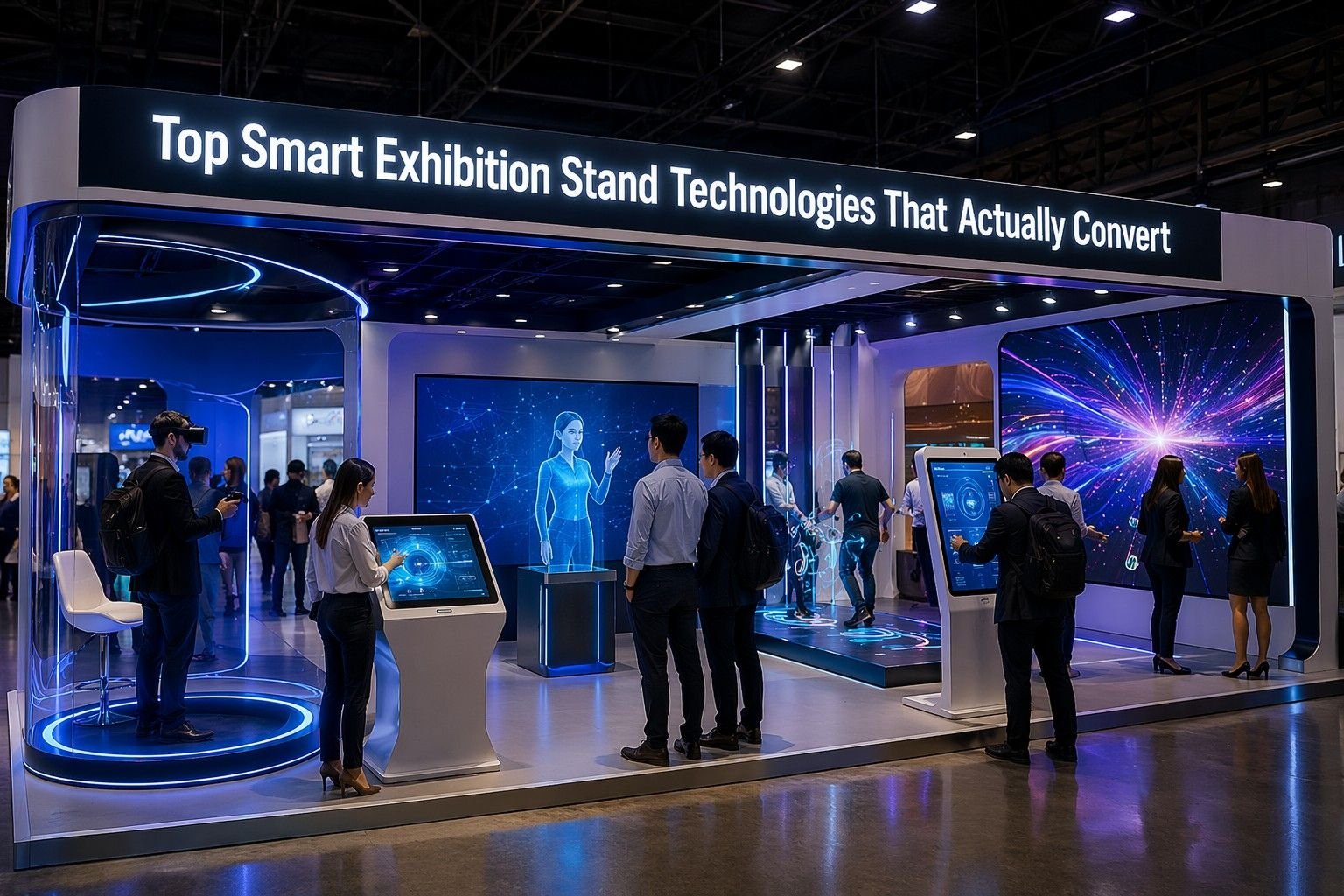
Top Smart Exhibition Stand Technologies That Actually Convert
Smart exhibition technologies are no longer just visual upgrades; they are strategic tools that directly influence visitor behaviour, improve engagement, and increase lead conversion rates. The most effective smart exhibition stand technology solutions are those that not only attract attention but also guide visitors through a structured journey from interest to action. Below are the most impactful technologies used in modern interactive exhibition stand design, explained in detail with their role in both attraction and conversion.
AR & VR Experiences
Augmented Reality (AR) and Virtual Reality (VR) are among the most powerful tools used in modern exhibition stands because they create fully immersive and interactive environments. Instead of relying on brochures or static displays, AR and VR allow visitors to experience products in a simulated real-world context. For example, AR can project a 3D model of a product that visitors can rotate, explore, and interact with, while VR can transport users into a completely virtual environment such as a factory walkthrough, product simulation, or service demonstration.
- How it attracts visitors: AR and VR naturally draw attention because they create curiosity and a strong visual impact. In crowded exhibition halls, immersive experiences stand out immediately and encourage visitors to stop and explore rather than walk past.
- How it converts visitors: These technologies simplify complex product explanations and help visitors understand value faster. By creating an emotional and experiential marketing connection with the product, AR and VR significantly improve decision-making intent and increase the likelihood of conversion.
AI Chatbots for Real-Time Interaction
AI chatbots are increasingly being used in exhibition stands to provide instant communication and engagement without human dependency. These systems are often integrated into kiosks, screens, or mobile interfaces, allowing visitors to interact with the brand at any time during their exhibition booth visit. AI chatbots can answer frequently asked questions, guide visitors through product information, and even collect and qualify leads based on predefined criteria.
- How it attracts visitors: Visitors are often curious to interact with AI-powered systems, especially when they provide instant and accurate responses. This reduces waiting time and improves the overall booth experience.
- How it converts visitors: AI chatbots automatically capture visitor data, assess intent through conversation flow, and segment leads based on interest level. High-quality leads can then be directly routed to sales teams for immediate follow-up, improving conversion efficiency.
Touchscreen Displays & Interactive Kiosks
Touchscreen displays and interactive kiosks are a core component of interactive exhibition stand design because they allow visitors to independently explore content at their own pace. These systems provide structured access to videos, product information, case studies, and service details. Unlike static banners, touchscreens create a self-driven experience where visitors can choose what they want to explore.
- How it attracts visitors: Interactive screens naturally draw attention in exhibition environments because they invite participation. Movement-based and touch-based interaction creates curiosity and encourages engagement.
- How it converts visitors: These systems are often integrated with lead capture forms, product selectors, and demo booking options. This allows businesses to collect visitor information seamlessly, track behavior, and convert interest into actionable leads using technology for exhibition lead generation.
RFID & Visitor Tracking Technology
RFID (Radio Frequency Identification) and visitor tracking systems are advanced tools used to monitor and analyze visitor movement within an exhibition stand. Each visitor badge or tag can be scanned to record interactions, dwell time, and engagement patterns. This transforms the exhibition booth into a fully data-driven environment.
- How it attracts visitors: RFID enhances the visitor experience by enabling smoother, personalized interactions such as instant badge scanning and automated access to booth features. It reduces friction and improves flow within the stand.
- How it converts visitors: It helps identify which areas of the booth generate the most interest and which visitors show high engagement levels. This data allows sales teams to prioritize follow-ups and improve lead quality, ultimately increasing conversion rates.
Gamification & Interactive Experiences
Gamification involves integrating game-like elements such as challenges, quizzes, leaderboards, or reward systems into the exhibition experience. This approach makes the booth more engaging, interactive, and memorable. It is one of the most effective exhibition booth engagement ideas because it transforms passive visitors into active participants.
- How it attracts visitors:Gamified experiences naturally draw attention because they create excitement and competition. People are more likely to approach booths where others are actively participating, creating a strong crowd-pull effect.
- How it converts visitors: During participation, visitor data is collected seamlessly, often through registration or reward-based systems. This makes lead capture feel natural and increases participation rates, leading to higher-quality leads.
Digital Signage & LED Display Systems
Digital signage and LED display systems replace traditional static banners with dynamic, high-impact visuals. These systems can display videos, animations, product highlights, and real-time updates. They are essential for creating strong visual visibility in crowded exhibition environments.
- How it attracts visitors: Bright, moving visuals immediately capture attention from a distance. The ability to communicate key messages within seconds makes LED displays highly effective in driving booth visibility.
- How it converts visitors: Digital signage can be used to highlight promotions, call-to-actions, and product demos, guiding visitors toward specific actions such as scanning a requesting information, QR code, or entering the booth for a live demo.
How to Attract Visitors to Exhibition Stand Using Technology
Attracting visitors to an exhibition stand has evolved significantly over the years. Today, success is no longer determined only by visual appeal or booth size. Instead, it depends on how effectively you use smart exhibition stand technology to create curiosity, interaction, and value-driven experiences that naturally draw people in. The most successful booths are not passive displays; they are designed as engagement systems that guide visitors through a structured journey from attraction to interaction.
1. Create a Strong First 3 Seconds Impact
The first few seconds determine whether a visitor stops at your booth or walks past it. In a crowded exhibition hall, attention is limited, so your booth must immediately communicate value and curiosity. High-impact technologies such as LED video walls, motion-based digital content, and dynamic signage play a critical role in achieving this. These tools allow brands to present visually rich storytelling that communicates key messages within moments. Instead of relying on static banners or printed visuals, movement-based content helps create instant attention and emotional interest, making your booth stand out in a competitive environment.
2. Use Interactive Entry Points to Encourage Engagement
Once attention is captured, the next step is to convert that attention into interaction. Interactive entry points encourage visitors to physically or digitally engage with your booth rather than just observing it. This can include touchscreen product explorers, AR-based demonstrations, or live interactive product displays. These elements are a core part of interactive exhibition stand design, as they shift visitors from passive viewers to active participants. When visitors are given control over what they explore, they are more likely to stay longer and develop a deeper interest in your offerings.
3. Offer Instant Value to Visitors
Modern exhibition visitors expect immediate value. If they do not find relevance quickly, they move on to the next exhibition booth. Therefore, it is essential to provide instant, meaningful experiences through technology. This can include real-time product demonstrations, AI-based recommendations, interactive quizzes, or guided digital walkthroughs. The goal is to ensure that visitors feel their time is valuable from the very first interaction. When a booth delivers quick insights or personalized information, it significantly increases engagement and improves the chances of conversion.
4. Leverage Gamification for Crowd Attraction
Gamification is one of the most effective ways to increase booth engagement and footfall. By integrating game-like elements into the booth experience, you create excitement and encourage participation. This can include digital spin wheels, quizzes, interactive challenges, or leaderboard-based competitions. These elements are widely used as part of modern exhibition booth engagement ideas because they naturally attract attention and encourage group participation. Gamification also creates a crowd effect, where visible engagement encourages more visitors to join, further increasing booth traffic.
5. Use Smart Lead Capture Systems
Attracting visitors is only the first step; converting them into qualified leads is equally important. Smart lead capture systems ensure that every interaction is recorded and utilized effectively. Technologies such as QR code scanners, AI chatbots, and digital registration kiosks help collect visitor data seamlessly without interrupting the experience. These systems form the backbone of technology for exhibition lead generation. By automating lead capture, businesses can reduce manual effort, improve data accuracy, and ensure faster follow-ups after the event.
6. Personalize the Visitor Experience
Personalization plays a crucial role in modern exhibition engagement. Visitors are more likely to interact with booths that feel relevant to their specific needs or interests. Data-driven tools such as AI systems and interactive content modules can be used to show tailored recommendations, customized product suggestions, or guided content pathways based on visitor behavior. When experiences are personalized, visitors feel more connected to the brand, which significantly increases both engagement and conversion potential.
7. Create Social Media-Friendly Experiences
In today’s digital environment, exhibitions extend beyond physical spaces. Creating experiences that encourage visitors to share their interactions on social media helps amplify booth visibility. This can include interactive selfie zones, AR-based photo booths, or visually engaging branded installations. These experiences encourage visitors to share content online, increasing brand exposure beyond the exhibition hall. As a result, your booth not only attracts on-site traffic but also gains visibility among a wider digital audience.
Best Technology for Exhibition Lead Generation
The success of any exhibition is not defined by footfall alone, but by how effectively you convert booth visitors into qualified, actionable leads. This is where advanced technology for exhibition lead generation becomes critical. Modern tools ensure that every interaction is captured, analyzed, and used for meaningful follow-up, eliminating the risk of losing potential business opportunities. A smart lead generation system transforms your exhibition stand into a structured data collection and conversion engine rather than just a branding space.
1. Digital Lead Capture Forms & Interactive Kiosks
Digital lead capture systems have replaced traditional paper-based forms, offering a faster, more reliable, and more scalable way to collect visitor data. These systems are usually integrated into tablets, touchscreen kiosks, or self-service stations placed strategically within the booth. Visitors can enter their details, select areas of interest, and even request product demos or meetings.
Why it works:
Digital systems significantly reduce manual errors and ensure data accuracy. They also speed up the process of capturing information, which is crucial in high-traffic exhibition environments. Additionally, they integrate directly with CRM platforms, enabling instant data transfer and organized lead management. When combined with interactive exhibition stand design, these kiosks become more than just data entry points; they become engagement hubs that encourage meaningful interaction.
2. QR Code-Based Lead Capture Systems
QR code technology is one of the most efficient and frictionless methods of capturing leads at exhibitions. By scanning a QR code, visitors can instantly access landing pages, product catalogs, registration forms, or demo booking pages. This approach eliminates the need for manual data entry and reduces waiting time, making the experience smooth and convenient for visitors.
Why it works: QR-based systems perform exceptionally well in crowded environments because they allow visitors to engage instantly using their smartphones. There is no dependency on booth staff, which increases scalability and efficiency. It is particularly effective for technology for exhibition lead generation because it enables continuous data capture even during peak traffic hours.
3. AI Chatbots for Intelligent Lead Qualification
AI-powered chatbots are increasingly being used in exhibition environments to automate visitor interaction and improve lead quality. These chatbots can be integrated into kiosks, screens, or mobile interfaces to engage visitors in real time. They can ask targeted questions, understand visitor intent, and classify leads based on interest level or buying readiness.
Why it works: Unlike traditional forms, AI chatbots do more than just collect information; they actively qualify leads. This ensures that sales teams focus only on high-intent prospects, improving efficiency and conversion rates. Additionally, chatbots provide instant responses, enhancing the visitor experience and making your booth more interactive and responsive.
4. Badge Scanning & RFID Tracking Systems
RFID and badge scanning technologies are widely used in modern exhibitions to capture visitor data quickly and accurately. Every visitor badge contains embedded information that can be scanned instantly at the booth. This allows exhibitors to collect visitor details, track booth interactions, and analyze movement patterns within the stand.
Why it works: RFID systems eliminate manual data entry entirely, ensuring fast and error-free data capture. They also provide valuable behavioral insights, such as which sections of the booth attracted the most attention and how long visitors stayed. This information helps prioritize leads based on engagement level, making follow-up more targeted and effective.
5. Gamification-Based Lead Collection Systems
Gamification integrates interactive and reward-based elements into the exhibition experience, making lead capture more engaging and less transactional. This can include quizzes, digital contests, spin-the-wheel activities, or challenge-based participation systems where visitors register to join.
Why it works: Gamification increases participation rates because visitors are more willing to share their details when there is an incentive or reward involved. It also creates a positive emotional experience, making the interaction more memorable. From a lead generation perspective, it allows seamless data collection while maintaining high engagement levels throughout the booth experience.
6. Real-Time Analytics and Lead Tracking Systems
Real-time analytics tools are essential for understanding how your exhibition booth stand is performing during the event itself. These systems track visitor behavior, engagement levels, and lead conversion metrics in real time.
They provide insights into:
- Number of visitors entering the booth
- Time spent at each engagement point
- Most interacted sections of the stand
- Conversion rates from engagement to lead capture
Why it works: Real-time data allows businesses to make immediate adjustments during the exhibition, improving performance while the event is still ongoing. It also helps identify which strategies and technologies are generating the highest ROI. When combined with trade show booth technology, analytics tools ensure that every decision is data-driven and performance-focused.
How to Increase Footfall in Exhibition Booth
Increasing footfall is one of the most critical challenges in any exhibition strategy. Even with a well-designed booth and strong branding, success is limited if visitors do not physically enter your space. The key to solving this problem lies in using smart exhibition stand technology strategically to create visibility, curiosity, and engagement that naturally pulls people inside. The objective is not just to attract attention from a distance, but to design a booth experience that feels active, inviting, and impossible to ignore.
1. Use Motion and Visual Triggers to Capture Attention
In a busy exhibition hall, static visuals are often overlooked because they fail to compete with dynamic surroundings. Movement, however, naturally draws human attention and increases the chances of visitors noticing your booth from a distance. High-impact visual elements such as LED video walls, motion graphics, animated product displays, and live demonstrations play a key role in creating this effect.
Why it works: Human attention is instinctively drawn to movement and light changes. When your booth uses dynamic visuals, it immediately stands out among static competitors. This increases visibility, strengthens first impressions, and encourages visitors to move closer for exploration.
2. Create an Open and Visitor-Friendly Booth Layout
Even the most advanced technology will fail if the booth feels closed or difficult to enter. Layout plays a major role in footfall generation because it directly affects visitor comfort and accessibility. An open booth design encourages natural movement and reduces hesitation. This includes maintaining clear entry points, avoiding cluttered layouts, and positioning key engagement areas where they are easily visible.
Why it works: A well-structured interactive exhibition stand design creates a sense of openness and approachability. When visitors feel that a booth is easy to enter and explore, they are more likely to step inside without hesitation, increasing overall footfall.
3. Place Interactive Technology at the Front of the Booth
One of the most effective ways to increase engagement is by positioning interactive elements at the front of your booth rather than hiding them inside. Technologies such as touchscreen displays, AR/VR stations, and live product demo setups should be placed in high-visibility areas to immediately capture attention.
Why it works: When passersby see people actively interacting with technology, it creates curiosity and draws them in. This visual engagement acts as a natural invitation, encouraging more visitors to enter and explore the booth.
4. Use Gamification to Create Crowd Attraction
Gamification is a powerful psychological tool used to increase engagement and footfall by introducing elements of competition, rewards, and interaction. This can include digital quizzes, spin-to-win activities, interactive challenges, or leaderboard-based competitions displayed on screens.
Why it works: People are naturally attracted to active and energetic environments. When visitors see others participating and enjoying an activity, it creates a crowd effect that encourages more people to join. This is one of the most effective exhibition booth engagement ideas for increasing booth traffic.
5. Schedule Live Demonstrations and Interactive Sessions
Live demonstrations and scheduled activities give visitors a specific reason and timing to visit your booth. Instead of passive browsing, it creates anticipation and structured engagement opportunities. Examples include product demos, expert talks, technology walkthroughs, or short interactive presentations conducted at regular intervals.
Why it works: Scheduled activities build curiosity and urgency. Visitors are more likely to return or wait for a demonstration, increasing both footfall and repeat engagement throughout the event.
6. Use Pre-Event Digital Promotion Strategies
Footfall generation begins long before the exhibition starts. Pre-event marketing plays a crucial role in ensuring that visitors already know about your booth before they arrive at the venue. This includes promoting your booth number, highlighting key attractions such as AR experiences or gamified activities, and sharing exclusive event offers through digital channels.
Why it works: When visitors already have awareness and interest in your booth, they are more likely to prioritize it during their visit. This increases both planned and organic footfall at the exhibition.
7. Encourage Social Media and On-Site Sharing
In modern exhibitions, visibility is not limited to physical attendance. Encouraging visitors to share their experience on social media significantly expands your reach beyond the event space. This can be achieved through branded photo zones, interactive selfie stations, or visually engaging installations designed specifically for sharing.
Why it works: User-generated content acts as organic promotion for your booth. When visitors share their experience online, it creates additional visibility and attracts more attendees who want to experience the booth themselves.
Real Examples of Interactive Exhibition Stand Design
Understanding technologies and strategies is important, but real clarity comes from seeing how they are applied in practical exhibition environments. The most effective interactive exhibition stand design approaches combine multiple technologies to create seamless visitor journeys that focus on engagement, experience, and conversion. Below are detailed real-world style examples that show how smart execution transforms booth performance.
1. AR Product Experience Booth
Scenario: A manufacturing company needs to showcase large, complex machinery that cannot be physically transported or displayed at an exhibition due to size, cost, and logistical limitations.
What they did: The company implemented an augmented reality (AR) setup within their booth. Visitors were given access to AR-enabled screens or tablets that allowed them to scan markers placed in the booth. Once scanned, a detailed 3D model of the machinery appeared on the screen.
Visitors could:
- Rotate the product in real-time
- Zoom into specific components
- Explore internal mechanisms
- View animated working processes
Result: This approach significantly improved visitor understanding of the product without requiring physical display. Visitors spent more time engaging with the brand, asked more detailed questions, and showed higher purchase intent. The immersive experience improved both lead quality and conversion potential. This is a strong example of how smart exhibition stand technology simplifies complex product communication through visualization.
2. Touchscreen Product Discovery Zone
Scenario: A technology company offering multiple solutions needed a structured way to present its product range without overwhelming visitors or relying on printed brochures.
What they did: The company created an interactive touchscreen kiosk system within the booth. The interface was organized into clear categories, allowing visitors to explore products based on their interests.
The system included:
- Product comparison tools
- Video demonstrations
- Feature breakdowns
- Integrated lead capture forms for inquiries and demo requests
Result: Visitors were able to explore content at their own pace, which improved engagement and reduced pressure from sales staff. The system also captured visitor data seamlessly, improving follow-up efficiency. This setup demonstrated how technology for exhibition lead generation can be integrated directly into engagement points to maximize conversions.
3. Gamified Engagement Booth
Scenario: A consumer-focused brand aimed to increase booth traffic and generate excitement around its exhibition presence in a highly competitive hall.
What they did: The brand introduced a gamified digital experience designed around industry-related quizzes and interactive challenges. Visitors could participate using a touchscreen interface and compete for rewards or recognition.
Key features included:
- Digital quiz rounds
- Live leaderboard displayed on a large screen
- Reward-based participation system
Result: The booth quickly became a focal point in the exhibition due to visible engagement activity. The presence of active participants created a strong crowd-pull effect, encouraging more visitors to join. In addition, participant data was automatically collected during registration, improving lead generation quality. This is a practical example of effective exhibition booth engagement ideas that increase both traffic and interaction.
4. AI Chatbot Lead Qualification Station
Scenario: A B2B service provider needed a way to filter high-intent prospects from general visitors to ensure sales teams focused only on qualified leads.
What they did: An AI-powered chatbot system was installed on a large digital display within the booth. Visitors interacted with the chatbot by answering a structured set of questions related to their budget, needs, and interest level.
The system:
- Collected visitor information
- Assessed intent through responses
- Segmented leads into categories (hot, warm, cold)
- Directed high-priority leads to sales representatives
Result: The company significantly reduced time spent on unqualified leads and improved the efficiency of its sales team. Follow-ups became faster and more targeted, leading to higher conversion rates. This highlights how AI enhances both engagement and efficiency in interactive exhibition stand design.
5. RFID-Based Smart Booth Tracking
Scenario: A global enterprise wanted to understand visitor behavior within its booth to optimize layout and improve future exhibition performance.
What they did: The company used RFID-enabled visitor badges to track movement within different zones of the booth. Each interaction point was monitored to collect behavioral data.
The system recorded:
- Visitor entry and exit times
- Time spent in each booth section
- Areas with the highest engagement
- Interaction frequency with displays
Result: The data provided clear insights into visitor preferences and behavior patterns. The company used this information to redesign booth layouts for future events and improve engagement flow. This is a strong example of how trade show booth technology supports data-driven decision-making and long-term ROI improvement.
How Exhibition Stand Builders Use Smart Technologies
In today’s competitive exhibition environment, exhibition stand builders and design companies are increasingly relying on smart exhibition stand technology to create high-performance booths that go beyond visual appeal. Modern exhibition spaces are no longer just physical structures; they are interactive, data-driven environments designed to attract, engage, and convert visitors effectively. A technology-first approach is now becoming the standard in global exhibitions, where visitor expectations are higher and attention spans are shorter.
Tech-Driven Design is Becoming the Standard
Modern exhibition stand builders focus on combining strong visual impact with advanced functionality. The goal is not only to attract attention but also to ensure meaningful interaction once visitors enter the booth.
Common technologies used include:
- Large LED video walls for high-impact branding and visibility
- Interactive touchscreen systems for product exploration and engagement
- Real-time data capture tools integrated into booth systems
These elements work together to ensure that every visitor interaction contributes to engagement and lead generation rather than passive viewing. By combining aesthetics with trade show booth technology, exhibition stands become more dynamic and performance driven.
Focus on Visitor Experience and Engagement
A major shift in modern exhibition booth design is the move toward experience-led environments. Instead of simply displaying products, booths are designed to create immersive and memorable interactions that encourage visitors to stay longer and engage more deeply.
This is achieved through:
- AR and VR-based product demonstrations for immersive storytelling
- Gamified experiences that increase participation and dwell time
- Personalized digital content based on visitor interaction and preferences
These methods are key components of interactive exhibition stand design, as they transform passive audiences into active participants. The focus is not only on attracting visitors but also on ensuring they have a meaningful and engaging experience that strengthens brand recall.
Data-Driven Booth Performance and Optimization
Another important aspect of modern exhibition stand development is the use of data-driven systems to measure and optimize performance in real time.
Advanced booths often include:
- RFID-based tracking systems to monitor visitor movement and engagement patterns
- AI-powered tools for lead qualification and segmentation
- Analytics dashboards that provide real-time performance insights
These technologies allow exhibitors to understand how visitors interact with different areas of the booth, helping them identify high-performing zones and optimize future strategies. This data-driven approach ensures that technology for exhibition lead generation is not just about collecting leads, but about improving the quality and conversion potential of those leads.
Integration with Broader Marketing and Sales Systems
Modern exhibition booths are no longer standalone marketing efforts. They are fully integrated into broader digital ecosystems that extend beyond the physical event.
Key integrations include:
- QR code systems linked to landing pages and product resources
- CRM integration for instant and automated lead syncing
- Social media engagement zones designed to extend reach beyond the exhibition
This ensures that visitor engagement continues even after the event ends, making the exhibition part of a larger, ongoing marketing and sales strategy. By connecting booth interactions with digital systems, brands create a seamless flow from engagement to conversion, significantly improving ROI.
ROI Benefits of Smart Exhibition Stand Technology
Investing in smart exhibition stand technology is not simply about upgrading the look and feel of an exhibition booth. It is a strategic business decision that directly influences measurable outcomes such as lead quality, engagement levels, sales efficiency, and overall return on investment (ROI). When implemented correctly, these technologies transform an exhibition stand into a performance-driven marketing asset rather than just a branding space. Below are the key ROI benefits explained in detail.
1. Higher Quality Leads
One of the most significant advantages of using smart technologies is the ability to capture qualified and intent-based leads rather than generic visitor data. Traditional methods often collect incomplete or low-quality information, but modern systems focus on identifying visitor interest and buying intent. Tools such as AI chatbots, digital lead capture forms, and RFID tracking systems help analyze visitor behavior and interaction levels. These systems allow exhibitors to understand what a visitor is looking for, how engaged they are, and whether they are a potential customer.
Impact on ROI: This leads to a more focused sales pipeline where teams spend time only on high-potential prospects. As a result, conversion efficiency improves and sales cycles become shorter and more effective.
2. Increased Visitor Engagement and Dwell Time
Technologies like AR/VR experiences, interactive touchscreens, and gamification play a major role in increasing visitor engagement. These tools transform passive observation into active participation, encouraging visitors to spend more time at the booth. The longer a visitor stays, the higher the chances of meaningful interaction and conversion. Engagement-driven environments also improve brand recall, as visitors are more likely to remember experiences rather than static displays. A well-implemented interactive exhibition stand design ensures that visitors are consistently engaged through multiple touchpoints within the booth.
Impact on ROI: Higher engagement directly correlates with stronger brand awareness and improved conversion probability, making every visitor interaction more valuable.
3. Improved Conversion Rates Through Structured Visitor Journeys
Smart exhibition stands are designed to guide visitors through a structured journey that moves them from awareness to action. This journey typically follows a clear path:
Attract attention → Engage through interaction → Capture data → Convert into leads
By integrating trade show booth technology, exhibitors can provide instant product demonstrations, personalized recommendations, and seamless lead capture options during the interaction itself. This reduces friction in the decision-making process and helps visitors move quickly from interest to intent.
Impact on ROI: A structured journey significantly increases conversion rates compared to traditional booths where interactions are unorganized and untracked.
4. Real-Time Performance Tracking and Optimization
One of the most powerful benefits of smart technology is the ability to track booth performance in real time. Instead of waiting until the event ends, exhibitors can monitor visitor behavior and engagement metrics during the exhibition itself.
Key insights include:
- Total number of visitors entering the booth
- Time spent in different sections of the stand
- Most engaged zones and interactive points
- Conversion rates from interaction to lead capture
This allows businesses to make immediate adjustments such as repositioning staff, highlighting underperforming areas, or optimizing engagement strategies on the spot.
Impact on ROI: Real-time insights enable faster decision-making, improved booth performance during the event, and better overall outcomes.
5. Improved Follow-Up Efficiency and Lead Management
Smart lead capture systems ensure that all visitor data is collected, organized, and segmented automatically. This eliminates the need for manual data entry and significantly reduces the risk of lost or incomplete leads.
With structured data available instantly, sales teams can prioritize high-quality leads and personalize follow-up communication based on visitor behavior and interests.
A strong technology for exhibition booth lead generation system ensures that no potential opportunity is missed after the event.
Impact on ROI: Faster response times, better personalization, and improved lead management significantly increase the chances of closing deals after the exhibition.
6. Long-Term Cost Efficiency and Sustainable ROI Growth
While the initial investment in smart technologies may be higher compared to traditional setups, the long-term benefits far outweigh the costs. Automation reduces dependency on manual processes, minimizes operational inefficiencies, and improves overall productivity. Additionally, higher-quality leads and improved conversion rates result in better revenue generation from each exhibition participation. Over time, businesses also gain reusable digital assets such as lead databases, analytics insights, and optimized engagement strategies that can be applied to future events.
Impact on ROI: The combination of cost savings, improved efficiency, and higher conversion rates leads to a consistently higher and more sustainable return on investment.
Conclusion
Smart exhibition stands are no longer a “nice-to-have” feature but have become a core requirement for brands that want to remain competitive and achieve measurable success at modern trade shows. In today’s highly crowded exhibition booth environments, visitor attention is extremely limited, and only those exhibition booths that deliver instant engagement, meaningful interaction, and clear value are able to stand out and make a lasting impact. By integrating smart exhibition stand technology such as AR/VR experiences, AI-powered chatbots, interactive touchscreens, RFID tracking systems, and gamification elements, businesses can transform their booths from simple static displays into high-performing engagement systems that actively attract, engage, and convert visitors. The real shift happening in the industry is not just technological but strategic. Instead of only showcasing products or services, successful exhibitors are now focusing on creating complete visitor journeys that begin with attraction through immersive experiences, continue with engagement through interactive content, and move toward conversion through intelligent data capture and qualification systems. This structured approach is the foundation of modern interactive exhibition stand design, where every element of the booth is intentionally designed to support engagement, lead generation, and ROI improvement. When these technologies are combined with strong execution and effective trade show booth technology, businesses are able to significantly improve footfall, enhance lead quality, and maximize overall exhibition performance. Ultimately, the brands that succeed at exhibitions are not necessarily the ones with the largest or most expensive booths, but those that implement the smartest strategies focused on experience, interaction, and measurable business outcomes.
FAQs
1. What technology attracts visitors to exhibition stands?
Technologies like AR/VR experiences, LED video walls, interactive touchscreens, and gamification attract visitors by creating engaging and visually dynamic experiences. These tools grab attention instantly and encourage people to stop, explore, and interact with the booth instead of walking past it.
2. How can I increase engagement at a trade show booth?
You can increase engagement by using interactive exhibition stand design elements such as touchscreens, live demos, quizzes, and AR experiences. These tools encourage participation, extend visitor dwell time, and create memorable brand interactions that improve engagement and recall.
3. What is the best technology for lead generation at exhibitions?
The best technologies for exhibition lead generation include AI chatbots, QR code systems, RFID tracking, and digital lead capture forms. These tools help collect visitor data instantly, qualify leads automatically, and ensure faster follow-ups for better conversion rates.
4. How can I increase footfall in my exhibition booth?
Footfall can be increased by using motion-based displays, gamification, live demonstrations, and strong visual storytelling through LED screens. Creating curiosity and interactive experiences encourages more visitors to enter and explore your booth.
5. How does AR/VR help in exhibition stands?
AR and VR help by creating immersive product experiences that allow visitors to interact with or visualize products in a realistic way. This increases understanding, emotional connection, and engagement, which ultimately leads to higher interest and stronger purchase intent.
6. What is the difference between traditional and smart exhibition stands?
Traditional stands are static and focus mainly on visual display, while smart exhibition stands use digital technologies to create interactive, data-driven experiences. Smart stands attract more visitors, engage them better, and generate more qualified leads.
7. Why is smart exhibition stand technology important for ROI?
Smart exhibition stand technology improves ROI by increasing engagement, capturing high-quality leads, and enabling real-time performance tracking. It ensures that every visitor interaction is measurable and contributes directly to business growth and conversions.