Most exhibition stands succeed at one thing: attracting attention. Bold structures, bright graphics, and flashy elements pull visitors in. Yet, once the exhibition ends, many exhibitors are left with the same question: Where are the leads? In our experience on exhibition floors across India and the Middle East, footfall alone rarely translates into business. What truly matters is whether your stand design supports meaningful captures the right data, conversations, and guides visitors toward a clear next step.
Exhibition stand design for lead generation is fundamentally different from a design created only to look impressive. It is planned around visitor psychology, sales flow, and conversion points, not just aesthetics. Every element, from layout to messaging, is intentional. The stand is designed to filter casual visitors from genuine prospects, help sales teams engage confidently, and make lead capture feel natural rather than forced.
What we’ve consistently seen is that brands that treat their exhibition stand as a sales environment, not a display space, generate higher-quality leads and stronger post-event ROI. This blog breaks down how strategic exhibition stand design transforms footfall into measurable business outcomes and why design decisions made early can directly impact your lead pipeline long after the exhibition closes.
1. Shift Your Mindset: From Display to Sales Environment
A successful exhibition stand is more than just a visual showcase. It is a controlled environment designed to nurture engagement and convert interest into actionable leads In-depth Insights:
- Treat the stand as a mini sales floor: Every display, table, and interaction point should have a purpose. Visitors should know exactly what they can do or learn at each part of the stand.
- Focus on the outcome, not the look: Bold graphics draw people in, but if the design doesn’t guide them toward giving their information or engaging with staff, it fails in ROI terms.
- Create natural engagement points: For instance, a product demo corner, a consultation area, or a digital kiosk should feel inviting and purposeful.
Example: A software company designed their stand with a “Try It Yourself” demo zone. Visitors naturally moved from exploring product features to interacting with sales reps who guided them through lead capture steps.
2. Understand Visitor Psychology
Visitors approach exhibitions with a mix of curiosity and caution. Understanding this psychology allows you to design for engagement, not just attraction.
Deeper Tactics:
- Use attention zones strategically:Place curiosity-inducing visuals near entrances but move serious engagement areas deeper in the stand. This filters casual visitors from genuinely interested prospects.
- Build trust immediately:Clearly display credentials, success stories, or client logos. Trust encourages visitors to provide their details willingly.
- Leverage behavioral triggers: Humans respond to curiosity, exclusivity, and gamification. Use interactive elements, contests, or “exclusive access” zones to motivate action.
- Control traffic flow: Prevent congestion by using multiple entry and exit points, guiding visitors along a natural journey from exploration → engagement → lead capture.
Example:A logistics company created an “Explore the Future of Shipping” interactive zone. Visitors started with curiosity, then moved to one-on-one sessions with consultants, ultimately providing contact details for further discussions.
3. Design for Lead Capture, Not Just Interaction
The primary goal of a lead-generating exhibition stand is to capture qualified prospects efficiently. High footfall without data capture is wasted effort.
In-depth Approaches:
- Interactive Technology: Use VR experiences, AR demos, or touchscreens that require visitor registration. These attract attention and capture leads simultaneously.
- Gamification & Contests: Spin-the-wheel games, quizzes, or challenges encourage participation and naturally collect emails, phone numbers, or business details.
- Subtle Qualification: Use guided conversations to determine interest and readiness without making the interaction feel forced. Staff should ask 2–3 qualification questions seamlessly.
- Mobile Lead Capture: Tablets, QR codes, and digital forms speed up data collection and reduce errors compared to paper forms.
Example:A healthcare exhibitor used a tablet-based health quiz at their stand. Visitors answered questions about their wellness habits, which automatically captured email addresses for follow-up. Engagement was high, and leads were highly qualified.
4. Clear Messaging and Call-to-Action
Visitors decide within seconds whether a stand is relevant to them. Clear messaging and calls-to-action (CTA) are essential for converting interest into leads.
Deeper Insights:
- Value proposition upfront: Your main offer should be visible from a distance, thinkheadlines that communicate benefits immediately.
- Multiple CTAs: Don’t rely on a single CTA. For example: “Book a Demo,” “Try it Here,” and “Download Brochure” can cater to different visitor preferences.
- Use signage strategically: Eye-level graphics, floor arrows, and lighting cues guide visitors to lead capture points naturally.
- Consistency in messaging: Align visuals, digital content, and staff pitches to reinforce your core message.
Example:An AI startup placed a brightly lit sign above their consultation area: “Book Your Personalized AI Demo Here.” The sign worked with the stand layout and interactive screens, increasing lead collection by 60%.
5. Layout & Flow Matter
A lead-generating stand is not just a space it’s a journey. Visitors should be guided through experiences that naturally encourage interaction.
Expanded Details:
- Divide the space into zones: Curiosity, engagement, demo, consultation, and lead capture. Each zone should have a clear function.
- Avoid bottlenecks: Ensure pathways are wide enough for movement and encourage exploration without feeling crowded.
- Position lead capture points strategically: At the end of demos or interactive zones where visitor interest peaks.
- Use open vs. closed design wisely: Open layouts invite casual visitors; enclosed areas provide privacy for high-value discussions.
Example:A telecom company’s stand flowed like this: Entrance → Interactive Demo → Private Consultation Booth → Exit. Visitors were naturally segmented, allowing staff to focus on high-intent prospects.
6. Empower Your Sales Team
Even the most strategically designed stand fails without a capable sales team. Staff need tools, training, and confidence to convert visitors into leads.
In-depth Strategies:
- Lead qualification training: Teach staff to identify high-potential visitors and ask subtle qualifying questions.
- Equip with technology: Tablets, QR scanners, and apps make real-time lead capture seamless.
- Structured engagement scripts: Avoid random conversations; scripts ensure the visitor journey is consistent.
- Immediate follow-up readiness:Equip staff to schedule demos or consultations during the event to keep momentum.
Example:A consumer electronics brand trained staff to log leads on tablets and instantly email personalized product brochures, improving conversion rates post-event.
7. Measure and Optimize
Lead-generating stands should be data-driven, allowing continuous improvement.
Advanced Tips:
- Track footfall vs. lead conversion:High footfall doesn’t guarantee ROI; measure quality over quantity.
- Segment leads by intent: Categorize visitors based on engagement level, readiness to buy, or budget.
- Analyze engagement hotspots: Which zones generated the most leads? Which activities didn’t work?
- Iterate design for next event: Use collected insights to refine messaging, layout, and interaction points.
Example:A SaaS company noticed that their interactive demo kiosks outperformed free giveaways in generating quality leads. They increased demo stations at subsequent exhibitions, boosting ROI by 40%.
8. Design for Post-Event Engagement
Generating leads at the exhibition is just the start. Your stand should also set up effective follow-up opportunities.
In-depth Strategies:
- Memorable experiences: Interactive demos, VR experiences, or live workshops create lasting impressions.
- Takeaways with next steps:Brochures, business cards, or digital downloads should clearly outline how to continue engagement.
- Segmented follow-up:Use the captured lead data to send personalized communications. Tailored follow-ups improve response rates significantly.
- Social media integration: Encourage visitors to share experiences online, extending reach beyond the exhibition floor.
Example:A fintech startup sent personalized emails referencing a visitor’s demo experience and offering a free consultation, leading to a 70% response rate within a week.
Why Most Exhibition Stands Attract Visitors but Fail to Generate Leads
Exhibition stand design focuses on visibility, not lead generation
Most exhibition stand designs are created to stand out visually on crowded exhibition floors in India, Dubai, and the Middle East. Height, lighting, and bold graphics attract attention, but without a conversion strategy, these stands fail to support exhibition lead generation or trade show ROI.
High footfall is confused with exhibition success
Busy exhibition booths often give brands a false sense of achievement. High visitor numbers do not mean high-quality leads. Without a clear exhibition booth strategy for lead generation, footfall remains a vanity metric rather than a business outcome.
No intent-based visitor filtering in exhibition booth design
Most exhibition stalls attract everyone: students, competitors, vendors, and casual visitors. When exhibition stand design does not filter visitors based on intent, sales teams struggle to identify decision-makers, resulting in low-quality trade show leads.
Lack of conversion-focused exhibition messaging
Exhibition booth graphics often highlight brand slogans instead of explaining solutions. When visitors cannot understand what the company offers within the first few seconds, engagement drops. Effective exhibition stand messaging must clearly communicate value, industry relevance, and use cases.
Design decisions are disconnected from sales and marketing goals
Many exhibition stands are designed without aligning with sales targets or lead qualification criteria. Without integrating exhibition stand design and sales objectives, the booth becomes a branding space instead of a lead-generating sales environment.
No defined engagement zones within the exhibition stand layout
Poor exhibition stand layout planning results in all visitors being treated the same. Without clear zones for exploration, interaction, consultation, and lead capture, serious prospects leave unnoticed while sales teams spend time on low-intent conversations.
Unstructured visitor flow reduces engagement time
Visitors enter and exit exhibition booths randomly due to poor layout planning. When exhibition booth design does not guide visitor movement, conversations are cut short and lead capture opportunities are missed.
Exhibition stand design does not support the sales team
Sales teams are often left standing without clear interaction points. Without seating, demo stations, or consultation areas, meaningful discussions become difficult, directly impacting exhibition lead quality.
Manual and outdated lead capture methods
Relying on business cards or handwritten notes is still common at exhibitions in India and the Middle East. These methods lead to data loss and weak follow-ups. Modern exhibition stand design must integrate digital lead capture tools for accurate and scalable results.
No natural moments for lead capture
Many exhibition stands fail to place lead capture at moments of peak visitor interest, such as after demos or discussions. When lead capture is poorly timed, visitors hesitate to share their details.
Lack of interactive elements in exhibition booth design
Static displays attract attention but fail to hold it. Without interactive exhibition stand elements like live demos, touchscreens, or guided walkthroughs, visitors remain observers rather than engaged prospects.
No clear call-to-action inside the exhibition booth
Visitors often leave without knowing what to do next. Exhibition stand design for lead generation must include clear CTAs such as “Book a Demo,” “Schedule a Meeting,” or “Scan to Get Details.”
No real-time lead qualification process
Many exhibitors collect contacts without categorizing them by interest level or buying intent. Without lead segmentation during the exhibition, post-event follow-ups become generic and less effective.
Overcrowded exhibition stands reduce lead quality
Busy booths may look successful, but noise and crowding prevent serious conversations. Without semi-private consultation zones, high-intent visitors leave without sharing requirements.
Exhibition stand design ignores post-event follow-up strategy
Lead generation does not end at the exhibition. When exhibition booth design does not support post-event nurturing through data capture and expectation-setting conversion rates drop significantly.
Exhibition performance measured only by footfall and visibility
Many brands evaluate exhibition success based on traffic rather than qualified leads, pipeline value, or ROI. This leads to repeating the same design mistakes at every trade show.
How Strategic Exhibition Stand Design Drives Lead Generation
Exhibition stand design starts with a sales-first mindset, not decoration. Strategic exhibition stand design treats the exhibition booth as a live sales environment rather than a static branding display. Every design decision layout, graphics, structure, and interaction points is made to support exhibition lead generation and measurable trade show ROI. When stands are designed with conversion goals, visitors are guided naturally from interest to engagement instead of wandering aimlessly.
Defined Engagement Zones Filter Visitor Intent Automatically
Strategic exhibition booth design separates casual visitors from serious prospects using layered engagement zones. Light-touch areas attract curiosity, while deeper zones encourage discussion and consultation. This self-selection reduces wasted sales effort and improves qualified lead generation at exhibitions.
Exhibition Booth Layout Is Planned Around Real Visitor Behavior
Effective exhibition stand design follows how visitors actually move on busy exhibition floors in India, Abu Dhabi, Dubai, and across the Middle East. Clear entry points, intuitive walkways, and visible engagement zones help visitors immediately understand where to go and how to interact, increasing dwell time and improving lead quality.
Clear Value Proposition Messaging Accelerates Decision-Making
High-performing exhibition stands communicate their core offering within the first 5-7 seconds. Strategic exhibition stand graphics focus on industry relevance, customer problems, and clear benefits rather than vague slogans. This ensures that decision-makers quickly recognize relevance and step forward to engage.
Visual Hierarchy Prevents Information Overload
Instead of overwhelming visitors with excessive content, strategic exhibition stand design uses strong visual hierarchy. Primary messages are visible from a distance, secondary details support engagement, and deeper explanations are reserved for one-on-one sales conversations. This keeps interactions focused and productive.
Exhibition Stand Design Supports Natural Conversation Flow
Strategic booth layouts are designed to remove friction from sales interactions. Seating areas, demo points, and consultation spaces are positioned to encourage smooth transitions from introduction to discussion to lead capture. This creates a comfortable environment for meaningful conversations.
Lead Capture Is Built Into the Stand, Not Added Later
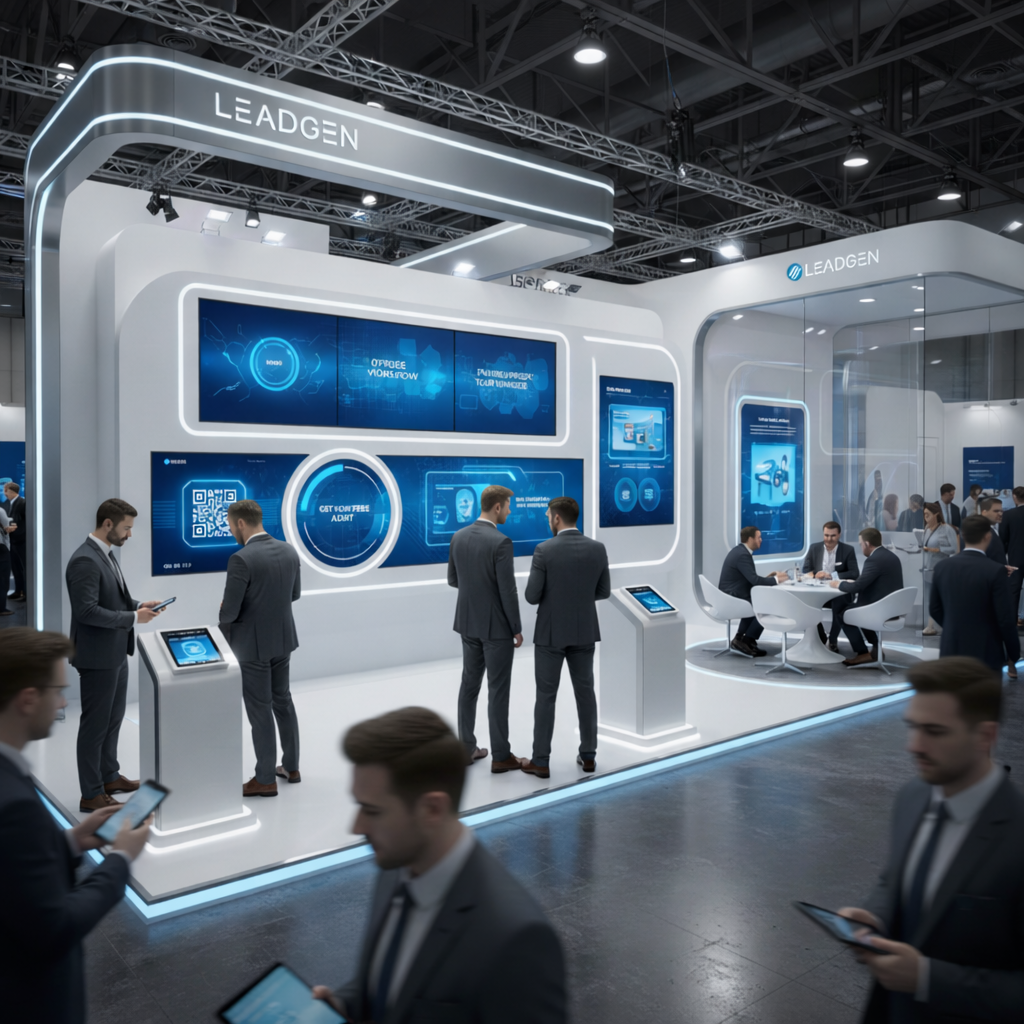
Strategic exhibition stand design integrates digital lead capture tools from the start. QR codes, tablets, demo registrations, and CRM-connected forms are positioned at natural interaction points, making lead capture feel effortless rather than forced.
Design-Led Engagement Reduces Random Interactions
When exhibition stands lack structure, sales teams face constant interruptions and low-quality interactions. Strategic exhibition booth design controls traffic flow and interaction points, allowing sales teams to focus on high-intent prospects instead of chasing footfall.
Exhibition Booth Design Empowers the Sales Team
A well-designed exhibition stand acts as a silent sales assistant. Clear zones, defined interaction points, and intuitive layouts help sales teams engage confidently, qualify leads efficiently, and avoid burnout during long exhibition days.
Strategic Design Enables Real-Time Lead Qualification
Exhibition stands designed for lead generation allow sales teams to quickly assess visitor intent through interaction depth, engagement zones, and guided conversations. This ensures that leads collected are not just numerous but highly relevant.
Exhibition Stand Design Supports Post-Event Conversion
Lead-driven exhibition booth design ensures that collected data is complete, structured, and usable. This enables faster follow-ups, personalized communication, and higher post-event conversion rates, improving overall exhibition ROI.
Exhibition Stand Design Aligns Marketing and Sales Goals
Strategic exhibition design bridges the gap between marketing visibility and sales outcomes. Messaging attracts the right audience, while layout and engagement convert interest into actionable leads, creating a unified exhibition strategy.
Success Is Measured by Leads, Not Just Footfall
Strategic exhibition stand design shifts performance metrics from visitor count to qualified leads, engagement quality, and pipeline contribution. This data-driven approach ensures exhibitions deliver long-term business value.
Exhibition Stands Become Scalable Lead-Generation Assets
When designed strategically, exhibition stands can be reused, optimized, and scaled across multiple exhibitions in India and the Middle East. Each event generates insights that further improve lead quality and conversion efficiency.

Key Elements of a High-Converting Exhibition Booth
A high-converting exhibition booth is not defined by size, budget, or visual drama alone. Across trade shows, expos, and exhibitions in India, Dubai, and the Middle East, the exhibition booths that consistently generate qualified leads are the ones designed with function, flow, and conversion in mind. While aesthetics attract attention, it is the structure, messaging, and usability of the exhibition stand that determine whether footfall turns into real business opportunities.
High-performing exhibition booth design starts with one principle: every square foot must support lead generation. Below are the key elements that make an exhibition stand convert visitors into qualified leads and measurable ROI.
Booth Layout and Visitor Flow
Exhibition booth layout plays a critical role in determining how visitors behave once they step inside the stand. A well-designed exhibition stand guides visitors naturally, while a poorly planned one creates confusion and short interactions.
High-converting exhibition stands use open entry points to attract attention from multiple aisles, but they also include defined internal pathways that gently move interested visitors deeper into the booth. This controlled flow allows sales teams to engage visitors without interruption and prevents overcrowding at the entrance.
Intentional exhibition stand layout planning ensures that:
- Casual browsers remain near the front
- Interested visitors move toward demo or discussion zones
- Serious prospects reach consultation or lead capture areas
When visitor flow is planned strategically, conversations feel natural, engagement time increases, and sales teams maintain control of the interaction resulting in higher-quality exhibition leads.
Messaging Hierarchy and Visual Communication
In a competitive exhibition environment, visitors decide within seconds whether a booth is relevant. High-converting exhibition booth design relies on a clear messaging hierarchy that communicates value instantly.
Primary exhibition stand messaging should be:
- Benefit-driven, not slogan-based
- Industry-specific and problem-focused
- Visible from a distance and easy to read
This helps decision-makers quickly identify whether the brand aligns with their needs. Secondary messaging can support deeper conversations, highlight features, or explain processes, but it should never compete with the primary value proposition.
Effective exhibition booth graphics act as conversation starters, allowing sales teams to engage with context instead of cold introductions. This reduces friction and increases the likelihood of meaningful lead-generating discussions.
Engagement and Interaction Zones
One of the most important elements of a high-converting exhibition booth is the presence of clearly defined engagement zones. Stands that lack zoning often become chaotic, leading to shallow conversations and missed opportunities.
Strategic exhibition booth design separates interactions by intent:
- Exploration zones for casual interest
- Demo or presentation zones for active engagement
- Consultation areas for serious discussions
This zoning approach allows visitors to self-select based on interest level, while sales teams focus their energy where it matters most. It also prevents overcrowding and ensures that serious prospects receive the attention they need.
High-performing exhibition stands in India and the Middle East consistently use engagement zones to improve lead quality rather than chasing volume alone.
Integrated Lead Capture Systems
Lead capture should never feel like an interruption. In high-converting exhibition stand design, lead capture is integrated seamlessly into the visitor journey.
Whether through QR code scanning, tablet-based forms, demo registrations, or assisted data entry, the process must be quick, intuitive, and placed at moments of peak interest. When visitors are already engaged in conversation or interaction, sharing details feels natural rather than forced.
Modern exhibition booth design for lead generation ensures that:
- Lead capture points are visible but non-intrusive
- Data is collected digitally for accuracy and speed
- Information flows directly into sales or CRM systems
This approach improves post-event follow-up and significantly increases exhibition ROI.
Sales Team Usability and Comfort
An exhibition booth can only perform as well as the people working inside it. High-converting exhibition stand design prioritizes sales team usability, ensuring that staff can engage confidently throughout long exhibition days.
Effective booth design provides:
- Clear standing and engagement points
- Storage for materials and personal items
- Easy access to lead capture tools and demos
- Comfortable spaces for longer discussions
When the exhibition booth supports the sales team operationally, conversations remain focused, energy levels stay high, and lead capture becomes consistent rather than rushed or forgotten.
Sales-friendly exhibition stand design reduces fatigue, improves engagement quality, and directly impacts the number of qualified leads generated during the event.
Alignment with Post-Event Lead Conversion
A truly high-converting exhibition booth is designed with post-event conversion in mind. The booth does not just capture leads; it captures the right data, at the right moment, with the right context.
By aligning exhibition stand design with post-event sales workflows, brands ensure that:
- Leads are properly segmented by interest level
- Follow-ups are timely and personalized
- Conversations continue seamlessly after the exhibition
This alignment turns exhibitions from short-term visibility exercises into long-term pipeline-building opportunities.
Exhibition Stand Design for Lead Generation in Mumbai, Dubai, and Delhi
Exhibition lead generation depends heavily on local visitor behavior. Exhibition stand design that performs well in one city often underperforms in another. Audience expectations, decision-making speed, and communication style vary significantly across regions.
High-ROI exhibition stand design adapts to how visitors in each city engage, evaluate, and convert on the exhibition floor.
Exhibition Stand Design for Lead Generation in Mumbai
Fast-Paced Visitor Movement Requires Instant Clarity
Exhibitions in Mumbai are high-energy and time-constrained. Visitors typically scan multiple exhibition booths quickly before deciding where to stop. Exhibition stand design in Mumbai must communicate relevance within the first few seconds to capture attention and initiate engagement.
Clear value propositions, visible branding, and structured layouts help brands stand out in a competitive exhibition environment.
Highly Visible Lead Capture Points Increase Conversions
QR codes, tablet-based forms, and quick-scan lead capture tools should be positioned clearly at the front or mid-section of the booth. When lead capture is obvious and frictionless, even brief interactions can result in qualified trade show leads.
Strategic placement of capture points ensures no opportunity is missed in a fast-moving exhibition environment.
Bold, Concise Messaging Improves Booth Engagement
Exhibition booth graphics in Mumbai perform best when they are bold, benefit-led, and easy to read from a distance. Long explanations or abstract branding fail to hold attention in a crowded exhibition setting.
Simple headlines, strong contrast, and outcome-focused messaging increase the chances of converting footfall into conversations.
Quick Engagement Formats Convert Short Interactions into Leads
Short demos, rapid product overviews, and direct problem-solution messaging help sales teams engage efficiently. Exhibition stand design for lead generation in Mumbai should support fast conversations without sacrificing lead quality.
Layouts that allow immediate interaction improve visitor flow and maximize opportunity within limited time frames.
Exhibition Stand Design for Lead Generation in Dubai
Relationship-Driven Engagement Shapes Booth Strategy
Exhibition visitors in Dubai are generally open to longer conversations when the environment feels premium and professional. Exhibition stand designers in Dubai focus on establishing credibility before pushing for lead capture.
A well-designed booth creates an atmosphere of trust, positioning the brand as reliable and serious about long-term partnerships rather than quick transactions.
Structured Layouts Support Trust and Comfort
Exhibition booth design in Dubai benefits from clearly defined zones, including welcoming reception areas, interactive demo spaces, and comfortable discussion sections.
These structured layouts encourage visitors to stay longer, explore offerings in detail, and engage in meaningful business conversations without feeling rushed.
Premium Design Elements Enhance Brand Credibility
Polished finishes, clean lighting, and high-quality materials are especially important in Dubai exhibitions. A refined exhibition stand design signals reliability, professionalism, and attention to detail all of which are critical for lead generation in this competitive market.
Strong visual presentation combined with strategic layout planning significantly increases perceived brand value.
Private Discussion Areas Improve Lead Quality
Decision-makers in Dubai often prefer semi-private spaces for serious business discussions. Exhibition stall design that incorporates meeting areas allows for confidential conversations, detailed negotiations, and stronger relationship building.
These private zones help convert interest into high-value, well-qualified leads.
Exhibition Stand Design for Lead Generation in Delhi
Detail-Oriented Decision-Making Influences Booth Design
Exhibition visitors in Delhi tend to compare options carefully before making decisions. Exhibition stand design in Delhi must allow space for explanation, discussion, and clarification. Booths that feel rushed or overly promotional often struggle to convert serious prospects.
A well-planned exhibition stand creates an environment where conversations can unfold naturally, helping brands build credibility and trust.
In-Depth Product and Service Communication Matters
Booths that provide structured product breakdowns, case studies, and detailed process explanations see stronger engagement. Exhibition stall designers in Delhi often prioritize content-rich displays supported by knowledgeable sales staff.
Clear messaging panels, interactive screens, and demonstration areas help visitors understand value propositions quickly while still allowing deeper discussion when required.
Clear Segmentation Between Browsing and Discussion Zones
Exhibition booth layout in Delhi performs better when casual visitors are separated from serious prospects. Creating distinct zones ensures that sales teams can manage multiple conversations without losing focus or momentum.
An open front area can attract footfall, while a semi-private discussion zone encourages meaningful engagement with qualified leads.
One-on-One Engagement Improves Lead Quality
Delhi exhibitions reward personalized interactions. Exhibition stand design that supports seated discussions, product demos, and consultations leads to higher-quality, better-qualified leads.
When visitors feel heard and understood, they are more likely to share detailed requirements, accelerating the sales process beyond the exhibition floor.
Why Regional Exhibition Stand Design Improves Lead Quality
Localized Exhibition Booth Design Aligns with Buying Behavior
When exhibition stands reflect how decisions are made in Mumbai, Dubai, and Delhi, visitors feel understood and comfortable engaging. This alignment increases trust and significantly improves conversion rates.
A region-specific exhibition booth design strategy ensures that messaging, layout, and engagement formats match local expectations, making interactions more meaningful.
Sales Teams Perform Better in Region-Optimized Booths
Exhibition stand design tailored to local engagement styles helps sales teams communicate more naturally and confidently. When the booth layout supports how conversations typically unfold in each city, teams can focus on qualification instead of adjusting their approach mid-discussion.
This results in stronger engagement, clearer needs assessment, and higher-quality leads.
Post-Event Follow-Up Becomes More Effective
Leads generated through region-specific exhibition stand strategies tend to be better qualified and more aligned with the brand’s offering. As a result, post-event sales follow-ups become more relevant, targeted, and successful.
When exhibition stand design supports proper lead filtering at the event itself, the sales pipeline becomes stronger and more conversion-focused.
How Lead-Driven Booth Design Improves ROI After the Exhibition
Exhibition ROI Is Determined After the Event, Not During It
The true return on investment from an exhibition is not measured by footfall, booth traffic, or visual impact during the event. It is measured weeks and months later through follow-ups, conversions, and closed deals.Lead-driven exhibition stand design ensures that every visitor interaction is structured to support post-event sales activity, making the exhibition booth a revenue-generating asset rather than a temporary brand display.
Higher Lead Quality Starts With Intent-Focused Booth Design
When exhibition booth design is built around lead generation, it naturally filters out low-intent visitors. Clear messaging, defined engagement zones, and focused conversations allow only relevant prospects to engage deeply.
This results in fewer leads but significantly higher lead quality, directly improving post-exhibition conversion rates and overall exhibition ROI.
Clear Engagement Zones Improve Post-Event Follow-Up Accuracy
Exhibition stands with well-defined zones such as browsing areas, demo spaces, and private discussion zones help sales teams control interactions.
Visitors who move into deeper engagement areas have already demonstrated intent. This makes it easier for sales teams to categorize leads correctly, prioritize follow-ups, and continue conversations without confusion once the exhibition ends.
Integrated Lead Capture Creates Clean, Actionable Data
One of the biggest reasons exhibitions fail to deliver ROI is poor lead data. Lead-driven exhibition stand design integrates digital lead capture tools, QR-based forms, tablets, or assisted data entry directly into the booth experience.
This ensures that contact details, discussion notes, and requirements are captured accurately, making post-event follow-ups faster, more relevant, and more effective.
Sales Teams Leave the Booth With Context, Not Just Contacts
Exhibition booths designed for lead generation help sales teams document who they spoke to, what was discussed, and what the next step should be.
Instead of sending generic follow-up emails, teams can continue conversations with context, improving trust and response rates. This structured approach shortens sales cycles and improves exhibition lead conversion.
Optimized Sales Effort Improves Cost-Per-Lead Metrics
Lead-driven booth design reduces wasted sales effort. Rather than chasing hundreds of unqualified contacts, teams focus on prospects who engage meaningfully.
This lowers cost per lead, increases conversion efficiency, and ensures the exhibition budget delivers measurable business results. From a performance standpoint, this directly improves exhibition marketing ROI.
Stronger Pipelines Built From Fewer, Better Conversations
High-performing exhibition booths are not designed to attract everyone, they are designed to attract the right audience. Strategic exhibition stand design supports conversations aligned with real buying intent.
This leads to stronger sales pipelines, better forecasting, and more predictable revenue outcomes after the exhibition.
Local Market Optimization Improves Geo-Specific Results
Exhibition stand design for lead generation performs even better when aligned with local market behavior.
Whether it is exhibition stand design in Mumbai, exhibition booth design in Dubai, or exhibition stall design in Delhi, adapting layout, messaging, and engagement style to the regional audience improves lead quality and post-event ROI across different cities.
Post-Exhibition ROI Becomes Measurable and Defensible
When lead generation is embedded into booth design, ROI becomes easier to track. Businesses can directly connect exhibition stand investment to qualified leads, conversions, and revenue.
This makes future exhibition planning more strategic and helps justify spending on custom exhibition stand design, exhibition stall fabrication, and trade show booth solutions.
Why Brands Choose a Professional Exhibition Stand Design Company for Lead Generation
Strategic Thinking Beyond Visual Appeal
Brands no longer choose an exhibition stand design company only for aesthetics. High-performing exhibitors work with professionals who understand that exhibition stand design for lead generation requires aligning creativity with sales psychology, visitor behavior, and conversion strategy. A professional partner ensures the booth is not just attractive but purpose-built to generate qualified leads and measurable business outcomes.
Audience-Led Planning Improves Exhibition Lead Conversion
Experienced exhibition stand designers begin with a deep understanding of the brand’s target audience, buyer intent, and decision-making journey. This insight shapes everything from layout and messaging to engagement flow. When booth design reflects how real buyers think and move, exhibition lead conversion improves significantly compared to generic or design-only approaches.
Lead-Driven Booth Design Supports Sales Objectives
Professional agencies specialize in lead-driven booth design, where every element supports a clear sales goal. Entry points attract attention, mid-zones qualify interest, and deeper engagement areas support demos and discussions. This structured approach allows sales teams to focus on high-intent prospects, improving efficiency and reducing wasted interactions on the exhibition floor.
Execution Reliability During High-Traffic Exhibition Hours
One of the biggest advantages of working with a professional exhibition stand design company is execution reliability. Experienced teams anticipate real-world challenges such as space limitations, crowd movement, electrical planning, and storage needs. This ensures smooth visitor flow and uninterrupted conversations during peak hours, directly supporting booth performance and exhibition booth ROI.
Sales Team Usability Improves Conversion Outcomes
A custom exhibition stand designed by professionals prioritizes sales team comfort and usability. Clear standing points, storage access, demo positioning, and smooth transitions between conversations help teams stay organized and confident. When the booth supports the people working in it, conversations stay focused and conversions increase.
Integrated Lead Capture Built Into Trade Show Booth Design
Professional designers integrate lead capture systems directly into the trade show booth design, rather than treating them as add-ons. Whether through digital forms, QR codes, tablets, or assisted capture points, the process feels natural and non-intrusive. Clean, structured data enables faster and more effective post-event follow-ups, improving long-term ROI.
Market-Specific Expertise Enhances GEO Performance
Brands exhibiting across regions benefit from agencies with geo-market understanding. Exhibition stall design in Mumbai emphasizes speed, clarity, and high-visibility messaging. Exhibition stand design in Dubai focuses on premium presentation, structured layouts, and relationship-building zones. Exhibition booth design in Delhi supports detailed discussions and comparison-based decision-making. This regional alignment strengthens engagement and improves lead quality in each market.
Post-Exhibition ROI Planning Is Built Into the Design Process
Professional partners design with the post-event phase in mind. By planning how leads will be categorized, followed up, and converted, they turn the exhibition booth into a long-term sales asset. This future-focused approach is what transforms booth investment into consistent exhibition booth ROI, long after the exhibition ends.
A Strategic Partner, Not Just a Fabrication Vendor
Ultimately, brands choose a professional exhibition stand design company because they offer more than fabrication. They act as strategic partners who understand branding, sales, visitor engagement, and conversion. This holistic approach ensures the exhibition stand delivers real business value, not just temporary visibility.
Data-Driven Decisions Replace Guesswork
Experienced exhibition stand designers use past performance insights, visitor behavior patterns, and industry benchmarks to inform design decisions. This reduces guesswork and ensures the booth is optimized for lead generation, not assumptions. The result is stronger pipelines, better forecasting, and predictable returns from exhibition participation.
Frequently Asked Questions (FAQs)
How does exhibition stand design generate leads?
Exhibition stand design generates leads by intentionally guiding visitor behavior rather than relying on passive footfall. A well-planned exhibition stand design for lead generation uses clear visual hierarchy, strategic booth layout, and defined engagement zones to attract the right audience. Visitors quickly understand whether the brand is relevant to them, which encourages genuine prospects to engage in conversations that naturally lead to data capture and follow-up opportunities.
What makes an exhibition booth effective for B2B lead generation?
An effective B2B exhibition booth design focuses on clarity, relevance, and structure. It communicates the core value proposition within the first few seconds and supports deeper discussions through demos, presentations, or private meeting areas. By separating casual visitors from decision-makers, the booth enables sales teams to qualify leads efficiently, improving exhibition lead conversion and post-event sales outcomes.
Does exhibition stand design really impact exhibition booth ROI?
Yes, exhibition stand design has a direct and measurable impact on exhibition booth ROI. Lead-driven booth design improves the quality of conversations, reduces time spent on low-intent visitors, and ensures clean lead capture. This results in faster follow-ups, shorter sales cycles, and higher conversion rates, making the exhibition investment easier to justify and scale.
How can exhibitors capture high-quality leads at trade shows?
High-quality leads are captured when trade show booth design combines purposeful layout with structured engagement. Clear calls to action, interactive demos, and integrated digital lead capture tools such as QR codes or tablets help document genuine interest accurately. When lead capture is built into the booth experience, prospects feel guided rather than pressured, improving both data quality and response rates.
What is the best exhibition stand layout for lead conversions?
The best exhibition stand layout for conversions follows a natural flow: attraction, qualification, engagement, and capture. Open entry points draw attention, mid-zones help qualify interest, and deeper areas support focused discussions. This layout allows sales teams to manage conversations efficiently while guiding serious prospects toward conversion points without overcrowding the booth.
Why should brands work with a professional exhibition stand design company?
Brands choose a professional exhibition stand design company because lead generation requires more than visual creativity. Experienced designers align booth design with sales goals, audience behavior, and conversion strategy. From layout planning to lead capture integration, professional partners ensure the booth performs as a sales environment, not just a display space.
How does location affect exhibition stand design for lead generation?
Location plays a major role in visitor behavior. Exhibition stall design in Mumbai prioritizes fast messaging and quick engagement due to high footfall and limited visitor time. Exhibition stand design in Dubai focuses on premium presentation and relationship-building. Exhibition booth design in Delhi supports detailed discussions and comparison-driven decisions. Geo-optimized design improves lead quality and engagement in each market.
What role does lead capture technology play in exhibition success?
Lead capture technology is essential for turning conversations into measurable results. Integrated systems within a custom exhibition stand ensure accurate data collection, reduce manual errors, and help sales teams document intent in real time. This makes post-event follow-ups more personalized and significantly improves conversion rates.
How soon should exhibition stand planning start for better lead generation?
Effective lead-driven booth design begins months before the exhibition. Early planning allows time to align design with sales objectives, integrate lead capture systems, and train sales teams on booth flow. Brands that plan early consistently see better exhibition lead conversion and stronger post-event ROI.
Is custom exhibition stand design better than modular booths for lead generation?
In most cases, yes. A custom exhibition stand allows brands to design layouts, messaging, and engagement zones specifically around their lead generation goals. While modular booths offer flexibility, custom stands provide better control over visitor flow and conversation quality, resulting in higher lead intent and stronger ROI.
Conclusion – Turning Exhibition Stands into Lead-Generating Assets
Footfall Becomes Valuable Only When Supported by Strategy
A busy exhibition booth means little if interactions lack direction. When exhibition booth design is aligned with visitor behaviour and sales objectives, every interaction has a purpose. Strategic layouts and messaging ensure that the right visitors engage, while casual footfall filters itself out naturally.
Exhibitions Have Shifted From Visibility to Business Impact
Modern exhibitions are no longer about how attractive a booth looks or how much footfall it receives. Success today is defined by measurable outcomes. Exhibition stand design for lead generation focuses on turning visitor interest into qualified opportunities that directly support sales and business growth.
Integrated Lead Capture Strengthens Post-Event Results
Exhibition stands designed with built-in lead capture systems ensure that valuable data is collected accurately. Clean, structured lead information allows sales teams to follow up quickly and confidently, improving response rates and long-term exhibition booth ROI.
Lead-Driven Booth Design Improves Lead Quality, Not Just Quantity
Lead-driven booth design prioritises meaningful conversations over volume. By guiding visitors through defined engagement zones and supporting focused discussions, brands generate fewer but far more relevant leads. This directly improves exhibition lead conversion during post-event follow-ups.
Sales-Focused Design Reduces Wasted Effort After the Exhibition
When a custom exhibition stand supports how sales teams work, follow-ups become more targeted and effective. Instead of chasing unqualified contacts, teams focus on prospects who have already shown genuine interest, shortening sales cycles and improving conversion efficiency.
Geo-Optimised Design Delivers Better Market-Specific Results
Exhibition performance improves when booth design reflects local visitor behaviour.
- Exhibition stall design in Mumbai benefits from fast messaging and quick engagement.
- Exhibition stand design in Dubai performs best with premium layouts and relationship-driven spaces.
- Exhibition booth design in Delhi supports detailed discussions and comparison-based decision-making.
Aligning booth strategy with regional expectations increases both engagement quality and lead conversion.
Exhibition Stands Perform Best When Treated as Sales Environments
Brands that treat their exhibition booth as an extension of their sales process consistently see better results. By working with experienced exhibition stand designers and focusing on lead generation, exhibitions contribute meaningfully to long-term growth rather than short-term exposure.
Early Design Decisions Directly Impact Long-Term ROI
The most successful exhibition stands are planned with intent from the first design discussion. Layout, messaging, and lead capture are all aligned with post-event goals. These early decisions determine whether an exhibition becomes a cost or a revenue-generating asset.
About Young Mirchies
Young Mirchies is a full-service event and experiential agency helping brands design events that are not just memorable but measurable.
From employee offsites and internal summits to trade shows, CXO dinners, and brand activations, every experience we build is backed by an ROI-first mindset.
Our Services Include
- Event strategy and goal setting
- End-to-end logistics and execution
- Lead-generation optimized booth and experience design
- Onsite and post-event analytics dashboards
- Sales and marketing integration
Plan Smarter. Not Just Louder.
If you’re looking to make your next event not just impressive, but truly impactful — it’s time to rethink how you plan.
Visit: https://www.youngmirchies.com to get started.