
Introduction
Events today don’t look anything like they used to. A stage, a few banners, and a speaker are no longer enough to hold attention. Audiences now expect something they can feel, interact with, and remember, not just watch. This is where visual-driven events and experiential marketing events ideas have completely changed the game. These are events built around immersive visuals, storytelling environments, lighting design, digital installations, AR/VR elements, and interactive event design that pulls people into the moment instead of just presenting to them. In simple terms, visual-driven events are designed to make people experience a brand rather than just see it.
And the real question most marketers are asking is: do they actually work?
The short answer is yes but not because they look impressive. They work when they are built with a clear purpose: to strengthen emotional connection, improve engagement, and make the brand memorable long after the event ends. In a world where attention spans are shrinking and digital noise is increasing, immersive event experiences and brand experience events have become one of the most effective ways for brands to stand out.
What Are Visual-Driven Events?
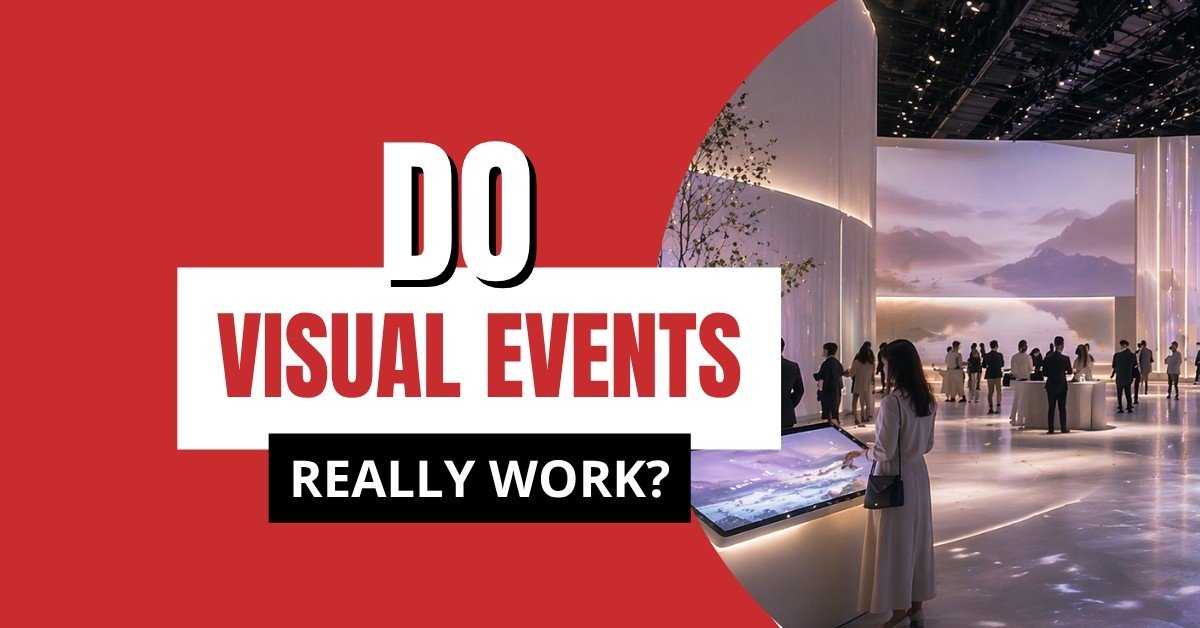
Visual-driven events are experiences designed around powerful visuals and immersive environments that shape how people feel, interact, and remember a brand. Instead of relying only on speeches, static setups, or traditional presentations, these events use visual storytelling as the core communication tool and are a key part of modern event engagement strategies. At their simplest level, they turn an event space into a living experience rather than a passive gathering.
In these setups, every element is intentional:
- Large-scale screens or LED walls enhance storytelling
- Lighting is used to create mood and focus attention
- Projection mapping transforms physical spaces into dynamic visuals
- AR/VR elements add interactive layers to engagement
- The overall design guides how attendees move and experience the event
The goal is not just to “show” something, but to immerse the audience inside a story. For example, instead of launching a product on a simple stage, a brand might create a fully immersive environment where visuals, sound, and interaction together demonstrate the product’s value in a memorable way. That’s what separates visual-driven events from traditional ones; they don’t just communicate a message they let people experience it firsthand.
Why Brands Are Investing in Visual-Driven Events
Brands are shifting toward visual-driven events marketing because traditional marketing methods are struggling to hold attention. People are exposed to thousands of ads every day, and most are forgotten within seconds. In contrast, immersive and experiential marketing events create something far more powerful: memory through experience.
The Rise of the Attention Economy
One of the biggest reasons behind this shift is the growing challenge of capturing attention. Today, attention is limited and highly competitive. Visual-driven events solve this by creating environments that naturally pull people in through design, movement, sound, and interaction making them a core part of modern event engagement strategies.
Social Media Amplification
Another major factor is changing social media behavior. Audiences don’t just attend events anymore they capture and share them. A visually engaging event becomes instantly shareable content, helping brands extend their reach far beyond the physical space and strengthening brand experience events.
Emotional Engagement Over Information
Brands are also recognizing the value of emotional connection. Instead of simply telling people why a product matters, immersive event experiences allow them to feel it. This emotional engagement often leads to stronger trust and long-term brand recall at corporate events.
Key Benefits of Visual-Driven Events
Brands invest in these experiences because they deliver:
- Higher audience engagement compared to traditional setups
- Stronger brand storytelling through immersive and interactive event design
- Increased shareability across digital platforms
- Better recall and emotional impact
- More meaningful customer interactions
A Strategic Shift, Not Just a Visual Trend
At a deeper level, this shift is not just about aesthetics, it’s about strategy. Modern audiences no longer respond to information alone. They respond to experience, interaction, and emotion, which is exactly what immersive event experiences and brand experience events are designed to deliver.
Do Visual-Driven Events Actually Work?
This is the question most brands are trying to answer before investing in visual-driven events marketing and the honest answer is: yes, they work, but only when they are built with strategy, not just visuals. It’s easy to assume that bigger screens, better lighting, or advanced technology automatically led to success. But the real reason these events work goes much deeper. They fundamentally change how people consume, process, and remember information. In traditional formats, communication is passive. People sit, watch, and listen. In contrast, immersive event experiences shift the audience from passive observers to active participants. And that shift from watching to experiencing is what drives real impact.
How Visual-Driven Events Influence Audience Behavior
When someone enters a well-designed visual environment, multiple senses are activated at once sight, sound, movement, and sometimes even touch. This creates a layered experience that keeps the brain engaged for longer periods.
Instead of quickly filtering out information (which often happens with ads), the brain starts processing the experience as something meaningful. This leads to:
- longer attention spans
- deeper cognitive involvement
- stronger emotional responses
In simple terms, people don’t just notice the brand, they interact with it and internalize it.
1. Stronger Engagement
Engagement is one of the clearest indicators of whether an event is working. Visual-driven events naturally increase engagement because they are designed to be explored, not just observed making them highly effective event engagement strategies.
Elements like interactive installations, dynamic visuals, and spatial storytelling encourage attendees to:
- move through the environment
- interact with different touchpoints
- spend more time within the brand space
This increased dwell time is critical. The longer someone stays engaged, the higher the chances they will connect with the message.
2. Improved Brand Recall
Memory is not built through information alone it is built through experience and emotion.
When attendees walk through a visually rich environment, their brain stores the experience as a moment rather than just a message. This makes recall much stronger compared to traditional formats like presentations or static advertisements.
For example:
- A slide presentation may be forgotten within hours
- A fully immersive product experience can be remembered for weeks or even months
This is why brands investing in experiential marketing events often see stronger long-term impact rather than just short-term visibility.
3. Emotional Connection
One of the most powerful outcomes of visual-driven events is emotional connection. These experiences are designed not just to inform, but to make people feel something.
That feeling could be:
- excitement
- curiosity
- inspiration
- trust
And this emotional layer is what moves people from simple awareness to actual preference.
When a brand creates a meaningful experience, it becomes more than just a product it becomes something the audience can relate to. Over time, this builds stronger loyalty and perception, reinforcing successful brand experience events.
ROI of Experiential Marketing Events
When discussing experiential marketing ROI, it’s important to move beyond the idea of immediate sales. The real value of visual-driven events often lies in long-term brand impact.
Instead of direct conversions, ROI typically shows up in:
- Increased brand awareness and visibility
- Higher social media reach through organic sharing
- Stronger audience engagement during and after the event
- Improved perception of brand innovation and creativity
- Greater word-of-mouth and recall over time
These outcomes may not always be instantly measurable in numbers, but they play a crucial role in influencing future buying decisions.
Where Visual-Driven Events Can Fail
Despite their potential, these events are not guaranteed to succeed. In fact, many fail for a simple reason they focus too much on visuals and not enough on purpose.
Common mistakes include:
- Lack of clear audience targeting
- Prioritizing technology over storytelling
- Creating visually impressive but meaningless experiences
- Poor integration between brand message and event design
When the experience looks good but doesn’t say anything meaningful, the impact fades quickly reducing overall experiential marketing ROI.
Real-World Use Cases of Visual-Driven Events
To understand the real impact of visual-driven events marketing, it helps to look at how these experiences are actually used in practice. Across industries, brands are no longer relying on traditional setups alone; they are building environments that people can step into, interact with, and remember through interactive event design.
1. Product Launch Events
One of the most common applications is in product launches. Instead of simply presenting a new product on stage, brands create immersive storytelling environments around it.
For example:
- A tech product might be introduced through interactive screens that demonstrate features in real time
- A fashion brand might use projection mapping to showcase collections in dynamic visual formats
- A consumer brand might build themed environments that reflect the product’s lifestyle use
The goal is simple: make the product experience more memorable than a standard presentation.
2. Corporate and Industry Events
In corporate settings, immersive event experiences are used to make conferences and summits more engaging. Instead of long, static presentations, companies now integrate:
- Large-scale LED storytelling visuals
- Interactive data displays
- Stage environments that change with the narrative
This keeps attendees more focused and reduces the fatigue typically associated with long corporate sessions.
3. Brand Activation Campaigns
Brand activations are where visual-driven events truly shine. These setups are designed to attract attention in public spaces like malls, exhibitions, or outdoor venues and are key event engagement strategies.
Common elements include:
- Interactive installations that encourage participation
- Photo-worthy visual zones designed for social sharing
- Experiential booths that allow users to “try” the brand in a creative way
These activations are not just about visibility they are about creating real-time engagement with audiences.
4. Retail and Experiential Spaces
Even retail environments are evolving. Stores are no longer just places to buy products, they are becoming experienced hubs.
Brands now use:
- Immersive digital displays
- Sensor-based interactions
- Story-driven store layouts
This turns shopping into an experience rather than a transaction and strengthens overall brand experience events.
Challenges of Visual-Driven Events
While visual-driven events marketing can deliver strong results, executing them effectively comes with several challenges. Many brands underestimate the level of strategy, coordination, and precision required to create truly impactful immersive event experiences.
Here’s a clear breakdown:
Challenge | Description | Impact on Event Success |
High Production Costs | Advanced visuals like LED walls, projection mapping, and interactive installations require significant investment. Costs also include design, content creation, and technical setup. | Can limit scalability and ROI if not planned strategically. |
Complex Planning & Coordination | Multiple elements such as creative direction, technology integration, and execution must work together seamlessly. | Misalignment can lead to a disjointed and confusing experience. |
Execution Dependency | Success depends heavily on flawless on-ground execution and technical reliability. | Even small technical failures can negatively affect the audience experience. |
Over-Prioritizing Visuals | Focusing too much on aesthetics without a clear message or purpose. | Results in short-term attention but weak long-term brand impact. |
Weak Storytelling | Lack of a strong narrative connecting visuals to the brand message. | Reduces emotional engagement and overall effectiveness. |
Audience Misalignment | Not all audiences respond the same way to brand immersive experiences. | Leads to low engagement despite high investment. |
Difficult ROI Measurement | Impact is often indirect (engagement, recall, perception) rather than immediate sales. | Makes it harder to justify investment without clear metrics. |
Conclusion
So, do visual-driven events actually work?
The answer is yes but not for the reasons most people assume. It’s not just about creating something visually impressive. It’s about creating something meaningful. Visual-driven events marketing works when it goes beyond aesthetics and focuses on experience, storytelling, and audience connection. When people are actively involved when they can see, feel, and interact with a brand the impact becomes far more lasting than any traditional format. At the same time, these events are not a shortcut to success. Without a clear strategy, strong narrative, and understanding of the audience, even the most immersive setups can fall flat. The real value comes from aligning creativity with purpose. As experiential marketing events continue to evolve, one thing is becoming clear: brands that invest in thoughtful, well-designed immersive event experiences and brand experience events will stand out, while those that rely only on visibility will struggle to stay relevant. In the end, visual-driven events do work but only when they are built to create genuine engagement, not just attention.
FAQs
1. What are visual-driven events?
Visual-driven events are experiences built around immersive visuals, interactive elements, and storytelling environments. Instead of relying only on presentations or static formats, they use design, technology, and sensory engagement to create a more memorable and engaging experience for the audience.
2. Do experiential events really work?
Yes, experiential marketing events work when they are backed by a clear strategy and purpose. They are effective because they actively involve the audience, making the experience more engaging and emotionally impactful compared to traditional marketing approaches.
3. What is ROI in experiential marketing?
ROI in experiential marketing is not limited to direct sales or immediate conversions. It often includes brand awareness, audience engagement, social media reach, and long-term perception, making it more about influence and memory than short-term results.
4. How do immersive events increase engagement?
Immersive event experiences increase engagement by involving multiple senses and encouraging participation. When people interact with an environment instead of just observing it, they tend to stay longer, engage more deeply, and form stronger connections with the brand.
5. Why are brands shifting toward visual-driven events?
Brands are moving toward visual-driven events because traditional marketing struggles to capture attention in a crowded digital space. These events offer a more engaging and memorable way to communicate messages through experience rather than just information.
6. What technologies are commonly used in visual-driven events?
Visual-driven events often use technologies like LED walls, projection mapping, AR/VR, interactive screens, and dynamic lighting. These tools help create immersive environments that enhance storytelling and make the overall experience more engaging.
7. What is the future of visual event marketing?
The future of visual-driven events lies in deeper immersive storytelling supported by technologies like AI, AR/VR, and hybrid formats. The focus will increasingly shift toward personalization, interaction, and creating meaningful experiences rather than just visual appeal.
8. Are visual-driven events suitable for all types of brands?
Visual-driven events can work for most brands, but their success depends on how well they align with the target audience and brand message. Not every brand needs high-end visuals, but every brand can benefit from creating more engaging and experience-driven interactions.