
Fintech Conferences: Creating Stronger Networking Opportunities for Financial Leaders

Fintech Conferences: Creating Stronger Networking Opportunities for Financial Leaders

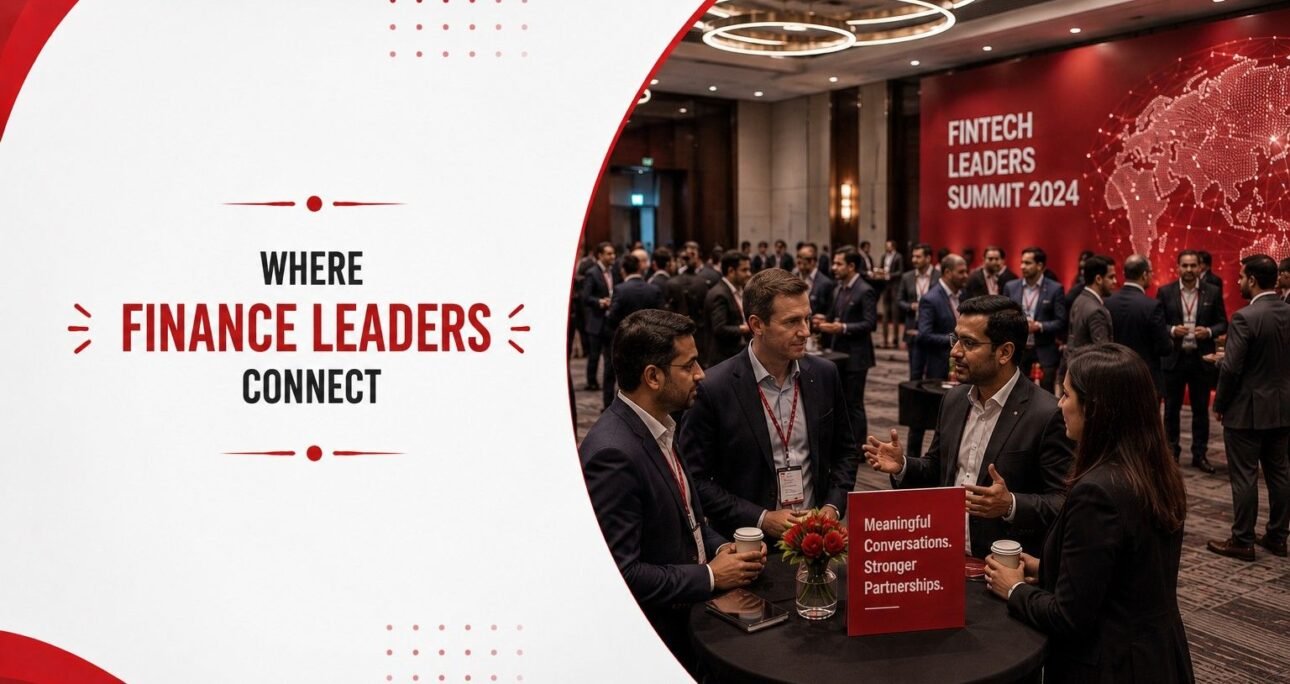
Fintech conference networking is the structured process of helping financial leaders, fintech companies, investors, technology providers and other industry stakeholders build relevant business relationships. It can include curated one-to-one meetings, executive roundtables, hosted introductions, networking lounges, private gatherings and digital matchmaking. The difference between a busy conference and a valuable networking experience often comes down to planning. Simply providing coffee breaks and a large networking area does not guarantee useful conversations. Organisers need to consider who should meet, why they should meet, when the interaction should happen and where the conversation can take place comfortably. For financial leaders, this matters because conference time is limited. A CEO looking for strategic partnerships, an investor evaluating fintech opportunities and a bank’s technology executive looking for new solutions may all have very different reasons for attending the same event. A well-designed networking programme helps them spend that limited time on conversations that are actually relevant.
 

Fintech conference networking

What Is Fintech Conference Networking?

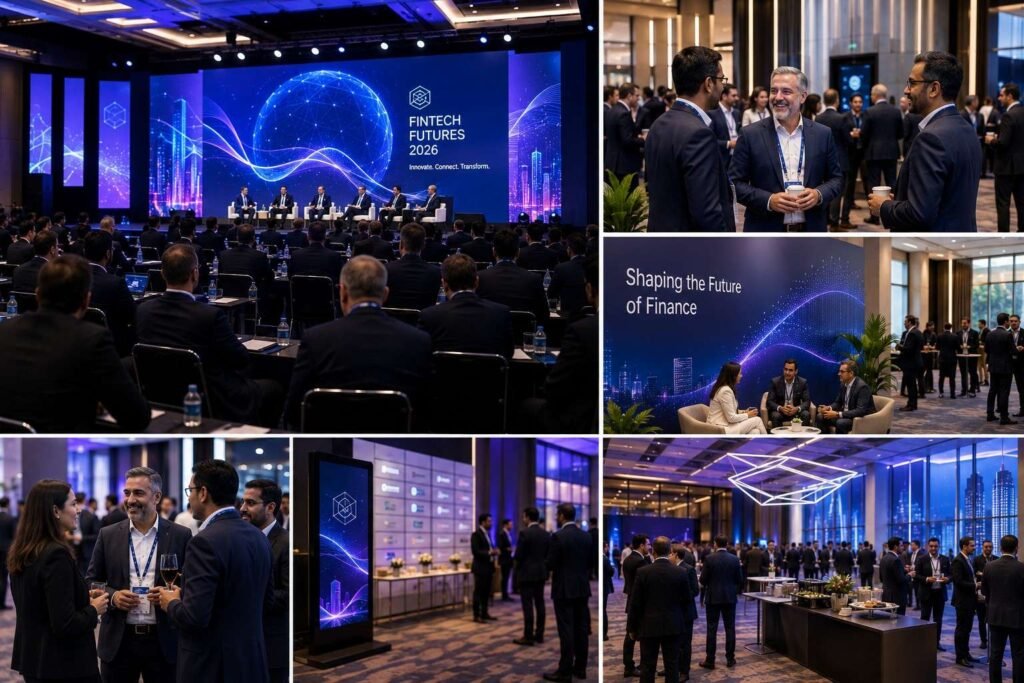
Fintech conference networking is the planned creation of opportunities for people across the financial technology ecosystem to meet, exchange ideas and explore potential business relationships. Unlike informal networking, it uses the conference programme, attendee information, meeting formats, venue design and event technology to make relevant connections easier. The people involved can include bank and NBFC executives, fintech founders, investors, insurers, payment companies, technology providers, regulators and policymakers. Good fintech conference networking usually has a clear purpose behind each interaction. A founder may want to meet an investor or potential enterprise customer. A bank executive may be looking for a technology partner. An investor may want introductions to companies in a particular segment. A regulator may be more interested in industry discussions and emerging technology trends. That is why networking should be treated as part of the conference experience rather than as spare time between keynote sessions. A useful networking programme connects four things:

  • People: identifying who should connect
  • Purpose: understanding why the connection matters
  • Place: creating an environment where the conversation can happen
  • Process: making the introduction, meeting and follow-up simple

When these elements work together, networking becomes more than exchanging contact details. It can lead to partnerships, investment discussions, customer relationships, knowledge sharing and longer-term business opportunities.

Why Is Networking Important at Fintech Conferences?
Fintech conference for financial leaders

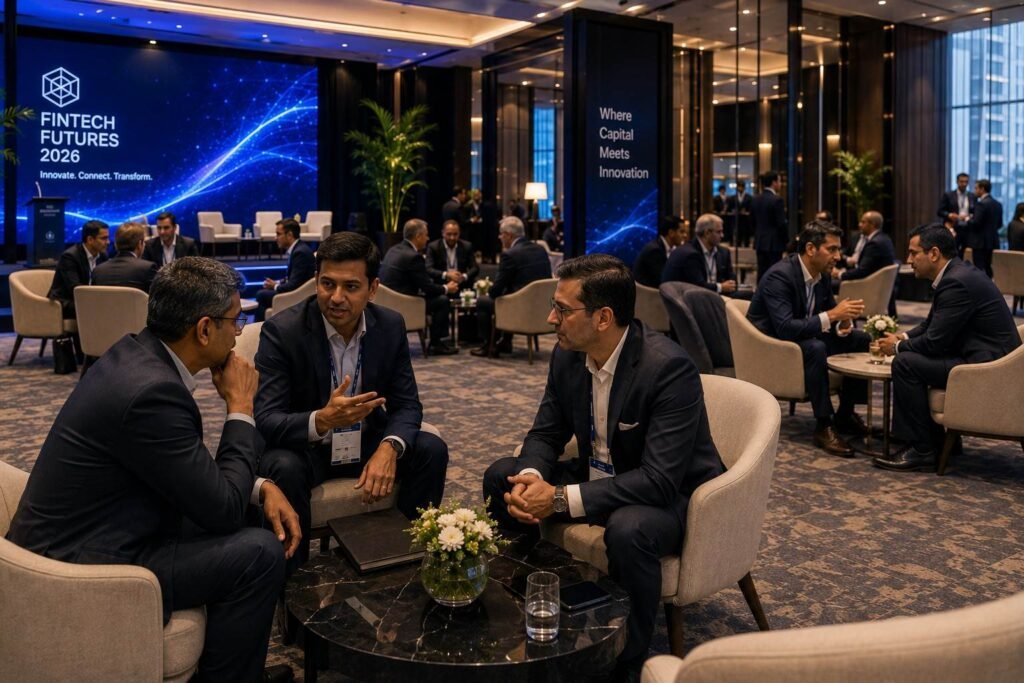
Networking gives financial leaders access to people and perspectives they may not encounter through their normal business routines. A conference can bring banks, fintech startups, investors, technology companies and other parts of the financial ecosystem into the same environment, creating opportunities for conversations that would otherwise take much longer to arrange. The value usually comes from several areas.


Strategic Partnerships

Fintech businesses often depend on partnerships between organisations with different capabilities. A technology provider may have the infrastructure but need access to financial institutions. A fintech startup may have a new product but need distribution or integration partners. A conference can shorten the distance between those organisations when introductions are planned around relevant business interests.


Investment and Business Development

Investors and founders can use fintech networking events to identify potential opportunities, while established financial companies can meet businesses offering new products or technologies. However, simply placing investors and founders in the same room does not guarantee useful discussions. The attendee profiles, meeting format and timing all influence whether the interaction turns into a meaningful conversation.


Peer Learning

Financial leaders also network to learn from their peers. A CIO may want to understand how another institution is approaching digital transformation. A CFO may be interested in operational efficiency or new payment models. A fintech founder may want to compare market challenges with other businesses working in the same sector. Smaller roundtables and moderated discussions can be particularly effective for these conversations because participants have a defined topic rather than having to find common ground from scratch.


Access to the Wider Financial Ecosystem

One of the strengths of a fintech conference is the concentration of different stakeholders in one place. Instead of attending separate meetings with a bank, technology provider, investor and industry expert, a financial leader may be able to encounter all of them during a single event. The organiser’s role is to make those interactions easier to navigate.


Stronger Relationships After the Event

The most valuable networking outcome may not happen during the conference itself. A short conversation can become a product demonstration, partnership discussion, investment meeting or follow-up call weeks later. For that reason, a good networking programme should consider what happens after attendees leave the venue as well. The objective is not to maximise the number of conversations. It is to increase the likelihood that the right conversations continue.

Who Should Financial Leaders Meet at a Fintech Conference?

A fintech conference can bring together a wide mix of people, but that does not mean every connection will be useful. A banking executive might be looking for a technology partner, an investor may want to meet promising fintech companies, while a founder could be trying to find customers or a distribution partner. The networking experience becomes more valuable when attendees can quickly find people who are relevant to what they are trying to achieve. For organisers, this means networking should be planned around the needs of the audience rather than simply creating a large space and expecting conversations to happen on their own.


Banking and Financial Institution Leaders

Bank and NBFC executives often attend fintech conferences to understand new technologies, meet potential partners and keep up with changes across financial services. They may want to speak with fintech companies, payment providers, cybersecurity firms or technology businesses that can solve a particular operational problem. Conversations with peers can be just as useful, especially when executives are dealing with similar challenges around digital transformation, compliance or customer experience. For this group, a few relevant introductions are usually more useful than a long list of random contacts.


Fintech Founders and Startups

For fintech founders, networking can be closely tied to business growth. An early-stage company may be looking for investors, mentors or its first institutional customers, while a more established business may be focused on distribution partnerships, enterprise clients or entering a new market. Giving founders an opportunity to state what they are looking for before the event can make matchmaking much more useful. It also saves them from spending valuable conference time trying to work out who might be interested in their business.


Investors and Venture Capital Firms

Investors attend fintech events to meet founders, understand new areas of the market and spot opportunities that may not be obvious from a pitch deck alone. Their interests can range from payments and digital banking to financial infrastructure, cybersecurity and new applications of AI. Rather than putting investors into a crowded networking session, organisers can create smaller investor-founder meetings or curated introductions where there is a clear reason for both sides to talk.


Technology and Infrastructure Providers

Technology providers are an important part of the fintech ecosystem, but their networking needs can easily become too sales-focused. Companies providing payment infrastructure, cloud services, data platforms, cybersecurity or AI solutions need opportunities to understand the actual problems financial institutions are trying to solve. A CIO looking for a specific technology capability, for example, is likely to get more value from a focused conversation with a relevant provider than from walking around an exhibition floor and collecting brochures.


Regulators and Policymakers

Fintech conferences also create an opportunity for dialogue between the industry and the people involved in shaping its regulatory environment. Regulators, policymakers and industry bodies may want to discuss new technologies, compliance challenges, consumer protection or changes affecting financial services. These conversations often need more structure than a quick networking introduction. Roundtables, moderated discussions and smaller policy-focused sessions can give participants enough time to explore the subject properly.


Strategic Partners and Potential Clients

Some valuable connections do not fit neatly into categories such as “investor” or “technology provider.” A fintech company may be looking for a large enterprise customer, a payment business may need a distribution partner, or a financial institution may want to work with a specialist provider. This is why good matchmaking should look at what an organisation needs and offers, rather than relying only on job titles.


Different Attendees Have Different Networking Goals

Attendee

What they may be looking for

CEO

Strategic partnerships, growth opportunities and senior-level relationships

CFO

Financial solutions, efficiency and commercial opportunities

CIO

Technology, digital transformation and implementation partners

CTO

Infrastructure, innovation and technical partnerships

Fintech founder

Customers, investors, partnerships and market access

Investor

Founders, investment opportunities and market insight

Bank or NBFC executive

Fintech solutions, technology providers and strategic partners

Regulator or policymaker

Industry dialogue, emerging trends and stakeholder discussions


These are useful starting points, not fixed categories. A founder may also be looking for a regulator, a CIO may be exploring an investment opportunity, and a CEO may simply want to meet other leaders facing similar challenges. The better approach is to ask attendees what they actually want from the conference before trying to match them. Knowing someone’s job title tells you who they are; knowing their objective tells you who they should meet.

How to Create Better Networking Opportunities at a Fintech Conference

A busy conference does not automatically create good networking. Attendees may have plenty of people around them but still struggle to find the right connections. The better approach is to plan networking around who people want to meet and why.


Start With Attendee Intent

Before the event, organisers should understand what attendees are hoping to achieve. Simple registration questions can identify whether someone is looking for customers, investors, technology providers, partners or industry peers. This information makes matchmaking more useful. A fintech founder looking for banking partnerships, for example, can be connected with relevant banking executives before the event rather than relying on chance encounters. The goal is not to collect excessive attendee data. It is to collect enough information to make introductions relevant.


Use Curated 1-to-1 Meetings

One-to-one meetings give senior executives a focused way to have useful conversations. Matching can consider the attendee’s role, organisation, interests, business needs and preferred meeting times. Short, scheduled meetings can work well because they give both people an opportunity to decide whether a longer discussion is worthwhile. Clear meeting locations are equally important; attendees should not waste valuable time searching for their table.


Build Executive Roundtables

Large networking areas are not always ideal for senior-level discussions. Executive roundtables create a smaller setting where participants can explore a specific topic with peers and relevant experts. For fintech events, themes could include digital transformation, payments, cybersecurity, AI in financial services or regulatory developments. A good mix of participants and an experienced moderator can keep the conversation focused and useful.


Create Hosted Networking

Not everyone feels comfortable approaching strangers at a large conference. A host or event representative can make relevant introductions based on shared interests or business objectives. This can be particularly useful for first-time attendees, investors, speakers and senior executives. A simple introduction can remove the awkward first step and get the conversation started.


Use Executive Breakfasts, Dinners and Private Gatherings

Some conversations need a quieter setting than the main conference floor. Executive breakfasts, dinners and invitation-only gatherings can provide a more relaxed environment for senior-level discussions. The guest list should have a clear purpose. A smaller group of relevant participants will usually create better conversations than a large gathering with no common objective.


Schedule Networking Into the Agenda

Networking should not be treated as leftover time between sessions. A 20-minute break can quickly become much shorter once attendees leave a hall, move to another area and collect refreshments. Build realistic networking windows into the agenda and consider dedicated meeting periods for high-value conversations.


Make Introductions Easy

Attendees should quickly understand:

  • who they are meeting
  • why the connection is relevant
  • where the meeting takes place
  • when it starts
  • how long it lasts

Clear signage, meeting schedules, apps, reminders and event staff can remove unnecessary friction.


Focus on Relevant Connections

The goal is not to maximise the number of conversations. A fintech founder may gain more from three relevant introductions than from exchanging contact details with 30 people. Likewise, a CIO may need only a few technology conversations that address a genuine business requirement. Effective fintech conference networking is about creating the right connections, not simply creating more of them.

How to Design a Fintech Conference Networking Area
Fintech industry networking

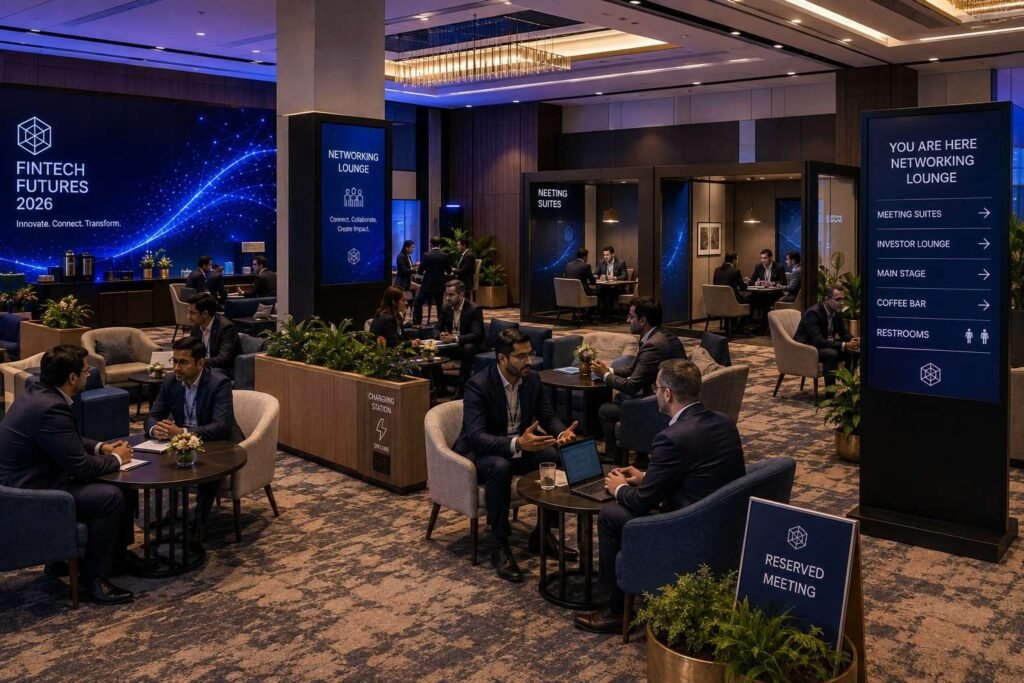
A networking area is more than a collection of tables and chairs. Its layout can influence whether attendees stay for a conversation, find their meeting easily and feel comfortable discussing business. For fintech conferences, where conversations may involve partnerships, investments or technology decisions, the space needs to support both planned meetings and informal interactions.


Location and Traffic Flow

Place the networking area somewhere attendees can reach easily from the main conference sessions, exhibition area or refreshment points. It should be visible without being directly beside a loud stage or busy demonstration zone. The attendee journey should feel simple: Session → Networking Area → Meeting → Next Session. If people have to walk across the venue or search for their meeting location, valuable networking time can quickly disappear.


Seating for Different Conversations

One seating style will not suit every interaction. A useful networking area can include small tables for one-to-one meetings, larger tables for informal discussions and semi-private spaces for longer conversations. The furniture should match the purpose. A quick introduction may need only a high table, while an executive discussion may require comfortable seating and more privacy.


Keep Noise Under Control

Good conversations are difficult when people have to compete with stage audio, exhibition demonstrations or loud background music. Where possible, keep networking areas away from major noise sources and use suitable partitions or sound-absorbing materials. This becomes particularly important when senior executives are discussing commercial, technical or financial matters.


Provide Privacy When Needed

Not every conversation should happen in an open lounge. Some attendees may need to discuss investments, partnerships or business requirements privately. A few semi-private areas, meeting rooms or well-positioned partitions can give attendees more flexibility without making the entire networking space feel closed off.


Make Meetings Easy to Find

Clear signage can prevent a surprisingly common problem: attendees arriving late because they cannot find their meeting. Meeting zones, table numbers and private rooms should use the same names across the event app, meeting confirmation and physical signage. Simple wayfinding gives attendees more time to talk and reduces the pressure on event staff.


Focus on Comfort

People are more likely to stay and continue a useful conversation when the environment is comfortable. Consider seating, temperature, ventilation, lighting, table spacing, refreshments and accessibility. Lighting should be bright enough for people to read and use their devices without making the space feel harsh.


Provide Reliable Connectivity

Wi-Fi and charging facilities are basic requirements for a modern networking area. Attendees may need to check schedules, access profiles, share information or arrange follow-up meetings while they are talking. Power points should be planned into the layout rather than added as an afterthought. Cables should never interfere with walkways.


Use Screens With Purpose

Digital screens can help display meeting schedules, networking announcements or location information. They should support the conversation rather than compete with it. The networking area should feel like a place to talk, not another presentation zone.


Keep Branding Useful

Branding can identify networking zones and give sponsors visibility, but too much of it can make the area feel like an advertising space. Use branding to guide people, distinguish different areas and reinforce the event identity while keeping the actual conversation spaces comfortable and uncluttered.


Quick Networking-Space Checklist

Element

What to consider

Location

Easy access without excessive noise

Seating

Options for short, informal and longer conversations

Acoustics

Separation from stages and loud demonstrations

Privacy

Semi-private or enclosed meeting options

Signage

Clear and consistent meeting directions

Lighting

Comfortable visibility

Connectivity

Reliable Wi-Fi and charging

Accessibility

Easy movement and usable seating

Screens

Helpful meeting and event information

Branding

Clear but not distracting


A well-designed networking area should make the next step obvious: find the right person, sit down comfortably and have the conversation. Good matchmaking may bring the right people together, but the physical environment helps determine whether that meeting is actually productive.

How Technology Can Improve Fintech Conference Networking
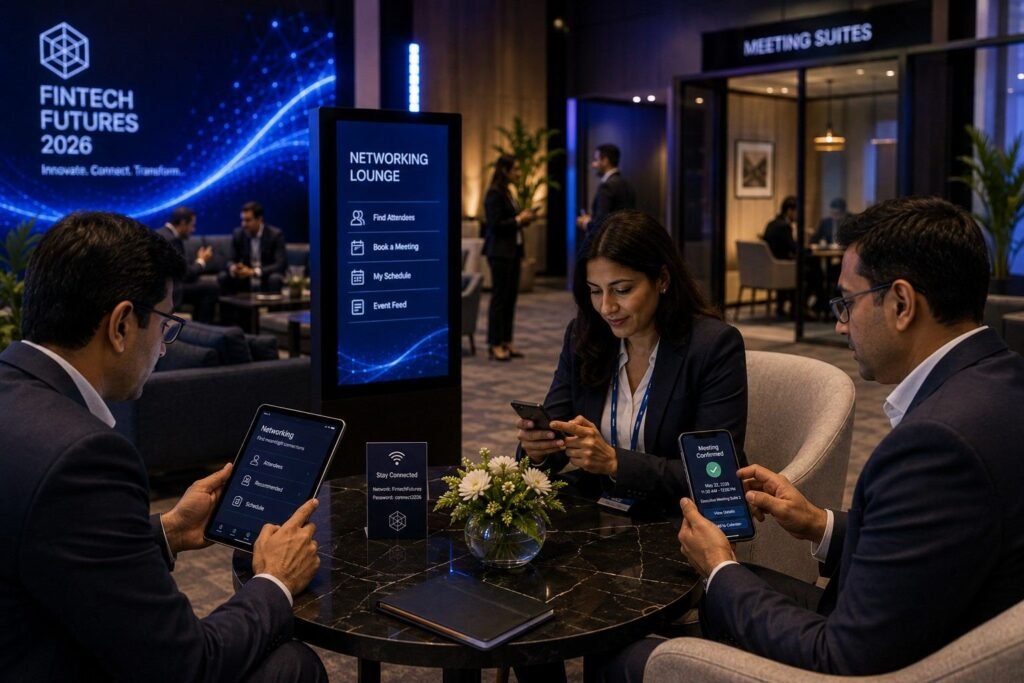
Fintech conference attendees

Technology can make fintech conference networking more convenient, but it should never become a substitute for genuine conversation. Its real value is simple: help attendees find the right people, organise meetings and stay connected without unnecessary effort.


Attendee Matchmaking

Matchmaking tools can use information such as an attendee’s role, organisation, interests and business goals to suggest relevant connections. For example, a fintech company looking for banking partners can be introduced to financial institutions exploring new technology. The quality of these recommendations depends on the information collected. A shorter registration form with useful questions is often more effective than asking attendees to complete a long profile.


Conference Networking Apps

A conference app can bring networking activities into one place. Attendees may be able to view profiles, request meetings, manage their schedules, find networking areas and receive event updates. The app should make things easier, not create another complicated platform to navigate. Clear profiles and simple actions are more valuable than a long list of features that attendees rarely use.


Meeting Scheduling

For senior executives, time is often limited. A meeting scheduler can make it easier to find an available slot, confirm the meeting and receive a reminder. A simple process works best: Find a relevant person → Request a meeting → Confirm a time → Receive a reminder → Meet. Clear meeting locations are just as important as the scheduling system. A perfectly planned meeting is of little use if the attendee cannot find it.


Digital Attendee Profiles

A useful attendee profile should quickly explain who someone is and why another participant might want to meet them. It can include:

  • Name and role
  • Organisation
  • Area of expertise
  • Business interests
  • Networking objectives

The purpose is not to create a detailed online biography. It is to answer one practical question: “Why should I speak with this person?”


QR-Based Contact Sharing

Digital contact sharing can make it easier to exchange professional details without relying entirely on printed business cards. A QR code can connect an attendee to a professional event profile or contact information. But collecting contacts should not be treated as the end goal. A successful networking programme should help people decide which connections are worth continuing.


Notifications and Meeting Reminders

Busy conference schedules make missed meetings easy. Timely reminders can help attendees keep track of meetings, location changes and networking activities. Useful notifications might cover:

  • upcoming meetings
  • meeting-location changes
  • networking sessions
  • private gatherings
  • important schedule updates

Keep them limited and relevant. Too many notifications can quickly become background noise.


How AI Can Support Networking

AI can assist with attendee matching, session recommendations and identifying potential connections based on stated interests. It can make the discovery process faster, but it cannot guarantee that two people will have a valuable conversation. Human judgement still matters, particularly for senior-level introductions and commercially sensitive discussions. A practical approach is: Technology suggests → organisers refine → attendees connect.


Post-Event Follow-Up

Technology can also keep networking alive after the conference. Attendees can revisit profiles, review meetings, exchange information and arrange follow-up conversations. For organisers, this stage provides a better indication of networking quality. A large number of contact exchanges may look impressive, but follow-up meetings and ongoing business conversations provide a much clearer signal that the connections were useful.


Keep Technology in the Background

The best conference networking technology should make the experience feel easier, not more complicated. If attendees can find relevant people, schedule meetings, locate them and continue the conversation with minimal effort, the technology is doing its job. The goal is not to make networking more digital. It is to make meaningful human connections easier to start and easier to continue.


What Financial Leaders Expect From Fintech Conference Networking

Financial leaders do not all attend a fintech conference with the same goal. A CEO may be looking for a strategic partnership, while a CIO may want to compare technology solutions. An investor may be searching for promising companies, while a regulator may want to discuss industry developments. Understanding these differences helps organisers create networking opportunities that feel relevant rather than treating every attendee the same.


CEOs: Strategic Relationships and Business Growth

For CEOs, networking is usually about relationships that can create value beyond the conference. They may be interested in strategic partnerships, new markets, investors, customers or senior industry contacts. They rarely need dozens of introductions. A few well-chosen conversations can be far more useful. Executive meetings, private discussions, hosted introductions and leadership dinners can provide the right setting for these interactions.


CFOs: Commercial and Financial Opportunities

CFOs may be interested in improving financial efficiency, managing risk, exploring payment solutions or finding commercial partners. Their conversations may involve financial technology providers, banking partners, investors and other finance leaders. The most useful discussions usually begin with a business challenge rather than a product pitch. A networking programme should therefore make it easier for CFOs to meet people who can address a genuine requirement.


CIOs: Technology and Transformation

CIOs often attend fintech conferences to understand how technology can support wider business transformation. They may want to explore cloud infrastructure, data platforms, cybersecurity, AI, integration and technology partnerships. Private meetings or focused technology roundtables can work well for this audience because these conversations often need more detail than a quick exchange on an exhibition floor.


CTOs: Innovation and Technical Partnerships

CTOs may have a stronger interest in the technical side of fintech, including APIs, infrastructure, emerging technologies, payment systems, cybersecurity and AI. Focused technical discussions and specialist roundtables can be more useful than general networking sessions, particularly when participants are facing similar technology challenges.


Fintech Founders: Customers, Capital and Partnerships

Founders often have several networking priorities at once. An early-stage startup may be looking for investors, mentors or its first banking relationships, while a growing fintech may be focused on enterprise customers, distribution or expansion into new markets. This is where attendee profiling becomes useful. Founders should be able to explain what type of connection they need instead of being placed into a broad “startup” category.


Investors: Opportunities and Market Insight

Investors may attend to meet founders, explore emerging fintech segments and understand where the market is heading. Their interests can include payments, digital banking, financial infrastructure, cybersecurity, AI and new financial business models. Where demand is strong, dedicated investor-founder meetings can make these conversations more focused than general networking.


Regulators and Policymakers: Industry Dialogue

Regulators and policymakers bring a different perspective to fintech networking. Their conversations may focus on emerging technology, regulatory developments, consumer protection and wider industry trends. These discussions often work better in moderated roundtables or smaller sessions where participants have enough time to explore a subject properly.


Networking Objectives by Role

Financial leader

What they may be looking for

Useful formats

CEO

Strategic partnerships, growth and senior relationships

Executive meetings, dinners, roundtables

CFO

Financial solutions, efficiency and commercial opportunities

1-to-1 meetings, specialist discussions

CIO

Technology, transformation and implementation partners

Private meetings, technology roundtables

CTO

Innovation, infrastructure and technical partnerships

Technical sessions, focused meetings

Fintech founder

Customers, investors and partnerships

Matchmaking, investor meetings

Investor

Founders, opportunities and market insight

Curated meetings, investor sessions

Regulator

Policy, industry dialogue and emerging trends

Roundtables, closed discussions


These categories are useful for planning, but they should not be treated as fixed rules. A CIO may also be looking for an investment opportunity, while a founder may want to meet a regulator or policy expert. The better approach is to combine role-based segmentation with individual attendee intent. A job title tells an organiser who someone is; their objective gives a much clearer indication of who they should meet. For financial leaders with limited time, that distinction can make the difference between a conference filled with introductions and one that produces genuinely useful business relationships.

Fintech Conference Networking Before, During and After the Event

Networking should start before attendees arrive and continue after the conference ends. The strongest fintech conference networking programmes treat it as a complete journey rather than something that happens only during coffee breaks or dedicated sessions.


Before the Conference: Prepare the Right Connections

The pre-event stage allows organisers to understand what attendees want from networking. Registration can ask which sectors they want to meet, whether they are looking for customers, investors or partners, and whether they prefer one-to-one meetings or group discussions. Once this information is available, attendees can identify relevant people before arriving at the venue. A fintech founder looking for banking partnerships, for example, can request meetings with suitable banking executives in advance.  Pre-booked meetings are particularly useful for senior leaders with limited time. Meeting confirmations should clearly provide the time, location and participant details, along with reminders before the event.


During the Conference: Make Connections Easy

Once the event begins, the focus shifts to making those planned connections simple while leaving room for spontaneous conversations.

  • Provide Dedicated Networking Windows: Networking needs realistic space in the agenda. If a short break is spent walking between rooms and collecting refreshments, there may be little time left for an actual conversation. Dedicated networking periods give attendees a better opportunity to meet without constantly choosing between networking and attending another important session.
  • Facilitate 1-to-1 Meetings: Scheduled meetings should have clear locations and simple wayfinding. Numbered tables, meeting zones and event staff can make it easier for attendees to find each other and avoid unnecessary delays.
  • Use Roundtables and Hosted Discussions: Roundtables give attendees an immediate topic to discuss, while hosts can introduce people who have complementary interests. This can be especially helpful for attendees who may not feel comfortable approaching strangers.
  • Leave Room for Informal Networking: Not every useful connection needs to be scheduled. Coffee areas, lounges and exhibition spaces can encourage spontaneous conversations, provided they are comfortable and not overwhelmed by noise or crowds.


After the Conference: Continue the Conversation

A conference should not be considered the end of a networking relationship. Attendees should have an easy way to revisit the people they met, exchange information and arrange follow-up conversations. Where appropriate, organisers can also facilitate a second introduction. For example, a founder may meet a senior executive who wants to involve another member of their technology or procurement team. Helping that conversation move forward can add value beyond the event itself. Post-event feedback can also reveal whether networking actually worked. Useful questions include:

  • Did you meet the people you wanted to meet?
  • Were the suggested connections relevant?
  • Did any conversation lead to a follow-up?
  • Which networking format worked best?
  • What could improve the next event?


The Complete Networking Journey

Stage

Key activities

Main objective

Before

Profiling, matchmaking, meeting requests

Find relevant connections

During

1-to-1 meetings, roundtables, hosted networking

Create useful conversations

After

Follow-up, introductions and feedback

Develop relationships


The three stages should work together. Before the event, identify the right connections. During the event, make those conversations easy. After the event, give useful relationships a chance to continue. That continuity is what turns conference networking from a short interaction into a longer-term business opportunity.

How to Measure Networking Success at a Fintech Conference

A busy networking area does not automatically mean a conference has delivered valuable networking. Hundreds of attendees may exchange contact details, but that does not tell an organiser whether those conversations were relevant or whether they continued afterwards. A better approach is to look at the complete networking journey, from the first meeting request before the event to the conversations that continue after the conference.


Measure the Quality of Matches Before the Event

Before the conference begins, organisers can review how well the matchmaking process is working. Meeting requests, accepted matches and attendee participation can indicate whether people are finding relevant connections. However, numbers alone can be misleading. If attendees are regularly rejecting suggested matches, the problem may be with the matching criteria rather than the audience itself. The more useful question is whether people are being introduced to others they genuinely have a reason to meet.


Track What Happens During the Conference

During the event, organisers should look at whether scheduled networking is actually taking place. Completed meetings, roundtable participation, use of networking areas and hosted introductions can show how actively attendees are using the opportunities provided. Missed meetings can also provide useful information. If several attendees fail to reach their meetings, the issue could be unclear signage, inconvenient locations, an overcrowded agenda or poor scheduling. The number identifies the problem, but the organiser needs to understand the reason behind it.

Metric

What it shows

Meetings scheduled

Interest in structured networking

Meetings completed

Actual participation

Roundtable participation

Engagement with group discussions

Networking-area usage

Whether the space is being used effectively

Hosted introductions

Demand for facilitated connections

Missed meetings

Possible planning or navigation issues


Measure What Happens After the Event

The real value of networking often becomes clearer once the conference is over. A conversation that starts with a short introduction may develop into a product discussion, partnership meeting, investment conversation or potential customer relationship. This is why organisers should look beyond contact exchanges. A business card or digital profile connection shows that two people interacted. A follow-up meeting gives a much stronger indication that the conversation had value.


Measure Networking Value for Sponsors

Sponsors may judge networking differently from attendees. A technology company exhibiting at a fintech conference may be more interested in conversations with qualified banking or financial-services decision-makers than in the total number of visitors to its booth. Tracking relevant meetings, decision-maker interactions and follow-up opportunities can give sponsors a clearer picture of the commercial value generated by the event.


Ask Attendees About Their Experience

Event data can show what happened, but attendee feedback can explain why. A short post-event survey can ask whether attendees met the people they wanted to meet, whether suggested connections were relevant, whether there was enough time for networking and which format they found most useful. These responses can reveal practical problems that numbers cannot. For example, attendees may like the matchmaking system but find the meeting area difficult to locate. That insight can directly improve the next event.


Look Beyond the Event Day

Some fintech relationships take time to develop. An investor may continue speaking with a founder for several months, while a technology partnership may require further discussions with procurement, security or implementation teams. For this reason, networking should not be judged entirely on what happens during the conference itself. Follow-up meetings, partnership discussions, qualified opportunities, repeat participation and sponsor renewal can provide a clearer picture of longer-term value.


A Practical Networking Measurement Framework

Stage

Metric

What it measures

Before the event

Match acceptance

Relevance of suggested connections

Before the event

Meeting requests

Attendee interest

During the event

Meetings completed

Actual networking activity

During the event

Roundtable participation

Engagement

During the event

Networking-area usage

Physical experience

After the event

Follow-up meetings

Quality of connections

After the event

Qualified opportunities

Business potential

Longer term

Partnerships or pipeline influenced

Commercial impact

Sponsor level

Qualified interactions

Sponsor value

Overall

Attendee feedback

Networking experience

The right metric ultimately depends on the purpose of the conference. If the goal is to connect fintech founders with investors, the organiser should focus on whether those introductions happened and continued. If the objective is to connect financial institutions with technology providers, relevant meetings and follow-up opportunities become more important. Successful fintech conference networking is not about creating the most interactions. It is about creating connections that have a reason to continue.

The 4P Framework for Fintech Conference Networking

A simple way to plan effective fintech conference networking is to look at four connected elements: People, Purpose, Place and Process. Together, they help organisers move beyond simply adding a networking session to the agenda and instead design the complete experience.

4P Element

Key Question

What It Means for the Conference

Example

People

Who needs to meet?

Identify the attendees who could benefit from connecting, such as financial leaders, fintech founders, investors, technology providers and strategic partners.

Fintech founder + banking executive

Purpose

Why should they meet?

Define the reason behind the introduction, whether it is a partnership, investment opportunity, technology requirement or business discussion.

Explore a distribution partnership

Place

Where should they meet?

Choose an environment that suits the conversation, considering privacy, seating, acoustics, accessibility and connectivity.

Quiet executive meeting area

Process

How will the connection happen?

Create a simple journey from attendee profiling and matchmaking to the meeting and follow-up.

Curated match + scheduled meeting

The four elements work together. Having the right people means little if they have no clear reason to connect. A strong business purpose can still lose value if there is no suitable place for the conversation. And even the right people, purpose and space will not help if attendees cannot easily find or schedule their meetings.People identify the right connection. Purpose gives it meaning. Place creates the right environment. Process makes the interaction happen.

Conclusion

Strong fintech conference networking does not happen simply because the right people are present in the same venue. It requires deliberate planning around who should meet, why the connection matters, where the conversation should happen and how the relationship can continue after the event. For financial leaders, that approach can make a significant difference. A well-planned one-to-one meeting, focused roundtable or private conversation may create more value than dozens of unstructured introductions.


For organisers, the opportunity is to look at networking as part of the complete conference experience. Attendee profiling and matchmaking can help identify relevant connections before the event. A well-designed agenda can create realistic opportunities to meet. The physical environment can make conversations more comfortable, while technology can simplify scheduling and follow-up. The most useful measure of success is not how many business cards were exchanged or how busy a networking lounge appeared. It is whether the conference helped the right people have meaningful conversations that continued beyond the event. That is ultimately what effective fintech conference networking should achieve: fewer random interactions, more relevant connections and a better foundation for lasting business relationships.

FAQs

1. What is fintech conference networking?

Fintech conference networking is the planned process of helping financial leaders, fintech companies, investors, technology providers, regulators and other industry stakeholders connect for relevant business or professional conversations. It can include one-to-one meetings, executive roundtables, matchmaking, hosted introductions, networking lounges, dinners and digital networking tools.

Networking allows attendees to find potential partners, investors, customers, technology providers and industry peers in one place. For financial leaders with limited time, a well-planned networking programme can make it easier to identify relevant people and move from a brief introduction to a more useful business conversation.

Fintech conferences can create networking opportunities through curated one-to-one meetings, executive roundtables, hosted introductions, networking lounges, business matchmaking, private gatherings and scheduled networking periods. The strongest programmes combine these formats with attendee information so that people are connected based on their interests and objectives rather than simply being placed in the same room.

Financial leaders can network more effectively by defining their objectives before attending, identifying relevant participants, scheduling priority meetings and using focused roundtables or smaller networking sessions. It is usually more productive to prepare for a few relevant conversations than to try to meet as many people as possible.

There is no single format that works for every fintech conference. One-to-one meetings are useful for specific business discussions, while executive roundtables can support peer learning and industry dialogue. Networking lounges work well for informal conversations, and hosted dinners or private gatherings can create a more focused environment for senior-level relationships.

Matchmaking uses attendee information such as professional role, organisation type, interests and networking objectives to identify potentially relevant connections. It reduces the time attendees spend searching for people and can make scheduled meetings more purposeful. Good matchmaking should support human judgement rather than assume that a software-generated match will automatically produce a valuable relationship.

A networking area should provide a mix of comfortable seating, one-to-one meeting tables and, where appropriate, semi-private spaces. It should be easy to reach, clearly signposted and separated from excessive noise. Reliable Wi-Fi, charging facilities, suitable lighting, accessibility and adequate space between conversations can also improve the experience.

Organisers should identify networking objectives, understand attendee interests, establish matchmaking criteria, create relevant attendee profiles and provide opportunities to schedule meetings before the event. They should also plan the physical networking areas, allocate sufficient time in the agenda and make meeting locations easy to understand.