Executive Summary
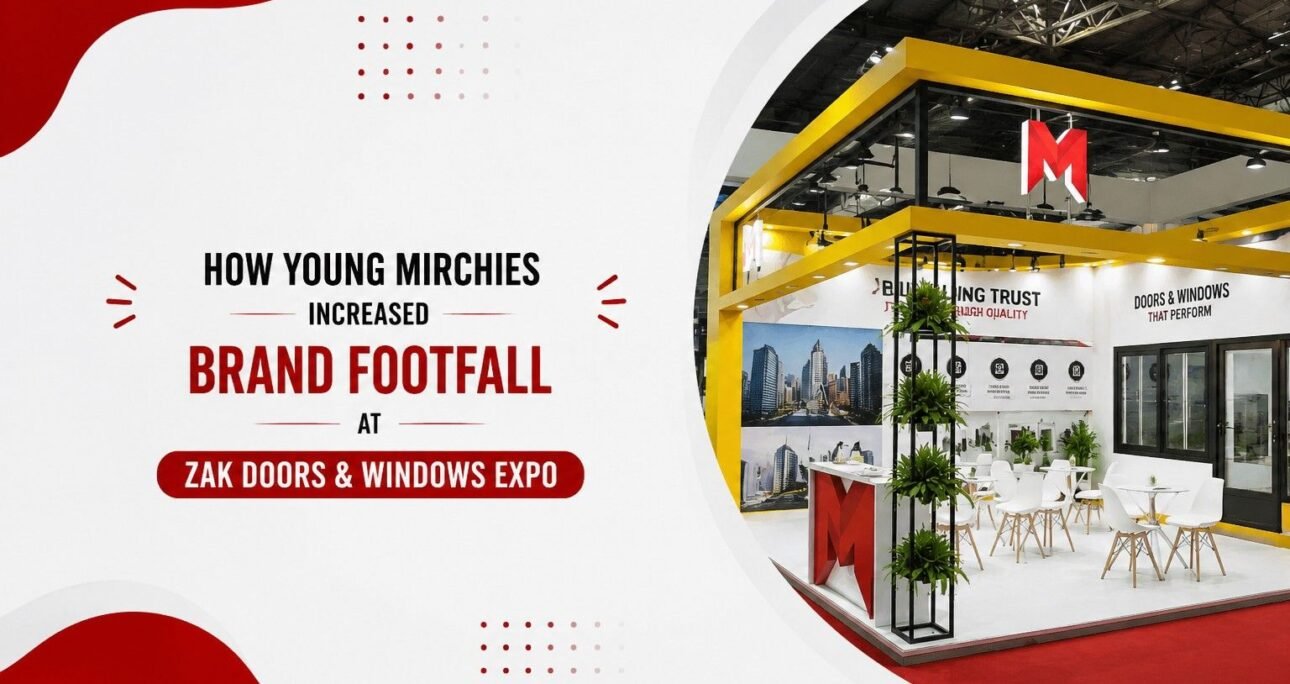
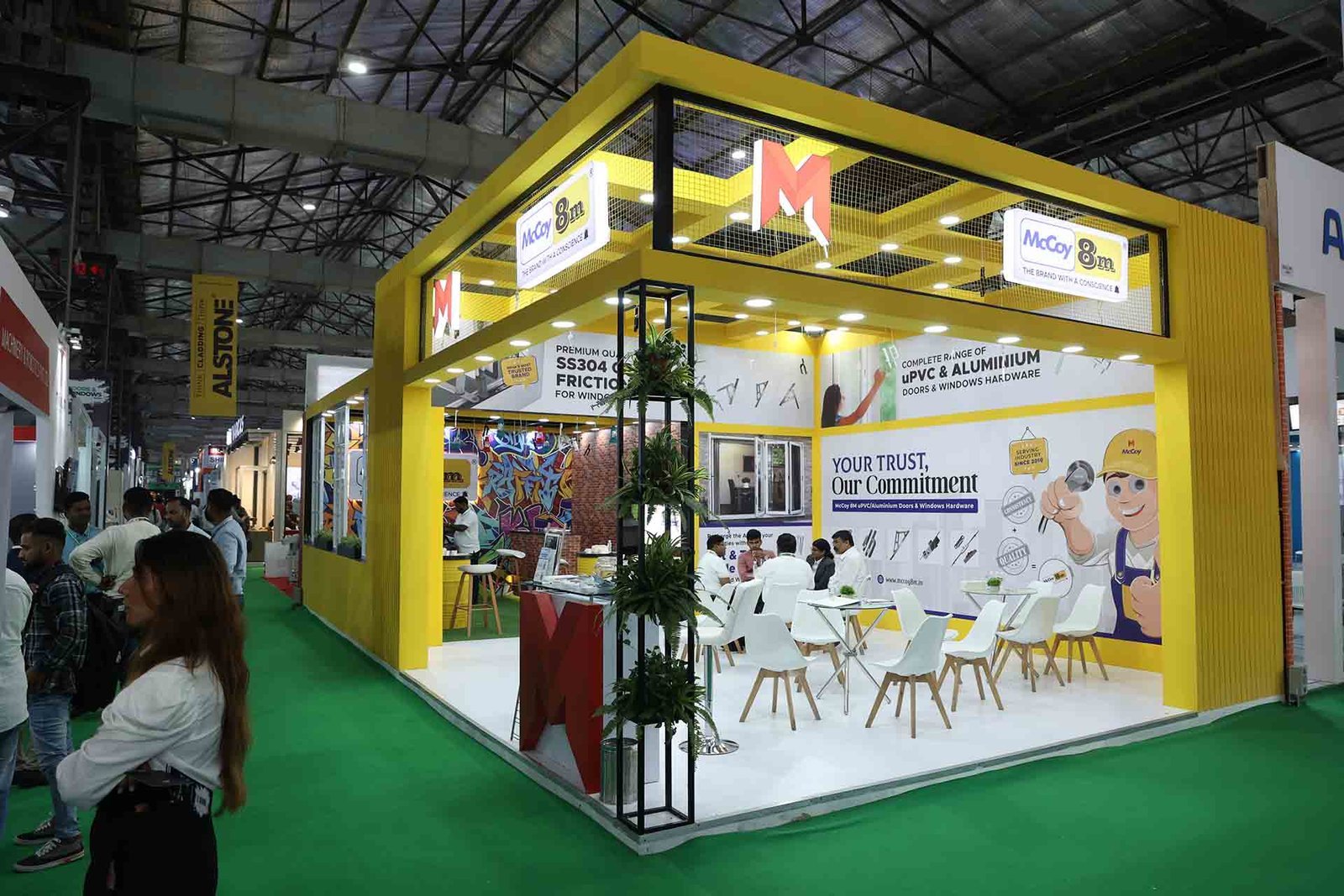
At ZAK Doors & Windows Expo, attracting visitor attention was only part of the challenge. With hundreds of exhibitors competing for the same audience, the real objective was to increase qualified footfall, encourage meaningful engagement and create opportunities for productive business conversations. Young Mirchies developed an exhibition strategy centred around visitor behaviour rather than booth aesthetics alone. By combining strategic space planning, open booth architecture, clear brand communication, product experience zones and dedicated engagement areas, the exhibition space was transformed into a destination that encouraged visitors to stop, explore and interact.
Rather than functioning as a traditional product showcase, the booth was designed as an experience-led environment that guided attendees through a clear buyer journey, from initial curiosity to deeper engagement. Every element was planned to improve accessibility, increase dwell time, support product discovery and facilitate meaningful discussions. The result was a stronger exhibition presence, improved visitor engagement, higher-quality interactions and a more memorable brand experience. The project demonstrates how strategic exhibition design can support B2B marketing, industrial marketing, trade show marketing and lead generation when the physical environment is designed around the people using it.
The Exhibition Challenge: Standing Out at ZAK Doors & Windows Expo
Trade shows are filled with opportunity, but they are equally filled with competition. At ZAK Doors & Windows Expo, hundreds of exhibitors compete for the attention of architects, developers, fabricators, contractors, consultants and industry decision-makers. Every booth showcases products, technical expertise and compelling brand messages. In such a crowded environment, simply being present is not enough. The participating brand faced a common challenge experienced by many exhibitors: how to attract the right visitors and encourage meaningful engagement in a hall full of competing options.
Visitors attending the expo often have limited time and specific objectives. They move quickly through the exhibition floor, deciding within seconds which booths are worth exploring and which they will pass by. This makes the first impression incredibly important. The goal was not just to create visibility. The objective was to increase qualified footfall, encourage visitors to spend more time at the booth and create opportunities for productive business conversations. Several key challenges needed to be addressed before the exhibition:
Challenge | Business Impact |
High exhibitor competition | Reduced visibility among competing brands |
Limited visitor attention span | Fewer opportunities to attract engagement |
Technical product offerings | Required stronger communication and demonstration |
Similar booth designs across the floor | Difficult to differentiate from competitors |
Fast-moving visitor traffic | Lower chances of converting attention into interaction |
To overcome these challenges, the solution required more than an attractive exhibition stand. It required a strategic approach that combined visitor psychology, spatial planning, brand communication and engagement-focused design. Rather than focusing solely on how the booth would look, Young Mirchies focused on a more important question: How can the booth attract attention, encourage exploration and convert visitor curiosity into meaningful conversations? That question became the foundation of the entire exhibition strategy.
Understanding Visitor Behaviour: Why Some Booths Attract Footfall While Others Get Ignored
Before developing the booth strategy, Young Mirchies focused on understanding one critical factor that influences exhibition success: visitor behaviour. Many exhibitors assume visitors carefully evaluate every booth they encounter. In reality, exhibition attendees make quick decisions based on what they see, understand and experience within the first few seconds. At an event like ZAK Doors & Windows Expo, visitors are exposed to hundreds of products, brands and marketing messages throughout the day. With limited time available, they naturally prioritise booths that appear relevant, accessible and worth exploring. This means that increasing footfall is not just about having an attractive booth. It is about creating an experience that captures attention and encourages visitors to take the next step.
The Visitor Decision Journey
Visitor Action | Average Decision Time |
Notices a Booth | 2–3 Seconds |
Assesses Relevance | 3–5 Seconds |
Decides to Approach | 5–10 Seconds |
Enters the Booth | 10–20 Seconds |
Starts a Conversation | 30+ Seconds |
The challenge for exhibitors is that most visitors decide whether to engage long before a sales conversation begins. If a booth fails to communicate value quickly, visitors often move on.
The Exhibition Footfall Funnel
Young Mirchies mapped the typical visitor journey to understand where engagement is gained and where it is lost.
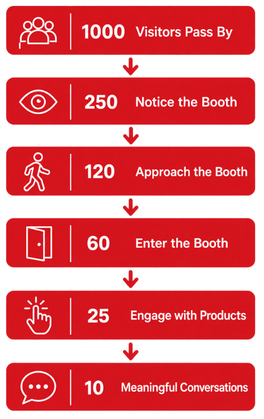
The goal was not to attract every visitor in the exhibition hall. It was to improve movement through each stage of the funnel and increase the number of qualified visitors who chose to engage with the brand.
Why Visitors Ignore Exhibition Booths
Through experience across multiple exhibitions, Young Mirchies has identified several common reasons why visitors walk past booths without stopping. Cluttered messaging can create confusion, closed booth layouts can discourage entry, poor visibility can reduce awareness, a lack of interaction opportunities can lower engagement, and generic booth design can make differentiation difficult. When visitors cannot quickly understand what a brand offers or feel uncertain about entering a space, they are more likely to continue walking.
Key Insight That Shaped the Strategy
One of the most important findings was that visitors are not looking for more information; they are looking for relevance. They want to know whether the solution is relevant to their business, whether it is worth spending time there, whether they can quickly understand what the company offers and whether there is a reason to stop and explore. Answering these questions became the foundation of the exhibition strategy. Rather than designing a booth around products alone, Young Mirchies focused on designing an experience around visitor behaviour.
The Young Mirchies Strategy: Designing for Footfall, Not Just Visibility
Once the visitor behaviour analysis was complete, the focus shifted from identifying challenges to creating solutions. Rather than asking, “How can we build an attractive booth?”, Young Mirchies approached the project with a different question: “How can we create an exhibition experience that encourages visitors to stop, enter, explore and engage?” This shift in perspective became the foundation of the entire strategy. At major trade shows like ZAK Doors & Windows Expo, attracting attention is only the first step. Real exhibition success happens when visitors choose to spend time inside a booth, interact with the brand and participate in meaningful conversations. To achieve this, Young Mirchies developed a strategy built around four key objectives.
Strategic Objectives
Objective | Focus Area |
Attract Attention | Improve visibility and brand recognition |
Encourage Entry | Create an inviting and accessible space |
Increase Engagement | Keep visitors interacting with products and solutions |
Support Conversations | Facilitate meaningful business discussions |
Every design and execution decision was aligned with these objectives.
Objective 1: Capture Attention Quickly
Visitors make decisions within seconds. The booth therefore needed to communicate relevance immediately, even from a distance. Instead of overwhelming attendees with excessive information, the strategy focused on clear messaging, strong visual branding, strategic product visibility and distinctive design elements. The goal was to create curiosity and encourage visitors to take a closer look.
Objective 2: Create an Open and Welcoming Environment
One of the most common reasons visitors avoid booths is uncertainty. If a space appears closed, crowded or difficult to navigate, visitors often continue walking. To overcome this, Young Mirchies planned an open-layout experience that encouraged natural movement. The booth architecture was designed to feel approachable from multiple directions, making it easier for visitors to step inside and begin exploring.
Why It Matters
Visitor Barrier | Strategic Response |
Unclear entry points | Open architecture |
Restricted movement | Accessible layout |
Hesitation to engage | Welcoming environment |
Objective 3: Increase Visitor Engagement
Footfall is valuable, but engagement creates impact. The strategy therefore focused on encouraging visitors to spend more time inside the booth rather than simply passing through it. Dedicated product and interaction zones were incorporated to help visitors ask questions, explore solutions, understand product applications and interact with the team. This transformed the booth from a display space into an experience-led environment, bringing experiential marketing into the physical exhibition experience.
Engagement Strategy
Goal | Approach |
Increase dwell time | Experience-driven layout |
Improve product understanding | Structured information flow |
Encourage interaction | Dedicated engagement zones |
Objective 4: Turn Engagement into Conversations
The ultimate purpose of exhibition participation is not simply attracting visitors. It is creating opportunities for meaningful business discussions. Young Mirchies therefore designed a visitor journey that naturally guided attendees from exploration to interaction. Instead of forcing conversations, the environment encouraged them. Visitors could move seamlessly from discovering products to discussing solutions with the team. This helped connect the physical visitor experience with lead generation and sales enablement.
Visitor Journey Framework
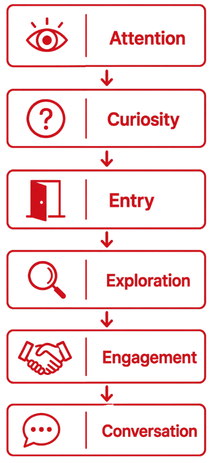
This journey ensured that every stage supported the next, creating a smoother and more effective visitor experience.
Solutions Implemented by Young Mirchies
With a clear understanding of visitor behaviour and a strategy focused on increasing footfall, the next step was execution. Rather than relying on a single design feature, Young Mirchies implemented a combination of strategic solutions that worked together to attract visitors, encourage exploration and support meaningful interactions. Every element of the booth served a specific purpose.
1. Strategic Space Planning
The priority was optimising how visitors would move through the booth. Instead of creating a product display area, the space was planned as an experience that guided visitors naturally from one zone to another. Dedicated areas were created for brand discovery, product showcases, visitor interaction and business discussions. This structured layout reduced congestion and made it easier for visitors to explore the booth comfortably.
Objective | Solution |
Improve navigation | Defined visitor zones |
Encourage exploration | Logical booth flow |
Reduce crowding | Dedicated engagement areas |
The planning also supported wayfinding, ensuring visitors could understand the space without feeling directed through it.
2. Open Booth Architecture
Many exhibition booths unintentionally create barriers through enclosed layouts and restricted access points. To maximise footfall, Young Mirchies adopted an open architecture approach. The booth was designed to feel welcoming from multiple directions, allowing visitors to enter naturally without feeling restricted. The approach improved visibility across the exhibition hall, made visitor access easier, increased spontaneous entry and supported smoother movement within the booth.
3. Clear Brand Communication
Visitors often decide within seconds whether a booth is relevant to them. To support faster decision-making, Young Mirchies developed a clear communication hierarchy. Rather than overwhelming visitors with information, the booth focused on communicating who the brand is, what solutions it offers and why visitors should engage.
Communication Element | Purpose |
Brand Identity | Recognition |
Product Messaging | Relevance |
Solution Messaging | Value |
Call-to-Action | Engagement |
This helped visitors quickly understand the brand’s offering and encouraged further interaction. The communication strategy was supported by environmental graphics, ensuring that branding and messaging worked as part of the physical environment rather than appearing as disconnected visual elements.
4. Product Experience Zones
One of the biggest challenges in the doors, windows and façade industry is explaining technical products effectively. Instead of relying on static displays, Young Mirchies created dedicated product experience zones where visitors could engage more closely with showcased solutions. Visitors could explore products in detail, understand practical applications, ask questions and interact with brand representatives.
Zone | Purpose |
Display Zone | Showcase products |
Experience Zone | Encourage interaction |
Consultation Zone | Support discussions |
These zones helped connect product discovery with the broader customer experience, making the interaction more relevant to individual visitor requirements.
5. Strategic Lighting & Visual Focus
Lighting was used as a strategic tool rather than just a decorative element. The objective was to draw attention to key areas of the booth while creating a professional and inviting atmosphere. Lighting helped highlight featured products, improve visibility from a distance, guide visitor attention and strengthen the overall booth presence.
6. Dedicated Meeting & Discussion Areas
Attracting visitors is only the first step. The real value comes from meaningful conversations. To support this objective, Young Mirchies integrated dedicated discussion spaces within the booth. These areas allowed visitors to move naturally from exploration to conversation without leaving the booth environment. They provided a comfortable setting for project discussions, technical consultations, partnership opportunities and future business planning. This made the booth an important part of the brand’s sales enablement process rather than simply a visual marketing space.
Behind the Build: Turning Strategy into Reality
A successful exhibition booth is the result of much more than good design. Behind every engaging visitor experience is a carefully managed process involving planning, visualisation, fabrication, logistics and on-site execution. While visitors only see the finished booth, a significant amount of work happens behind the scenes to ensure that every element performs as intended on the exhibition floor. For the ZAK Doors & Windows Expo project, Young Mirchies managed the entire process from concept development to final installation, ensuring that the strategic objectives remained consistent throughout execution.
Scope of Work Delivered
Young Mirchies provided end-to-end exhibition solutions to bring the project to life.
Service | Delivered |
Exhibition Strategy | ✓ |
Concept Development | ✓ |
3D Booth Design | ✓ |
Fabrication & Production | ✓ |
Graphic Production | ✓ |
Lighting Integration | ✓ |
On-Site Installation | ✓ |
Project Management | ✓ |
This integrated approach ensured seamless coordination across every stage of the project.
From Concept to 3D Visualisation
Before fabrication began, the booth concept was transformed into detailed 3D visualisations. This phase helped the team evaluate visitor flow, branding visibility, product placement, interaction zones and meeting spaces. The visualisation process allowed potential improvements to be identified early, reducing on-site challenges and ensuring that the final booth aligned with the original strategy.
Precision Fabrication & Production
Once the design was finalised, the project moved into fabrication. Every structural element, branding component, display unit and lighting feature was produced according to the approved specifications. The production process focused on high-quality finishes, structural accuracy, brand consistency and efficient installation. By maintaining strict quality standards during fabrication, Young Mirchies ensured that the final booth delivered both visual impact and functional performance.
On-Site Installation & Execution
Exhibition venues operate on strict timelines, making efficient installation critical. The Young Mirchies team coordinated transportation, assembly, branding installation, lighting setup and final detailing to ensure the booth was fully prepared before the event opened. Structural setup focused on stability and safety, while branding placement, lighting configuration and product display setup were reviewed to ensure maximum visibility and visitor engagement. Final quality checks ensured the finished space matched the approved design.
The Visitor Experience: From Curiosity to Conversation
At exhibitions, visitors rarely remember every booth they walk past. They remember the booths that capture their attention, offer value and create meaningful interactions. With this understanding, Young Mirchies designed the ZAK Doors & Windows Expo booth as more than a display space. The goal was to create a visitor journey that encouraged attendees to move naturally from curiosity to engagement. Every touchpoint was planned to make the experience intuitive, informative and memorable.
Stage 1: Capturing Attention
The visitor journey began long before attendees entered the booth. As visitors navigated the exhibition floor, the booth’s open design, strong visual branding and clear messaging helped create an immediate impression. Instead of competing through visual clutter, the booth communicated its value quickly and clearly. This encouraged visitors to pause, observe and consider exploring further.
Stage 2: Encouraging Exploration
Once visitors approached the booth, the open layout made entry feel natural and effortless. Without barriers or restricted access points, attendees could move comfortably through different areas of the space. The booth encouraged exploration by allowing visitors to discover products at their own pace, understand solution applications, engage with displays and demonstrations, and navigate seamlessly between different zones. This transformed the booth from a static exhibit into an interactive experience.
Stage 3: Creating Meaningful Engagement
As visitors explored the booth, they encountered opportunities to interact with the brand team and learn more about the showcased solutions. Rather than overwhelming attendees with technical information, the experience focused on meaningful conversations and practical insights. This helped visitors better understand product features and benefits, industry applications, potential project solutions and business opportunities.
Visitor Activity | Experience Outcome |
Product Exploration | Increased Interest |
Demonstrations | Better Understanding |
Team Interactions | Stronger Engagement |
Consultations | More Meaningful Discussions |
Stage 4: Supporting Business Conversations
The final stage of the journey focused on converting engagement into valuable discussions. Dedicated meeting spaces allowed visitors and brand representatives to move from casual interactions to more focused conversations. These areas provided a comfortable setting for project discussions, technical consultations, partnership opportunities and future business planning. By integrating meeting spaces into the overall booth design, the transition from exploration to conversation felt seamless.
Outcomes & Impact: How Strategic Design Helped Increase Brand Footfall
The success of an exhibition booth is not determined by how impressive it looks. It is determined by how effectively it attracts visitors, encourages engagement and creates opportunities for meaningful conversations. At ZAK Doors & Windows Expo, the Young Mirchies approach focused on creating an experience rather than simply showcasing products. By combining strategic design, visitor-centric planning and purposeful engagement zones, the booth delivered a stronger exhibition presence and a more impactful visitor experience.
Transforming Visibility into Engagement
One of the most noticeable outcomes was the booth’s ability to move visitors beyond observation and into interaction. Rather than simply attracting attention, the booth encouraged attendees to explore the space, engage with products and connect with the brand team.
Before vs After
Traditional Exhibition Approach | Young Mirchies Approach |
Product Display | Product Experience |
Passive Visitors | Engaged Visitors |
Visibility | Recognition |
Short Interactions | Meaningful Conversations |
Booth Presence | Visitor Destination |
Improved Visitor Flow & Exploration
The open layout and strategic space planning made it easier for visitors to navigate the booth and discover different products and solutions. This resulted in better movement throughout the booth, increased product exploration, higher engagement across multiple zones and more opportunities for interaction. Visitors were able to experience the brand rather than simply observe it.
Stronger Quality of Conversations
The booth was designed not just to attract people, but to attract the right people. By creating dedicated engagement and discussion areas, visitors could move naturally from product exploration to business conversations. This helped facilitate discussions around project requirements, product applications, technical specifications, industry challenges and future opportunities. The quality of interactions improved because visitors were already engaged before discussions began.
Enhanced Brand Recall
At large exhibitions, visitors often encounter hundreds of brands in a single day. Standing out requires more than visibility. The combination of strategic branding, interactive experiences and meaningful engagement helped create a stronger and more memorable brand presence.
Brand Recall Drivers
Element | Contribution |
Clear Branding | Recognition |
Product Experience | Understanding |
Team Interactions | Relationship Building |
Structured Visitor Journey | Memorability |
Professional Presentation | Trust & Credibility |
Key Lessons for Exhibitors from ZAK Doors & Windows Expo
Every exhibition project offers valuable insights, not only for the participating brand but also for other companies looking to improve their trade show performance. One of the biggest takeaways from this project is that successful exhibition marketing is rarely about having the largest booth or the biggest budget. It is about creating an experience that attracts the right audience and encourages meaningful engagement. The ZAK Doors & Windows Expo project reinforced several important principles that can help exhibitors maximise their return on investment.
Lesson 1: Footfall Starts with Strategy, Not Design
Many exhibitors begin by discussing booth layouts, graphics and fabrication. However, the most successful exhibition experiences start with a clear understanding of visitor behaviour and business objectives. Before designing the booth, Young Mirchies focused on who the target visitors were, what challenges they were trying to solve, what information they were looking for and what would encourage them to stop and engage. Design then became a tool for achieving those objectives.
Traditional Approach | Strategic Approach |
Design First | Visitor First |
Booth-Centric | Audience-Centric |
Visual Focus | Experience Focus |
Lesson 2: Visibility Alone Is Not Enough
Being noticed is important. Being remembered is more important. Many booths achieve visibility but fail to create meaningful engagement. Visitors may glance at the stand, collect a brochure and move on. The most effective exhibition spaces create reasons for visitors to stay, interact and explore.
Lesson 3: Open Layouts Encourage More Visitor Interaction
One of the simplest yet most effective decisions in this project was creating an open and accessible environment. Visitors naturally gravitate towards spaces that feel welcoming and easy to navigate. Removing physical and psychological barriers can improve booth entry, visitor flow, product exploration and team interactions.
Why It Works
Closed Booths | Open Booths |
Restricted Access | Easy Entry |
Limited Visibility | Better Exposure |
Higher Visitor Hesitation | Increased Exploration |
Lesson 4: Product Displays Should Create Experiences
Many exhibitors focus on showing products. The most successful exhibitors focus on helping visitors experience them. When visitors interact with products, ask questions and understand real-world applications, engagement becomes more meaningful. This is particularly important in industries where products require technical explanation or consultation.
Product Experience Benefits: Better understanding, increased engagement, longer dwell time, stronger recall and higher-quality conversations are all supported when visitors can interact with products rather than simply observe them.
Lesson 5: Meaningful Conversations Drive Real Value
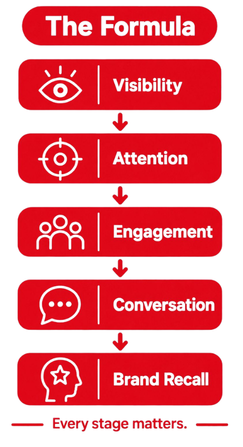
Footfall is often treated as the primary success metric. In reality, conversations create business opportunities. The objective should not simply be attracting more people. It should be attracting the right people and creating an environment where productive discussions can happen naturally. This was one of the biggest strengths of the Young Mirchies strategy. By guiding visitors from curiosity to conversation, the booth became more than a display space; it became a relationship-building platform that supported lead generation and sales enablement.
Lesson 6: Consistency Builds Brand Recall
Visitors encounter hundreds of brands during large exhibitions. Without consistency, even impressive booths can be forgotten. Strong brand recall comes from combining clear messaging, consistent visual identity, positive visitor experiences and meaningful interactions. When these elements work together, visitors leave with a clearer understanding of the brand and its value.
Young Mirchies Perspective: Designing Exhibition Experiences That Drive Results
At Young Mirchies, we believe that the most successful exhibition booths are not built around structures; they are built around people. Every visitor who walks through an exhibition hall is making hundreds of decisions throughout the day. They decide which booths to approach, which brands to engage with and which conversations are worth their time. Our role is to help brands become part of that decision-making process. This philosophy guided our approach to the ZAK Doors & Windows Expo project. Rather than focusing solely on aesthetics, we focused on understanding how visitors think, move, interact and engage within an exhibition environment. The result was a booth designed not only to attract attention but also to create meaningful experiences that encouraged exploration, conversations and stronger brand recall. For us, exhibition design is not about creating the biggest booth on the show floor. It is about creating the most effective one. That means combining strategy, creativity, fabrication expertise and visitor psychology to ensure every element contributes to a clear business objective.
Our Approach
What We Focus On | Why It Matters |
Visitor Behaviour | Improves engagement opportunities |
Strategic Design | Aligns with business goals |
Brand Storytelling | Creates memorable experiences |
Space Planning | Enhances visitor flow |
Execution Excellence | Ensures flawless delivery |
Measurable Outcomes | Supports exhibition ROI |
Every project is approached with the same question: How can we help this brand create meaningful connections with the right audience? The answer is rarely found in design alone. It comes from understanding the complete exhibition journey, from the moment a visitor notices a booth to the moment they leave with a lasting impression of the brand. Whether it’s a trade show, industry expo, product launch or experiential activation, our goal remains the same: To create exhibition experiences that attract attention, encourage engagement and support real business growth.
Conclusion
The ZAK Doors & Windows Expo project demonstrates that increasing exhibition footfall requires far more than visual appeal. By combining visitor insights, strategic planning, experience-driven design and flawless execution, Young Mirchies transformed a booth into a destination that encouraged visitors to stop, explore, engage and connect. The project reinforced an important truth about exhibition marketing: Success is not measured by how many people walk past your booth. It is measured by how many meaningful interactions take place inside it. For brands looking to maximise their exhibition presence, the key is not simply to be seen. It is to create experiences that visitors remember long after the event ends.
Looking to Increase Footfall at Your Next Exhibition?
Whether you’re exhibiting at an industry expo, trade fair, B2B event or product showcase, Young Mirchies helps brands design and build exhibition experiences that deliver meaningful business impact. Ready to create a booth that attracts attention and drives engagement? Get in touch with Young Mirchies to discuss your next exhibition project.
FAQs
1. How can exhibitors increase footfall at trade shows and exhibitions?
Increasing footfall at trade shows requires more than an attractive booth design. Successful exhibitors focus on understanding visitor behaviour and creating experiences that encourage people to stop, enter and engage. Elements such as strategic booth placement, clear branding, open layouts, interactive product displays and meaningful engagement opportunities all play an important role in attracting the right audience and maximising exhibition ROI.
2. What makes an exhibition booth attract more visitors?
Visitors are naturally drawn to booths that are visually inviting, easy to navigate and clearly communicate value. A booth that immediately tells visitors who the brand is, what it offers and why it is relevant will always perform better than one filled with excessive information. Open designs, strong visual branding, strategic lighting and interactive experiences are some of the most effective ways to increase booth traffic and engagement.
3. Why is visitor experience important in exhibition design?
Visitor experience directly impacts how attendees perceive a brand during an exhibition. When visitors can easily explore products, interact with brand representatives and access relevant information, they are more likely to spend time at the booth and remember the brand afterwards. A positive experience not only improves engagement but also increases the likelihood of generating meaningful business conversations and future opportunities.
4. How does booth layout influence visitor engagement?
Booth layout plays a critical role in determining how visitors move through a space and interact with products or services. An open and well-planned layout encourages exploration and reduces barriers that might prevent visitors from entering. By creating dedicated zones for product displays, demonstrations and discussions, exhibitors can guide attendees through a structured journey that leads to deeper engagement and stronger brand recall.
5. What are the most effective ways to engage visitors at an exhibition?
The most effective engagement strategies are those that encourage active participation rather than passive observation. Product demonstrations, interactive displays, live presentations, consultation areas and hands-on experiences help visitors better understand a brand’s offerings. When visitors are involved in the experience, they are more likely to ask questions, stay longer and develop a stronger connection with the brand.
6. How do exhibition stands generate business opportunities?
Exhibition stands generate business opportunities by creating an environment where visitors can learn about solutions, interact with experts and discuss their specific requirements. A well-designed booth attracts qualified visitors and encourages meaningful conversations that can lead to future partnerships, sales opportunities and long-term business relationships. The focus should always be on creating engagement rather than simply increasing footfall.
7. What should brands consider before participating in an exhibition?
Before participating in an exhibition, brands should clearly define their objectives, target audience, key messages and success metrics. It is also important to plan how visitors will experience the booth and what actions they should take during their visit. A clear strategy ensures that design, marketing and engagement efforts work together to achieve measurable results during and after the event.
8. Why choose Young Mirchies for exhibition booth design and fabrication?
Young Mirchies combines strategy, creativity, fabrication expertise and project management to deliver exhibition experiences that go beyond aesthetics. Our approach focuses on understanding visitor behaviour, improving engagement and creating environments that support meaningful business interactions. From concept development and 3D design to fabrication and on-site execution, we help brands maximise their exhibition presence and achieve stronger event outcomes.