Executive Summary
Exhibiting at a trade show is no longer as simple as setting up a visually appealing booth and waiting for foot traffic to roll in. Today’s trade show attendees are far more selective. Navigating packed halls, hundreds of competing brands, and tight schedules, they make split-second decisions about where to spend their time. This reality was front and centre at ChromaTexChem Mumbai, a premier exhibition for textile auxiliaries, dyes, pigments, colourants, speciality chemicals, and chemical processing solutions. When our client signed up to exhibit, their goal was clear: establish a commanding floor presence, attract high-value buyers, and turn brief drop-ins into meaningful commercial conversations. Instead of focusing purely on aesthetics, Young Mirchies engineered a visitor-centric strategy built around audience behaviour. By rethinking how attendees move through a space, digest complex information, and interact with technical products, we transformed a standard footprint into an engaging brand experience. The result was a steady flow of qualified traffic, longer dwell times, heightened brand recall, and a solid pipeline of business opportunities.
Project Snapshot
- Event: ChromaTexChem Mumbai
- Industry: Speciality Chemicals, Dyes, Pigments & Textile Chemicals
- Scope of Work: Exhibition Booth Design, Visitor Journey Planning, Brand Experience Design, Custom Fabrication, On-Site Installation, and Execution Support
- Core Objectives: Drive qualified engagement, extend visitor dwell time, elevate brand presence, improve technical product communication, and capture actionable leads
About ChromaTexChem Mumbai
ChromaTexChem has established itself as a critical hub for India’s chemical and textile processing sectors. The event brings together a concentrated audience of decision-makers from exporters, manufacturers, and procurement directors to R&D experts and international distributors. While this environment offers immense commercial potential, it also presents a steep visibility challenge. Attendees typically enter the venue with a tight itinerary and dozens of booths on their radar. With limited time to spare, they pass by standard displays without stopping. On a crowded trade show floor, success isn’t determined by booth square footage; it depends on whether your space can capture attention and immediately signal value. That reality formed the baseline of our design challenge.
The Client’s Objective & The Core Challenge
Having exhibited at industry trade shows before, the client understood the value of face-to-face interactions. However, they had frequently run into a common frustration: attracting casual footfall is easy, but keeping the right people engaged long enough to have a real business conversation is difficult. They wanted to step away from the static, product-on-a-shelf format and create an environment structured for commercial outcome. Achieving this meant solving three primary hurdles:
- Floor Competition: Standing out in a sea of established manufacturers and noisy marketing messaging.
- Communicating Complexity: Speciality chemical formulations and technical processing benefits are inherently detailed. Explaining compliance standards and application mechanics to a passing visitor required a far clearer, layered communication strategy.
- Quality Over Quantity: Ensuring booth interactions went deeper than brochure hand-offs and badge scans, translating instead into qualified lead discussions.
Strategic Approach: Why Engagement Trumps Footfall
A frequent trap in exhibition marketing is treating total foot traffic as the primary metric of success. Raw headcount rarely translates to high ROI. At a specialised B2B trade show like ChromaTexChem, a hundred brief, superficial walk-bys yield far less value than ten in-depth conversations with targeted procurement leads. When visitors feel comfortable exploring a space, asking technical questions, and speaking directly with specialists, trust builds naturally. Guided by this principle, Young Mirchies shifted the focus from sheer crowd generation to dwell-time quality, building a space tailored to how humans actually navigate trade shows.
Decoding the Visitor Decision Journey
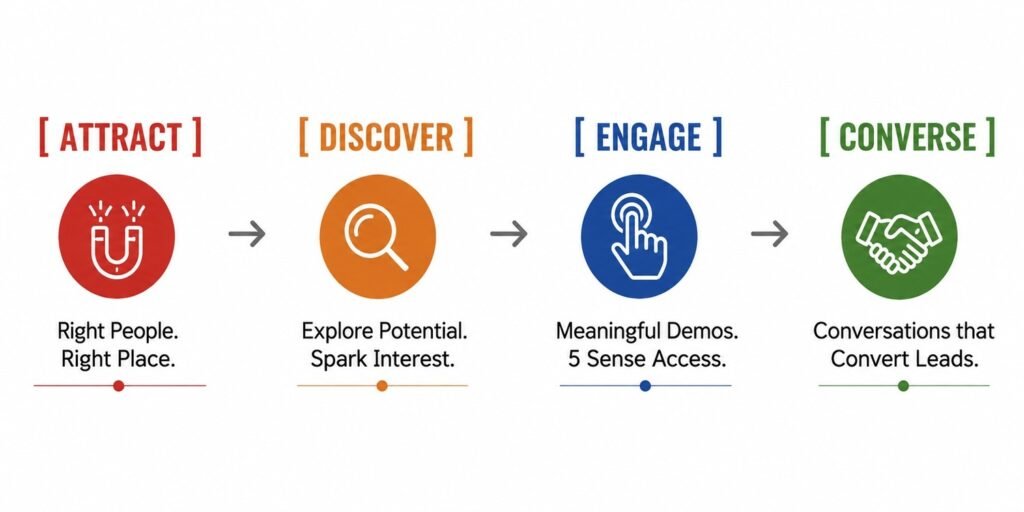
Before sketching layouts, we analysed how trade show attendees evaluate a space in real time:
- Initial Catch: A passing attendee notices clear sightlines or an intriguing visual element.
- Rapid Assessment: Within 3-5 seconds, they determine if the booth offers solutions relevant to their business.
- Low-Friction Entry: If the boundary feels open and welcoming, they step inside without feeling trapped.
- Active Exploration: They scan organized, easily digestible product presentations.
- Commercial Dialogue: Feeling informed and unpressured, they comfortably transition into a conversation with booth representatives.
By structuring the booth to accommodate each stage of this psychological sequence, we eliminated common points of friction that cause visitors to keep walking.
Designing the Physical Experience
To turn this strategy into a functional environment, we focused on four core design choices:
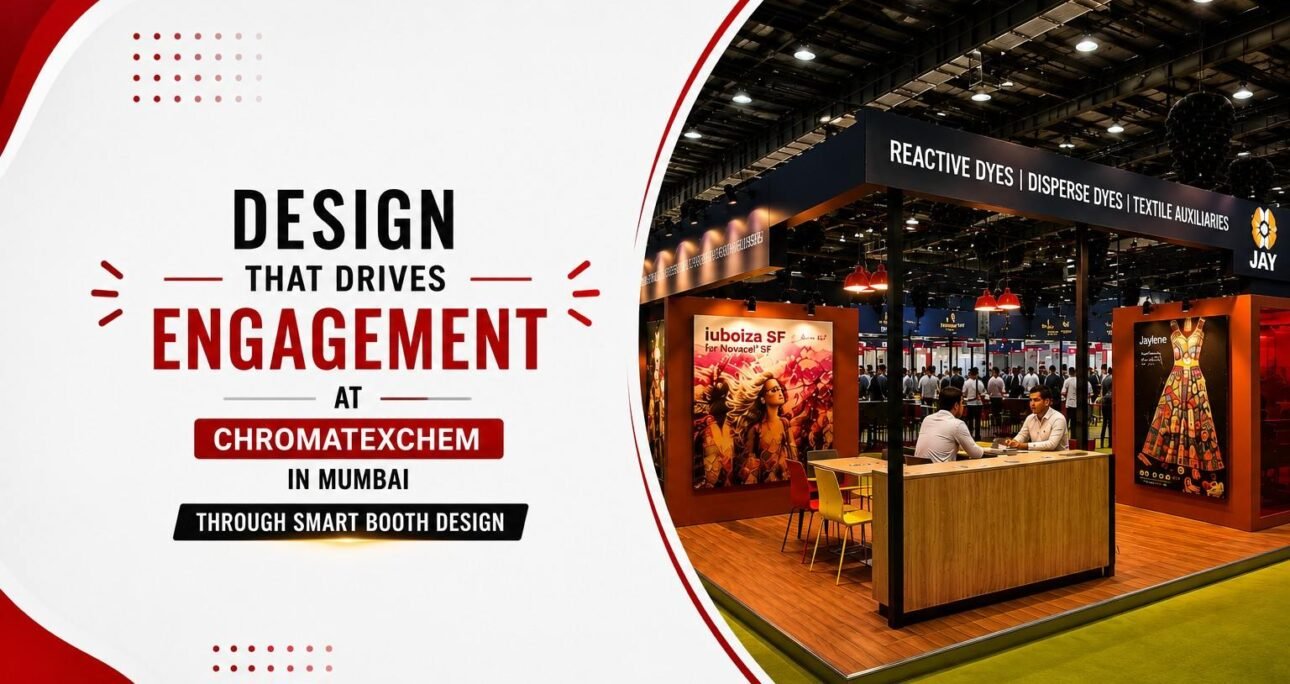
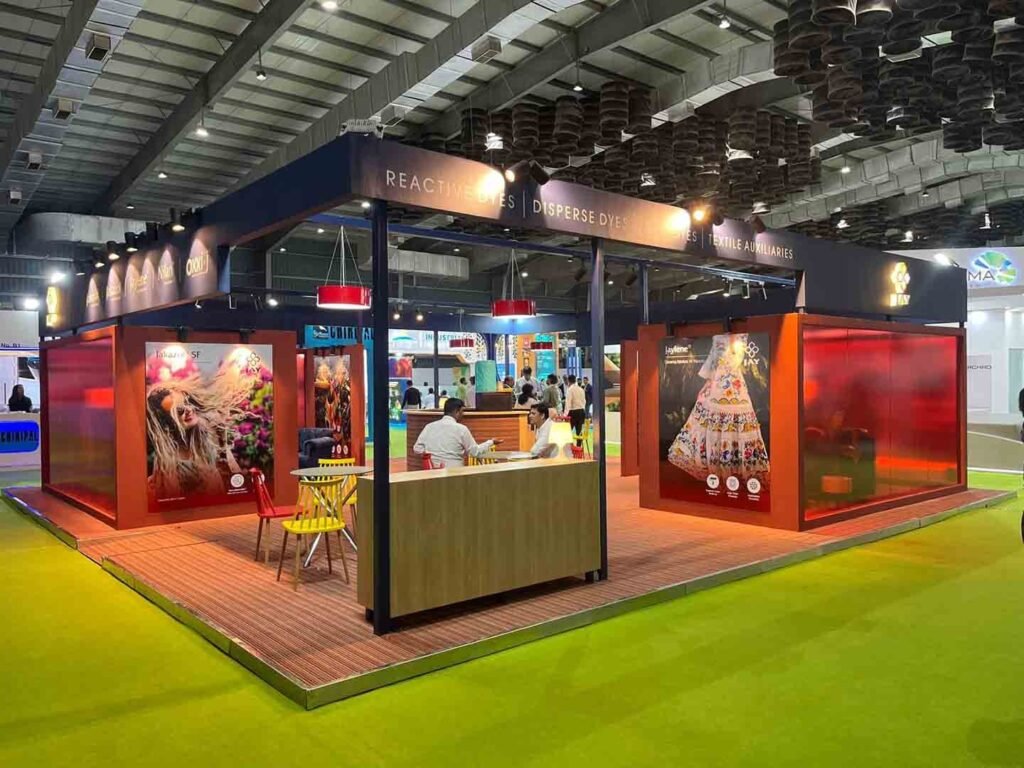
1. Open, Barrier-Free Architecture: Rather than enclosing the footprint with tall walls or high reception counters, we kept access points open along primary traffic paths. This open-sightline layout lowered the mental barrier to entry, allowing attendees to wander in naturally.
2. Layered Information Hierarchy:
Trade show attendees scan before they read. We replaced dense technical panels with a clean, tiered messaging system:
- Top Layer: Bold, high-level value statements visible from the aisle.
- Middle Layer: Clear, contextual product benefits grouped by industry application.
- Deep Layer: Detailed technical spec sheets and digital reference materials reserved for direct, one-on-one discussions.
3. Interactive Application Zones: Instead of presenting raw chemical samples in isolation, we anchored products within real-world application contexts. Interactive touchpoints allowed visitors to see performance characteristics firsthand, shifting their experience from passive viewing to active learning.
4. Dedicated Business Lounge: Once a visitor showed serious interest, booth staff could seamlessly transition them from the main display area into a quieter, semi-private meeting zone equipped for comfortable, extended commercial discussions.
From Execution to On-Site Impact
A great strategy requires precise physical execution. Working closely with our fabrication teams, Young Mirchies managed every aspect of the build from material selection and structural stability to precise lighting alignment and graphics installation. When the doors opened at ChromaTexChem Mumbai, the design strategy delivered immediate, practical results:
- Extended Dwell Times: The combination of approachable displays and clear messaging kept visitors inside the booth significantly longer than average floor benchmarks.
- Higher-Quality Inquiries: By simplifying initial communication, visitors approached booth staff with specific, highly relevant technical and purchasing questions.
- Better Brand Recall: A clean, professional aesthetic paired with a comfortable, hands-on experience left a strong lasting impression on prospective clients post-event.
Key Takeaways for Trade Show Exhibitors
The success of this project highlights several core principles that apply to B2B exhibitions across industries:
- Design for People, Not Packaging: A booth should be built around human behavior, movement, and comfort rather than acting as a glorified storage unit for products.
- Clarity Drives Curiosity: Complex technical offerings don’t require overwhelming wall text. Broad value statements hook attention; detailed technical discussions belong in conversations.
- Lower the Entry Threshold: Physical barriers, cluttered perimeters, and pushy sales tactics drive attendees away. Open, welcoming layouts invite low-pressure exploration.
- Measure What Matters: Total footfall is a vanity metric. Real trade show ROI comes from the depth of your conversations and the quality of the relationships you initiate on the floor.
By prioritizing visitor experience over traditional product displays, Young Mirchies helped transform a standard trade show presence into an effective engine for business growth.
Conclusion
The ChromaTexChem Mumbai project reinforces an essential truth in B2B exhibition marketing: successful trade show outcomes are not defined by structural scale or raw visual volume alone. They are defined by how intentionally a physical space serves the human beings walking through it. By aligning spatial architecture with visitor psychology, lowering entry barriers, structuring complex information into clear layers, and dedicating comfortable spaces for high-intent dialogue, Young Mirchies helped transform a standard trade show layout into a high-performing engine for business relationships. For brands evaluating their next trade show presence, the strategic focus remains clear: stop designing booths merely to be seen from the aisle and start engineering environments built to be experienced.
FAQs
1. What is smart booth design?
Smart booth design is an approach to exhibition spaces that combines visitor psychology, architectural flow, and strategic marketing. Rather than treating a booth as a static product display, smart booth design focuses on how visitors navigate physical environments, absorb technical information, and interact with brand representatives.
2. How does booth design directly impact exhibition ROI?
Booth design directly dictates the quality and depth of visitor interactions. A poorly structured booth creates spatial bottlenecks and presents cognitive overload, causing qualified decision-makers to walk past. A visitor-centric layout removes barriers to entry, simplifies initial messaging, and provides dedicated zones for high-value commercial discussions turning foot traffic into measurable leads.
3. How can companies with highly technical products engage trade show visitors quickly?
Technical solutions are best communicated using a layered information hierarchy. Instead of overwhelming passersby with dense specification sheets on outer walls, use bold, benefits-driven value statements at eye level. Reserve detailed spec sheets, digital demonstrations, and deep technical discussions for dedicated interior zones once a visitor has entered the space.
4. What is the difference between measuring footfall and measuring visitor engagement?
Footfall simply tracks raw headcounts walking past or stepping into a footprint, which often includes casual browsers or unqualified traffic. Engagement measures dwell time, interaction quality, product demonstrations attended, and the number of meaningful commercial conversations generated with targeted decision-makers.
5. How can an exhibitor encourage visitors to stay longer in their booth?
By creating a comfortable, frictionless environment. This involves keeping entrance points open and uncluttered, offering intuitive product interaction points, avoiding aggressive sales pitches at the boundary line, and incorporating semi-private seating areas where extended business discussions can take place naturally.